No way with 〜わけがない
Grammar: Assertion and Declaration » 〜わけがない
〜わけがない rules something out completely: “there’s no way” or “it can’t possibly be”. わけ means a reason or grounds, so the phrase says there’s nothing that could make the thing true.
It states the speaker’s own firm judgment. The speaker may find the idea ridiculous, or may simply have reasoned that it can’t happen.
Usage Notes
わけがない follows the plain form of a verb or い-adjective. In the non-past, な-adjectives and nouns take な: 犯人なわけがない “there’s no way they’re the culprit”. Both can use である in formal writing. Nouns can also take の: 小林さんのわけがありません. Past and negative forms attach directly: 来たわけがない.
Casual speech usually drops the が: わけない, or rough わけねえ. わけはない and わけもない are less common variants, and わけは can shrink to わきゃ: そんなわきゃない. Katakana ワケ is common in manga. The polite form is わけがありません or わけないです, and わけがなかった puts the judgment in the past. On its own, そんなわけ(が)ない means “that can’t be true”. In fast speech it shrinks to んなわけない, or just なわけない at the start of a line.
はずがない overlaps heavily and can often replace it. はずがない tends to rule something out from evidence, in more formal writing. わけがない is common in casual speech.
Watch for the unrelated adjective 訳ない “easy, no trouble”: 扉まで戻るのは訳ない, “getting back to the door is easy”. That one is a predicate on its own (〜のは訳ない, 訳なく勝つ) and doesn’t follow a verb or adjective directly.
Formation
View formation details
- Verb (plain form) + わけがない
- あいつが負けるわけがない
- "There's no way that guy would lose."
- い-adjective + わけがない
- 病人と喋って楽しいわけがない
- "There's no way chatting with a sick person is fun."
- な-adjective + な + わけがない
- 平気なわけがない
- "There's no way I'm fine."
- Noun + な + わけがない
- 彼が犯人なわけがない
- "There's no way he's the culprit."
- 〜わけない (casual)
- そんなわけないじゃん
- "No way that's true."
- Polite 〜わけがありません
- そんなわけがありません
- "That can't possibly be true."
Ruling Something Out
The speaker says something can’t be true or can’t happen. It may answer someone’s suggestion, or it may be the speaker’s own prediction.
- こんな廃墟に人がいるわけないよ。
- There's no way anyone is in a ruin like this.
With a potential verb, it says something is impossible to do: できるわけない “there’s no way I can”, 勝てるわけない “there’s no way we can win”, こんな量、食べきれるわけない “there’s no way I can eat this much”.
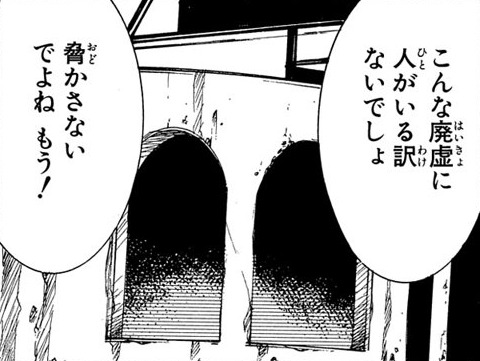
While chasing President Aria in a training gondola, Akari and Aika follow a narrow canal and come out among the ruins of an old settlement from the days when Aqua was still called Mars. Akari glances up at a pair of empty windows and says she felt as if someone was watching them.
- 藍華:
- 「こんな廃虚に人がいる訳ないでしょ」
- “There's no way anyone's in a ruin like this.”
- 「脅かさないでよね もう!」
- “Don't scare me like that, geez!”
Akari and Aika have come out among the ruins of an old settlement, and Akari feels someone watching them. Aika rules it out: 人がいる訳ない, “there’s no way anyone’s here”. She drops the が and writes わけ in kanji, and でしょ treats the answer as obvious.
Defending Someone
わけがない vouches for a person against an accusation. It says the speaker is sure, not that the person has been proven innocent.
- 彼女が嘘をつくわけがない!
- There's no way she would lie!
In mysteries, it’s a stock line for a suspect’s friends: 犯人なわけないじゃない! “There’s no way they’re the culprit!”
Retorting with だろ, でしょ, and じゃん
In manga, わけない often comes with だろ, でしょ, or じゃん. These endings don’t make it a guess. They tell the listener the answer is obvious: “of course not!”
- 寂しいわけないだろ。
- As if I’d be lonely! (No way I’d be lonely.)
A flustered character can use it to deny a feeling, as with 好きなわけねーだろ “As if I like them!”. It can also insist that a feeling is real: 平気なわけないだろ! “How could I be okay!” A line that vouches for a person still belongs under Defending Someone, whatever its ending.
Dismissing Your Own Guess with 〜わけないか
A speaker can float an idea, often a hopeful one, then drop it with 〜わけないか: “…no, I guess not.” Here the sentence-final か turns the denial into a conclusion the speaker reaches while talking to themselves.
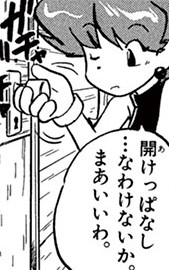
Blue tries to sneak into Masaki’s cottage, but the door is locked.
- ブルー:
- 「開けっぱなし…なわけないか。まあいいわ。」
- “There's no way it'd be left unlocked. Well, that's fine.”
Blue tries the door of Masaki’s cottage and finds it locked. For a moment she wonders if it was 開けっぱなし, left open, then answers herself with なわけないか: “…no, I guess not.” 開けっぱなし is a noun, so it takes な before わけ. The pause doesn’t break the link. まあいいわ, “oh well”, shows she is ready to move on.
Rhetorical そんなわけあるか
In a rhetorical question, わけ(が)あるか strongly rejects an idea: “how could that be?”. It’s a sharper way to say わけがない, often shouted back at someone: そんなわけあるか! “As if!” A rougher あるかい is common, especially in Kansai speech. The statement わけがある isn’t used in this sense, so only the question form appears.
- 人間と人形を見間違えるわけあるか!
- How could anyone mistake a doll for a person!
Double Negatives with 〜ないわけがない
When the word before わけがない is already negative, the result is a strong yes. 知らないわけがない means “there’s no way they don’t know”, so they must know.
- 覚えてないわけがない!
- There's no way he doesn’t remember!
Related Grammar
- A strong denial with 〜っこない
- っこない attaches only to verb stems, usually potential verbs, and is casual. わけがない works with any predicate.
- Expectation with はず
- はずがない is often interchangeable. It leans on evidence and sounds more formal.
- Not necessarily with 〜わけではない
- わけではない rejects one conclusion or qualifies a claim. わけがない rules the whole thing out.
- Logical conclusion with 〜わけだ
- わけだ draws a conclusion. わけがない says no grounds exist for one.