Not at all with 全然〜ない
Grammar: Degree » 全然〜ない
The adverb 全然 with a negative means “not at all”: 全然わからない, “I don’t understand at all”. It leaves no room for “a little”.
In casual speech, 全然 also goes with some positive words, as in 全然大丈夫, “totally fine”.
Usage Notes
全然 comes before a negative predicate, such as 〜ない, 〜ません, or 〜じゃない, and strengthens it. Words that already carry a “no” meaning, such as 違う “be different” and だめ “no good”, take 全然 too.
As a reply, 全然 can stand alone, often after いや or いえ. The negative is understood from the question.
全然 is conversational. In formal writing, 全く or 少しも is safer.
Formation
View formation details
- 全然 + Verb (negative)
- 全然眠れなかった
- "I couldn't sleep at all."
- 全然 + い-adjective (くない)
- 全然寒くない
- "It's not cold at all."
- 全然 + Noun / な-adjective + じゃない
- 全然平気じゃない
- "I'm not OK at all."
- 全然 + 違う / だめ
- 前のと全然違う
- "It's completely different from the last one."
- いや + 全然 (reply)
- いや、全然
- "No, not at all."
- 全然 + positive word (casual)
- 全然大丈夫だよ
- "I'm totally fine."
- Note: Some speakers consider this wrong, so avoid it in formal speech.
Not at All
With a negative verb or adjective, 全然 says there’s none at all. 全然わからない is “I don’t understand at all”, not “I don’t understand much”.
Example 1 of 2: Not understanding at all with 全然〜ない

During an underwater-breath-holding contest, Cocoa begins a game of charades.
- シャロ:
- 「全然わからない」
- “I don't understand at all.”
- リゼ:
- 「ナルシストか?」
- “A narcissist?”
Cocoa is acting out charades underwater, and Syaro can’t make sense of it. She’s thinking this to herself. Once 全然 appears, a negative is expected, and わからない supplies it.
Example 2 of 2: You say that, but it's not important with だって
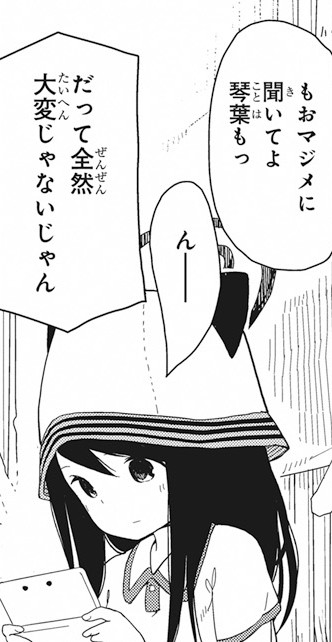
Yui hurries to her clubhouse to tell her friends, Kotoha and Sacchan, about a big case: there’s a cat that looks like a panda. However, Sacchan doesn’t engage in the topic and Kotoha continues playing her video game.
- 結衣:
- 「もおマジメに聞いてよ 琴葉もっ」
- “Geez, listen seriously. You too, Kotoha.”
- さっちゃん:
- 「だって全然大変じゃないじゃん」
- “You say that, but it's not a big deal at all, right?”
Yui rushes in with news of a cat that looks like a panda. Sacchan isn’t impressed. 大変 is a な-adjective, so its negative is 大変じゃない, and 全然 makes it “not a big deal at all”. じゃん at the end asks Yui to agree.
Words That Already Mean No
Some words carry a negative meaning without ない. 違う, “be different”, says two things aren’t the same, and だめ says something is no good. 全然 works with them as it does with ない: 全然違う is “completely different”, and 全然だめ is “no good at all”.
Answering with 全然
In a reply, 全然 can stand alone. いや, いえ, or ううん often comes first. The question supplies the rest, so いや、全然 is “no, not at all”.

Sakurako tells Takeru not to go to the shogi club as he’ll get in the way of Ayumu being with Urushi. However, as a new member of shogi club, and as a man, Takeru feels it’s his duty to show up. On his way to the shogi club room, he encounters Ayumu who implores him to come to the shogi club room.
- タケル:
- 「理解してくれたか!!」
- “You understood me, huh?”
- 「オレの男としての!」
- “As a man, my (duty)!”
- 歩:
- 「いや全然だ」
- “No, not at all.”
Ayumu asks Takeru to come to the shogi club. Takeru takes this as support for his duty “as a man”: 理解してくれたか, “you understand me!” Ayumu cuts him off with いや全然だ, “no, not at all”. The full thought would be 全然理解していない, “I don’t understand at all”. だ just closes the short reply.
Casual 全然 with Positive Words
全然 once meant “entirely” and went with positive words as well as negative ones. From the mid-1920s on, it became closely linked to negatives. Later, schools taught “全然 takes a negative” as a rule. After World War II, a new use appeared that just means “very” with a positive word. Because of that history, some people still consider any positive use a mistake.
In casual speech, two positive uses are common. One is a reply that clears away the other person’s worry: 全然大丈夫, 全然いいよ. The other is a comparison: 昨日より全然暖かい is “much warmer than yesterday”.
Someone apologizes or asks if you’re OK, and you answer 全然大丈夫 or 全然いいよ. The “not” is in the other person’s worry: you mean “it’s not a problem at all”.
In a comparison, 全然 means “far” or “by a long way”.
As a plain “very” with no worry or comparison behind it, as in 全然おいしかった, 全然 sounds wrong to many speakers. Stick to the negative uses when in doubt.
Related Grammar
- Negation with 〜ない
- ない is the basic negative form that 全然 pairs with, as in 全然わからない.