Not limited to just this with 〜だけじゃなくても
Grammar: Addition » 〜だけじゃなくても
〜だけじゃなくても says that something does not have to be limited to only Ⓐ. It often means “even if it is not just Ⓐ”, “it does not have to be only Ⓐ”, or “something besides Ⓐ is also okay”.
The pattern is built from だけ (“only”), casual negative じゃない, and concessive ても (“even if”). It is often followed by words such as いい, 大丈夫, かまわない, or 問題ない.
Usage Notes
Use this when someone might think the acceptable choice is restricted to Ⓐ, but the speaker wants to loosen that restriction. The focus is not adding one specific second item, but saying the limit itself is unnecessary.
This is casual spoken Japanese. More polite speech uses だけではなくても, while everyday speech usually prefers だけじゃなくても.
Formation
View formation details
-
Noun + だけじゃなくても + いい/大丈夫/etc.
- 今日だけじゃなくてもいい
- "it does not have to be only today"
-
Particle phrase + だけじゃなくても + いい/大丈夫/etc.
- 東京でだけじゃなくても大丈夫
- "it is okay even if it is not only in Tokyo"
-
Verb plain form + だけじゃなくても + いい/大丈夫/etc.
- 読むだけじゃなくてもいい
- "it does not have to be only reading"
-
い-adjective + だけじゃなくても + いい/大丈夫/etc.
- 安いだけじゃなくてもいい
- "it does not have to be only cheap"
-
な-adjective + なだけじゃなくても + いい/大丈夫/etc.
- 便利なだけじゃなくてもいい
- "it does not have to be only convenient"
What Is Being Loosened
The word before だけ is the possible limit. In 「一人だけじゃなくてもいい」, the speaker is saying “it does not have to be just one person.” In 「日本語だけじゃなくても大丈夫」, the speaker is saying that Japanese does not have to be the only language used.
Because ても has an “even if” feeling, this pattern often reassures the listener that alternatives are acceptable.
Particle Placement
When the limited phrase includes a particle, the particle usually stays before だけ.
- Ⓐでだけじゃなくてもいい: it does not have to be only at/in Ⓐ
- Ⓐにだけじゃなくてもいい: it does not have to be only to/at Ⓐ
- Ⓐからだけじゃなくてもいい: it does not have to be only from Ⓐ
In casual speech, some particles may be dropped when the meaning is obvious, but keeping the particle makes the limit easier to parse.
Related Grammar
-
Limiting with 〜だけ
- 〜だけ marks a limit; 〜だけじゃなくても says that limit does not have to hold.
-
Not only this but also that with 〜だけではなく〜も
- 〜だけで(は)なく〜も adds a specific second item; 〜だけじゃなくても makes the "only Ⓐ" limit unnecessary.
-
Permission to do with 〜てもいい
- 〜だけじゃなくても is often followed by いい, giving a sense like "it is okay even if it is not only Ⓐ".
Examples
Not only physical wounds with 〜だけじゃなくても
Grammar Explanation: Not limited to just this with 〜だけじゃなくても
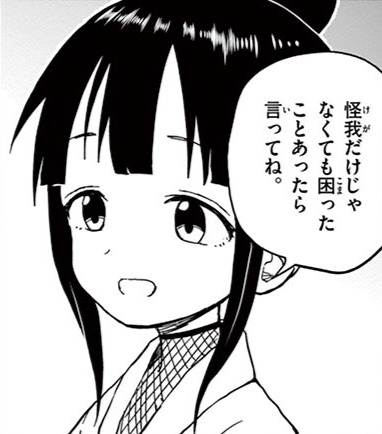
During lunch, Mokurin sees someone new sitting with Tsubaki. She learns that it’s the transfer student, Rindou, who’s joined Tsubaki in the Dog Clan. Mokurin introduces herself as a member of the Monkey Clan, which Tsubaki explains handles medical treatment.
- モクリン:
- 「怪我だけじゃなくても困ったことあったら言ってね。」
- “If you're having trouble with anything, not just injuries, let me know.”