Nothing but with 〜ばかり
Grammar: Limit » 〜ばかり
ばかり says something is only or almost only one thing: nothing but games, nothing but strangers, doing nothing but sleep. It follows nouns, て-forms, dictionary-form verbs, and い-adjectives.
It often sounds critical, because so much of one thing usually means something else is missing. マンガばかり読んでいる, “all you do is read manga”, is a typical complaint.
Usage Notes
After a noun, ばかり usually takes the place of が or を: 肉ばかり食べる “eat nothing but meat”. Writing often keeps が after it, as in 彼ばかりがしゃべっている. Other particles stay, and ばかり usually goes after them: 友だちとばかり会う “only hang out with friends”. With に and で, it can also go first: 私にばかり or 私ばかりに “only to me”.
ばかり is looser than だけ. 白いシャツばかり買った still works if a few of the shirts were another color.
Casual speech uses ばっかり, ばっか, and ばっかし.
A few other ばかり patterns look similar. After a number, ばかり means “about”: 一時間ばかり “about an hour”. 〜とばかり思っていた means “I’d simply assumed that…”.
Formation
View formation details
- Noun + ばかり
- ゲームばかりしている
- "All they do is play games."
- Noun + ばかりだ・ばかりで
- 周りは知らない人ばかりだ
- "I'm surrounded by nothing but strangers."
- Verb (て-form) + ばかりいる
- 弟は寝てばかりいる
- "My little brother does nothing but sleep."
- Verb (dictionary form) + ばかりで
- 言うばかりで、何もしない
- "He only talks and never does anything."
- Verb (dictionary form) + ばかりだ
- 状況は悪くなるばかりだ
- "Things just keep getting worse."
- ばっかり・ばっか (casual)
- 最近、雨ばっかだね
- "Lately it's been nothing but rain, huh."
Doing Nothing but One Thing
Noun + ばかり + verb says someone does only that one thing, or almost only that. ゲームばかりする is “do nothing but play games”, and the unspoken part is that other things, like homework, get left undone. The verb is often ている, for a habit.
The noun can also be who does it or who it happens to: 彼ばかりしゃべっている “he does all the talking”, 私にばかり聞く “always asking me”.
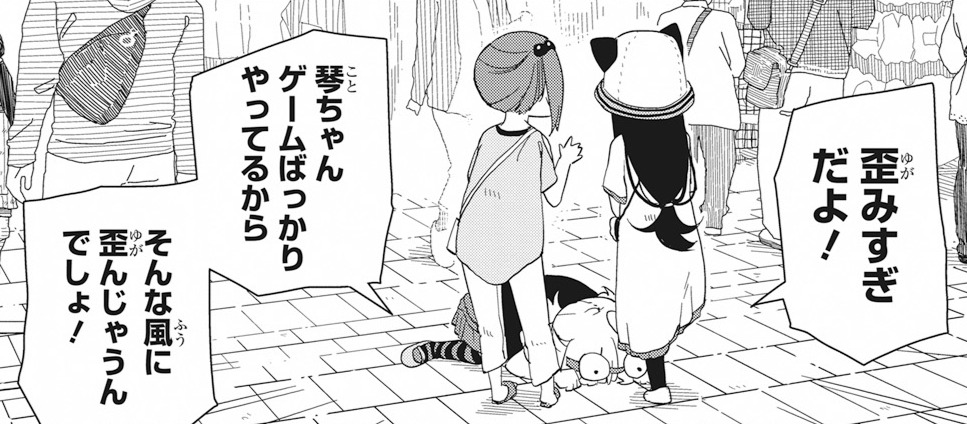
Sacchan tries crawling on the ground to help find the cat that’s been stealing from the area lately. Kotoha takes this opportunity to step on Sacchan’s head.
- さっちゃん:
- 「歪みすぎだよ!」
- “You're way too twisted!”
- 「琴ちゃんゲームばっかりやってるからそんな風に歪んじゃうんでしょ!」
- “It's 'cause you only ever play video games, Koto-chan, that's why you've gotten all warped like that!”
Sacchan is crawling on the ground looking for a cat, and Kotoha steps on her head. Sacchan blames video games for how twisted Kotoha is. ゲームばっかりやってる is noun + ばっかり + やっている: playing games is the one thing Kotoha does all day. ばっかり takes the place of を. から makes the habit the cause, and the main clause, そんな風に歪んじゃうんでしょ, is the complaint.
Nothing but That Kind of Thing
With だ or で after it, Noun + ばかり describes what a place, group, or stretch of time is made of: 周りは知らない人ばかりだ “I’m surrounded by strangers”. It doesn’t have to be literally everything. The speaker presents that one kind of thing as making up all or almost all of the situation.
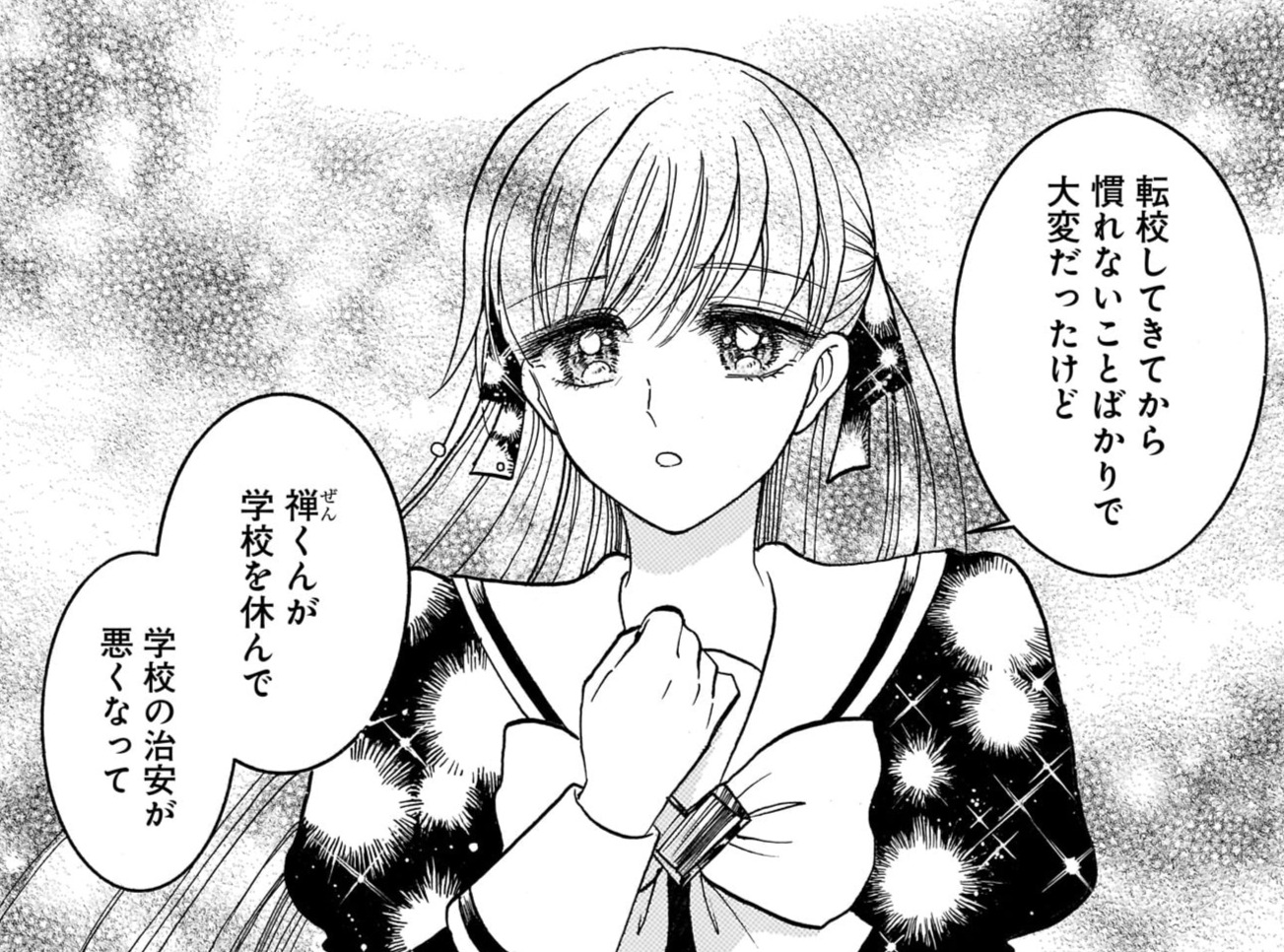
Following Zen’s absence from school for a while, fights and disobedience have taken over the school grounds. When Lulu learns Zen hasn’t been at home either during this time, she travels to the mountains in search of him. After finding him, she explains the situation at school.
- ルル:
- 「転校してきてから慣れないことばかりで大変だったけど禅くんが学校を休んで学校の治安が悪くなって」
- “Since I transferred to this school, everything has been unfamiliar and difficult, but ever since you've started missing school, the school's security has gotten worse...”
Lulu has tracked Zen down in the mountains to tell him the school has fallen into fights and disorder while he’s been away. 慣れないことばかりで describes her life since transferring: one unfamiliar thing after another. The で connects it to 大変だった, “it was hard”, and だったけど turns to the bigger problem.
Doing the Same Action All the Time with てばかりいる
After a verb’s て-form, ばかりいる says someone keeps doing that one action and nothing else: 仕事がきつくて、日曜日は寝てばかりいる “Work is so hard that on Sundays I do nothing but sleep”. The speaker can be talking about themselves, not just complaining about others.
いる often drops in speech, leaving てばかりだ, てばかりで, or てばっか. てばかりじゃ… warns that keeping this up won’t do.
Example 1 of 2: Doing nothing but sleep in class with 〜てばかり
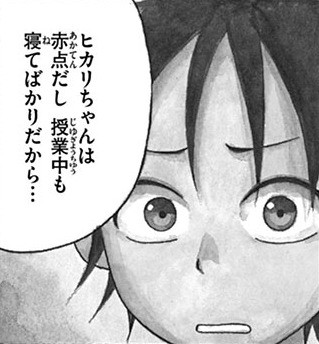
Hibino has kept Hikari and Kenji after school for extra study. Hikari is upset to be stuck with Kenji and points out that makeup classes are usually for students in the same year. Hibino explains that Kenji didn’t fail, but his scores are always just barely passing.
- 日々野:
- 「ヒカリちゃんは赤点だし 授業中も寝てばかりだから…」
- “Hikari-chan, you got a failing grade, and in class you do nothing but sleep, so...”
Hikari wants to know why she’s stuck in an extra study session with Kenji. Hibino gives two reasons: she failed, and in class she does nothing but sleep. 寝てばかりだ is てばかりいる with いる dropped and だ in its place. Before the trailing から, it states the habit as a reason, and the result, “so you’re here”, goes unsaid.
Example 2 of 2: Doing nothing but slack off with 〜てばっか
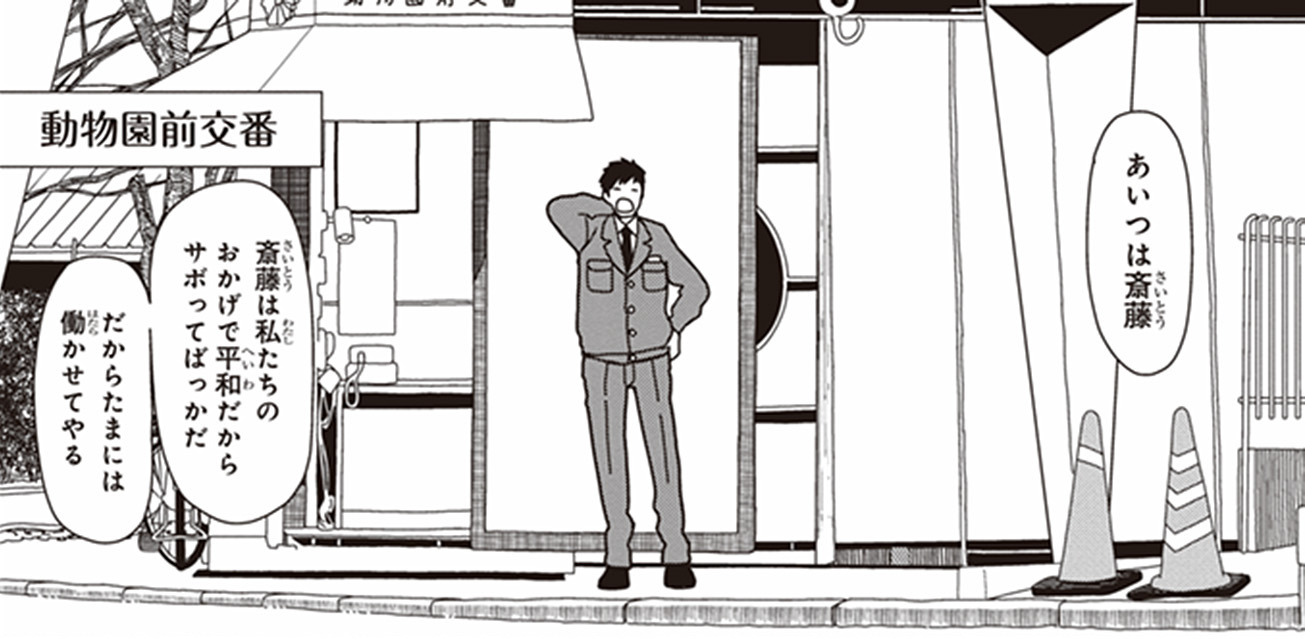
Yui, Sacchan, and Kotoha are making a video to introduce the Colors and the people of their town. After filming at a few local shops, they come to the police box by the zoo, where Officer Saitou works.
- 「動物園前交番」
- “Zoo-Front Police Box”
- さっちゃん:
- 「あいつは斎藤」
- “That guy is Saitou.”
- 「斎藤は私たちのおかげで平和だからサボってばっかだ」
- “Thanks to us, everything's peaceful, so Saitou does nothing but slack off.”
- 「だからたまには働かせてやる」
- “So for once, we're going to make him work.”
Sacchan introduces Saitou, the officer at the police box by the zoo, in the Colors’ video about their town. サボってばっかだ is てばかりいる in its most casual form, with ばっか for ばかり and だ in place of いる. Slacking off is all he does, and she claims it’s because the girls keep the town so peaceful.
Only Doing That with Verb + ばかり
After a verb’s dictionary form, ばかり says that one action is all that happens. い-adjectives work the same way: 高いばかりで、おいしくない “it’s just expensive, not tasty”. ばかりで often leads to what’s missing: 言うばかりで、自分では何もしない “he only talks and never does anything himself”. ばかりではだめ, or casual ばかりじゃダメ, says that action alone isn’t enough.
Example 1 of 2: Precisely because of the fundamentals with 〜からこそ
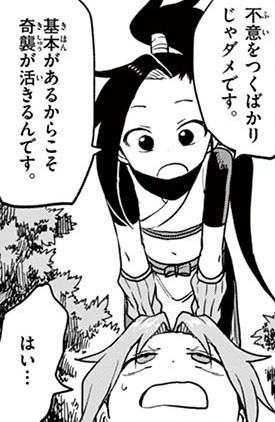
During a training session, Tsubaki quickly subdues Asagao. Sazanka uses this opportunity to launch a surprise attack, only for Tsubaki to anticipate it and take her down as well.
- ツバキ:
- 「不意をつくばかりじゃダメです。」
- “You can't rely just on surprise attacks.”
- 「基本があるからこそ奇襲が活きるんです。」
- “It's precisely from having fundamentals that surprise attacks become effective.”
- サザンカ:
- 「はい…」
- “Yeah...”
During training, Tsubaki quickly subdues Asagao, and when Sazanka tries a surprise attack, Tsubaki sees it coming and takes her down too. 不意をつく means “catch someone off guard”. 不意をつくばかりじゃダメです says that relying only on surprise won’t work. じゃ is short for では. Her next line gives the reason: surprise attacks only pay off once the fundamentals are there.
Example 2 of 2: Only dodging and never attacking with 〜ばかり
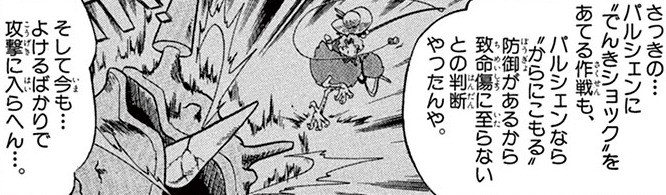
Kanna of the Elite Four has Yellow and Masaki under attack with ice missiles fired by her Cloyster and Dewgong. Yellow hits Cloyster with Thunder Shock, which keeps it from firing, and the two escape on Yellow’s Dodo. When Kanna attacks again, Dodo only dodges. Masaki asks why Yellow won’t fight back, and Yellow says they should run. Masaki then realizes that Yellow is trying not to hurt anyone, friend or enemy.
- マサキ:
- 「さっきの…パルシェンに〝でんきショック〟をあてる作戦も、パルシェンなら〝からにこもる〟防御があるから致命傷に至らないとの判断やったんや。」
- “That plan earlier, hitting Cloyster with Thunder Shock... he'd figured Cloyster could defend itself with Withdraw, so the hit wouldn't be fatal.”
- 「そして今も…よけるばかりで攻撃に入らへん…。」
- “And now too... he's only dodging, and he won't go on the attack...”
Kanna of the Elite Four keeps attacking, and Yellow’s Dodo does nothing but dodge. よけるばかりで says dodging is the only thing Yellow does, and the clause after で gives what’s missing: 攻撃に入らへん, “won’t go on the attack”. Masaki isn’t complaining. He has just realized Yellow is trying not to hurt anyone.
Only Getting Worse and All That’s Left with 〜ばかりだ
At the end of a sentence, Verb (dictionary form) + ばかりだ has two common uses.
With a verb of change, it says things keep moving in one direction, usually a bad one: 不安はつのるばかりだ “my worries just keep growing”. In this use, it is close to 〜一方だ.
Often with あとは, it says one step is all that remains: あとは待つばかりだ “all that’s left is to wait”. Everything else is done.
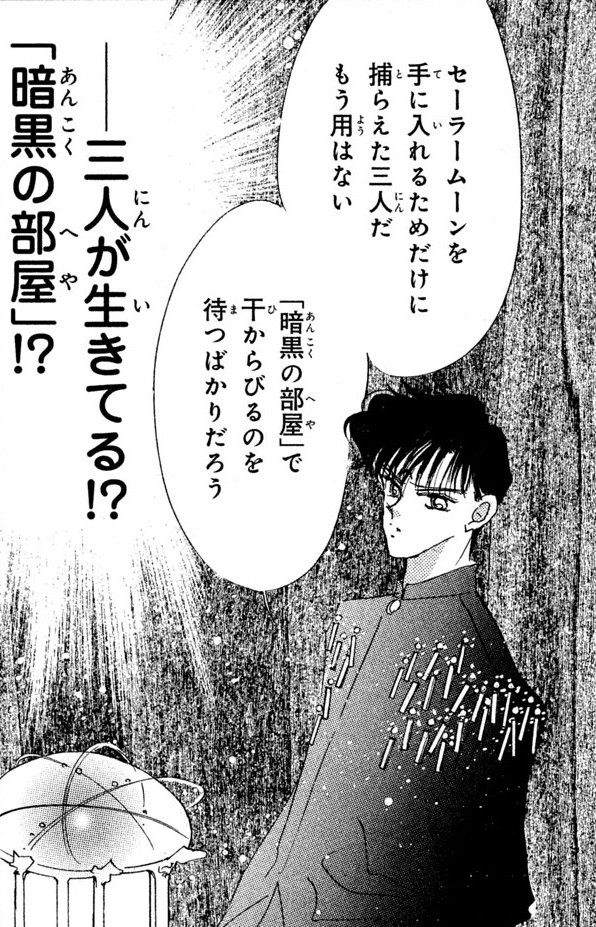
Sailormoon is searching the Black Moon clan’s maze-like castle for Mars, Mercury, and Jupiter, who were taken captive. She sensed them for an instant, then lost them. Weak and short of breath, she overhears Saphir talking with another member of the clan, who asks whether the three warriors are still alive.
- サフィール:
- 「セーラームーンを手に入れるためだけに捕らえた三人だ もう用はない」
- 「『暗黒の部屋』で干からびるのを待つばかりだろう」
- “We only took those three to get our hands on Sailormoon. We have no more use for them.”
- “I expect all that's left for them is to wait in the 'Room of Darkness' until they shrivel up.”
- うさぎ:
- 「三人が生きてる!? 『暗黒の部屋』!?」
- “The three of them are alive!? The 'Room of Darkness'!?”
Sailormoon overhears Saphir talking about her three captured friends. The clan only took them to lure her in, so they’re no longer of any use. 干からびるのを待つばかりだ says waiting to shrivel up is all that’s left for them, and だろう makes it his guess.
Related Grammar
- Limiting with だけ
- だけ limits to one item. ばかり says that one thing keeps happening or fills the picture, often with disapproval.
- Not only this but also that with 〜だけではなく〜も
- 〜ばかりか and 〜ばかりでなく mean "not only … but also", like だけでなく.
- Just happened with 〜た+ばかり
- After a た-form, ばかり instead means an action just happened. 〜たばかりに is different again, "all because", followed by a bad result.
- As if with 〜んばかり
- んばかり describes acting as if about to do something. とばかりに, "as if to say", is a close relative.