〜ので joins a reason to its result. It often translates as “because” or “since”. The reason comes first, as in 雨なので中止です, “it’s canceled because of rain”.
ので presents the reason as a circumstance that leads to the result, not as the speaker’s own argument. That makes it sound softer than から, so it is common in requests, excuses, and explanations to people the speaker doesn’t know well.
Verbs and い-adjectives take ので directly. Nouns and な-adjectives take なので.
Usage Notes
ので follows plain or polite forms. ますので and ですので sound formal and are common in announcements and customer service. In everyday polite speech, the reason clause usually stays plain and only the end of the sentence is polite, as in しないので大丈夫です.
ので is the usual choice before a polite request, and when giving an excuse to someone of higher status. Blunt commands and prohibitions, such as 危ないから触るな, normally take から. Casual speech often shortens ので to んで.
Formation
View formation details
Verb (plain form) + ので
雨が降っているので、傘を持っていく
"It's raining, so I'll take an umbrella."
い-adjective + ので
部屋が暑いので、窓を開けます
"The room is hot, so I'll open the window."
Noun / な-adjective + なので
明日は休みなので、ゆっくり寝られる
"Since tomorrow is a day off, I can sleep in."
Note: Standard Japanese uses な here, not だ.
Polite form + ので
電車が揺れますので、ご注意ください
"The train will sway, so please be careful."
Note: Formal. Common in announcements and service speech.
Sentence + ので (trailing)
ちょっと用事があるので…
"I have something to take care of, so..."
Note: The result, such as "so I can't come", is left unsaid.
Sentence + んで (casual)
時間ないんで、先に行きます
"I don't have time, so I'll go ahead."
なので / ですので (sentence-initial)
なので、今日は早めに帰ります
"So I'm heading home early today."
Note: Conversational. ですので is the polite version.
Giving the Reason First
The clause before ので is the reason. The clause after it is the result.
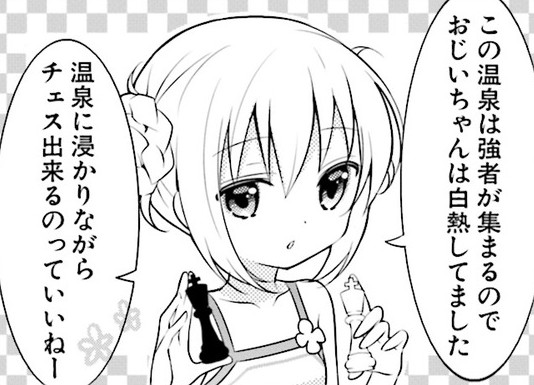
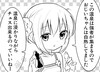
Strong players gathering at the hot spring is the reason. Grandpa getting fired up over chess is the result. 集まる stays non-past because strong players still gather there, even though the result is in the past.
Chino reports a plain fact about the place. That kind of reason, a circumstance anyone could observe, is where ので fits best.
Plain Forms in Polite Sentences
In polite conversation, the ので clause often stays in plain form. The politeness goes at the end of the sentence.
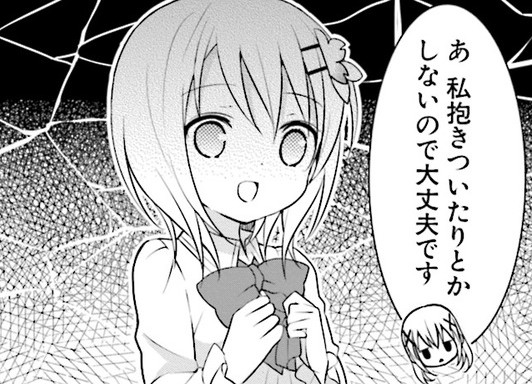
On the topic of Chino’s height, Rize says it would be funny if Chino outgrew Cocoa, as this would put Cocoa on the receiving end of affection. Cocoa is fine with this.
チノ:
「あ 私抱きついたりとかしないので大丈夫です」
“It will be all right because I won't do things like hugging you.”
Chino uses plain しない before ので and saves です for 大丈夫です at the end. Her reason is that she won’t do things like hug Cocoa, so Cocoa has nothing to worry about.
Formal speech puts the politeness inside the reason too. ますので and ですので are common in announcements and customer service.
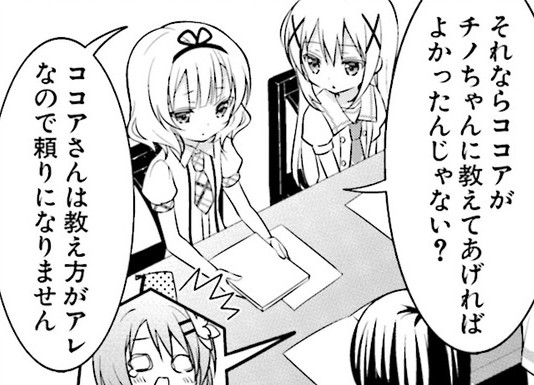
アレ, “that”, stands in for a criticism Chino would rather not say out loud. It works as a noun, so it takes なので. The result is 頼りになりません, “isn’t reliable”, as a tutor.
Leading into an Invitation or a Rule
ので often sets up an invitation, a request, or a rule. The reason comes across as a circumstance, and what follows sounds like a natural next step rather than a demand.
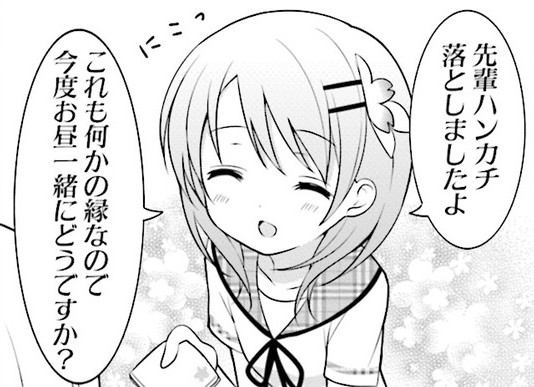
Example 1 of 2: Because this is chance encounter with 〜ので
Cocoa treats the dropped handkerchief as 何かの縁, a connection of some kind. なので turns that connection into the reason for her lunch invitation, so the invitation seems to follow from the encounter.
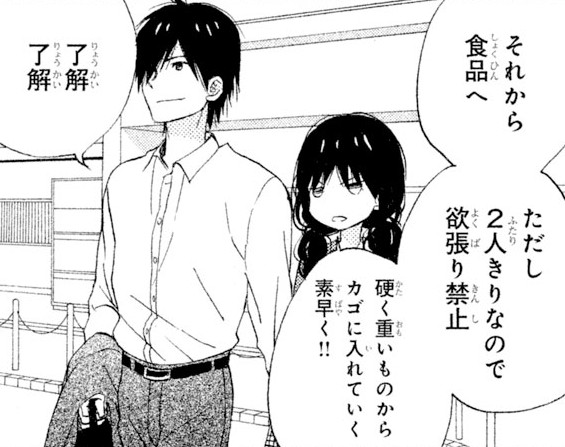
Example 2 of 2: Grocery shopping plan understood with 了解
Mao needs Hiro to go grocery shopping with her due to a sale that’s limited per customer. She tells him the plan is to start by grabbing everyday household items first.
真魚:
「それから食品へ」
“Then move on to food.”
「ただし2人きりなので欲張り禁止」
“But since it's just the two of us, no hoarding allowed!”
「硬く重いものからカゴに入れていく素早く!!」
“We'll fill the basket as we go, starting with the hard, heavy stuff. Fast!!”
Mao gives the circumstance first, 2人きりなので, “since it’s just the two of us”. Then comes the rule, 欲張り禁止, “no getting greedy”.
Leaving the Result Unsaid
A sentence can stop at ので. The listener fills in the result from context. This is a common way to make an excuse or hint at a request without stating it.
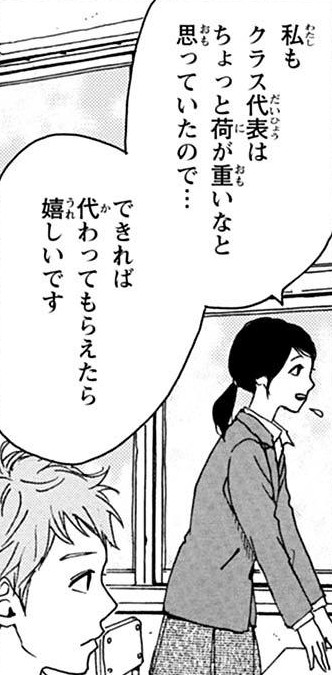
Takako and Azu tell their teacher they want to participate in the sports day relay race. The teacher points out that participants have already been decided, then one of the decided participants chimes in.
生徒:
「私もクラス代表はちょっと荷が重いなと思っていたので…」
“I was also thinking I have too much on my plate as class representative.”
「できれば代わってもらえたら嬉しいです」
“If possible, I'd be happy if someone could take my place.”
The student stops at 思っていたので…. The trailing ので lets the teacher draw the conclusion, and her next line says it outright. She would be glad if someone took her place.
から can end a sentence the same way. A trailing ので sounds more reserved.
Casual んで
In casual speech, ので often contracts to んで. 時間ないんで is a relaxed way to say 時間がないので.
Watch for なんで. After a noun, なんで can be the contraction of なので, as in 休みなんで, “since it’s my day off”. On its own or at the start of a question, なんで means “why”.
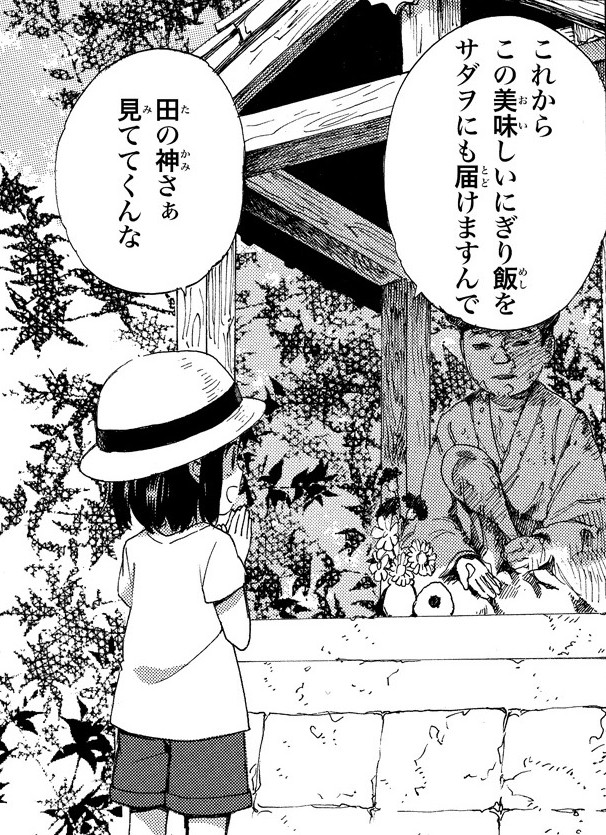
Hinata lived her first life as an old woman, and she misses her grandson Sadao, whom she hasn’t seen in over six years. She packs a lunch and sets out by bicycle for her old home to see him. After a long ride she notices it’s already noon, and she stops at a roadside shrine to the god of the rice fields.
ひなた:
「これからこの美味しいにぎり飯をサダヲにも届けますんで」
“I'm off to take these delicious rice balls to Sadao too,”
Hinata stops at a roadside shrine on her way to see her grandson Sadao. She tells the god of the fields she’ll take her rice balls to Sadao, then asks him to watch over her. 届けますんで keeps the polite ます but uses the casual んで, so the reason sounds respectful without being stiff.
の followed by です, では, or である starts with the same two kana as ので. It is a different pattern. The の is the explanatory の of 〜のだ, and で belongs to the copula.
知らなかったのです。
I didn’t know.
無理なのではないか。
Isn’t it impossible?
If ので is followed by す, しょう, した, は, or ある, it is almost always の plus a form of the copula.
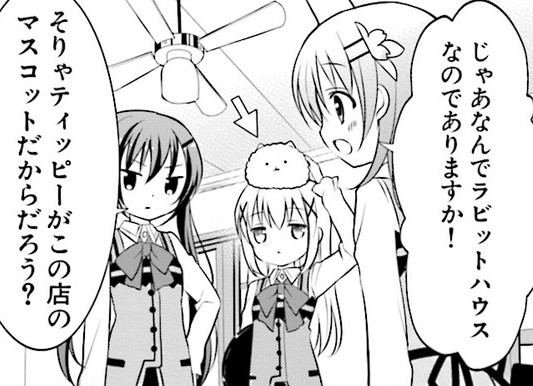
Cocoa’s なんでラビットハウスなのでありますか does not give a reason. なのであります is な + の + であります, a stiff, theatrical version of なのですか. なんで, “why”, is what asks for the reason.
Rize answers with だからだろう. ので could not replace から there, because ので cannot be followed by だろう.