Of all times to happen with 〜に限って
Grammar: Limit
〜に限って singles out an exceptional or badly timed case. It often translates as “of all times” or “on the one occasion when”.
Usage Notes
The pattern often links a particular occasion to an unwanted outcome. It can express complaint, irony, or frustration: the bad thing happened on exactly the wrong day.
It usually follows a noun for a time, situation, or condition.
Formation
View formation details
-
Noun + に + 限って
- 傘を持っていない日に限って雨が降った
- "Only on the day I didn't bring an umbrella, it rained."
Further Reading
- 〜に限って①(悪いことの発生)|日本語能力試験 JLPT N2 (edewakaru.com)
Examples
Lunch duty today of all days with 〜に限って
Grammar Explanation: Of all times to happen with 〜に限って
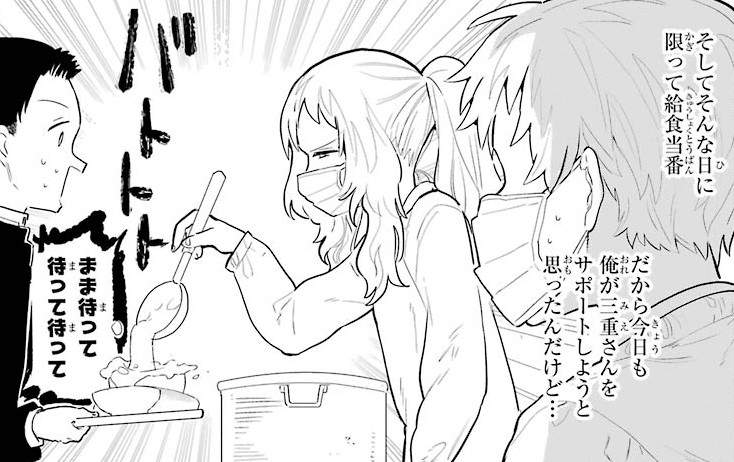
Komura and Mie have serving duty in the cafeteria. Normally this wouldn’t be an issue, except today Mie accidentally stepped on her glasses and broke them, and can barely see without them.
- 木村:
- 「そしてそんな日に限って給食当番」
- “Thus, on a day such as that (of all days), she has lunch duty.”
- 「だから今日も俺が三重さんをサポートしようと思っただけど…」
- “Therefore, I thought I'd support Mie today as well, but...”
- 男の子:
- 「まま待って待って待って」
- “W-w-wait, wait, wait!”