One's house with 〜んち
Grammar: Colloquial and Casual Speech » 〜んち
Casual speech contracts 「◯◯のうち」, “◯◯’s house”, to 「◯◯んち」. For example, 「田中さんのうち」 becomes 「田中さんち」.
Examples
Naru's place with 〜んち
Grammar Explanation: One's house with 〜んち
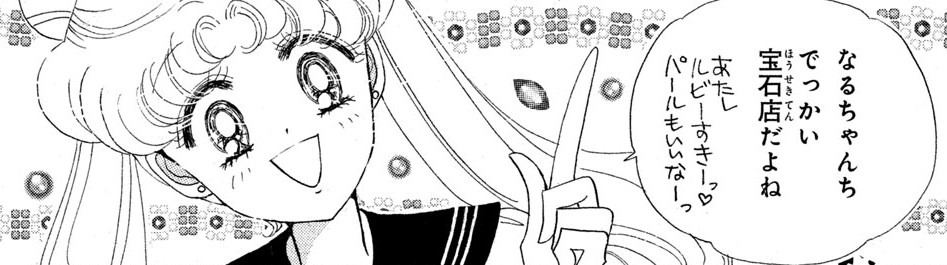
A lunchtime conversation about recent jewelry store robberies gives way to talk about jewelry and the kinds Usagi and her friends would like to own.
- うさぎ:
- 「なるちゃんちでっかい宝石店だよね。あたしルビーすきーっ♡ パールもいいなーっ」
- “Naru 's place is a huge jewelry store, isn't it? (Me, I like rubies. Pearls are also nice.)”
Sacchan's place with 〜んち
Grammar Explanation: One's house with 〜んち
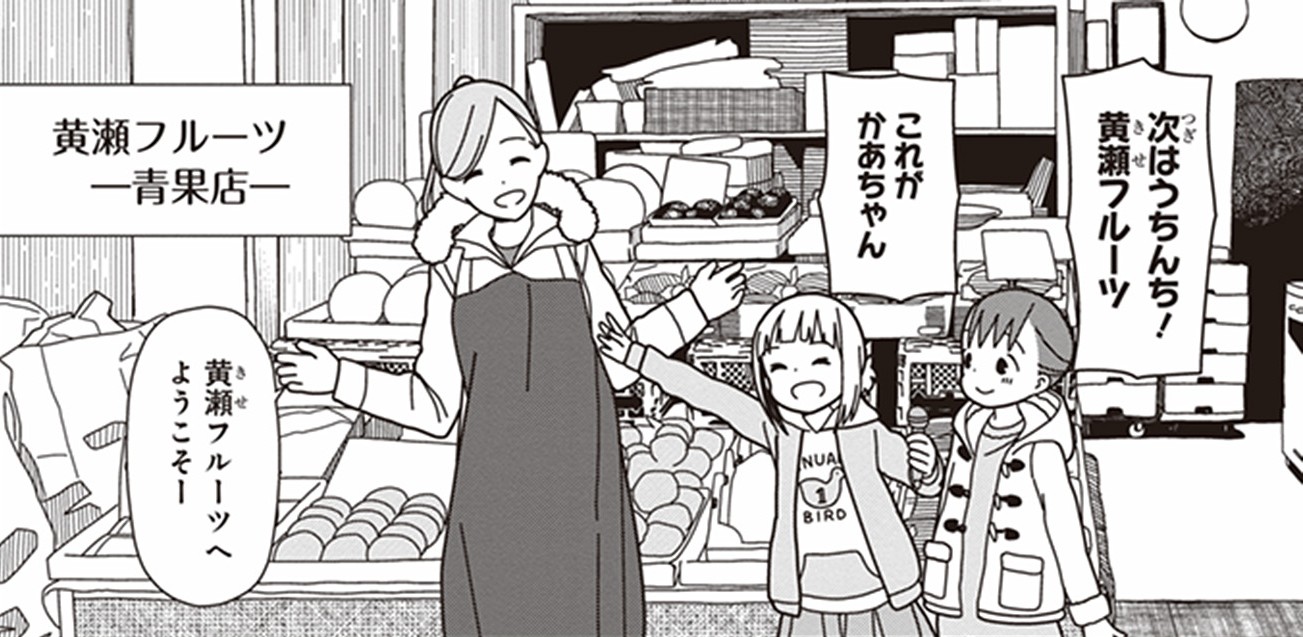
Sacchan and her friends decide to make a movie about the district they live in. They stop by Sacchan’s mother’s shop to film a scene.
- さっちゃん:
- 「次はうちんち!黄瀬フルーツ。これがかあちゃん」
- “Next is my place! Kise Fruits. This is my mom.”
- お母さん:
- 「黄瀬フルーツへようこそー」
- “Welcome to Kise Fruits.”
Yui's grandmother's place with 〜んち
Grammar Explanation: One's house with 〜んち
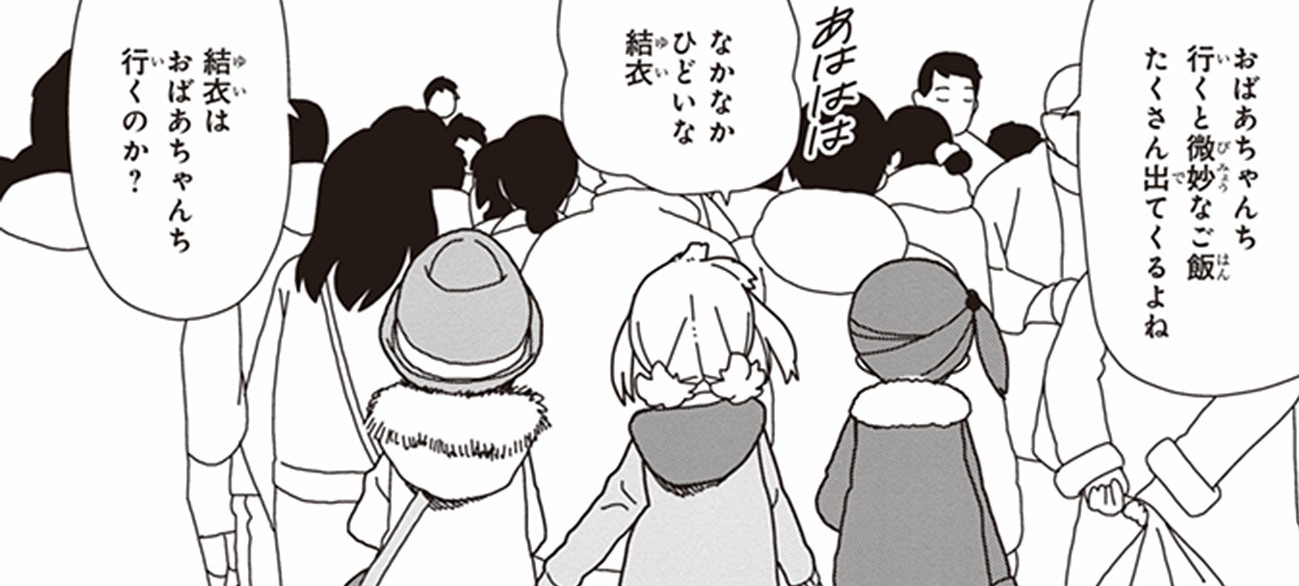
As the end of the year approaches, Yui and her friends discuss which New Year foods they like and dislike.
- 結衣:
- 「おばあちゃんち行くと微妙なご飯たくさん出てくるよね」
- “When I go to my grandma's house, a lot of not-so-good food is served.”
- さっちゃん:
- 「なかなかひどいな結衣」
- “That's pretty bad, Yui.”
- 琴葉:
- 「結衣はおばあちゃんち行くのか?」
- “Are you going to your grandma's house, Yui?”
