Permission to do with 〜てもいい
Grammar: Permission » 〜てもいい
〜てもいい says that an action is okay. As a question, it asks for permission, “can I?” or “is it okay if I…?” As a statement, it gives permission, “you can” or “you may”. 座ってもいい? means “can I sit down?”
The pattern is the て-form, then も, then いい. ても means “even if”, so the literal sense is “even if you sit, it’s fine”. Casual speech often drops the も, as in 入っていい?
A negative before ても turns permission into 〜なくてもいい, “you don’t have to”. 急がなくてもいい means “you don’t have to hurry”.
Usage Notes
〜てもいい? is a casual question. 〜てもいいですか is the everyday polite version, and 〜てもよろしいですか is politer still. 大丈夫 can replace いい and sounds reassuring. かまわない, “I don’t mind”, says there’s no objection and also appears in writing.
As a statement about the speaker’s own action, 〜てもいい can make an offer. 手伝ってもいいよ means “I can help, if you want”. With けど or かな at the end, the offer sounds tentative, and in the right context, grudging.
〜てもいいんじゃない? makes a suggestion. もう少し休んでもいいんじゃない? means “you could rest a bit more, couldn’t you?”
English “can” covers both permission and ability, but 〜てもいい is about permission, not ability. 泳いでもいい means “you’re allowed to swim”. To say someone is able to swim, Japanese uses the potential form, 泳げる.
Formation
View formation details
- Verb (て-form) + も + いい
- ここに座ってもいい?
- "Can I sit here?"
- Verb (て-form) + も + いいですか
- 写真を撮ってもいいですか
- "May I take a picture?"
- Verb (て-form) + いい
- 入っていいよ
- "You can come in."
- Note: Casual speech often drops も.
- Verb (ない-form, ない → なくて) + もいい
- 急がなくてもいい
- "You don't have to hurry."
- Note: なくていい, without も, is also common.
- い-adjective (い → くて) + もいい
- 少しなら高くてもいい
- "It's okay if it's a little expensive."
- Noun + でもいい
- 明日でもいいよ
- "Tomorrow is fine too."
- Note: な-adjectives work the same way, as in 下手でもいい, "it's fine if you're bad at it".
- Noun + でいい
- お茶でいい
- "Tea is fine."
- Note: でいい accepts an option. がいい picks it as the one you want.
- Verb (て-form) + も + かまわない・大丈夫
- 夜に電話してもかまわないよ
- "It's fine to call at night."
- 〜てもいい + noun
- 使ってもいい部屋
- "a room you're allowed to use"
Asking for Permission
The て-form plus も means “even if you do it”. いい adds the verdict, “it’s fine”. As a question, 〜てもいい? asks whether the listener will allow something.
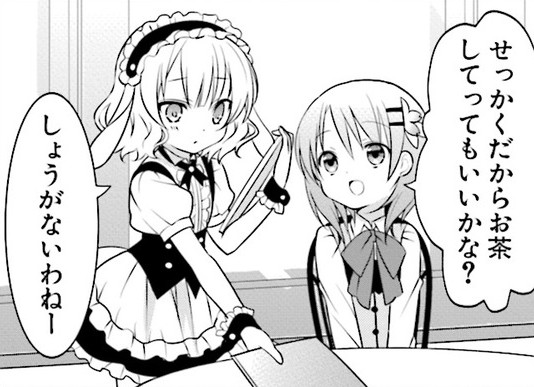
Following a misunderstanding, Cocoa and her friends ended up at the tea house where Syaro works.
- ココア:
- 「せっかくだからお茶してってもいいかな?」
- “Since we have the chance, would it be okay if we had some tea ?”
- シャロ:
- 「しょうがないわねー」
- “I guess it can't be helped.”
Cocoa and her friends have ended up at the tea shop where Syaro works. お茶していく means stopping in for tea, and casual speech shortens していって to してって. かな turns the question into “I wonder if it would be okay”, which sounds less pushy than a bare てもいい?
Syaro doesn’t answer with いいよ. しょうがないわね, “I guess it can’t be helped”, says yes while making a show of reluctance.
Polite speech adds です, as in 入ってもいいですか, “may I come in?”
Dropping も with 〜ていい
Casual speech often drops the も. 入っていい? asks the same thing as 入ってもいい?, but it sounds more direct. Between friends asking a small favor, ていい is common. When the request asks more of the listener, speakers tend to keep the も.
Example 1 of 2: Want you to let me explain with 〜させてほしい
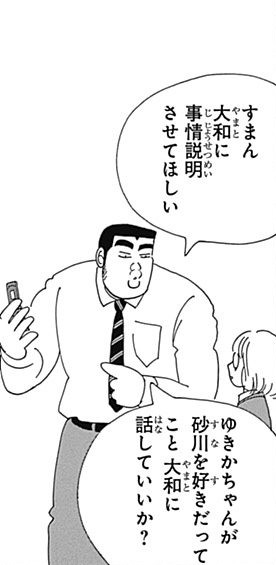
Takeo tries helping the girl who likes his friend Sunakawa. When Takeo receives a call from his own girlfriend, he realizes he’s alone with another girl.
- 猛男:
- 「すまん大和に事情説明させてほしい」
- “Sorry, I'd like you to let me explain the situation to Yamato.”
- 「ゆきかちゃんが砂川を好きだってこと大和に話していいか?」
- “Is it all right if I tell Yamato you like Suna?”
Takeo is helping Yukika, a girl who likes his friend Sunakawa. When his girlfriend Yamato calls, he realizes he’s alone with another girl. Before he explains anything to Yamato, he checks with Yukika. 話していいか? asks whether he may tell Yamato her secret. A question that ends in plain か sounds blunt. It’s a lot to ask, but Takeo doesn’t soften it with も, which fits his plain-spoken way of talking.
Example 2 of 2: No excuse to laze around with 〜わけじゃない
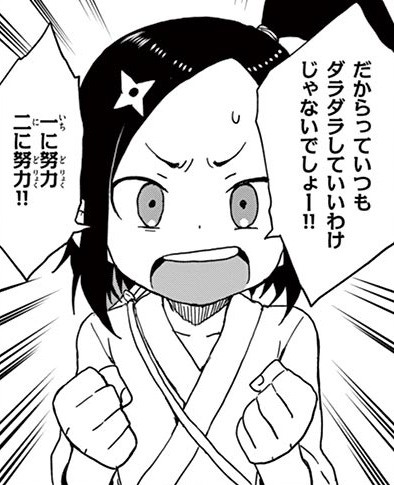
The teacher has declared a day of team-against-team battles. Benisumomo, a senior on Touwata’s team, challenges Tsubaki’s team, and Tsubaki accepts. Sazanka whispers that they should pick another team, since Touwata never gives up, Mizubashou is too good at setting traps, and Benisumomo is extremely strong. Benisumomo overhears and agrees: “Well, I am a genius.”
- トウワタ:
- 「だからっていつもダラダラしていいわけじゃないでしょー!!」
- “That doesn't mean you get to laze around all the time!!”
- 「一に努力二に努力!!」
- “Effort first, effort second!!”
Benisumomo has just called herself a genius, and Touwata, her junior, objects. ダラダラしていい is “it’s okay to laze around”, with the も dropped in heated casual speech. Touwata wraps it in わけじゃない to deny that the permission exists.
Giving Permission
As a statement, 〜てもいい gives permission. 帰ってもいいよ means “you can go home”. Giving permission this way assumes the speaker is in a position to allow it, like a teacher or a parent. Toward a boss or a customer, どうぞ is the safer answer.
Answers to a request are usually short. いいよ and どうぞ say yes. だめ says no, and ちょっと… trails off to refuse without saying so.
Offering with 〜てもいい
As a statement about the speaker’s own action, 〜てもいい can become an offer. 手伝ってもいいよ is “I can help, if you want”. The speaker treats their own help as something they would allow, so the offer can sound grudging or a little superior.
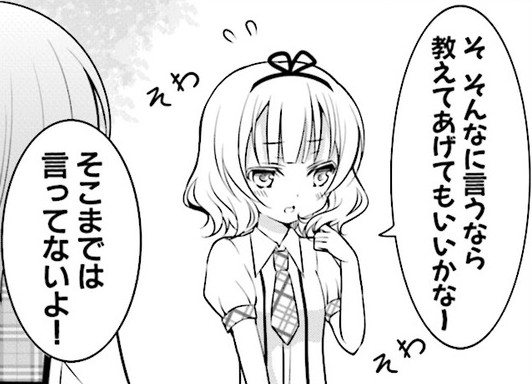
When Syaro is invited to study at the library with the others, she considers Rize may praise her for helping the others.
- シャロ:
- 「そ そんなに言うなら教えてあげてもいいかなー」
- “I-if you insist that much, maybe I could teach you if that's okay.”
- ココア:
- 「そこまでは言ってないよ!」
- “I didn't say all that!”
Syaro has been invited to study at the library with the others, and she likes the idea of Rize seeing her help. 教えてあげる already presents teaching as a favor. Adding てもいいかなー makes it “I suppose I could teach you”.
Not Having to with 〜なくてもいい
With a negative before ても, the meaning becomes “it’s fine even if you don’t”, or “you don’t have to”. 行かなくてもいい means “you don’t have to go”. 大丈夫 can stand in for いい.
Example 1 of 2: Visiting at every break with 〜ごとに
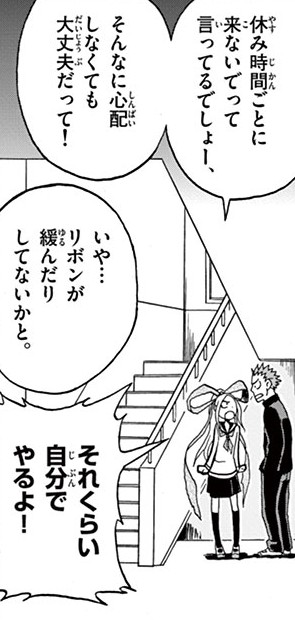
Due to concern about his sister’s ribbon, which seals away her need to attack people for their blood, Kenji takes every opportunity he can to check up on her at school.
- キョーコ:
- 「休み時間ごとに来ないでって言ってるでしょー、そんなに心配しなくても大丈夫だって!」
- “I'm telling you, you don't need to check up on me every break period. I'll be fine even without you worrying about me!”
- ケンジ:
- 「いや… リボンが緩んだりしてないかと。」
- “No, I'm just checking whether your ribbon's come loose.”
- キョーコ:
- 「それくらい自分でやるよ!」
- “I can handle that much on my own!”
Kyoko wears a ribbon that seals away her urge to attack people for their blood. Her brother Kenji worries it will come loose, so he checks on her at every break. 心配しなくても大丈夫 says she’ll be fine without his worrying. The だって at the end works like “I’m telling you”.
Example 2 of 2: Creating a report with 作成
Like the permission form, なくてもいい often loses its も. Casual speech says なくていい.
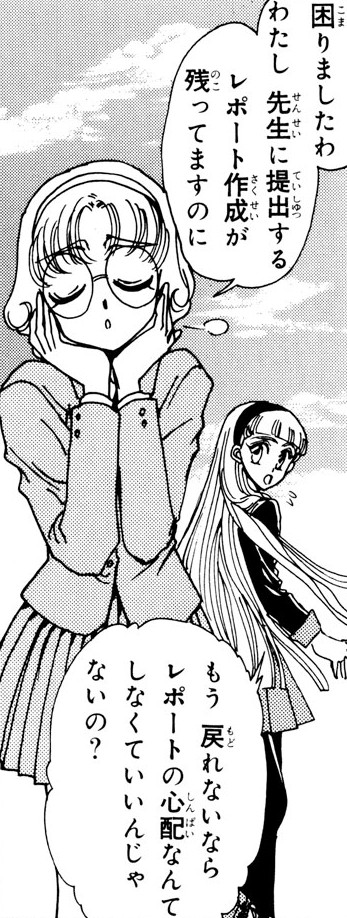
Fuu finds herself spirited away to another world, along with two other girls. A wizard appears before them, saying they cannot return home until they accomplish a specific goal.
- 風:
- 「困りましたわ。 わたし 先生に提出するレポート作成が残ってますのに」
- “Oh dear. I've still got to write that report to hand in to the teacher...”
- 海:
- 「もう 戻れないならレポートの心配なんてしなくていいんじゃないの?」
- “If we can't go back anyway, isn't there no point worrying about the report?”
Fuu, Umi, and Hikaru have been pulled into another world, and a wizard has told them they can’t go home until they complete a task. Fuu still frets about a report she owes her teacher. Umi points out that if they can’t go back, the report is no reason to worry. んじゃないの? turns her answer into a suggestion, “don’t you think?”
English “must not” and “don’t have to” mean different things, and Japanese keeps them apart too. 〜てはいけない forbids an action, and 〜なくてもいい makes it optional.
As a question, 〜なくてもいいですか asks permission not to do something. 行かなくてもいいですか means “is it okay if I don’t go?”
なくてもいい can also complain about something already done. そんな言い方しなくてもいいじゃない means “you didn’t have to say it like that”.
Nouns with でもいい and でいい
Nouns and な-adjectives take でも, the て-form of the copula plus も. 明日でもいい means “tomorrow is fine too”. い-adjectives take くても, as in 高くてもいい, “it’s fine if it’s expensive”.
Example 1 of 4: Bad at carbonated drinks with 炭酸
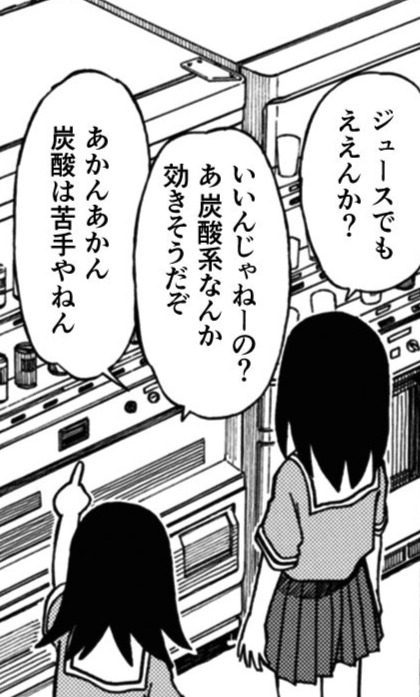
A case of the hiccups sends Ayumu down the path of trying each of her friends’ potential solutions. Tomo suggests drinking water as a cure.
- 歩:
- 「ジュースでもええんか?」
- “Is juice okay too?”
- とも:
- 「いいんじゃねーの?あ炭酸系なんか効きそうだぞ」
- “Yeah, that should be fine, right? Actually, carbonated stuff might work even better.”
- 歩:
- 「あかんあかん炭酸は苦手やねん」
- “No no, I can't do carbonated drinks. I'm bad with them.”
Ayumu has the hiccups, and Tomo suggests drinking water. Ayumu asks whether juice would work too. ええ is the Kansai dialect word for いい, so ジュースでもええんか? is standard ジュースでもいいのか? Here でも offers juice as a substitute for the water, a use also covered in 〜でも. Tomo answers with standard いい, in a rough いいんじゃねーの?, “it’s fine, isn’t it?”
Example 2 of 4: Bedding by the window with 窓際
Without も, でいい says that one option will do.
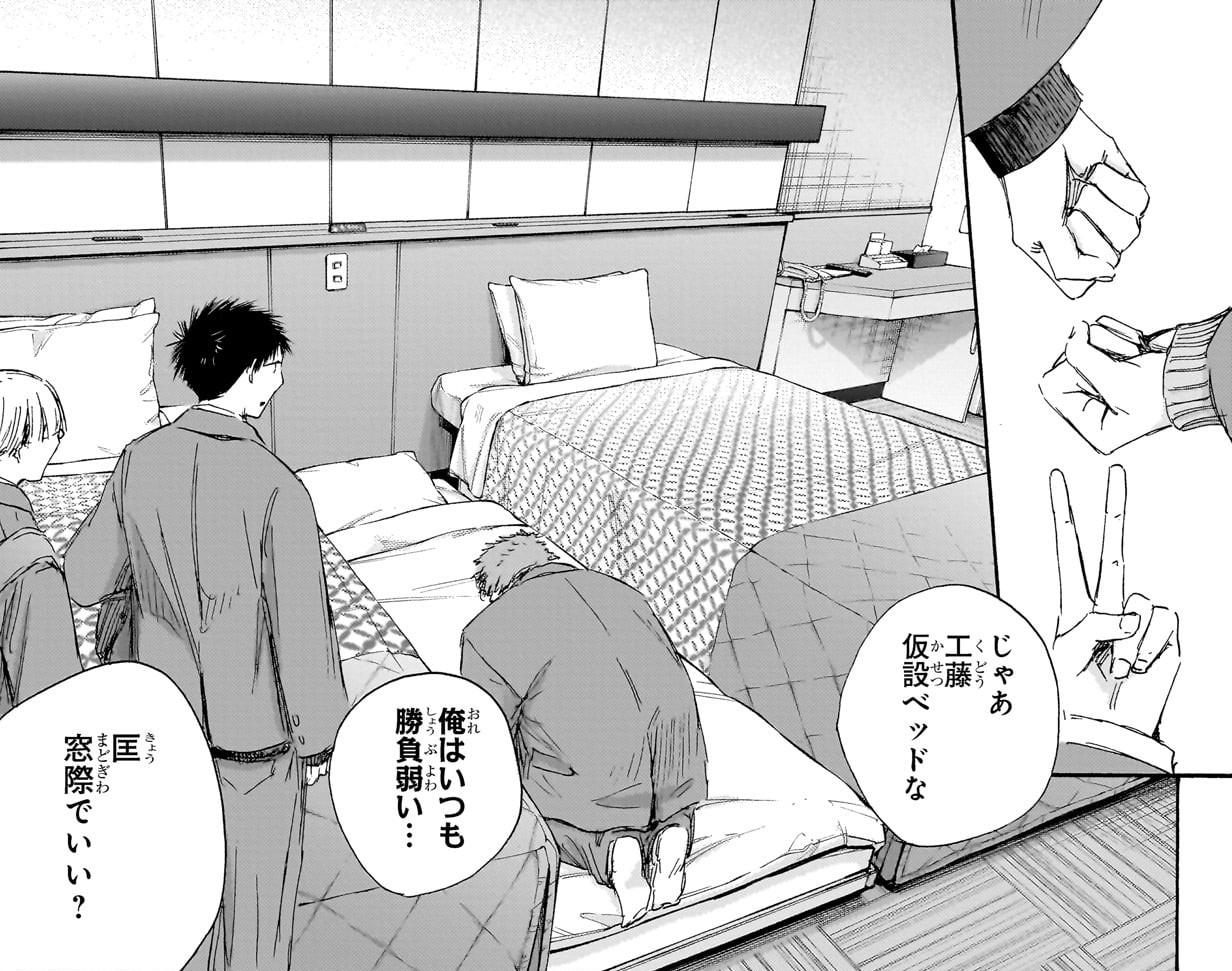
Taiki and his classmates are on the arrival day on their senior school trip. Taiki, Kyou, and Kudou are sharing a room, but with only two beds, they play a game of rock, paper, scissors to decide who sleeps on the floor. Kudou loses.
- ◯:
- 「じゃあ 工藤 仮設ベッドな」
- “All right then, Kudou, the makeshift bed is yours.”
- 工藤:
- 「俺はいつも勝負弱い…」
- “I always choke in competitions...”
- たいき:
- 「匡 窓際でいい?」
- “Kyou, is the spot by the window okay?”
Taiki, Kyou, and Kudou are sharing a room on their school trip, but there are only two beds. Kudou loses at rock, paper, scissors and gets the makeshift bed. Taiki then checks with Kyou. 窓際でいい? asks whether the bed by the window is okay with him.
Example 3 of 4: 私 while running a marathon with a classmate
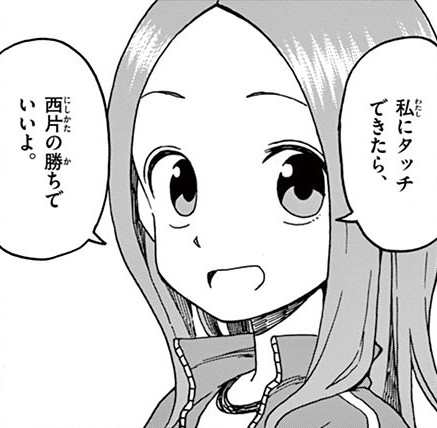
During a class marathon, Takagi challenges Nishikata to a competition.
- 高木:
- 「私にタッチできたら、西片の勝ちでいいよ。」
- “If you can tag me, you win.”
During a class marathon, Takagi challenges Nishikata. If he can tag her, 西片の勝ちでいいよ, “you can have the win”. でいいよ sets the terms of the challenge. Setting the bar at a single tag shows she isn’t worried about losing.
Example 4 of 4: Leave the vegetables to me with 野菜を切る
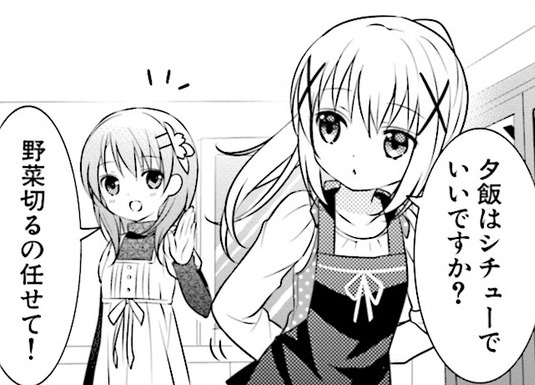
Cocoa has just moved in as a lodger with Chino’s family at the Rabbit House café. After closing, she suggested the two of them make dinner together. Chino said she could manage on her own, but Cocoa joined her in the kitchen.
- チノ:
- 「夕飯はシチューでいいですか?」
- “Is stew okay for dinner?”
- ココア:
- 「野菜切るの任せて!」
- “Leave cutting the vegetables to me!”
Chino and Cocoa are about to cook dinner together. Chino checks the menu with シチューでいいですか?, “is stew okay?” でいい asks whether stew will do, and ですか keeps Chino’s usual polite tone.
でいい accepts an option without calling it the best one. お茶でいい means “tea is fine”, and お茶がいい means “I’d like tea”. Answering an offer with でいい can sound like settling for second best.
Describing a Noun with てもいい
〜てもいい can come before a noun to describe it. 使ってもいい部屋 is “a room you’re allowed to use”.
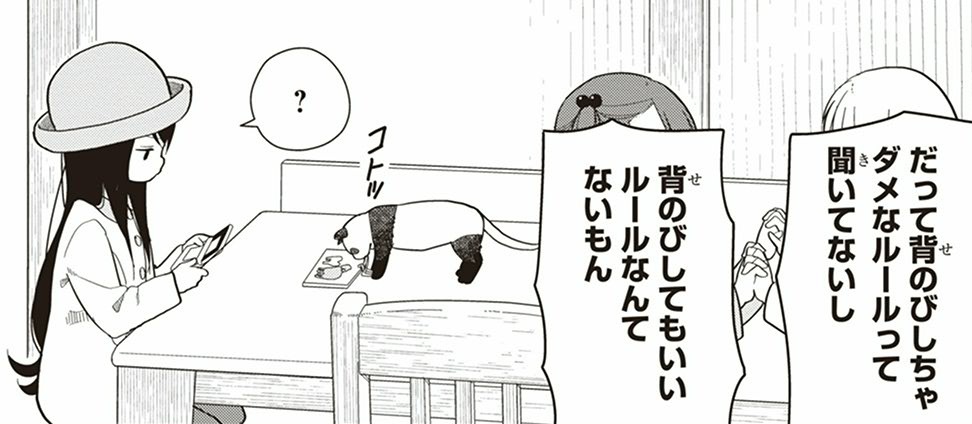
Standing back to back, Sacchan is slightly taller than Yui. Yui questions whether Sacchan is standing tip-toed, which Sacchan denies, but Yui looks and sees that Sacchan is.
- さっちゃん:
- 「だって背のびしちゃダメなルールって聞いてないし」
- “You say that, but I didn't hear a rule against tiptoes.”
- 結衣:
- 「背のびしてもいいルールなんてないもん」
- “There's no way there'd be a rule allowing tiptoes!”
Sacchan and Yui are comparing heights back to back, and Yui catches Sacchan on tiptoe. Sacchan says nobody told her about a 背のびしちゃダメなルール, “a rule against standing on tiptoe”. Yui turns it around. There’s no 背のびしてもいいルール, “rule that says tiptoe is allowed”, either. Between them, the two lines use てもいい and ちゃだめ as opposites.
Other Words in Place of いい
Other words can follow ても in place of いい, and they change the tone.
- 見てもいい?
Can I look?
- 見ても大丈夫?
Is it okay if I look?
- 見てもかまいませんか。
Do you mind if I look?
- 見てもよろしいですか。
- May I look?
大丈夫 checks that nothing will go wrong, and 〜ても大丈夫ですか is fine in polite speech. かまわない, “I don’t mind”, and its polite form かまいません appear in writing as well as speech. よろしい is a formal word for いい, and 〜てもよろしいでしょうか is a standard question from shop staff. As a statement, 帰ってよろしい sounds like a superior giving permission. Kansai speakers say ええ, as in 見てもええ?
To ask someone else to do something, polite speech often uses 〜てもらってもいいですか. 書いてもらってもいいですか literally asks “is it okay if I have you write it?” It works as a request, “could you write it?”, even though it has the shape of a permission question.
Comparing Permission, Prohibition, and Obligation
〜てもいい belongs to a set of patterns built on the て-form. ても, “even if you do”, pairs with いい. ては, “if you do”, pairs with いけない or だめ.
| Pattern | Example | Meaning |
|---|---|---|
| 〜てもいい | 帰ってもいい | You can go home |
| 〜なくてもいい | 帰らなくてもいい | You don’t have to go home |
| 〜てはいけない | 帰ってはいけない | You must not go home |
| 〜なくてはいけない | 帰らなくてはいけない | You have to go home |
The negative versions flip the meaning. なくてもいい, “fine even if you don’t”, makes something optional. なくてはいけない, “bad if you don’t”, makes it required, the same meaning as 〜なければならない.
In conversation, the patterns answer each other. A request with 〜てもいい? is often refused with 〜ちゃだめ, and a plea with 〜ちゃだめ?, “can’t I?”, is often answered with いいよ.
Further Reading
- Saying something is ok to do or not do, Tae Kim's Guide to Learning Japanese (guidetojapanese.org)
- てもいい, Bunpro (bunpro.jp)
- How to use verb + ても, Maggie Sensei (maggiesensei.com)
Related Grammar
- Must not do with 〜てはだめだ
- The opposite answer. 〜てもいい? asks for permission, and だめ refuses it.
- Should not do with 〜てはいけない
- ては, "if you do", plus いけない forbids an action. ても, "even if you do", plus いい allows it.
- Must do with 〜なければならない
- The opposite of なくてもいい. なければならない says you have to, and なくてもいい says you don't.
- Even if with 〜ても
- The ても in てもいい is this "even if".
- Please let me with 〜させてください
- Asks for permission by asking the listener to let you do something.
- Doing for someone with 〜てあげる
- 〜てあげてもいい offers a favor and can sound grudging.
- Wondering with かな
- てもいいかな softens a request to "I wonder if it'd be okay".
- Offering an example with 〜でも
- Noun + でもいい often offers one option among others, as in ジュースでもいい?
- Able to do with 〜れる・〜られる
- The potential form says someone is able to do something. 〜てもいい says they're allowed to.