Precisely because of with 〜からこそ
Grammar: Reason and Cause » 〜からこそ
〜からこそ emphasizes a reason, like “precisely because” or “it is because … that …”. It combines から, which gives a reason, with こそ, which singles something out for emphasis.
The speaker presents that reason as decisive. 基本があるからこそ奇襲が活きる means “surprise attacks work precisely because you have solid fundamentals”.
Usage Notes
Use からこそ to stress what makes a result possible or why you choose an action. It can also turn an apparent disadvantage into a reason to act. The emphasis belongs to the speaker’s explanation, even when the result is a fact.
The reason can be past or negative. 失敗したからこそ means “precisely because I failed”, and 知らないからこそ means “precisely because I don’t know”.
The result need not be pleasant. 信頼していたからこそ、裏切られたときの傷は深かった means “The betrayal hurt deeply precisely because I had trusted them”.
The sentence often ends with のだ or its conversational form んだ, but neither is required. Sentence-initial だからこそ means “that is precisely why” and points back to a reason already mentioned.
Formation
View formation details
- Verb (plain form) + からこそ
- 失敗したからこそ、学べたことがある。
- "There are things I learned precisely because I failed."
- い-adjective + からこそ
- 忙しいからこそ、休む時間を大切にしたい。
- "Precisely because I'm busy, I want to value my rest time."
- Noun / な-adjective + だからこそ
- 親友だからこそ、何でも話せる。
- "I can talk about anything precisely because you're my best friend."
- Note: Use だ in the affirmative nonpast. Conjugate it for other forms, as in 親友だったからこそ or 親友ではないからこそ.
- だからこそ + Sentence
- 人生は短い。だからこそ、後悔しないように生きたい。
- "Life is short. That is precisely why I want to live without regrets."
Emphasizing the Decisive Reason
からこそ singles out the reason the speaker considers essential to the result. It can suggest “without this, the result wouldn’t be possible”. The point is to stress that reason, rather than list every contributing cause.
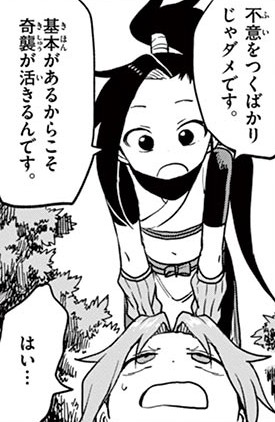
During a training session, Tsubaki quickly subdues Asagao. Sazanka uses this opportunity to launch a surprise attack, only for Tsubaki to anticipate it and take her down as well.
- ツバキ:
- 「不意をつくばかりじゃダメです。」
- “You can't rely just on surprise attacks.”
- 「基本があるからこそ奇襲が活きるんです。」
- “It's precisely from having fundamentals that surprise attacks become effective.”
- サザンカ:
- 「はい…」
- “Yeah...”
Tsubaki says that surprise alone is not enough. 基本がある, having a command of the basics, is what makes 奇襲が活きる, “surprise attacks become effective”, possible. からこそ puts the emphasis on those fundamentals.
The sentence ends with んです, the polite form of conversational んだ. It presents the statement as an explanation of why surprise attacks work.
Explaining a Choice or Giving Advice
The second clause can describe what someone wants or chooses to do. からこそ stresses why that action matters to the speaker.
- 大切な友達だからこそ、本当のことを伝えたい。
- I want to tell you the truth precisely because you’re a dear friend.
It can also support advice or a recommendation. The reason explains why the speaker thinks the advice is worth following.
- 忙しいからこそ、休む時間を作ったほうがいい。
- Precisely because you’re busy, you should make time to rest.
Keep the emphasis on the reason. からこそ does not itself express a duty or promise. からには, “now that” or “given that”, more often leads into what someone is determined or expected to do.
Turning an Objection into a Reason
Something that looks like a reason against an action can become the very reason to do it. からこそ keeps the meaning “because”. The surprise comes from the connection between the reason and the result.
- 難しいからこそ、挑戦したい。
- I want to try it precisely because it’s difficult.
The difficulty itself makes the challenge appealing. “Even though it’s difficult” would describe acting despite that difficulty. Other uses of からこそ need no such reversal.
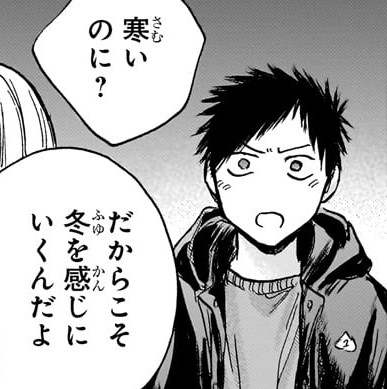
As Taiki arrives home, Chinatsu is heading out for a walk.
- 大喜:
- 「寒いのに?」
- “Even though it's cold?”
- 千夏:
- 「だからこそ 冬を感じにいくんだよ」
- “That's exactly why; I'm going to feel the winter.”
Taiki’s 寒いのに?, “even though it’s cold?”, questions Chinatsu’s decision to go out. Chinatsu accepts the cold and makes it her reason for walking. だからこそ points back to that cold, and 冬を感じにいく gives her purpose, “go out to experience winter”.
Referring Back with だからこそ
At the beginning of a sentence, だからこそ refers back to a reason in the previous statement. That statement can be your own or someone else’s, as in Chinatsu’s reply above.
- この仕事は経験が必要です。だからこそ、あなたに頼みたいんです。
- This job requires experience. That's precisely why I want to ask you to do it.
Here, experience is a straightforward reason to choose this person. だからこそ adds emphasis without reversing an objection. Compare plain だから, “that’s why” or “so”, which states the connection without singling the reason out as strongly.
Further Reading
- 表現意図 -理由-, Japan Foundation (jpf.go.jp)
- こそ, Japan Foundation teaching materials (kyozai.jpf.go.jp)
Related Grammar
- Objective reason with 〜ので
- ので presents a reason as a circumstance. Use からこそ when you want to emphasize the reason.
- Reasoning with 〜のだ
- Sentences with からこそ often end in explanatory のだ or んだ.