だろう and its polite form でしょう mark a statement as the speaker’s guess. English often renders them as “probably”, “must be”, or “I suppose”. The speaker believes the statement but has not confirmed it.
With rising intonation, the same forms ask the listener to agree, much like “right?” or “isn’t it?”. Casual speech often shortens them to だろ and でしょ.
だろう is the conjectural form of the copula だ, and でしょう is the conjectural form of です. Both end in the same う as the volitional form, but here it marks a guess rather than an intention.
Usage Notes
Attach だろう or でしょう to the plain form of a verb or い-adjective. A noun or な-adjective takes them directly, without だ, as in 学生だろう, “is probably a student”. でしょう normally follows plain forms too, even in a polite sentence, so 行くでしょう is the usual form rather than 行きますでしょう.
Intonation separates the two main uses. Falling intonation makes a guess, and rising intonation asks for agreement. In manga, a question mark usually signals the second use. Asking for agreement is the more common of the two in conversation.
でしょ is common in casual speech from all kinds of speakers. だろ sounds blunter, and in manga it comes mostly from male characters and characters with a rough way of talking.
Formation
View formation details
Verb (plain form) + だろう・でしょう
明日は雨が降るでしょう
"It will probably rain tomorrow."
Note: Past forms work the same way, as in 降っただろう.
い-adjective + だろう・でしょう
山の上はもっと寒いだろう
"It's probably even colder at the top of the mountain."
Noun or な-adjective + だろう・でしょう
この時間なら図書館は静かだろう
"The library is probably quiet at this hour."
Note: Do not add だ. A past guess uses だった, as in 静かだっただろう.
Question word + だろう・でしょう
あの人は誰だろう
"I wonder who that person is."
Plain form + でしょ?・だろ?
明日、来るでしょ?
"You're coming tomorrow, right?"
Note: Rising intonation asks the listener to agree.
Making a Guess
Sentence-final だろう marks a statement as the speaker’s guess. Depending on how sure the speaker sounds, English renders it as “probably”, “must”, or “I bet”.
Adverbs often show the level of confidence. きっと〜だろう is a confident guess, and たぶん〜だろう is a looser one.
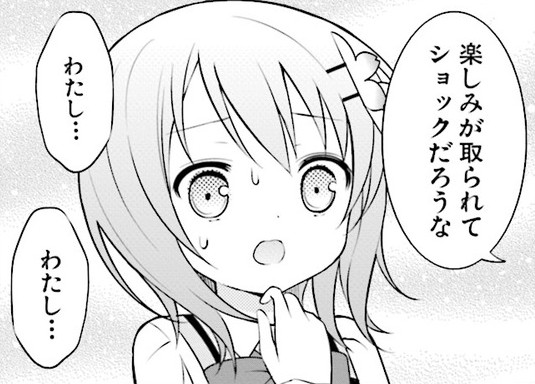
Rize can’t know for sure how Chino feels, so she presents the shock as her own inference. Japanese usually avoids stating another person’s feelings as plain fact, and a guessing form such as だろう fits that habit. The final な makes the line sound like Rize is reasoning it through out loud for Cocoa.
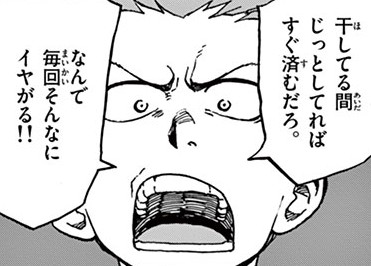
Example 2 of 6: Keeping still while her ribbon dries with 〜間
Kyouko’s ribbon needs to be washed. Since she is a jiāngshī (vampire), she will uncontrollably attack people to drink their blood when her ribbon is removed. For this reason, her brother tries to tie her up with a rope. Kyouko hides in the bathroom, then sneaks out the window only to find Kenji waiting outside.
ケンジ:
「干してる間じっとしてればすぐ済むだろ。」
“While it's drying, if you'd just keep still it'd be over soon.”
Kyouko is a jiangshi, and without her ribbon she bites people. The ribbon needs washing, so she slipped out the bathroom window to avoid being tied up, and Kenji was waiting outside. すぐ済むだろ, “it’ll be over soon”, is a confident guess. With falling intonation, casual だろ sounds sure of itself.
Example 3 of 6: Worth the effort to build a garden with 〜甲斐がある
Example 3 of 6
Polite でしょう makes the same kind of guess. A flat, sentence-final でしょう prediction sounds like a weather forecaster or other expert, as in 明日は雨でしょう, “it will probably rain tomorrow”. In everyday conversation, a polite guess more often comes out as 〜だろうと思います.
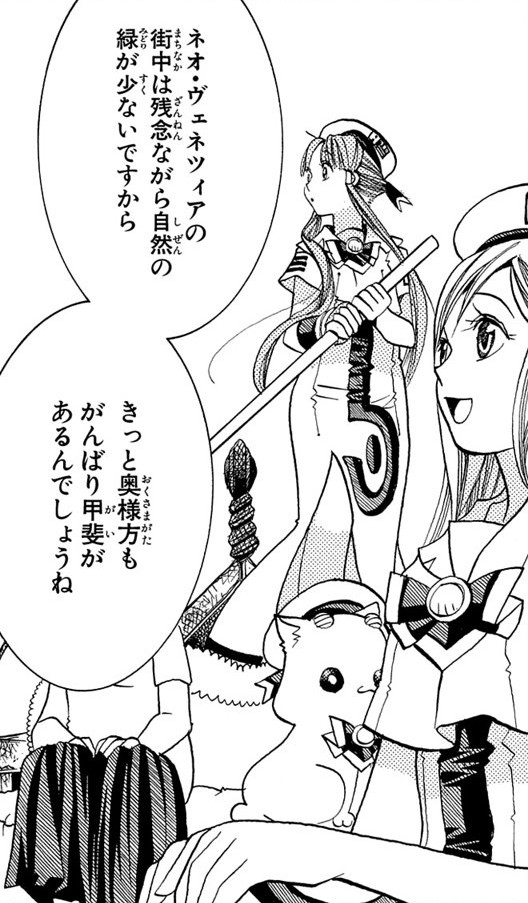
A customer asks Akari to stop the gondola as she sees a house with a fantastic flower garden. The customer asks if it’s a special place, to which Alicia explains it’s an ordinary house. She says the flower bed and gardening are a barometer to measure the caliber of the woman of the household.
アリシア:
「ネオ・ヴェネツィアの街中は残念ながら自然の緑が少ないですから」
“Since there's regrettably little natural greenery in the city of Neo-Venezia...”
「きっと奥様方もがんばり甲斐があるんでしょうね」
“...surely the housewives also find it worth the effort.”
A customer asked Akari to stop the gondola beside a house with a beautiful flower garden. Alicia explains that a garden shows off the skill of the woman who keeps it. Green spaces are rare in Neo-Venezia, so she guesses the housewives find the work worthwhile. きっと makes it a confident guess, and ね invites the customer to agree.
Example 4 of 6: Left to waste away in the Room of Darkness with 〜ばかりだ
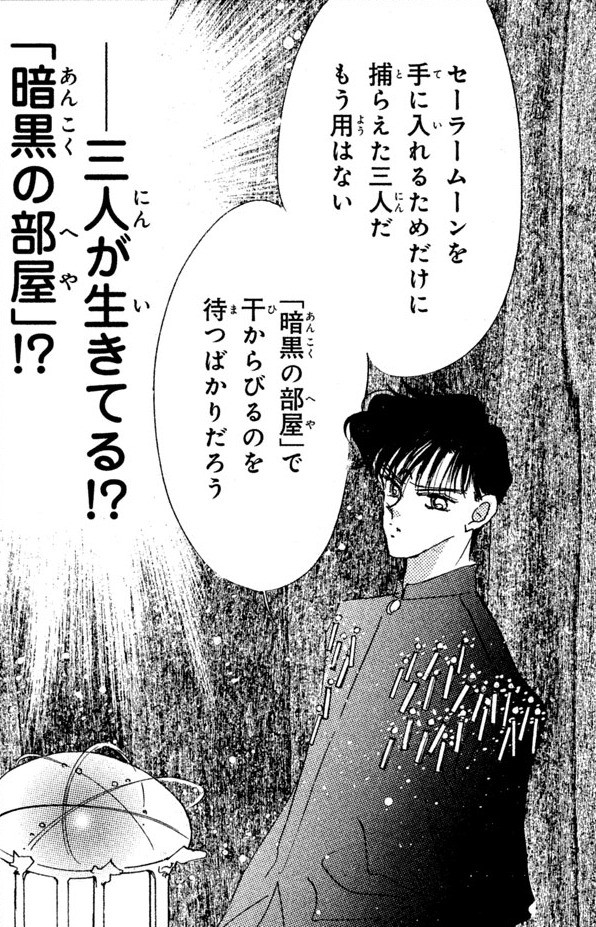
Sailormoon is searching the Black Moon clan’s maze-like castle for Mars, Mercury, and Jupiter, who were taken captive. She sensed them for an instant, then lost them. Weak and short of breath, she overhears Saphir talking with another member of the clan, who asks whether the three warriors are still alive.
サフィール:
「セーラームーンを手に入れるためだけに捕らえた三人だ もう用はない」
“We only took those three to get our hands on Sailormoon. We have no more use for them.”
「『暗黒の部屋』で干からびるのを待つばかりだろう」
“I expect all that's left for them is to wait in the 'Room of Darkness' until they shrivel up.”
うさぎ:
「三人が生きてる!? 『暗黒の部屋』!?」
“The three of them are alive!? The 'Room of Darkness'!?”
Asked whether Sailormoon’s three captured friends are still alive, Saphir says they’re left in a dungeon with nothing to do but shrivel up. He hasn’t checked on them and doesn’t care to, so だろう presents their fate as his offhand guess.
Example 5 of 6: Knowing her, it's probably nothing with 〜のことだから
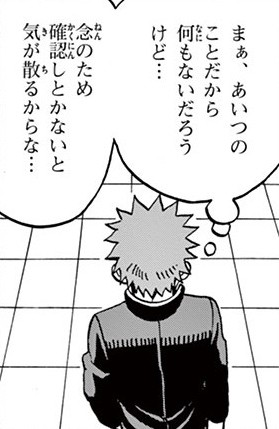
Kenji is staying after school for a study session with Hibino, the girl he likes, but his little sister Kyoko has seemed off all day. On the way, he tells Hibino to go ahead while he stops by the restroom.
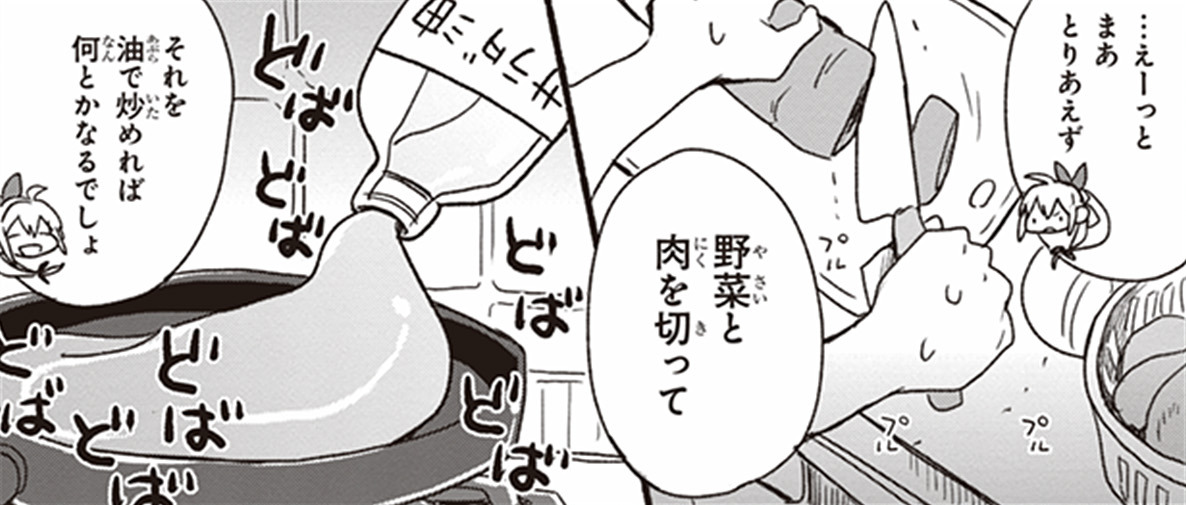
Neko puts on an apron and declares that today she’ll make a meal all by herself. She has rehearsed it in her head and pictures a perfect dish, one tasty enough to show up “that shrine maiden”.
禰子:
「…えーっと まあ とりあえず 野菜と肉を切って」
“…Um, well, for now, I'll cut the vegetables and meat...”
「それを油で炒めれば何とかなるでしょ」
“...and if I fry it all in oil, it'll work out somehow, right?”
Neko is determined to cook a meal on her own this time, but she has no real plan. 何とかなるでしょ is her guess that frying everything in oil will make it turn out fine. Casual でしょ makes the guess sound breezy and sure of itself.
Adding ん before だろう, or の in more careful speech, makes the guess about an explanation. The speaker sees a situation and supposes what lies behind it: “it must be that…” or “I guess that’s why…”.
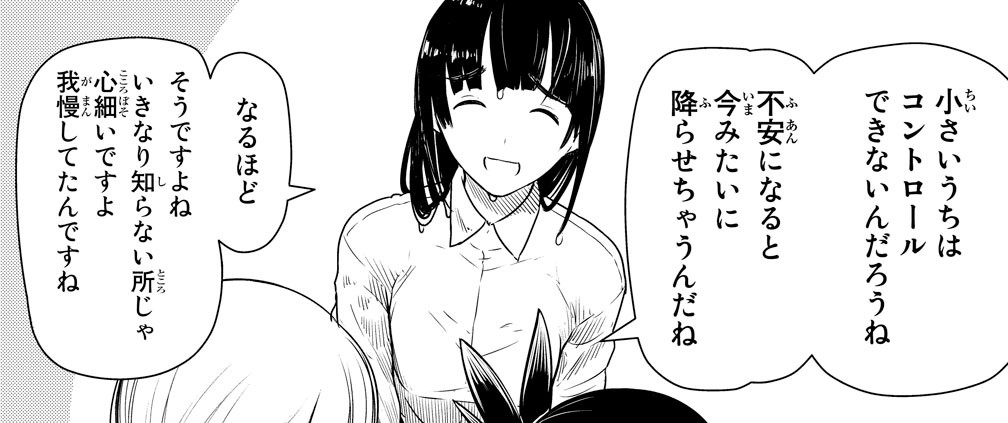
During a visit with Anzu’s family, Makoto receives a request to babysit for another witch. Things are fine at first, but after a while, rain begins to pour inside. Anzu’s mother realizes that the child they’re watching over has rain magic.
杏子の母:
「小さいうちはコントロールできないんだろうね。不安になると今みたいに降らせちゃうんだね」
“You don't have control while you're small, right? When he gets uneasy, he makes it rain like just now.”
真琴:
「なるほど。そうですよね。いきなり知らない所じゃ心細いですよ。我慢してたんですね」
“I see. So that's it. It's a little scary suddenly being in a place you don't know. You've been patient, haven't you?”
Rain is pouring indoors, and Anzu’s mother supposes the cause. The child is too young to control his magic. んだろう presents this as her explanation for the scene, and ね invites Makoto to agree.
Example 2 of 5: Too light-weight to overcome friction with 摩擦
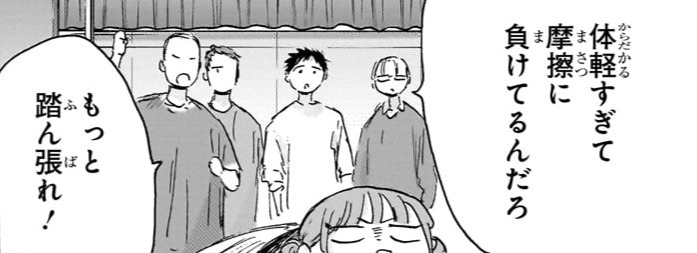
With the end of the school year, the sports clubs turn their attention to cleaning the gym. The boys make a race out of wiping the floor. When the girls decide to give it a go, Hina joins in, but she finds herself unable to move forward like the others do. Her attempts to advance only cause her socks to slip, keeping her in place.
匡:
「体軽すぎて摩擦に負けてるんだろ」
“I guess she's too light to overcome the friction.”
The students are cleaning the gym by racing across the floor with rags. Hina can’t move forward, because her socks keep slipping. Kyou guesses at the reason. She’s so light that friction wins, 摩擦に負けてる, and んだろ presents that as his explanation for what he sees.
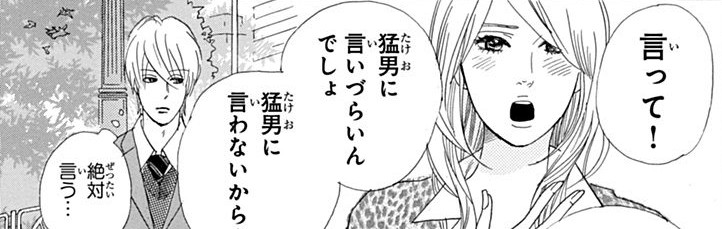
Takeo feels that Rinko is keeping something from him, so Sunakawa and his older sister, Ai, sit her down to ask. Ai guesses why Rinko hasn’t told him. It’s hard to say to Takeo, 言いづらい. んでしょ? puts the guess to Rinko and asks her to confirm it. Sunakawa is sure Ai will tell Takeo anyway.
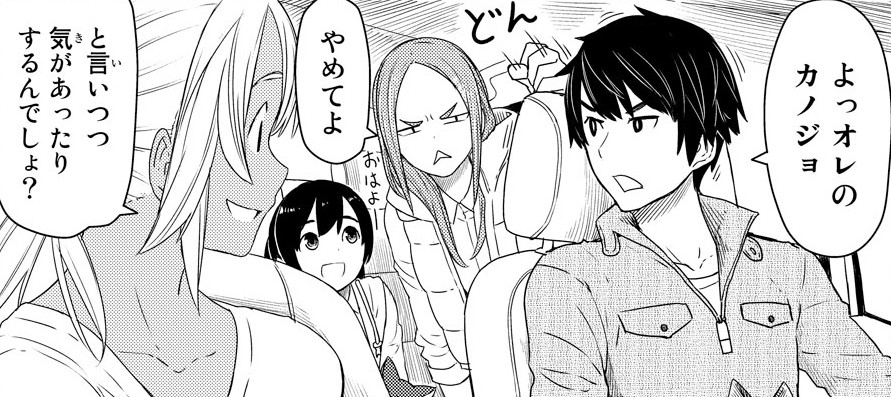
Makoto and her family head out on a trip to the river. When they stop to pick up Kei’s friend Nao, Akane greets her with, “Howdy, Kei’s girlfriend!” Nao tells her she’s wrong.
圭:
「よっオレのカノジョ」
“Yo, my girlfriend.”
なお:
「やめてよ」
“Stop that!”
茜:
「と言いつつ気があったりするんでしょ?」
“Although you say that, you're interested in him, aren't you?”
Makoto’s family is picking up Kei’s friend Nao for a trip to the river. Kei greets her as his girlfriend, and Nao tells him to stop. Akane teases her. と言いつつ, “even while saying that”, sets up the guess, and 〜たりするんでしょ? suggests Nao likes him a little anyway.
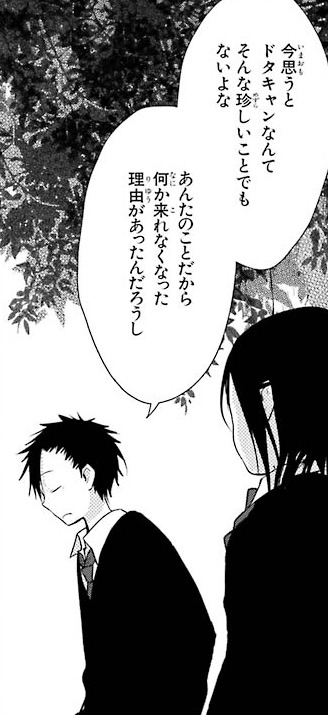
Example 5 of 5: Knowing you, there was a reason with 〜のことだから
Kujo, Fujimiya’s childhood friend, has transferred to her school. He tells her that before he moved away, she promised to meet him at the park one Sunday evening, but she never came, though he waited until he had to leave for Hokkaido. He felt betrayed, since she wasn’t the type to break a promise. Fujimiya doesn’t remember any of it, and Kujo shrugs that he was just a kid back then.
九条:
「今思うと ドタキャンなんて そんな珍しいことでもないよな」
“Looking back, canceling at the last minute isn't all that unusual.”
「あんたのことだから 何か来れなくなった理由があったんだろうし」
“Knowing you, there must have been some reason you couldn't come.”
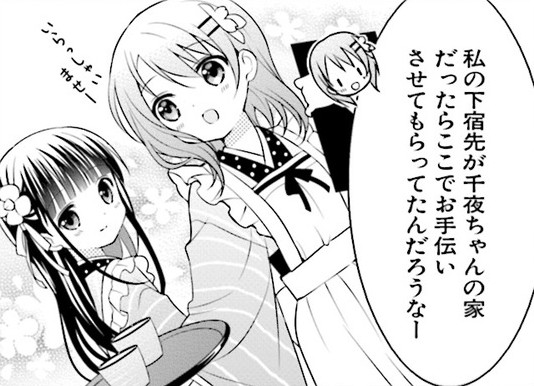
Cocoa lodges at Chino’s house, not Chiya’s. だったら sets up the situation that never happened. させてもらってた is short for the past form させてもらっていた, and んだろう after it makes a guess about how things would have gone. She supposes she would have gotten to help out at Chiya’s teahouse instead.
The stretched なー marks the line as musing rather than a remark aimed at anyone.
Saying What You Expected with だろうと思った
だろうと思う puts the guess inside a thought, “I think … probably”. In the past tense, だろうと思った often means “I figured as much” when events turn out as the speaker suspected.
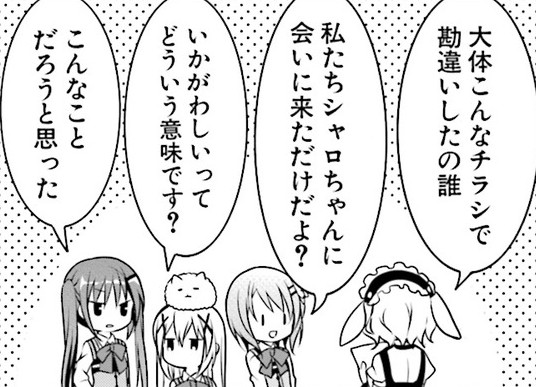
Syaro wants to know who misread the flyer for her workplace. Rize isn’t surprised. こんなことだろうと思った, “I figured it was something like this”, says the situation matches what she expected.
Wondering with だろうか and でしょうか
Adding か turns the guess into a question. The speaker wonders to themselves or puts the question gently to the listener: “I wonder…” or “do you think…?” でしょうか is also a common polite way to ask, softer than ですか.
Example 1 of 4: Do you believe such about our customers with 〜でしょう
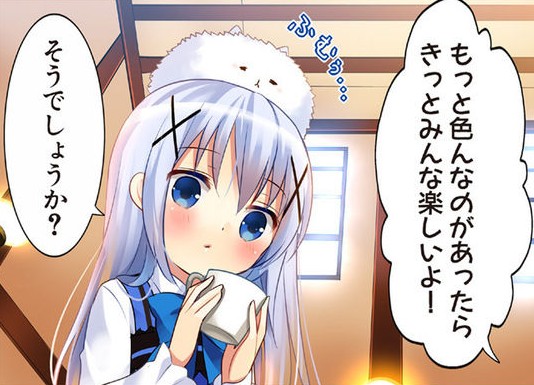
Cocoa is sure customers would enjoy more kinds of cups. Chino doubts it. そうでしょうか questions the claim without rejecting it outright, much like “Do you think so?” in English.
Example 2 of 4: Perhaps this is what he wants with 〜でしょう
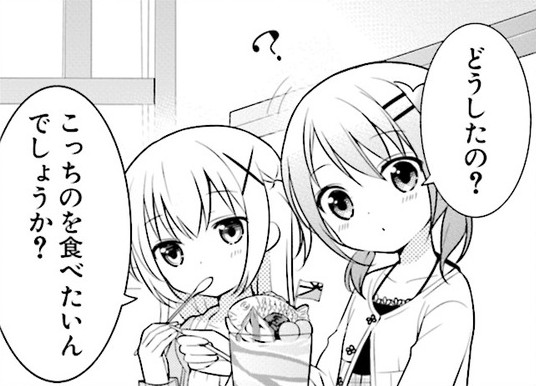
Anko the rabbit ignores his snack and stares at the group, and Chino wonders why. The ん before でしょうか shows she is guessing at an explanation, as in the んだろう section above.
Example 3 of 4: Visiting teahouses with お茶屋さん
Example 3 of 4
With a question word, だろう wonders without か. 何だろう means “I wonder what it is”, and どうしてだろう means “I wonder why”.
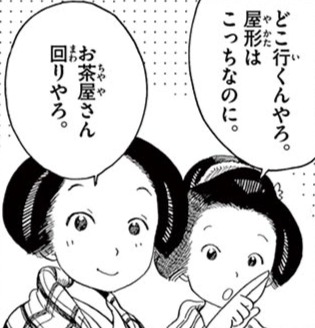
Two maiko see Momohana leave a shop and head away from their lodging house. やろ is the Kansai form of だろう. どこ行くんやろ wonders where she’s going, with a question word and no か. The second maiko answers with a guess: she’s probably making the rounds of the teahouses.
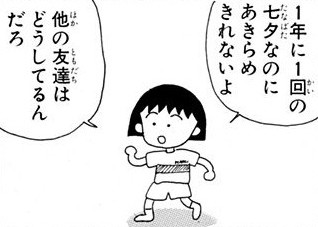
Example 4 of 4: Can't give up on Tanabata with あきらめきれない
It’s the day before Tanabata, and Maruko needs a bamboo branch to hang her wishes on. Dad brought one home by chance last year but won’t find one this time, so she throws a tantrum. Mom tells her it makes no difference whether she has bamboo, and Dad says sometimes you can’t get what you want.
まる子:
「1年に1回の七夕なのにあきらめきれないよ」
“Tanabata only comes once a year. I can't just give up on it!”
Maruko refuses to give up on getting a bamboo branch for Tanabata. 他の友達はどうしてるんだろ wonders how her friends are managing. With the question word どう, んだろ makes it a question to herself.
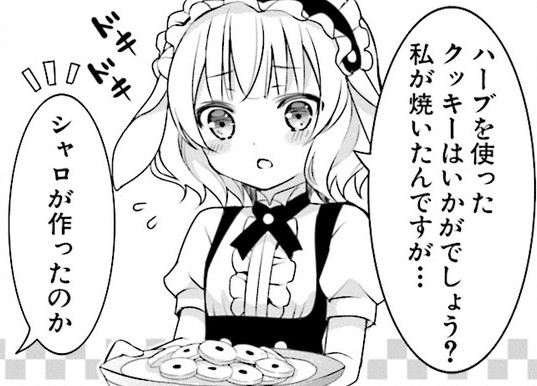
In service and polite speech, いかがでしょう or いかがでしょうか asks “how would … be?” It works as an offer or a suggestion, close to “would you like…?” or “how about…?”
Syaro offers her guests cookies she baked with herbs. いかが is the polite form of どう, so いかがでしょう is a polite “how about…?” The trailing 焼いたんですが… adds a modest “I baked them, though…”, which leaves room for the guests’ reaction.
A suggestion can take the same shape. 〜てはいかがでしょうか means “why not try…?”, and 〜たらどうでしょう is a slightly less formal version.
Expecting the Listener to Agree
In the sections above, the speaker is unsure. With rising intonation, だろう and でしょう work the other way. The speaker assumes something is true and expects the listener to confirm it: “right?” or “isn’t it?”
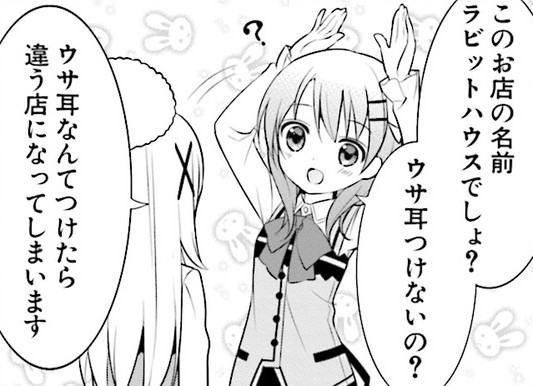
Example 1 of 15: Isn't the café named as such with 〜でしょう
Cocoa knows the café is called Rabbit House. She states it with でしょう? to get Chino to agree before making her real point, that the staff should wear bunny ears.
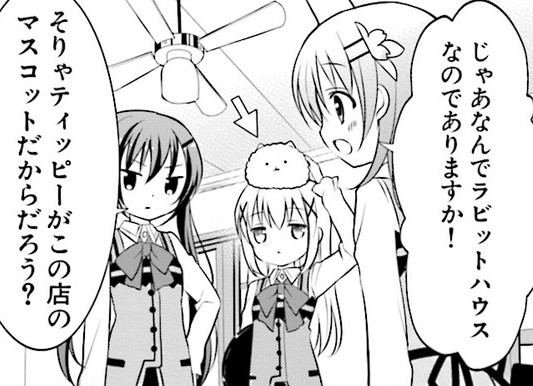
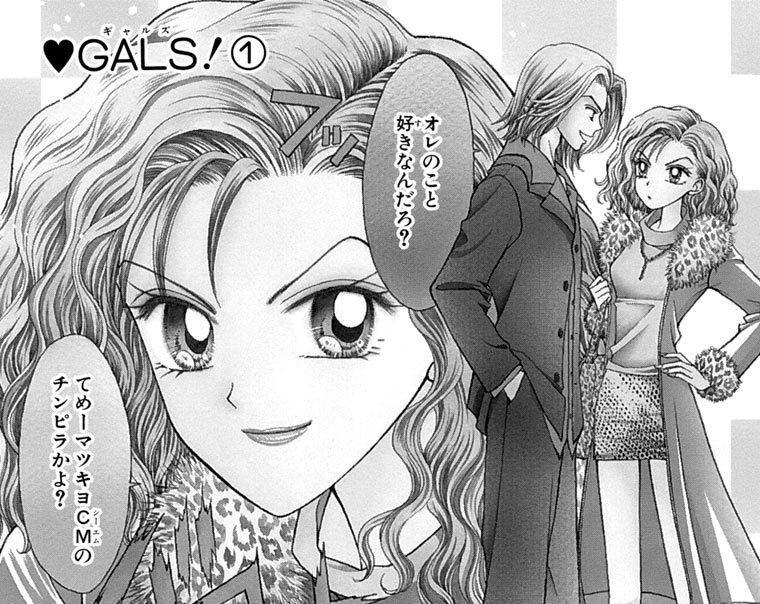
Cocoa’s idea of bunny ears for the staff has been turned down, so she asks why the café is called Rabbit House at all. Rize thinks the answer is obvious. そりゃ, “well, of course”, and だろう? present the reason as something Cocoa should have figured out: Tippy is the mascot.
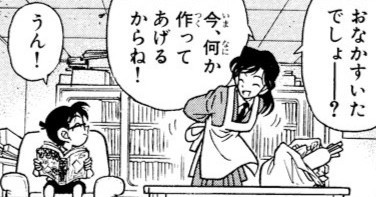
Conan went off on his own after a case, and now he’s back home with Ran. おなかすいたでしょーー?, “you must be hungry”, assumes the answer is yes, and Ran offers to cook something right away. The stretched でしょーー sounds warm.
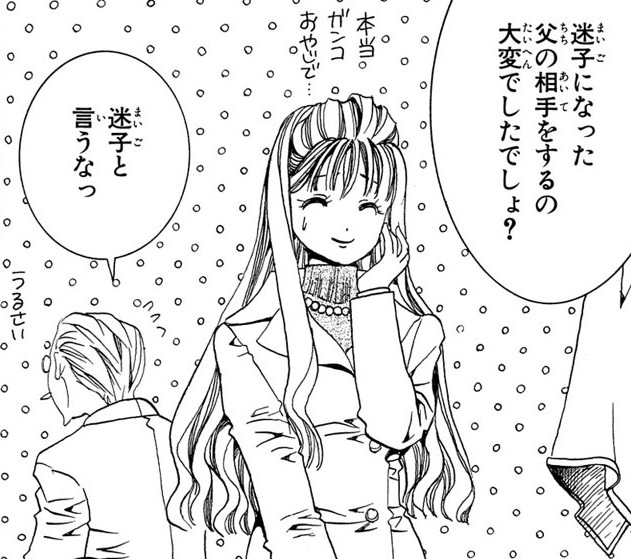
Akari encounters an older gentleman looking for a police box, so he can report his missing daughter and son-in-law. Akari offers to take him around and see if they can find the couple. Once they are reunited, the daughter thanks Akari for finding her father.
娘:
「迷子になった父の相手をするの大変でしたでしょ?」
“It must have been tough dealing with my dad when he got lost, right?”
Akari helped a lost old man look for his daughter and son-in-law, and now the daughter thanks her. 相手をする is “keep someone company” or “deal with someone”. 大変でしたでしょ? assumes it was hard work and invites Akari to say so. Her father objects to being called lost.
Example 6 of 15: Poor vision without glasses with 裸眼
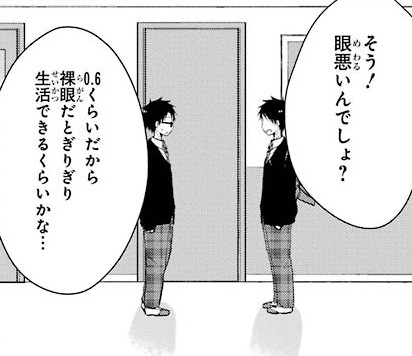
Shun asks Ayumu to continue switching places with him, since pretending to be Ayumu helps him be more open. Ayumu is game, but this requires Shun to go without his glasses, so Ayumu suggests he get contact lenses. Shun asks, “Contacts?”
歩:
「そう!眼悪いんでしょ?」
“That's right! You have bad eyesight, don't you?”
駿:
「0.6くらいだから裸眼だとぎりぎり生活できるくらいかな…」
“My vision's about 0.6, so without glasses, I can just barely get by in daily life...”
Shun wants to keep switching places with Ayumu, but being Ayumu means going without his glasses, so Ayumu suggests contact lenses. 眼悪いんでしょ?, “your eyes are bad, right?”, states something Ayumu already knows and asks Shun to confirm it.
Example 7 of 15: They'll target not just me with 〜だけじゃなく〜も
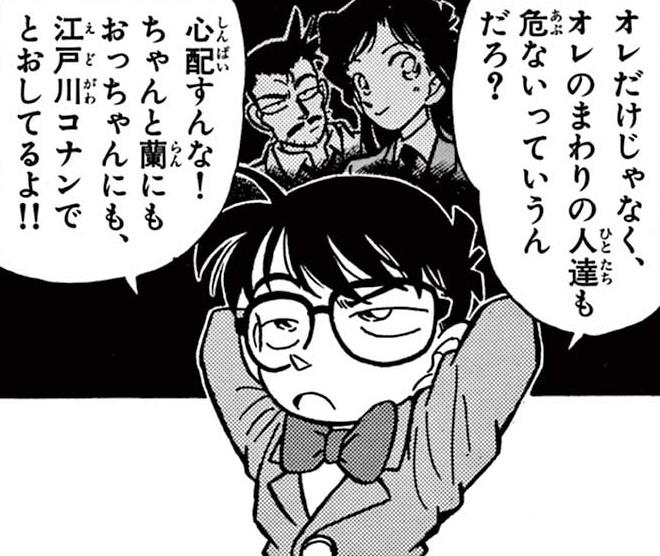
After Shin’ichi was forced to take a deadly drug that instead shrank him back to a child, he took on the undercover name Conan and went to stay with his childhood friend Ran and her detective father in the hope of a lead to the black-clad men who drugged him. He later discusses with Professor Agasa about how useless Detective Mouri is. The professor reminds Conan that the poison was supposed to have killed him, so he can’t rush and let others know his true identity.
コナン:
「オレだけじゃなく、オレのまわりの人達も危ないっていうんだろ?」
“You're saying it won't be just me, but the people around me will be in danger too, right?”
「心配すんな!ちゃんと蘭にもおっちゃんにも、江戸川コナンでとおしてるよ!!」
“Don't worry! I'm keeping up the Conan Edogawa act with Ran and the old man, too!!”
Professor Agasa has warned Conan not to reveal who he is, since the men in black think their poison killed him. Conan finishes the thought for him. っていうんだろ?, “that’s what you’re saying, right?”, checks that he has understood. Then he tells Agasa not to worry.
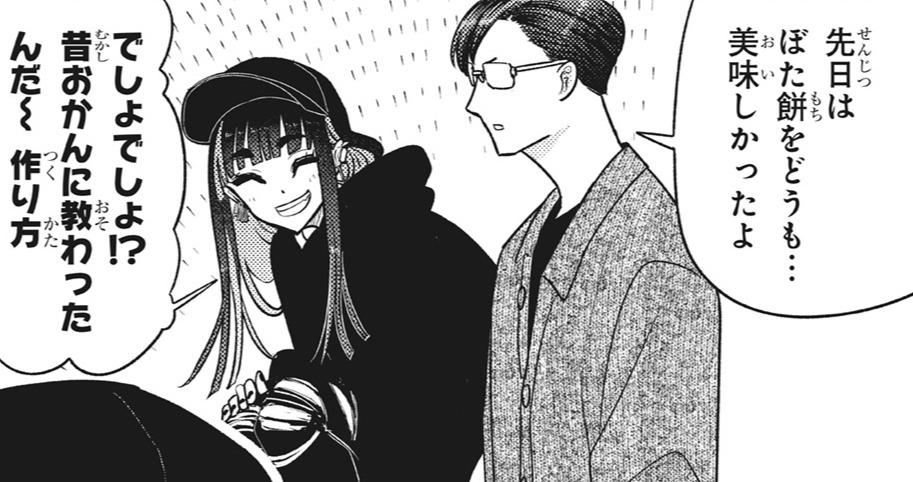
Kumada’s neighbor gave him extra botamochi a few days ago, and he thanks her and says it was delicious. でしょでしょ!? isn’t a guess. It’s “right?!”, agreeing with him and fishing for more praise. Doubling it makes her sound delighted.
Example 9 of 15: Additionally, I'm happier having girls here with それに〜
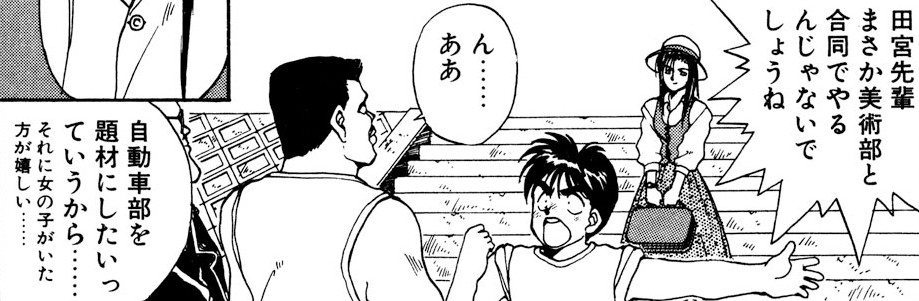
Kei’ichi is excited to spend four days at the beach with his university automobile club and Belldandy. His mood changes when he hears Sayoko call out to him.
螢一:
「田宮先輩まさか美術部と合同でやるんじゃないでしょうね」
“Tamiya, don't tell me we're doing this with the art club!”
田宮:
「ん……ああ。自動車部を題材にしたいっていうから…… それに女の子がいた方が嬉しい…」
“It's because they said they wanted to use the automobile club as a subject... Additionally, I'm happier having girls here.”
Keiichi is looking forward to four days at the beach with his university’s automobile club, until Sayoko calls out to him. まさか〜んじゃないでしょうね means “don’t tell me…”. The negative with でしょうね pushes Tamiya to deny it. He doesn’t.
Example 10 of 15: Wanting an alluring older woman with 〜っぽい
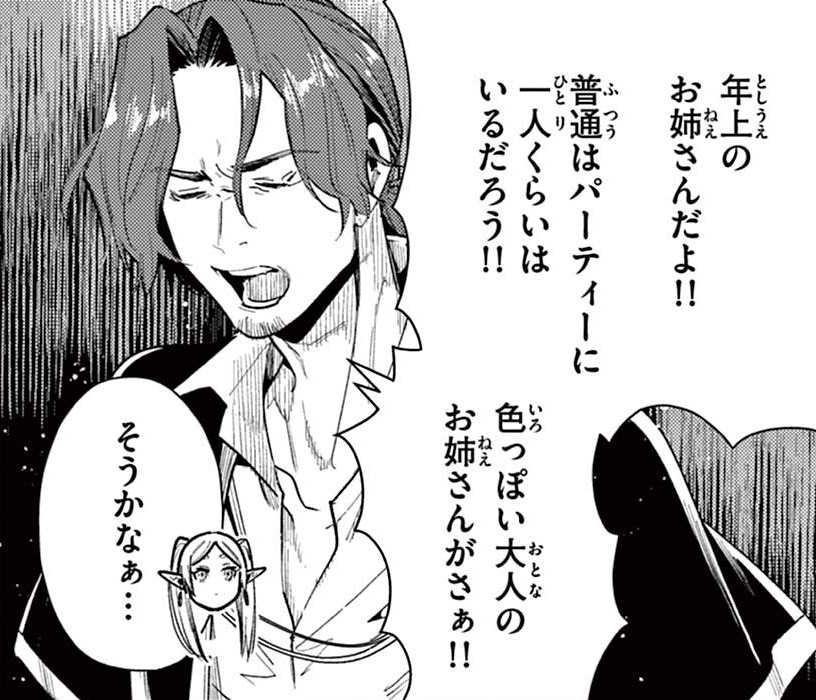
While the party walks through the hills of the northern lands, Sein says the party is missing something and asks the others what it is. Fern suggests a thief, since Frieren keeps falling for mimics, but Sein says what they lack is far more important.
Sein claims their party is missing an older woman. 普通はパーティーに一人くらいはいるだろう!! is “every party normally has at least one, right?!” He isn’t guessing. だろう presses the others to agree with what he treats as common knowledge.
Example 11 of 15: You like me, don't you with 〜のこと好き
Ayumu walks Urushi home after asking if they could walk together for a while. At her door, she asks what he wanted, and he says he only wanted to walk with her. As he thanks her, he starts to say something, covers his mouth, and then says he enjoyed walking with the senpai he respects.
うるし:
「なんか言いかけたろ 今!!」
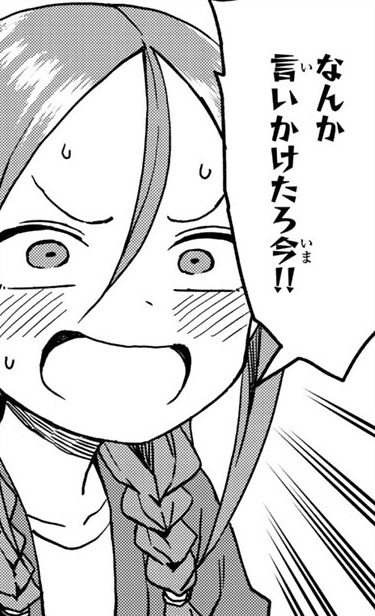
“You started to say something just now, didn't you!!”
Ayumu began his goodbye to Urushi with 「大好…」 and then switched to polite thanks. 言いかけたろ is short for 言いかけただろう. Urushi is sure he started to say something, and the rising だろ demands that he admit it.
Example 13 of 15: Taking the star jam off the heat with 火を止める
Mira and her master are making jam from stars that fell into the clouds. The master stirs the stars and sugar in a pot until they begin to melt, then lets Mira take over. As she stirs, a glint streaks through one of the melting stars, and she says it looks like a shooting star.
師匠:
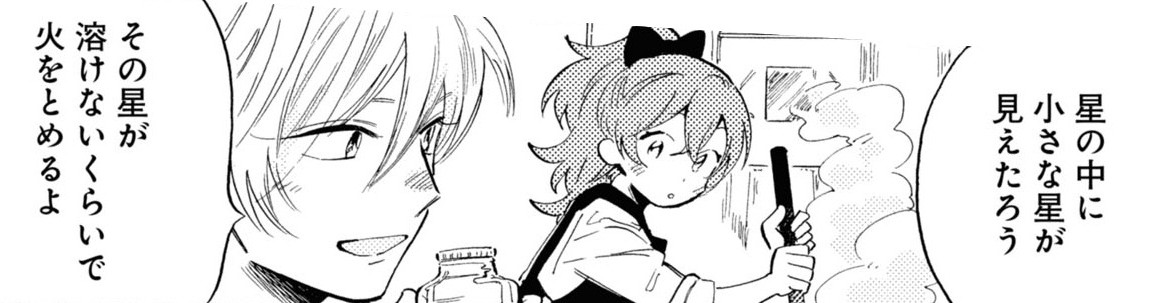
「星の中に小さな星が見えたろう」
“You saw little stars inside the star, didn't you?”
「その星が溶けないくらいで火をとめるよ」
“We take it off the heat before those stars melt.”
Mira is stirring star jam for the first time and has just spotted a sparkle in the pot. Her master knows exactly what she saw. 見えたろう is short for 見えただろう, “you saw it, didn’t you?”, and expects her to agree before he explains the next step.
Example 14 of 15: Sengoku's idea of high heat with 強火
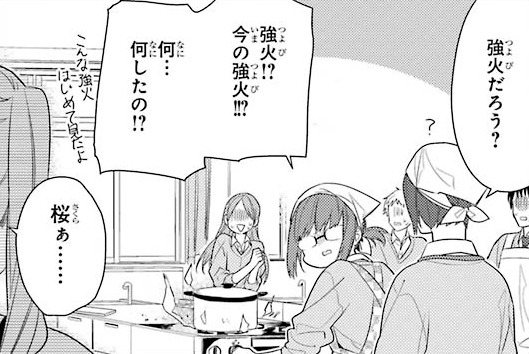
In cooking class, Sakura is in the same group as Remi and Sengoku, who can barely cook. Sakura told Sengoku to heat up the curry. He turned the burner up until flames roared around the pot, and Sakura asked what kind of heat he thought he was using.
Sengoku has turned the burner up until flames roar around the pot, and Sakura asks what kind of heat that is. 強火だろう?, “it’s high heat, isn’t it?”, treats the answer as obvious. Sakura doesn’t agree.
Example 15 of 15: A lunch for the night shift with 弁当を作る
Ran has been hauled into the Shibuya police box, where her older brother Yamato works as an officer, and he has just finished lecturing her. Then Ran’s friend Miyu bursts in with a cheerful greeting.
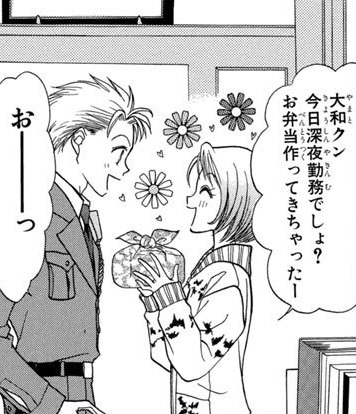
美由:
「大和クン 今日深夜勤務でしょ? お弁当作ってきちゃったー」
“Yamato, you're on the late-night shift today, right? I made you a lunch and brought it over!”
Miyu drops by the police box where Yamato works, holding a wrapped lunch. She already knows his schedule. 深夜勤務でしょ?, “you’re on the late-night shift, right?”, has him confirm it before she explains why she brought food.
Reminding and Scolding
When the listener should already know something, だろう? and でしょ? turn the confirmation into a reminder or a complaint, “I told you, didn’t I?” Look for them after 言った and 言ってる.
Example 1 of 5: Scheduled to stay the night with 〜ことになっている
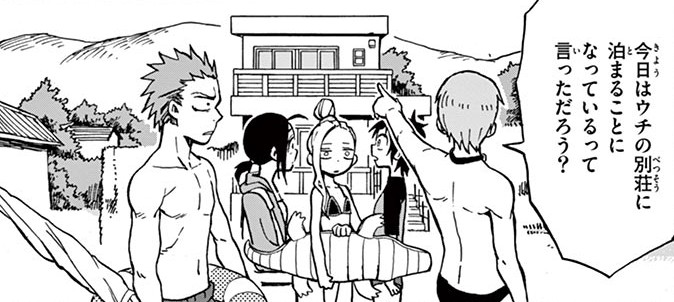
Hikari asks when someone will come to pick them up. Shindou claim he already told everyone they are staying at his villa tonight, so 言っただろう? is him reminding Hikari of it.
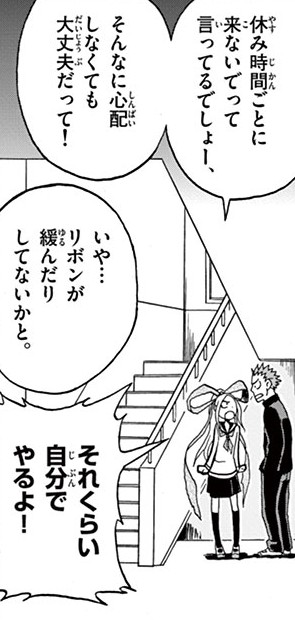
Due to concern about his sister’s ribbon, which seals away her need to attack people for their blood, Kenji takes every opportunity he can to check up on her at school.
キョーコ:
「休み時間ごとに来ないでって言ってるでしょー、そんなに心配しなくても大丈夫だって!」
“I'm telling you, you don't need to check up on me every break period. I'll be fine even without you worrying about me!”
ケンジ:
「いや… リボンが緩んだりしてないかと。」
“No, I'm just checking whether your ribbon's come loose.”
Kyoko has told her brother many times to stop checking on her. 言ってる is the ongoing ている form, “I keep telling you”, and the stretched でしょー carries her irritation.
Example 3 of 5: Gotten all warped from playing video games with 〜じゃう
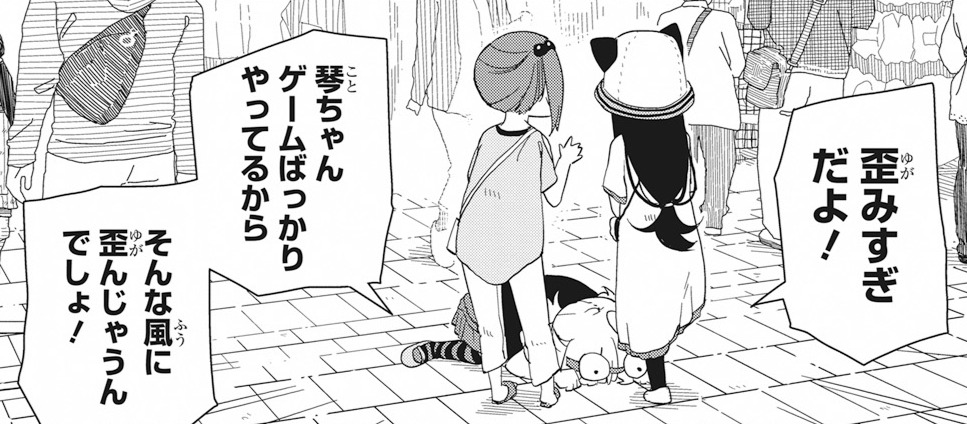
Sacchan tries crawling on the ground to help find the cat that’s been stealing from the area lately. Kotoha takes this opportunity to step on Sacchan’s head.
さっちゃん:
「歪みすぎだよ!」
“You're way too twisted!”
「琴ちゃんゲームばっかりやってるからそんな風に歪んじゃうんでしょ!」
“It's 'cause you only ever play video games, Koto-chan, that's why you've gotten all warped like that!”
Sacchan is crawling on the ground to look for a cat that’s been stealing things, and Kotoha steps on her head. Sacchan blames Kotoha’s video games for how twisted she is. 〜から〜んでしょ! isn’t a guess. With falling intonation, it presents the cause as obvious, the way a scolding parent might: “that’s why you turned out like this!”
Example 4 of 5: No excuse to laze around with 〜わけじゃない
The teacher has declared a day of team-against-team battles. Benisumomo, a senior on Touwata’s team, challenges Tsubaki’s team, and Tsubaki accepts. Sazanka whispers that they should pick another team, since Touwata never gives up, Mizubashou is too good at setting traps, and Benisumomo is extremely strong. Benisumomo overhears and agrees: “Well, I am a genius.”
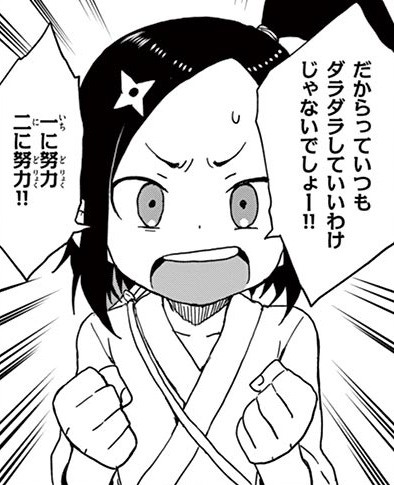
トウワタ:
「だからっていつもダラダラしていいわけじゃないでしょー!!」
“That doesn't mean you get to laze around all the time!!”
Benisumomo has just called herself a genius, and Touwata scolds her for using that as an excuse to slack off. The stretched でしょー!! treats the point as something her senior should already know: “you can’t laze around all the time, come on!”
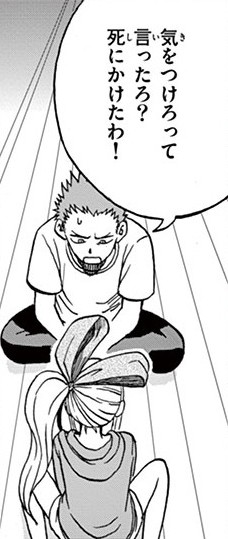
Example 5 of 5: Nearly drained of blood with 死にかける
Kenji’s younger sister Kyoko is a jiangshi who must drink blood regularly, and her big ribbon serves as the talisman that keeps her instincts in check. When it came loose, she pinned Kenji down and drank his blood. Kenji managed to tie the ribbon back on, and Kyoko returned to normal.
Kyoko’s ribbon came loose, and she drank so much of Kenji’s blood that he nearly died. 気をつけろって言ったろ? reminds her that he warned her to be careful. 言ったろ is a casual 言っただろう.
Blunt Retorts with だろ
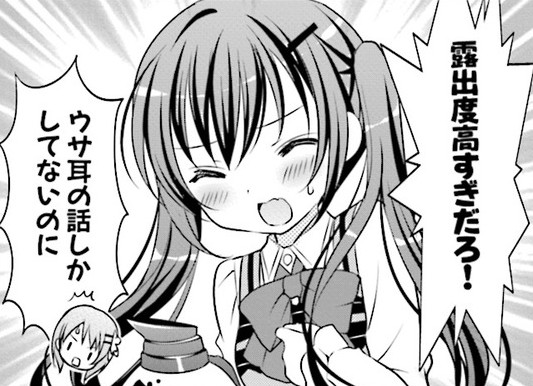
Casual だろ can also end an exclamation with falling intonation. Here it is neither a guess nor a real question. The speaker objects to something they treat as obvious, along the lines of “Come on, that’s way too…!” Comedic retorts, called ツッコミ, often end this way.
Cocoa only mentioned bunny ears, but Rize pictures a skimpy bunny-girl outfit. 高すぎだろ! objects as if the problem should be obvious to everyone: “That’s way too revealing!”
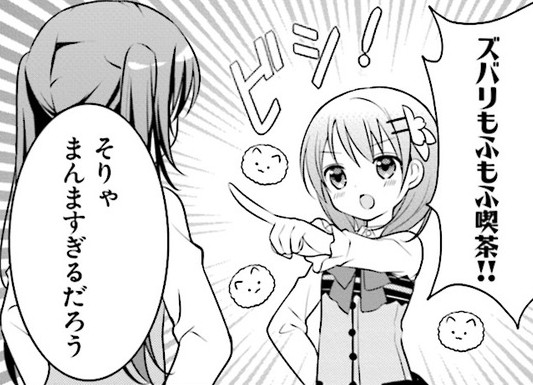
Cocoa wants to rename the café after its rabbit mascot, and her idea is もふもふ喫茶, “Fluffy Café”. まんま is a casual そのまま, “as is”, so まんますぎる is “way too literal”. Rize’s だろう isn’t a guess. It’s an objection she expects anyone to share.
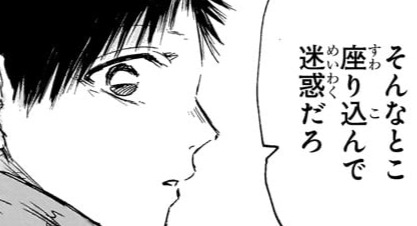
The Winter Cup basketball tournament has arrived, and Taiki is there to cheer on Chinatsu in the competition. He’s feeling so nervous that his legs give out and he falls into a crouch on the ground outside the event. In this state, he doesn’t see his upperclassman from the badminton club approaching.
Taiki has come to cheer for Chinatsu at the Winter Cup, but he’s so nervous that his legs give out, and he sinks to the ground outside the venue. His badminton club senpai, Haryuu, finds him there. 迷惑だろ, “you’re in the way”, is a blunt rebuke, with だろ pointing out what should be obvious.
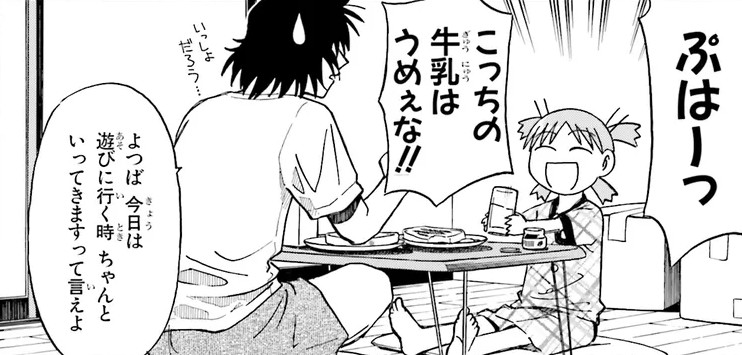
Yotsuba and her father have their first breakfast since moving to a new house in a new town. Yotsuba takes a bite from her toast, then drinks down some milk.
よつば:
「こっちの牛乳はうめぇな!!」
“The milk here is good!”
父さん:
「(いっしょだろう…)よつば 今日は遊びに行く時 ちゃんといってきますって言えよ」
“(It tastes the same...) Yotsuba, when you go out to play today, make sure you say "I'm off", okay?”
It’s Yotsuba and her father’s first breakfast in their new town, and Yotsuba declares the milk here delicious. Her father keeps his reply to himself. (いっしょだろう…), “it’s the same milk”, is a silent retort. Out loud, he reminds her to say “I’m off” when she goes out to play.
Example 5 of 7: It's not like you're a foreigner with 〜じゃあるまいし
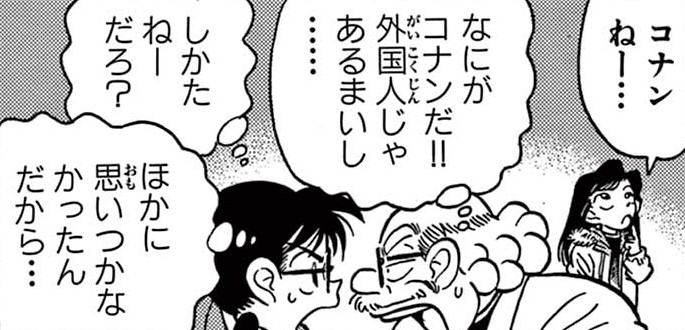
Shin’ichi’s teenage friend Ran enters Professor Agasa’s house looking for him, unaware that he was forced to take a poison that inadvertently turned the teenager into a young child. When Ran sees the boy and asks his name, Shin’ichi recalls Agasa’s suggestion to not reveal who he is. Panicking, he gives the name “Conan”, explaining the oddness of it by saying his father is a fan of author Arthur Conan Doyle.
蘭:
「コナンねー…」
“Conan, huh?”
阿笠:
「なにがコナンだ!! 外国人じゃあるまいし」
“What's with 'Conan'!? It's not like you're a foreigner...”
コナン:
「しかたねーだろ? ほかに思いつかなかったんだから…」
“It couldn't be helped, all right? I couldn't think up anything else...”
Shin’ichi has been shrunk into a child, and when Ran asks his name, he panics and says “Conan”. Professor Agasa objects that it’s a foreigner’s name. しかたねーだろ?, “what else could I do?”, defends the choice as if the answer were obvious. ねー is a rough ない.
Example 6 of 7: The truth isn't always right with 〜わけじゃない
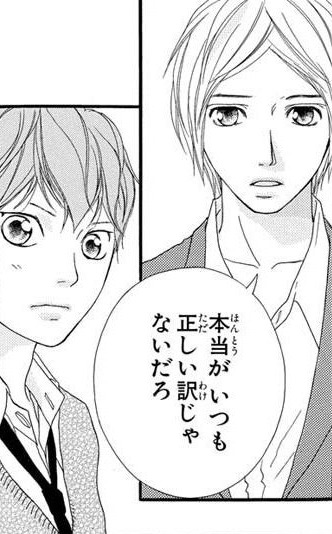
Ninako confessed to Ren and was turned down, since he already has a girlfriend. Manabu has been pushing Ren to admit he has feelings for Ninako. After Ren leaves, Manabu insists to Yuu that Ren really does like her. Yuu answers, “So what?”
Manabu thinks Ren should act on his feelings for Ninako, even though Ren has a girlfriend. Yuu says the truth isn’t always right. His だろ asks nothing. It treats the point as one Manabu should already see.
Example 7 of 7: No one in a ruin like this with 〜わけない
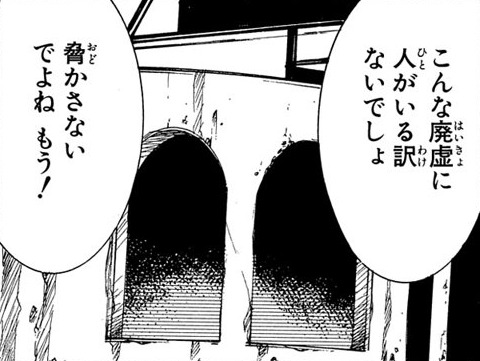
While chasing President Aria in a training gondola, Akari and Aika follow a narrow canal and come out among the ruins of an old settlement from the days when Aqua was still called Mars. Akari glances up at a pair of empty windows and says she felt as if someone was watching them.
Akari says she felt someone watching them in an abandoned settlement. Aika answers with 人がいる訳ないでしょ, “there’s no way anyone’s here”. でしょ isn’t a guess. It objects to Akari’s idea as obviously wrong.