Purpose and cause with 〜ために
Grammar: Purpose » 〜ために
〜ために says what an action is for. After a verb, it gives the goal: 勝つために練習する, “practice to win”. After a noun with の, it names a goal or the person who benefits: 家族のために働く, “work for my family”.
After a past verb, a state, or a noun like 雨, ため(に) gives a cause instead: 雨のために中止になった, “it was called off because of the rain”.
Usage Notes
ため is a noun, so it doesn’t always take に. It can end a sentence as ためだ, describe a noun as ための, and in writing it can stand alone as ため.
For a purpose, the verb before ために is something the subject can choose to do, in the plain non-past form. The same person usually does both actions. When the goal is a state or an ability, as with 泳げる or 見える, Japanese uses ように instead. The ように page compares the two.
Purpose ために is common in conversation. Cause ため(に) is different. It sounds stiff and belongs mainly to writing, and in conversation people give reasons with から or ので instead.
Formation
View formation details
- Verb (dictionary form) + ために
- 試験に合格するために、毎日勉強している
- "I study every day to pass the exam."
- Noun + のために (goal)
- 試合のために練習する
- "I practice for the game."
- Noun + のために (benefit)
- 家族のために働く
- "I work for my family."
- 何のために
- 何のために働くの?
- "What do you work for?"
- Verb (dictionary form) + ための + Noun / Noun + のための + Noun
- 料理をするための道具
- "tools for cooking"
- Clause + ためだ
- ここに来たのは謝るためだ
- "I came here to apologize."
- Verb (past) + ために (cause)
- 雪が降ったために、電車が遅れた
- "The train was late because it snowed."
- Adjective + ため (cause)
- 道が狭いため、車が通れない
- "Cars can't get through because the road is narrow."
- Note: A な-adjective keeps な, as in 不便なため.
- Noun + のため (cause)
- 事故のため、道が混んでいます
- "The roads are crowded because of an accident."
Doing Something for a Goal
Put the goal before ために and the action after it. A verb goes in its plain non-past form, and a noun takes の. English often says “to”, “in order to”, or “for”.
The goal is something the subject sets out to do, such as 勝つ “win” or 合格する “pass”. Verbs for weather or feelings, such as 降る “fall (rain)” or 喜ぶ “be glad”, don’t fit. The person who takes the action is usually the one aiming for the goal. A negative verb works when the subject is deliberately holding back from something: 無駄遣いしないためにカードを持ち歩かない, “I don’t carry cards so I won’t waste money”. For a result the subject can’t fully control, such as 忘れない, use ように instead.
Example 1 of 2: Practicing for this day with 〜ために
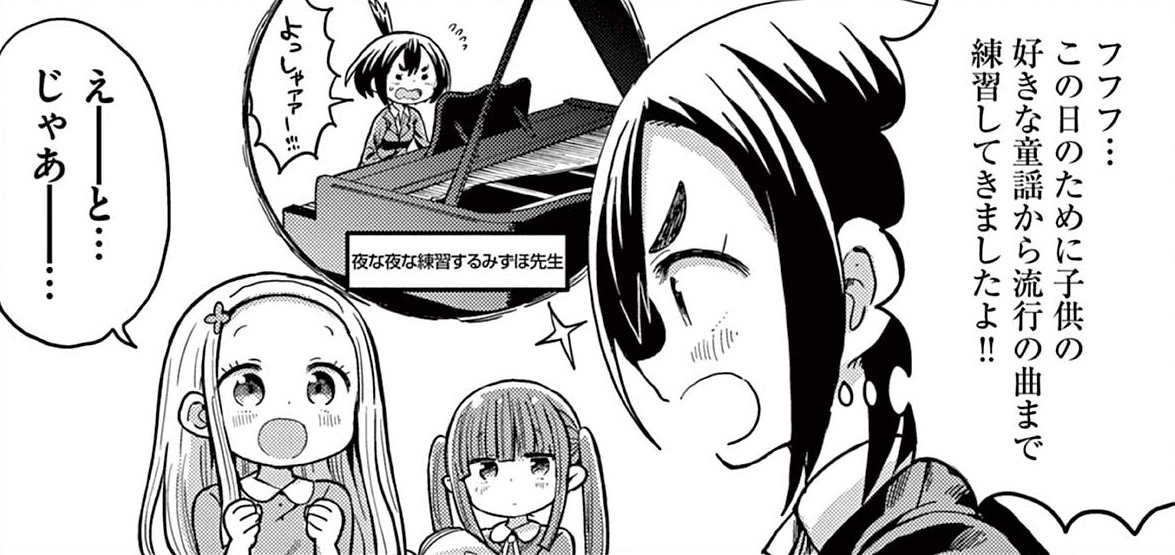
Mizuho-sensei is a new teacher. During her student teaching in Tokyo, a class survey called her lessons boring, and she wants her first graders to have fun. Today she is leading them on a school exploration. In the music room, the children crowd around the grand piano, and Sami asks whether it plays any songs. Mizuho-sensei sees her chance. She sits down at the piano, offers to play, and asks the class for requests.
- みずほ先生:
- 「フフフ… この日のために子供の好きな童謡から流行の曲まで練習してきましたよ!!」
- “Heh heh heh... For this day, I've practiced everything from the nursery rhymes kids love to the latest hits!!”
- みずほ先生:
- 「よっしゃアー!!!」
- “Yeahhh!!!”
- ◯:
- 「夜な夜な練習するみずほ先生」
- “Mizuho-sensei, practicing night after night”
- サミ:
- 「えーーと… じゃあーー…」
- “Ummm... Okay, then...”
Mizuho-sensei is a new teacher, and she wants her first graders to have fun on their school tour. When they find the music room’s piano, she recalls how she has practiced for this day, and an inset shows her at the piano night after night. この日のために, “for this day”, names the occasion she prepared for. 日 is a noun, so の links it to ために.
Example 2 of 2: Furthermore, this room is too warm with さらに〜
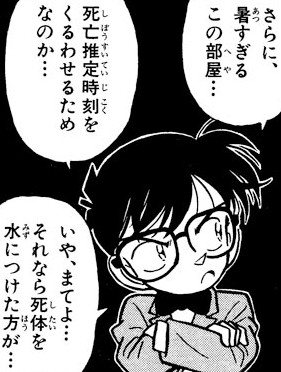
Upon walking in on a murder scene, Conan goes right to work making observations about the blood-covered body and its surroundings. He notes how the room is torn apart save for one upright chair beside the deceased.
- コナン:
- 「さらに、暑すぎるこの部屋…」
- “Furthermore, this room is too warm...”
- 「死亡推定時刻をくるわせるためなのか…」
- “Is it to confuse the estimated time of death...?”
- 「いや、まてよ… それなら死体を水につけた方が…」
- “No, wait... If that's the case, it would be better to put the corpse in water...”
Conan is examining a murder scene in a room that is far too hot. He wonders whether the killer made it hot to throw off the estimated time of death. くるわせる, “throw off”, is something the killer would set out to do, so ため gives a purpose. Because ため is a noun, it can take だ. Here だ becomes な before explanatory の, and か makes it a question: “is that what it’s for?”
In writing, に is sometimes dropped: 生きがいを見つけるため働く, “work to find something to live for”. The meaning stays the same.
With は or も, ために usually leads into something necessary or unavoidable: 勝つためには練習するしかない, “to win, there’s nothing for it but to practice”.
For Someone’s Sake
When the noun before のために is a person or a group, ために usually names who benefits: 娘のために, “for my daughter”. This is where the “for the sake of” reading comes from. Dictionaries list benefit first among the meanings of ため, and purpose as an extension of it.
Example 1 of 3: Coming all the way up here in the mountains with 足を運ぶ
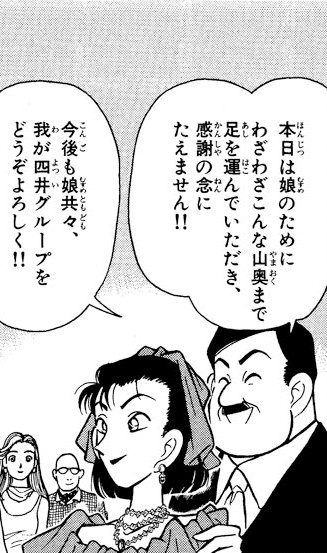
A large gathering takes place in a mansion deep in the mountains, in celebration of Reika, daughter of the head of Yotsui Group. After Reika blows out the candles on her birthday cake, her father congratulates her on turning 24, then he turns and addresses their guests.
- 四井:
- 「本日は娘のためにわざわざこんな山奥まで足を運んでいただき、感謝の念にたえません!!」
- “I can't thank you enough for coming all the way up here in the mountains today for my daughter!”
- 「今後も娘共々、我が四井グループを
どうぞ よろしく!!」 - “Please continue to be favorable to both my daughter and my Yotsui Group in the future!”
Mr. Yotsui is thanking the guests at his daughter Reika’s birthday party, held in a mansion deep in the mountains. 娘のために says who they made the long trip for.
Example 2 of 3: Better to give up fortune telling with 〜た+方がいい

Cocoa did fortune telling for her friends, only for all their fortunes to happen to her in a bad way.
- チノ:
- 「ココアさんは人の不幸の身代わりになる才能があるんですか?」
- “Cocoa, do you have a talent for taking on other people's misfortune?”
- リゼ:
- 「今後占いやめた方がいいぞ自分のために」
- “For your own sake, you had better stop fortune telling from now on.”
- ココア:
- 「なんで!?」
- “Why!?”
Cocoa’s fortune telling keeps backfiring on her. Rize tells her to quit, then tacks on 自分のために, “for your own sake”. The one who benefits is Cocoa herself.
Example 3 of 3: Don't care if it troubles you with 知ったことか
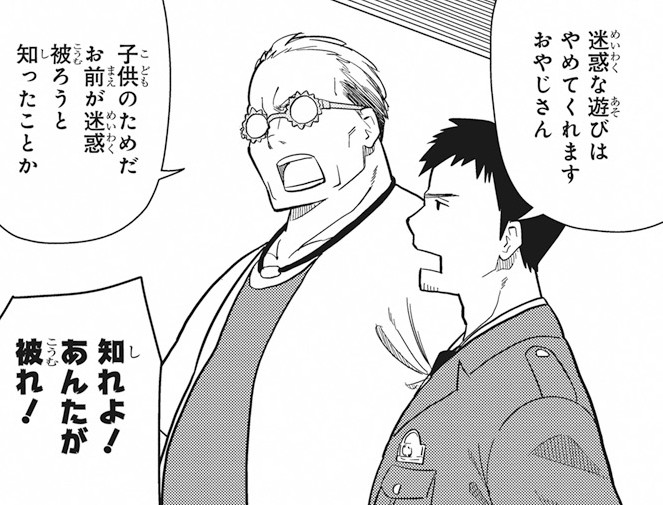
Oyaji presented Colors with a bomb to defuse via a riddle, which led to problems for Officer Saitou. After Colors successfully defuses the bomb, Saitou tells Oyaji to stop playing bothersome games.
- おやじ:
- 「子供のためだ。お前が迷惑被ろうと知ったことか」
- “It's for the kids. I don't care if it will cause you trouble.”
Officer Saitou asks Oyaji to stop playing games that cause trouble, like the riddle bomb he gave the girls to defuse. Oyaji answers 子供のためだ, “it’s for the kids”. Everyone knows what “it” is, so ため can end the sentence with だ. He presents the kids as the ones who benefit.
With なら, ため says what someone would do for a person: 君のためならなんでもする, “I’d do anything for you”.
Asking What Something Is For
何のために asks for the purpose of an action: “what for?” ように has no question form like this, so it can’t take the place of ために here. In the same way, 誰のために asks who something is for.
The question can also be a complaint that something has no point. 勉強しないなら何のために大学へ行くんだ? means “if you won’t study, what are you going to college for?”
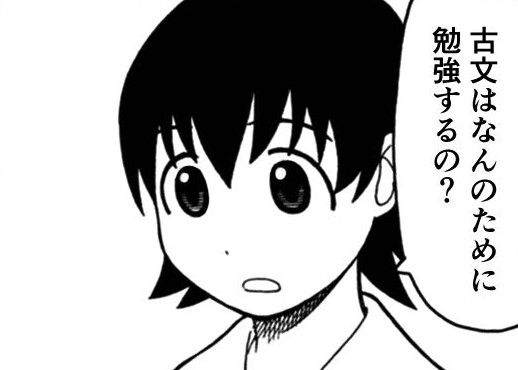
Following a midterm exam, Yomi asks Tomo how it went.
- とも:
- 「古文はなんのために勉強するの?」
- “What's the point of studying classical Japanese?”
After a midterm exam, Tomo asks what studying classical Japanese is for. なんのために is written in kana here. Coming right after the test, the question sounds doubtful that there’s any point.
Describing a Noun with ための
ための + noun says what something is for: 料理のための道具, “tools for cooking”, or 勝つための作戦, “a plan to win”. そのための points back to a purpose just mentioned: “for that”.
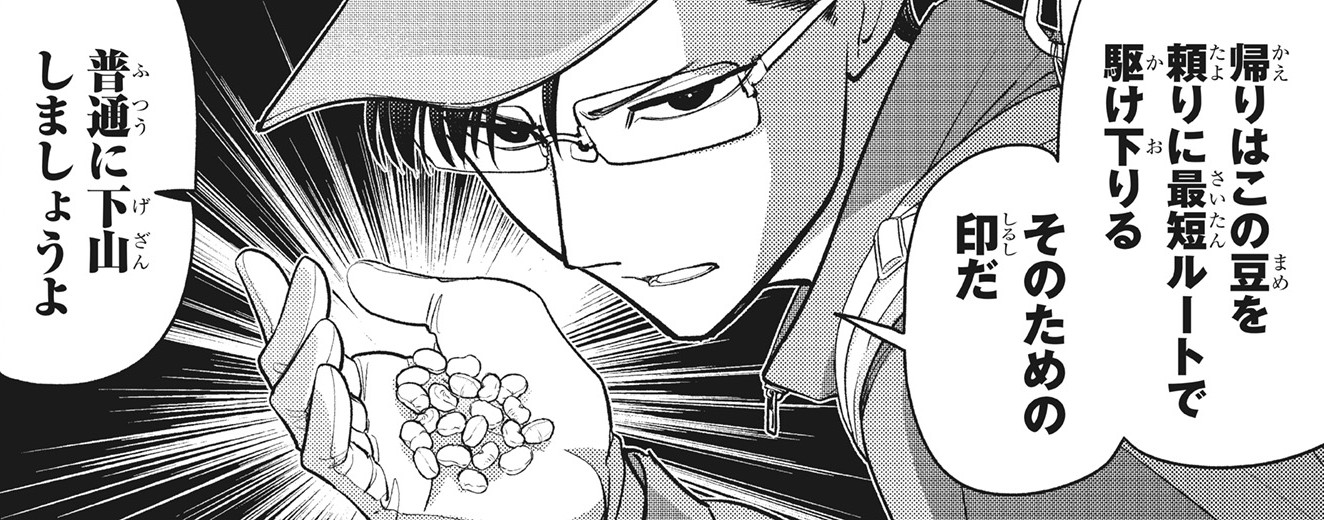
Kumada takes a trip to the mountain, in hope that the bear living in his apartment will follow him there, then he can run away and leave the bear stranded behind. He has with him his employee Sanami, an expert on mountains, to act as a guide. During their hike, Sanami asks Kumada why he’s placing beans on the ground as they go.
- 熊田:
- 「帰りはこの豆を頼りに最短ルートで駆け下りる」
- “On the way back, I'll use these beans as a guide and run down by the shortest route.”
- 「そのための印だ」
- “That's what the markers are for.”
- 砂波:
- 「普通に下山しましょうよ」
- “Let's just go down the mountain normally.”
Kumada wants to leave the bear that lives in his apartment stranded on a mountain. He drops beans along the trail so he can follow them down the shortest route later. そのための印だ means “that’s what the markers are for”. その refers to his plan to run back down.
Just in Case with 念のため
念のため is a set phrase for “just in case” or “to be safe”. 念 means care or attention, so the phrase is literally “for the sake of caution”. Dictionaries gloss it as “to take extra care” or “to make sure”. People say it before double-checking something or taking a precaution. 念のために is also used.

Before Cocoa teaches Rize how to swim, Syaro stops her with a suggestion.
- シャロ:
- 「泳ぐなら念のため軽くストレッチした方がいいと思うの」
- “If you're going to swim, I think you had better do some light stretching just in case.”
- ココア:
- 「さすがシャロちゃん」
- “That's Syaro for you.”
Cocoa is about to teach Rize to swim, and Syaro suggests some light stretching first. Nothing has gone wrong. 念のため presents the stretching as a precaution.
Giving a Cause with ために
ため(に) can also explain why something happened: “because of” or “due to”. The clause before it is usually past, as in 歌ってしまったために, or describes a state, as in 電源が入っていないため. A noun takes の, and a な-adjective keeps な. The main clause describes the result, often with a different subject. It’s often something unwelcome, such as a delay or an accident, though not always.
After cause ため(に), the main clause doesn’t normally make a request, give an order, or invite someone. For those, use から or ので.
This use sounds stiff and belongs mainly to writing. In manga it turns up in narration, announcements, recorded phone messages, and detectives laying out the facts of a case. In everyday talk, から and ので are more common.
Noun + のために doesn’t show tense, so it can be read either way. パーティーのために集まった could mean “gathered for the party” or “gathered because there was a party”. Context decides. With a verb, the form is a strong hint. A plain non-past action points to a purpose, and a past verb or a state points to a cause. It isn’t a rule, though. 父が転勤するために転校する means “change schools because my father is being transferred”. The transfer isn’t the speaker’s goal, and it has a different subject from the main clause.
Further Reading
- 文法をやさしく 第7回 V1ためにV2/V1ようにV2, Japan Foundation (jpf.go.jp)
- ために, Bunpro (bunpro.jp)
Related Grammar
- Doing for a reason with 〜ように
- ように fits when the goal is a state or an ability, such as 泳げる or 見える. Its "Comparing ように with ために" section sets the two side by side.
- Going to for a purpose with 〜に行く
- Verb stem + に行く gives the purpose of going somewhere, as in 買いに行く. ために works with any action.
- Objective reason with 〜ので
- ので is the everyday way to give an objective reason. Cause ため(に) mostly appears in writing.