Quoting and reporting with と and って
Grammar: Hearsay
と is a case particle that marks a phrase as the object of a verb such as 言う (say), 思う (think), or 聞く (hear).
って is a contraction of と言う, and is a casual counterpart to と.
Although both particles have other uses, this page covers quoting and reporting.
Usage Notes
The quoted words or idea are followed by と or って, then the verb.
The quote can be either a direct quote, which keeps the speaker’s words, or an indirect quote, which reports the meaning.
In casual speech, って can end the sentence when the verb is clear from context.
Formation
View formation details
-
Direct quote + と + 言う
- 行きますと言った
- "He said, 'I'll go'"
-
Direct quote + って + 言う
- 大丈夫って言った
- "She said, 'It's okay'"
-
Plain clause + と + 思う
- 今日は寒いと思う
- "I think it is cold today"
-
Plain clause + って + 聞く
- 明日休みだって聞いた
- "I heard that tomorrow is a day off"
Direct Quotes
A direct quote is a quote of someone’s exact words. The quoted line appears before と and a verb such as 言う.
- 先生は静かにしてくださいと言った。
- The teacher said, “Please be quiet.”
Indirect Quotes
An indirect quote conveys the meaning rather than the speaker’s exact words.
- 彼は明日来ると思う。
- I think he will come tomorrow.
For noun and な-adjective sentences, だ stays inside the quoted clause in many contexts.
- 彼女は学生だと聞いた。
- I heard that she is a student.
Casual って
って is a casual counterpart to と, and can be used for either quoting or reporting.
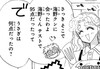
- 海野くんはテストで95点だったって聞いた。
- I heard Umino scored 95 points on the test.
Although って is a contraction with 言う built in, it can use the same array of verbs as と. However, the verb is often dropped when it’s clear from context.
- 明日雨だって。
- They say it will rain tomorrow.
If the sentence names a person as the topic, context must show whether that person is inside or outside the quote.
- 田中さんは来週東京に行くって。
-
Tanaka-san said he is going to Tokyo next week.
- 田中さんは来週東京に行くって。
- They said Tanaka-san is going to Tokyo next week.
The inclusion of 言う clarifies the sentence.
- 田中さんは来週東京に行くって言う。
- Tanaka-san said he is going to Tokyo next week.
Related Grammar
-
Contracting 〜って言う to 〜つー・〜つって・〜つった
- When casual っていう compresses further in rough speech.
- That said with だって
Examples
Call me Teacher with と呼べ
Grammar Explanation: Quoting and reporting with と and って
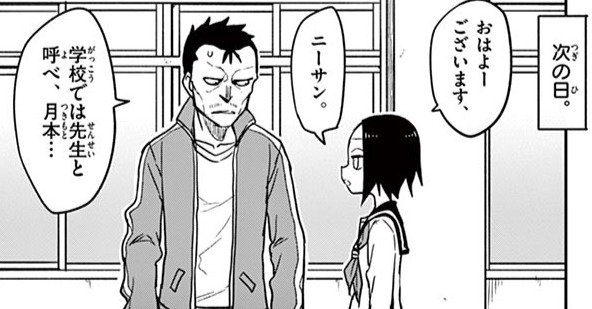
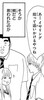
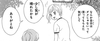
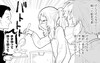
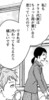
Sanae’s teacher, Mr. Tanabe, has proposed to her older sister, who is also a teacher at the school.
- 「次の日。」
- “The following day.”
- サナエ:
- 「おはよーございます、ニーサン。」
- “Good morning, Big Brother.”
- 田辺:
- 「学校では先生と呼べ、月本…」
- “Call me 'Teacher' at school, Tsukimoto.”
Quoting a reward with って
Grammar Explanation: Quoting and reporting with と and って
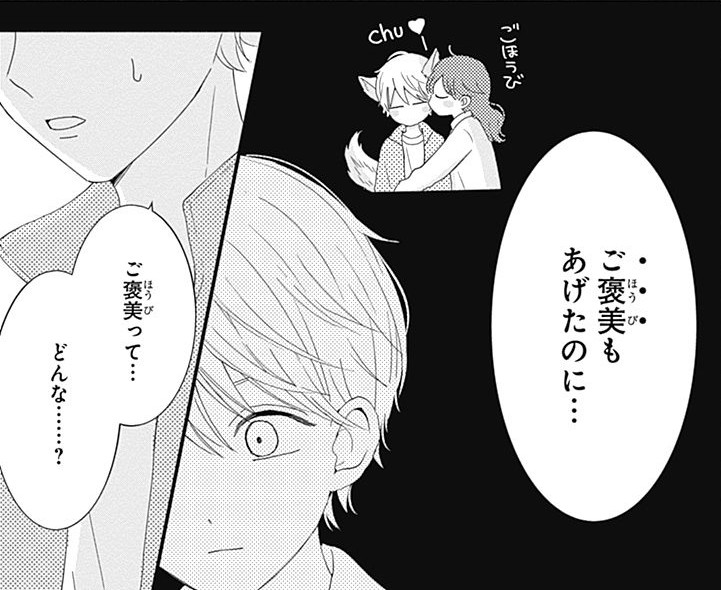
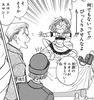
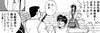
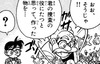
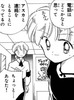
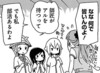
Ayumu tries to throw a basketball into the basket, only to have it bounce back and hit her in the face. After waking in the infirmary, she learns from her friend that Luna carried her there. When Luna denies it, Ayumu says she would have been happy if he did.
- 歩:
- 「ご褒美もあげたのに…」
- “I would have even given you a reward...”
- 月:
- 「ご褒美って… どんな……?」
- “A reward... What kind?”
Thinking it's the motive with と思う
Grammar Explanation: Quoting and reporting with と and って
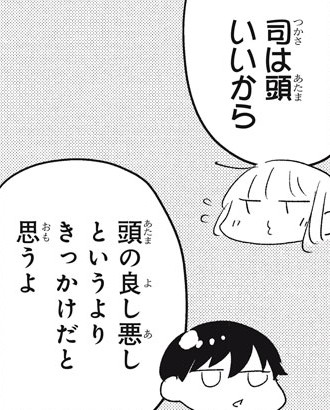
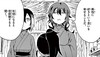
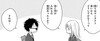
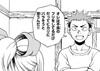
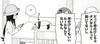
Makoto and Tsukasa meet to study for an upcoming test. When Makoto spends her study time complaining about it, Tsukasa asks if she hates studying. Makoto says it’s not that she hates it so much as it’s difficult. She asks if Tsukasa likes studying, and he says it’s fun to learn new things and connect them to his everyday life.
- 真:
- 「司は頭いいから」
- “That's because you're smart.”
- 司:
- 「頭良し悪しというよりきっかけだと思うよ」
- “I think it's less about whether you're smart or not, and more about having the right motive.”
Supplemental Examples