Reasoning with 〜のだ
Grammar: Reason and Cause » 〜のだ
〜のだ presents a statement as an explanation of the surrounding situation. It often answers an implied “why?” or supplies background the listener needs. Casual speech contracts it to 〜んだ.
Consider the following observations:
- The streets are wet.
- The package that was left on my doorstep is not there.
- My smartphone won’t turn on.
These are incomplete observations. We have observed the effect, but we do not know the cause.
Since the cause is unknown, we are left to reason what the cause is likely to have been.
- It must have rained. (That’s why the streets are wet.)
- My neighbor must have swiped another one of my packages. (That’s why the package is missing from my doorstep.)
- The battery must have stopped working. (That’s why my smartphone won’t turn on.)
This type of reasoning (known in English as abductive reasoning) is where you work out the reason (cause) for your observation (result).
Note that these reasons may not necessarily be correct.
Perhaps a street sweeper washed the streets, maybe I had my package sent to the wrong address, and it could be that I dropped my smartphone and a wire disconnected.
In English, there isn’t anything built into the grammar to denote this kind of reasoning.
In Japanese, there is.
- “It rained のだ.”
- “My neighbor swiped my package のだ.”
- “The battery stopped working のだ.”
This reasoning is intended to explain the cause of what we’ve observed. Thus, you’ll see this grammar referred to as “the explanatory の”.
Structurally, what’s happening is that the sentence is being turned into a noun phrase with の, then だ is added to turn it into a noun sentence: “It is (that) [phrase].” A close approximation in English is to say “It’s because [phrase]”:
- “The streets are wet. It’s because it must have rained.”
- “The package that was left on my doorstep is not there. It’s because my neighbor must have swiped it.”
- “My smartphone won’t turn on. It’s because the battery stopped working.”
It’s also used when you have the complete observation (you know the cause/reason), and you are informing someone who has an incomplete observation:
- “(The streets are wet) [because] there was a flood.”
- “(Your package is missing) [because] a bobcat took it.”
- “(My smartphone won’t turn on) [because] I forgot to charge it.”
The explanatory の can also be asked as a question: “Is it that [phrase]?” “Is it because [phrase]?”
Variations
のだ may appear as んだ or simply の.
When following a noun +だ, the だ becomes な. This results in noun +なのだ, which may appear as noun +なんだ or noun +なの (at the end of a sentence).
Another variation is のか.
Related Grammar
- Objective reason with 〜ので
Examples
Did you come to get me with 〜んです
Grammar Explanation: Reasoning with 〜のだ
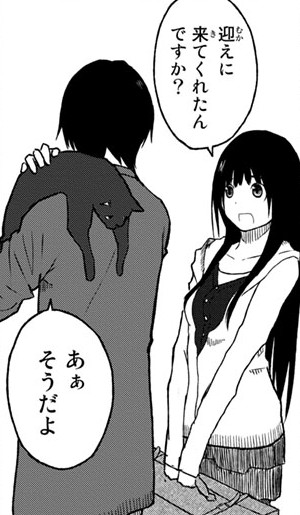
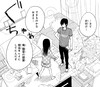
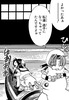
After getting off the intercity bus, Makoto is greeted by her cousin Kei.
- 真琴:
- 「迎えに来てくれたんですか?」
- “Did you come to get me?”
- 圭:
- 「あぁ そうだよ」
- “Yeah, that's right.”
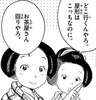
Do you want an origami ninja star with んです
Grammar Explanation: Reasoning with 〜のだ

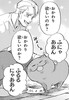
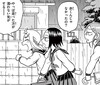
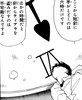
A couple of girls admire the foreign student Sotoka, as she has a sparkle about her. Sotoka notices the girls, mistaking their admiration as being for the origami ninja stars adorning her school bag.
- ソトカ:
- 「ほしいんですか?手裏剣」
- “Is it that you want one? This.”
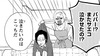
Is your dad still a detective with 〜の
Grammar Explanation: Reasoning with 〜のだ
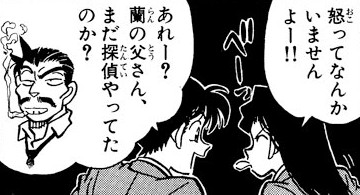
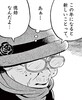
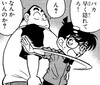
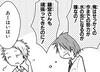
Ran seems angry as Shin’ichi basks in the media attention he’s getting for solving a difficult case. When Shin’ichi asks Ran why she’s angry, she points out that it’s because of Shin’ichi that her father’s been getting fewer case requests.
- 蘭:
- 「怒ってなんかいませんよー!!」
- “I'm not at all angry!”
- 新一:
- 「あれー?蘭の父さん、まだ探偵やってたのか?」
- “Huh? Your dad was still working as a detective?”
Supplemental Examples