Seeking agreement with ね Grammar: Particles
Sentence-final ね reaches toward the listener: “right?” , “isn’t it?” . It marks the statement as shared ground, inviting a nod.
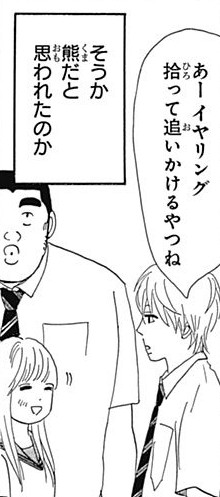
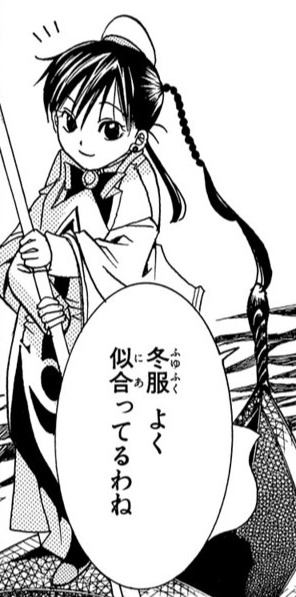
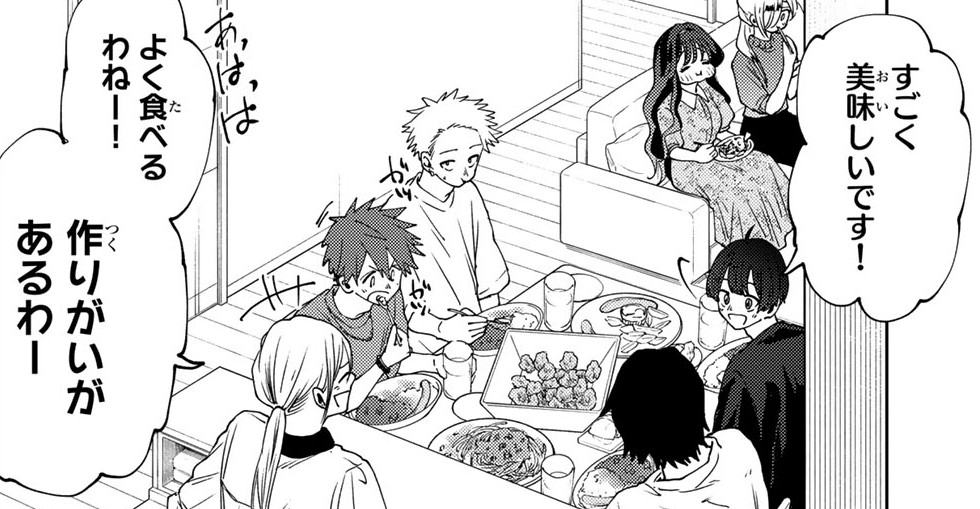
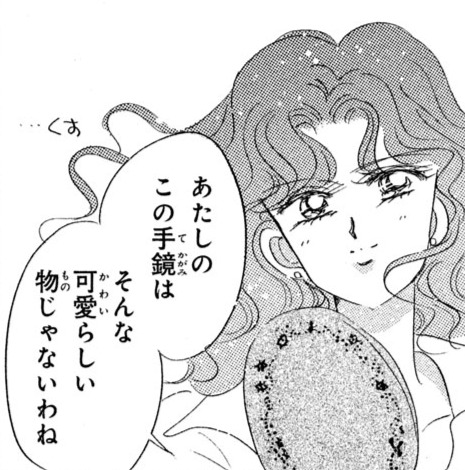
ね keeps Japanese conversation cooperative. In manga dialogue, it can make a character sound warm or gentle, or show that they want agreement.
Usage Notes ね attaches to a complete sentence of any politeness level: 寒( さむ ) いね, 寒( さむ ) いですね. Stretched ねえ works as a standalone attention-getter (“hey…” / “say…”), a different job from the tag use.
ね assumes the listener agrees or knows, while よ assumes the information is new to them. This contrast explains many dialogue endings. よね combines both jobs: assert, then double-check with “…right?”
Formation View formation details Sentence + ね 今日( きょう ) はいい天気( てんき ) だね "Nice weather today, isn't it ?" Sentence + よね (assert, then confirm) 明日( あした ) も来( く ) るよね ?"You're coming tomorrow too, right ?" ねえ (attention-getter) ねえ 、ちょっと聞( き ) いて"Hey , listen a sec." Mid-sentence ね (pacing) それでね 、昨日( きのう ) ね 、変( へん ) なことがあったの "So, y'know , yesterday, something weird happened." Note: Scattered mid-sentence ね keeps the listener along for the ride; common in chatty or childlike speech.Inviting Agreement The classic tag, expecting a nod.
ね presents the statement as something the listener can see or feel too, and invites a nod: “isn’t it?” or “right?”. Compliments and shared reactions often end in ね.
いい天気( てんき ) だね。 Nice weather, isn’t it? Example 1 of 19: Preparing by memorizing with 〜ておく Example 1 of 19
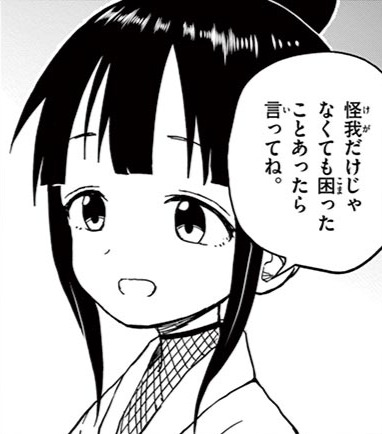
ご注文はうさぎですか? » Volume 1 » Page 16As the experienced barista, Rize is tasked with teaching Cocoa about working at the café.
リゼ: 「メニュー覚( おぼ ) えとけよ」 “Memorize the menu ahead of time.” ココア: 「コーヒーの種類( しゅるい ) が多( おお ) くて難( むずか ) しいね ー」 “The different kinds of coffee are numerous and difficult, huh?” Challenge Yourself Show translation
Challenge
What does リゼ mean in the highlighted line?
リゼ: 「メニュー覚( おぼ ) えとけ よ」 ココア: 「コーヒーの種類( しゅるい ) が多( おお ) くて難( むずか ) しいねー」 Clues 覚( おぼ ) えとけ覚( おぼ ) えとけ = 覚( おぼ ) えておけWhat does the speaker mean? Memorize the menu ahead of time. The base idea is 覚( おぼ ) えておく: memorize it now so it is already known later. Rize commands Cocoa to forget the menu before work. The highlighted form is 覚( おぼ ) えとけ. Here 覚( おぼ ) えとけ = 覚( おぼ ) えておけ, so this choice does not match the Japanese. Rize says Cocoa has already memorized every menu item. The highlighted form is 覚( おぼ ) えとけ. Here 覚( おぼ ) えとけ = 覚( おぼ ) えておけ, so this choice does not match the Japanese. Rize asks Chino to memorize the menu for Cocoa. The highlighted form is 覚( おぼ ) えとけ. Here 覚( おぼ ) えとけ = 覚( おぼ ) えておけ, so this choice does not match the Japanese.
覚( おぼ ) えとけ = 覚( おぼ ) えておけ. The base idea is 覚( おぼ ) えておく: memorize it now so it is already known later.
View Full Example Rize is training Cocoa as a new barista and tells her to memorize the menu. Cocoa looks it over: 難( むずか ) しいねー, “it’s hard, huh?” ね invites Rize to agree, and the long ー makes it a sigh.
Example 2 of 19: Nothing out of the ordinary with 異常 Example 2 of 19
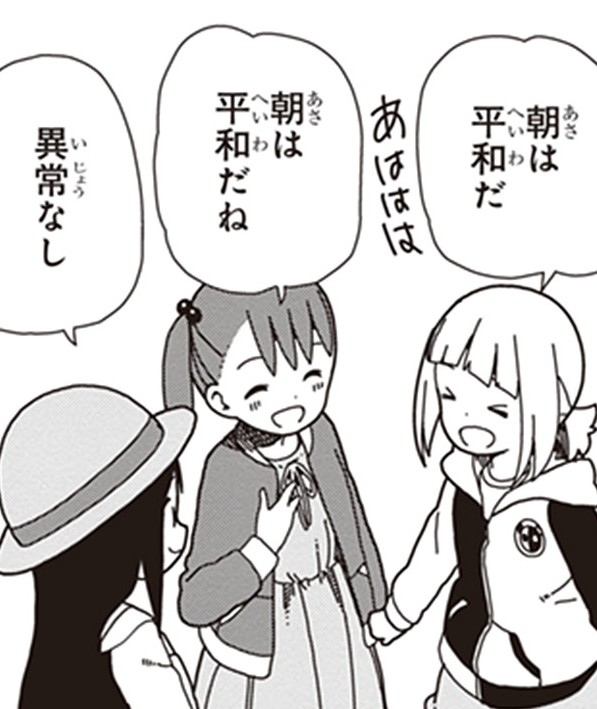
三ツ星カラーズ » Volume 7 » Page 73Yui, Sacchan, and Kotoha go on an early-morning patrol to check for any issues in their neighborhood. Because it’s so early, none of the shops are open yet, and the streets are empty.
さっちゃん: 「朝( あさ ) は平和( へいわ ) だ」 “Morning is peaceful.” 結衣( ゆい ) :「朝( あさ ) は平和( へいわ ) だね 」 “Morning is peaceful, isn't it?” 琴葉( ことは ) :「異常( いじょう ) なし」 “No abnormalities.” Challenge Yourself Show translation
Challenge
What conclusion does Kotoha give after the early-morning patrol?
さっちゃん: 「朝( あさ ) は平和( へいわ ) だ」 結衣( ゆい ) :「朝( あさ ) は平和( へいわ ) だね」 琴葉( ことは ) :「異常( いじょう ) Clues 異常( いじょう ) なしno abnormalities or nothing unusual What does the speaker mean? There is nothing out of the ordinary. 異常( いじょう ) names an abnormality, and なし says none is present. The empty streets are dangerously abnormal. なし negates the presence of an abnormality rather than declaring one. The patrol found one serious problem. 異常( いじょう ) なし is a zero-problem report. Morning patrols should be canceled. Kotoha reports the result of this patrol and gives no recommendation about future patrols. The shops have opened earlier than usual. The line contains no statement about opening times. It simply reports no abnormalities. The neighborhood is peaceful only at night. Yui and Sacchan call the morning peaceful, and Kotoha confirms that nothing unusual is present.
Kotoha gives the clipped patrol report 異常( いじょう ) なし, meaning that they found nothing unusual. Its terse style fits the Colors’ pretend public-safety mission.
View Full Example Yui, Sacchan, and Kotoha are patrolling the neighborhood early in the morning, before any shops open. Sacchan says 朝( あさ ) は平和( へいわ ) だ, a plain statement. Yui says the same thing with ね, 平和( へいわ ) だね, inviting the others to share the feeling. Kotoha reports no problems.
Example 3 of 19: Because strong players gather here with 〜ので Example 3 of 19
ご注文はうさぎですか? » Volume 1 » Page 103Cocoa inquires about the board and pieces sitting in front of Chino. Chino says it’s chess and gives a further explanation.
チノ: 「この温泉( おんせん ) は強者( きょうしゃ ) が集( あつ ) まるのでおじいちゃんは白熱( はくねつ ) してました」 “Grandpa would get excited because strong players gather at this hot spring spa.” ココア: 「温泉( おんせん ) に浸( つ ) かりながらチェス出来( でき ) るのっていいね ー」 “It's nice being able to play chess while soaking in the hot spring.” Challenge Yourself Show translation
Challenge
What does チノ mean in the highlighted line?
チノ: 「この温泉( おんせん ) は強者( きょうしゃ ) が集( あつ ) まるので おじいちゃんは白熱( はくねつ ) してました」 ココア: 「温泉( おんせん ) に浸( つ ) かりながらチェス出来( でき ) るのっていいねー」 Clues ので 集( あつ ) まるので explains Grandpa's excitementWhat does the speaker mean? Grandpa would get excited because strong players gather at this hot spring spa. Strong players gathering at the hot spring supplies the reason for おじいちゃんは白熱( はくねつ ) してました. Chino says strong players gather because Grandpa becomes excited. The highlighted form is ので. Here 集( あつ ) まるので explains Grandpa's excitement, so this choice does not match the Japanese. Chino says the hot spring water itself makes the players strong. The highlighted form is ので. Here 集( あつ ) まるので explains Grandpa's excitement, so this choice does not match the Japanese. Chino says Grandpa avoided chess whenever strong players gathered. The highlighted form is ので. Here 集( あつ ) まるので explains Grandpa's excitement, so this choice does not match the Japanese.
集( あつ ) まるので explains Grandpa’s excitement. Strong players gathering at the hot spring supplies the reason for おじいちゃんは白熱( はくねつ ) してました.
View Full Example Chino explains that her grandfather got fired up playing chess at this hot spring. Cocoa thinks it sounds great: 温泉( おんせん ) に浸( つ ) かりながらチェス出来( でき ) るのっていいねー, “playing chess while soaking is nice, isn’t it?” ね shares the thought.
Example 4 of 19: Kindred spirits in golf with 気が合う Example 4 of 19
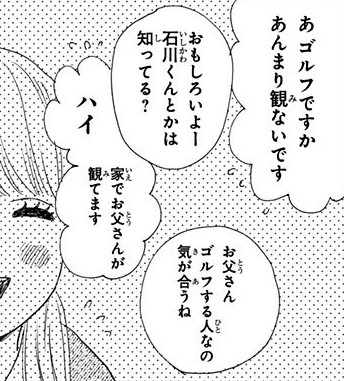
俺物語!! » Volume 3 » Page 170Takeo’s girlfriend Rinko visits to study with him, but Takeo’s parents take turns interrupting them to get to know her better. Takeo’s father, Yutaka, asks if she watches golf.
凛子( りんこ ) :「あ ゴルフですか。あんまり観( み ) ないです」 “Ah, golf? I don't watch a lot of it.” 豊( ゆたか ) :「おもしろいよー!石川( いしかわ ) くんとかは知( し ) ってる?」 “It's fun! Do you know about Ishikawa-kun?” 凛子( りんこ ) :「ハイ。家( いえ ) でお父( とう ) さんが観( み ) てます」 “I do. My father watches it at home.” 豊( ゆたか ) :「お父( とう ) さん ゴルフする人( ひと ) なの。気( き ) が合( あ ) うね 」 “So your dad's a golf guy. We're kindred spirits, eh?” Challenge Yourself Show translation
Challenge
Why does Yutaka say he and Rinko's father would get along?
凛子( りんこ ) :「あ ゴルフですか。あんまり観( み ) ないです」 豊( ゆたか ) :「おもしろいよー!石川( いしかわ ) くんとかは知( し ) ってる?」 凛子( りんこ ) :「ハイ。家( いえ ) でお父( とう ) さんが観( み ) てます」 豊( ゆたか ) :「お父( とう ) さん ゴルフする人( ひと ) なの。気( き ) が合( あ ) う Clues お父( とう ) さんが観( み ) てます Rinko's father watches golf お父( とう ) さん ゴルフする人( ひと ) なの。気( き ) が合( あ ) うね her father is a golf person, so their interests match What does the speaker mean? They share an interest in golf. Yutaka connects Rinko's father being a golf person with 気( き ) が合( あ ) う, having compatible interests. They attended the same school. The conversation establishes a golf connection, not a shared school. They both dislike watching sports. Rinko says her father watches golf, and Yutaka is enthusiastic about it. Rinko's father knows Ishikawa personally. Knowing about the golfer does not establish a personal acquaintance. The shared interest is golf itself. They work together at a golf course. No workplace is mentioned. Yutaka infers compatibility from the hobby. They have already played golf together. Yutaka is drawing a new conclusion about someone he has not been shown meeting.
Yutaka learns that Rinko’s father watches or plays golf and immediately decides their interests would match. 気( き ) が合( あ ) う describes people whose temperaments or interests fit well.
View Full Example Takeo’s father learns that Rinko’s father watches golf. 気( き ) が合( あ ) うね, “we’d get along”, invites her to agree. It’s a stretch, since he has never met her father, and ね shows how eager he is.
Example 5 of 19: Kindrid spirits in drinking tea with 気が合う Example 5 of 19
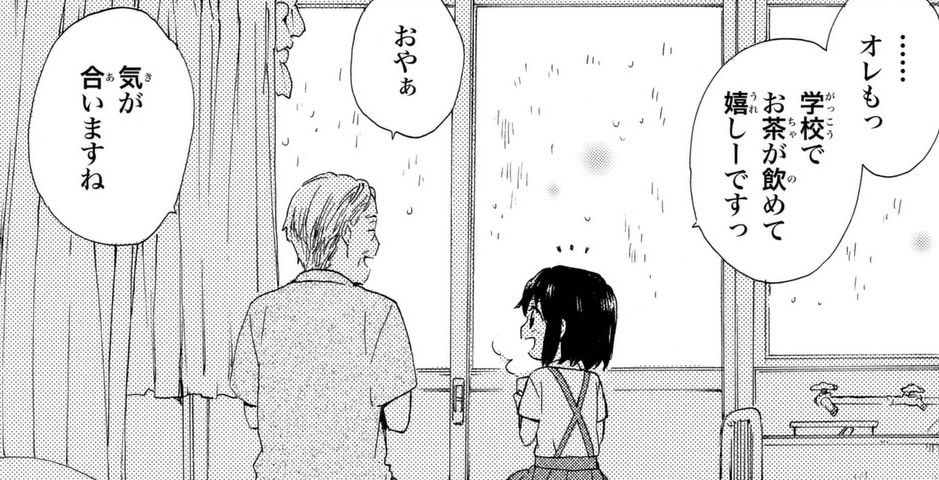
老女的少女ひなたちゃん » Volume 3 » Page 104Hinata escorts a classmate to the school nurse. There, she meets an elderly man sipping tea. Seeing her interest, the old man offers her a cup.
日向( ひなた ) :「……オレもっ 学校( がっこう ) でお茶( ちゃ ) が飲( の ) めて嬉( うれ ) しーですっ」 “It also makes me happy when I can drink tea at school.” おじいさん: 「おやぁ 気( き ) が合( あ ) いますね 」 “Oh, we're kindred spirits, huh?” Challenge Yourself Show translation
Challenge
Why does the elderly man say that he and Hinata are kindred spirits?
日向( ひなた ) :「……オレもっ 学校( がっこう ) でお茶( ちゃ ) が飲( の ) めて嬉( うれ ) しーですっ」 おじいさん: 「おやぁ 気( き ) が合( あ ) います Clues 学校( がっこう ) でお茶( ちゃ ) が飲( の ) めて嬉( うれ ) しーですHinata is happy that she can drink tea at school 気( き ) が合( あ ) いますねhe notices that their tastes or temperaments match What does the speaker mean? They both enjoy drinking tea at school. Hinata says that having tea at school makes her happy, and the man responds 気が合いますね because he shares that interest. They both came to the nurse because they feel ill. Hinata escorted a classmate, and the man is already enjoying tea. Their connection concerns tea, not matching illnesses. They attended the same school when they were young. Nothing in the exchange gives them a shared school history. The agreement comes from their enjoyment of tea. Hinata brought the tea that the man is drinking. The man offers Hinata tea after noticing her interest. She does not say that she supplied his cup. They use the same first-person pronoun. Hinata uses オレ, but the man's comment follows her enthusiasm for tea, not a comparison of pronouns. They both want to leave the nurse's office immediately. The scene shows them settling into a shared tea moment. Neither says that they want to leave.
Hinata says she is happy to drink tea at school, matching the elderly man’s own enjoyment. His 気が合いますね means that their tastes click, and ね warmly invites her to recognize the connection too.
View Full Example Hinata brought a classmate to the school nurse, where an old man is sipping tea, and he offers her a cup. She says she’s happy to drink tea at school too. 気( き ) が合( あ ) いますね, “we’re kindred spirits”, is the polite version, a warm nod from one tea lover to another.
Example 6 of 19: Looking good in a summer uniform as well with 夏服 Example 6 of 19
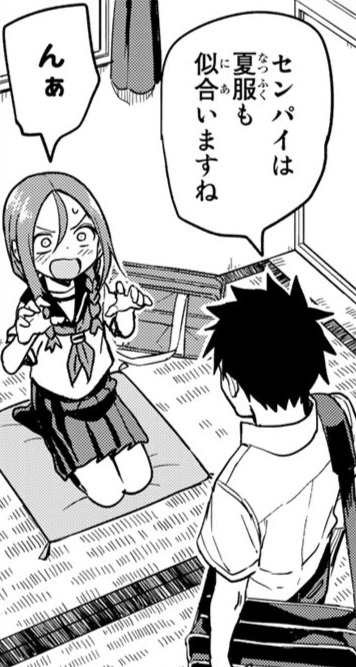
それでも歩は寄せてくる » Volume 7 » Page 101Ayumu goes to the shogi club room after school. There, he and Urushi find they’ve both switched from their winter uniform to their summer uniform on the same day.
歩( あゆむ ) :「センパイは夏服( なつふく ) も似( に ) 合( あ ) いますね 」 “You look good in your summer uniform too.” Challenge Yourself Show translation
Challenge
歩( あゆむ ) :「センパイは夏服( なつふく ) 似( に ) 合( あ ) いますね」 夏服( なつふく ) もthe summer uniform too 似( に ) 合( あ ) いますsuits someone or looks good on them What does the speaker mean? Her summer uniform suits her, just as her winter uniform does. も follows 夏服( なつふく ) , adding the summer uniform to the clothing that suits her. The summer uniform suits him as well as her. も marks 夏服( なつふく ) , not Ayumu. センパイは keeps the compliment about Urushi. Her summer uniform suits her better than her winter uniform. も means that the summer uniform suits Urushi too. It does not rank the two uniforms.
Ayumu says that Urushi looks good in her summer uniform too. With も after 夏服( なつふく ) , he implies that her winter uniform also suits her.
View Full Example Ayumu and Urushi have both switched to summer uniforms on the same day. 似合( にあ ) いますね, “it suits you”, is a compliment, and ね offers it as something they can both see. Ayumu is polite with his senior.
Example 7 of 19: More of a jaguar vibe with より Example 7 of 19
あずまんが大王 » Volume 1年生 » Page 66Ayumu and Chiyo get a summer job at Magnetron Hamburger. Their classmate stops by and orders the special that includes a toy of a cat and kitten.
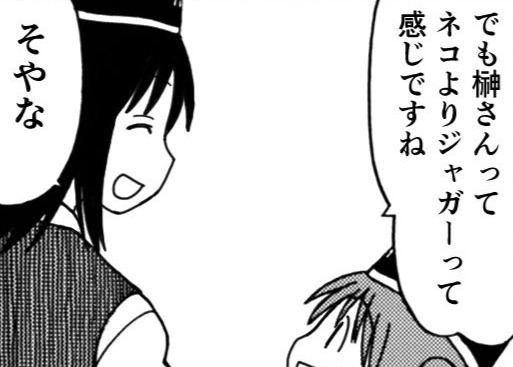
ちよ: 「でも榊( さかき ) さんってネコよりジャガーって感( かん ) じですね 」 “But Sakaki gives off more of a jaguar vibe than a cat, doesn't she?” 歩( あゆむ ) :「そやな」 “That's right.” Challenge Yourself Show translation
Challenge
What impression does Chiyo have of Sakaki?
ちよ: 「でも榊( さかき ) さんってネコよりジャガーって感( かん ) じですね」 歩( あゆむ ) :「そやな」 Clues 榊( さかき ) さんってas for Sakaki ネコより than a cat, setting the comparison baseline ジャガーって感( かん ) じ a jaguar sort of impression What does the speaker mean? Sakaki gives off more of a jaguar impression than a cat impression. ネコより makes a cat the baseline, while ジャガーって感( かん ) じ gives Chiyo's stronger impression. Sakaki likes cats more than she likes jaguars. The line compares how Sakaki comes across. It does not compare her preferences. Sakaki seems more like a cat than a jaguar. This reverses the comparison. ネコ is the baseline, and ジャガー supplies the stronger impression. Sakaki says that Chiyo reminds her of a jaguar. Chiyo is speaking about 榊( さかき ) さん, not reporting something Sakaki said about Chiyo. Chiyo cannot decide whether the toy is a cat or a jaguar. 感( かん ) じ describes Chiyo's impression of Sakaki. It does not identify the toy. Chiyo thinks Sakaki should choose the cat toy. The line makes an observation and seeks agreement with ですね. It does not recommend a toy.
Chiyo says Sakaki has more of a jaguar vibe than a cat vibe. Ayumu’s そやな agrees with that comparison.
View Full Example Chiyo and Ayumu have summer jobs at a burger shop, and Sakaki has just ordered the special that comes with a cat toy. Chiyo thinks Sakaki is more of a jaguar than a cat: ジャガーって感( かん ) じですね. ね invites agreement, and Ayumu gives it with そやな.
Example 8 of 19: Thanks for the sunset photograph with ありがと Example 8 of 19
からかい上手の高木さん » Volume 13 » Page 126On her way home from the store, Takagi sees Nishikata out jogging. She asks where he’s heading, and he says he doesn’t really have a destination, but he’s jogged as far as the beach before. Takagi doesn’t seem to fully believe him, so after they part ways, Nishikata heads specifically for the beach. Once there, he takes a photograph and sends it to Takagi as proof of his accomplishment.
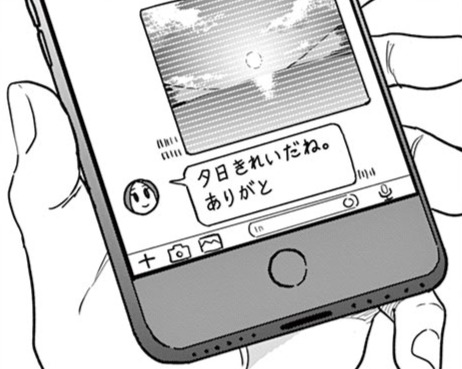
高木( たかぎ ) :「夕日( ゆうひ ) きれいだね 。ありがと」 “The sunset is pretty, isn't it? Thanks.” Challenge Yourself Show translation
Challenge
Why does Takagi thank Nishikata?
高木( たかぎ ) :「夕日( ゆうひ ) きれいだね。ありがと 」 Clues 夕日( ゆうひ ) きれいだね"The sunset is pretty, isn't it?" ありがと a casual shortening of ありがとう, "thanks" What does the speaker mean? He sent her a photograph of the sunset. Takagi comments on the beautiful sunset and immediately says ありがと, thanking him for sharing the photograph. He invited her to watch the sunset at the beach. The line reacts to the sunset image he sent. It does not accept an invitation. He agreed that the sunset was pretty. ね seeks agreement, but Takagi's thanks responds to receiving the photograph. He told her where the store was. There is no mention of the store or directions in her message. He apologized for interrupting her. ありがと expresses thanks, and nothing in the line refers to an apology. He promised to jog with her next time. The message discusses the sunset. It does not mention a future run.
Takagi first reacts to the image with 夕日( ゆうひ ) きれいだね, then says ありがと. She is thanking Nishikata for sending the sunset photograph.
View Full Example Takagi didn’t quite believe Nishikata jogs all the way to the beach, so he went there and sent her a photo as proof. 夕日( ゆうひ ) きれいだね, “the sunset’s pretty, isn’t it?”, shares the view with him. Then she thanks him.
Example 9 of 19: Cause of incidents in the pool with 原因 Example 9 of 19
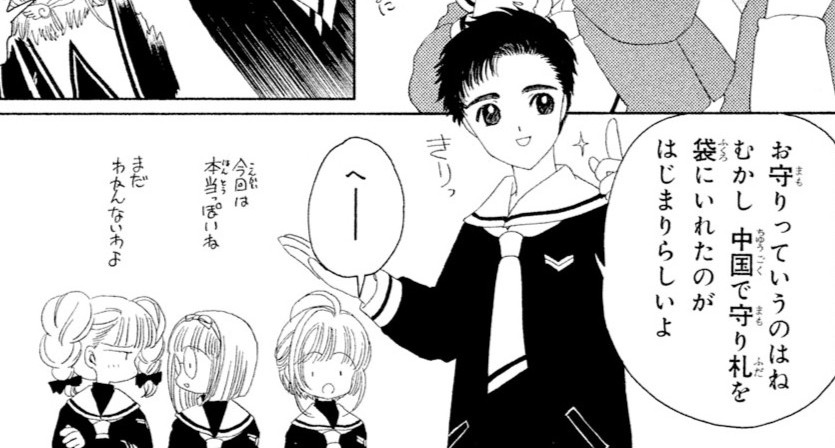
カードキャプターさくら » Volume 1 » Page 112After cheerleading practice, Sakura overhears her friends talking about incidents at the school pool, where Sakura and Chiharu were among those mysteriously pulled underwater.
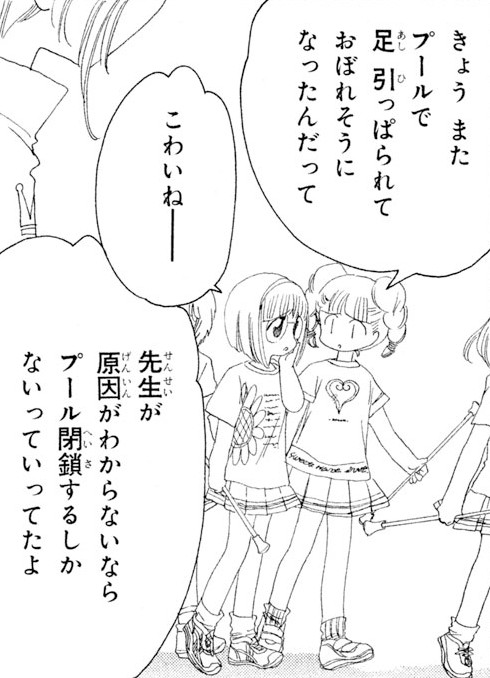
千春( ちはる ) :「きょう また プールで足( あし ) 引( ひ ) っぱられておぼれそうになったんだって」 “I heard that today, someone got dragged under the water at the pool and almost drowned again.” 奈緒子( なおこ ) :「こわいね ーーー」 “That's scary!” 千春( ちはる ) :「先生( せんせい ) が原因( げんいん ) がわからないならプール閉鎖( へいさ ) するしかないっていってたよ」 “The teacher said that if they can't figure out the cause, they'll have no choice but to close the pool.” Challenge Yourself Show translation
Challenge
What does the teacher say may have to happen?
千春( ちはる ) :「きょう また プールで足( あし ) 引( ひ ) っぱられておぼれそうになったんだって」 奈緒子( なおこ ) :「こわいねーーー」 千春( ちはる ) :「先生( せんせい ) が原因( げんいん ) 閉鎖( へいさ ) するしかないっていってたよ」 Clues 原因( げんいん ) がわからないならif the cause remains unknown プール閉鎖( へいさ ) するしかない there is no choice but to close the pool What does the speaker mean? The pool may have to close if nobody can determine the cause. なら sets the unknown cause as the condition, and 閉鎖( へいさ ) するしかない says closing is the only remaining option. The pool must close because the cause has already been found. The condition is that the cause is not known. Finding it could prevent the closure. The teacher must investigate the pool without telling anyone. The reported decision concerns closing the pool. The line does not describe a secret investigation. Students will have to swim until someone finds the cause. The teacher considers stopping use of the pool, not requiring students to keep swimming. The pool can stay open if another student is pulled underwater. The unexplained incidents make closure more likely. Another incident is not given as a reason to remain open. The school has no choice but to explain the cause to the students. しかない applies to プール閉鎖( へいさ ) する, closing the pool, not giving an explanation.
The teacher says the school may have no option except closing the pool if the cause remains unknown. なら sets the condition, and 〜しかない marks closure as the only available response.
View Full Example Something keeps pulling students under at the school pool, and Chiharu has heard it happened again today. Naoko reacts: こわいねーーー, “that’s scary!” ね shares the reaction, and the long ー draws it out.
Example 10 of 19: Difficult to discard a photo with 〜がたい Example 10 of 19
思い、思われ、ふり、ふられ » Volume 7 » Page 30Inui’s class is gathering photos of couples for a school festival contest. Another couple comes to join in.
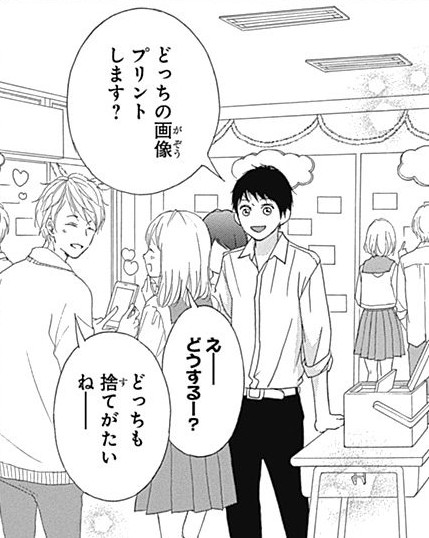
乾( いぬい ) :「どっちの画像( がぞう ) プリントします?」 “Which image should I print?” 彼女( かのじょ ) :「えーーー どうするー?」 “Oh my gosh... What should we do?” 彼氏( かれし ) :「どっちも捨( す ) てがたいね ーーー」 “Both are hard to abandon.” Challenge Yourself Show translation
Challenge
Why does the couple have trouble choosing which image to print?
乾( いぬい ) :「どっちの画像( がぞう ) プリントします?」 彼女( かのじょ ) :「えーーー どうするー?」 彼氏( かれし ) :「どっちも捨( す ) てがたい ねーーー」 Clues どっちも both of them 捨( す ) てがたいhard to reject or give up What does the speaker mean? Neither photo is easy for them to reject. どっちも applies 捨( す ) てがたい equally to both images. Neither photo can be printed by the machine. The difficulty is choosing against one image, not a technical printing problem. They dislike both photos and want new ones. 捨( す ) てがたい means both options have enough appeal that giving either one up is difficult. They have already decided to print both images. They are still being asked to choose which one to print. They cannot tell which image belongs to them. The couple recognizes both photos. Their problem is selecting between them. Inui has asked them to throw both photos away. Inui asks which image to print, and the couple uses 捨( す ) てる figuratively for rejecting the other choice.
The couple likes both photos enough that neither is easy to reject. どっちも applies the emotional difficulty of 捨( す ) てがたい to both choices.
View Full Example Inui’s class is collecting couple photos for a school festival contest, and one couple can’t decide which shot to print. 捨( す ) てがたい is “hard to give up”, and ねーーー invites his girlfriend to agree that both are good.
Example 11 of 19: Diving into the river with 飛びこむ Example 11 of 19
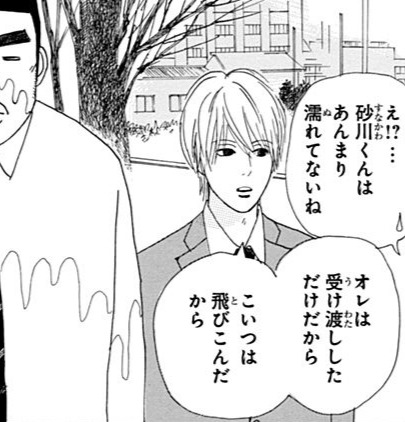
俺物語!! » Volume 1 » Page 114Takeo and Sunakawa meet Yamato at the park. Yamato sees that Takeo is soaked. Sunakawa explains that they saved a child from drowning.
大和( やまと ) :「え!?… 砂川( すなかわ ) くんはあんまり濡( ぬ ) れてないね 」 “Huh?!... You're not that wet, Sunakawa.” 砂川( すなかわ ) :「オレは受( う ) け渡( わた ) ししただけだから」 “I just did the handoff, is all.” 「こいつは飛( と ) びこんだから」 “This guy dived right in.” Challenge Yourself Show translation
Challenge
Why is Takeo much wetter than Sunakawa?
大和( やまと ) :「え!?… 砂川( すなかわ ) くんはあんまり濡( ぬ ) れてないね」 砂川( すなかわ ) :「オレは受( う ) け渡( わた ) ししただけだから」 「こいつは飛( と ) びこんだ Clues オレは受( う ) け渡( わた ) ししただけだから Sunakawa only handled the handoff こいつは飛( と ) びこんだから Takeo jumped into the river What does the speaker mean? Takeo jumped into the river while Sunakawa only handled the rescued child. 飛( と ) びこんだ explains Takeo's soaking, while だけ limits Sunakawa's role to the handoff. Sunakawa jumped in first, then gave Takeo his wet clothes. Sunakawa assigns 飛( と ) びこんだ to こいつ, Takeo, and says his own role was only the handoff. Takeo fell into the river while trying to hand something to Sunakawa. The line describes a deliberate jump into the river, not an accidental fall during the handoff. Takeo stayed in the rain while Sunakawa waited indoors. The contrast comes from the river rescue and their different roles, not weather. Sunakawa dried off before they met Yamato. He explains that he never entered the water, not that he dried himself afterward. Takeo carried Sunakawa across the river. Sunakawa handled the rescued child after Takeo jumped in. He was not carried across.
Takeo entered the river to save the child, while Sunakawa stayed out and handled the handoff. だけ minimizes Sunakawa’s role, and 飛( と ) びこんだ identifies the action that soaked Takeo.
View Full Example Takeo and Sunakawa saved a drowning child, and Takeo is soaked. Yamato notices that Sunakawa isn’t: あんまり濡( ぬ ) れてないね, “you’re not very wet”. ね makes it an observation she expects him to confirm, and he explains that he only did the handoff.
Example 12 of 19: Don't want you to worry with 〜てほしくない Example 12 of 19
くノ一ツバキの胸の内 » Volume 4 » Page 133Kagetsu is overworking herself trying to write a song for her group’s upcoming performance.
With a typhoon passing by, she worries their outdoor stage may get ruined. Hototogisu offers to sneak out and check, and Mukuge goes with her.
Outside, Hototogisu says that Kagetsu stops humming when she’s worried, and it’s lonely without her humming.
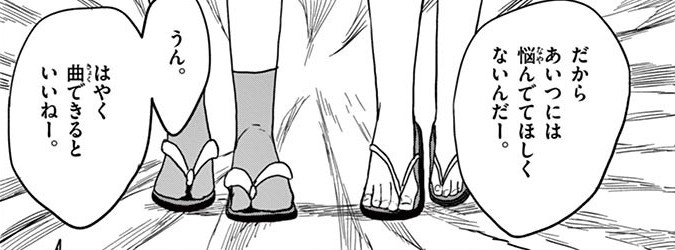
ホトトギス: 「だからあいつには悩( なや ) んでてほしくないんだー。」 “That's why I don't want her to be worrying.” ムクゲ: 「うん。はやく曲( きょく ) できるといいね ー。」 “Mm-hmm. It'd be nice if she could finish her song quickly.” Challenge Yourself Show translation
Challenge
What does Hototogisu want for Kagetsu?
ホトトギス: 「だからあいつには 悩( なや ) んでてほしくない んだー。」 ムクゲ: 「うん。はやく曲( きょく ) できるといいねー。」 Clues あいつには "as for her," marking Kagetsu as the person whose state matters 悩( なや ) んでてほしくない"I do not want her to be worrying" 曲( きょく ) できるといいね"It would be good if she could finish the song." What does the speaker mean? She wants Kagetsu to stop being burdened by worry. あいつには identifies Kagetsu, and 悩( なや ) んでてほしくない expresses Hototogisu's wish that she not remain troubled. She wants Kagetsu to stop humming while she works. Hototogisu misses Kagetsu's humming. She wants the worry to stop, not the humming. She wants Kagetsu to abandon the song. Mukuge hopes the song will be finished soon. Neither speaker asks Kagetsu to abandon it. She wants Kagetsu to worry more about the outdoor stage. ほしくない negates the wish. Hototogisu does not want Kagetsu worrying. She wants Kagetsu to ask someone else to write the song. The line concerns Kagetsu's emotional state, not who should compose the song. She wants Kagetsu to check the stage herself. Hototogisu and Mukuge go to check the stage so Kagetsu does not have to keep worrying about it.
Hototogisu says あいつには悩( なや ) んでてほしくない. She does not want Kagetsu weighed down by worry, and Mukuge adds the hope that the song will soon be finished.
View Full Example Kagetsu has been overworking herself on a song for their performance, and Hototogisu misses her humming. Mukuge agrees: 曲( きょく ) できるといいねー, “I hope she finishes her song soon”. 〜といいね shares a hope.
Example 13 of 19: Feeling you've gained weight with 〜気がする Example 13 of 19
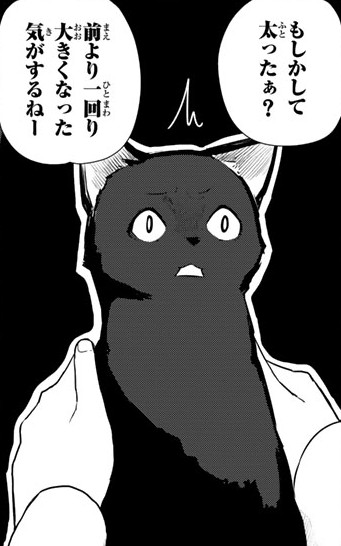
ふらいんぐうぃっち » Volume 2 » Page 136Nao sees Makoto’s cat, Chito. She stops to pet the cat when she notices something.
なお: 「もしかして太( ふと ) ったぁ?前( まえ ) より一( ひと ) 回( まわ ) り大( おお ) きくなった気( き ) がするね ー」 “Could it be you've gotten fatter? I feel you've grown a size bigger than before.” Challenge Yourself Show translation
Challenge
What impression does Nao have of Chito?
なお: 「もしかして太( ふと ) ったぁ?前( まえ ) より一( ひと ) 回( まわ ) り大( おお ) きくなった気( き ) がする Clues もしかして太( ふと ) ったぁ? she wonders whether Chito has gained weight 前( まえ ) より一( ひと ) 回( まわ ) り大( おお ) きくなった気( き ) がするChito seems one size bigger than before What does the speaker mean? Chito seems to have grown bigger and gained weight. 前( まえ ) より sets the comparison with before, and 気( き ) がする marks Nao's impression that Chito is larger. Chito looks smaller than the last time Nao saw her. 一( ひと ) 回( まわ ) り大( おお ) きくなった says Chito has become noticeably bigger, not smaller. Chito has definitely been weighed by a veterinarian. 気( き ) がする makes this Nao's subjective impression rather than a confirmed measurement. Chito seems tired from walking too far. Nao comments on size and possible weight gain. She does not mention fatigue or distance. Chito has grown taller but lost weight. もしかして太( ふと ) った connects the larger appearance to weight gain, not weight loss. Chito looks exactly the same as before. 前( まえ ) より and 大( おお ) きくなった explicitly compare the current cat with a smaller earlier appearance.
Nao thinks Chito may have gained weight because the cat looks one size bigger than before. 気( き ) がする presents that as an impression, not a fact she has measured.
View Full Example Nao stops to pet Makoto’s cat, Chito, and suspects the cat has put on weight. 〜気( き ) がするねー, “I feel like (you’ve gotten bigger)”, invites Makoto to look and agree.
Example 14 of 19: Limited amusement park admission with 入場制限 Example 14 of 19
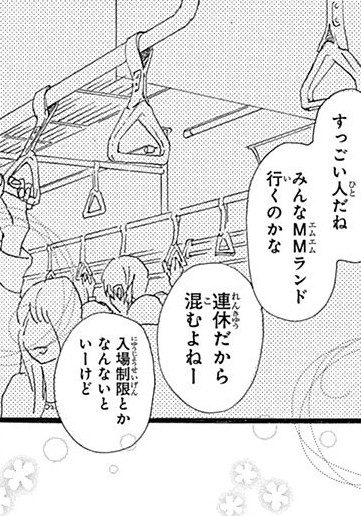
俺物語!! » Volume 4 » Page 50Takeo and his friends board the train bound for the amusement park, MM Land.
凛子( りんこ ) :「すっごい人( ひと ) だね 。みんなMMランド行( い ) くのかな」 “There's a lot of people here. I wonder if everyone's going to MM Land.” 隼人( はやと ) :「連休( れんきゅう ) だから混( こ ) むよね ー」 “It's a long holiday, so it'll be crowded.” 愛( あい ) :「入場( にゅうじょう ) 制限( せいげん ) とかなんないといーけど」 “I hope they don't restrict admission or anything.” Challenge Yourself Show translation
Challenge
What problem does Ai worry they may face at the amusement park?
凛子( りんこ ) :「すっごい人( ひと ) だね。みんなMMランド行( い ) くのかな」 隼人( はやと ) :「連休( れんきゅう ) だから混( こ ) むよねー」 愛( あい ) :「入場( にゅうじょう ) 制限( せいげん ) Clues 連休( れんきゅう ) だから混( こ ) むit will be crowded because of the long holiday 入場( にゅうじょう ) 制限( せいげん ) とかなんないといーけどI hope it does not turn into admission restrictions or anything like that What does the speaker mean? The park may restrict admission because of the crowds. 入場( にゅうじょう ) 制限( せいげん ) is limiting entry, and the preceding crowd discussion supplies the reason for the concern. The train may stop before reaching the park. Ai names an admission problem at the destination, not a disruption to the train. The park may close for the entire holiday. Restricting how many people enter is not the same as closing completely. Their group may be required to split up. The line worries about entry limits generally and does not describe a group rule. Only adults may be allowed into the park. No age restriction appears. The concern comes from crowding. The park may charge extra during the holiday. Ai discusses whether admission will be limited, not whether the price will change.
Ai worries that the long-holiday crowds could make the park restrict admission. The contracted といー expresses her hope that this problem will not occur.
View Full Example Takeo and his friends are on the train to MM Land. Rinko notices the crowd: すっごい人( ひと ) だね, “so many people!” Hayato agrees and explains with よね: it’s a long holiday, so it was bound to be crowded.
Example 15 of 19: Should have brought an umbrella with 〜べきだった Example 15 of 19
からかい上手の(元)高木さん » Volume 9 » Page 23On the way home from shopping, it starts raining.
お母( かあ ) さん: 「傘( かさ ) 持( も ) つべきだったね ー。」 “We should have brought an umbrella, huh?” お父( とう ) さん: 「そうだなー。」 “You're right.” Challenge Yourself Show translation
Challenge
What does Chii's mother regret?
お母( かあ ) さん: 「傘( かさ ) 持( も ) つべきだった ねー。」 お父( とう ) さん: 「そうだなー。」 Clues 傘( かさ ) 持( も ) つcarry or bring an umbrella 〜べきだった should have done, expressing hindsight ねー invites the listener to agree What does the speaker mean? They should have brought an umbrella before leaving. 傘( かさ ) 持( も ) つべきだった looks back on bringing an umbrella as the better choice they failed to make. They should buy an umbrella after they get home. 〜べきだった expresses regret about an earlier choice, not advice for after the trip. They brought an umbrella but should not have used it. The regret is that they did not bring one. The line does not say an umbrella is with them. Chii should carry all of the shopping bags. The object named is 傘( かさ ) , and the comment is shared rather than directed at Chii. They should wait for the rain before leaving home. The rain has already caught them outside. The missed preparation was bringing an umbrella. They are required to hold an umbrella right now. The past だった makes this hindsight about what should have happened earlier.
Once it starts raining, Chii’s mother reflects that they should have brought an umbrella. Nishikata agrees with her hindsight.
View Full Example The family is on the way home from shopping when it starts to rain. 傘( かさ ) 持( も ) つべきだったねー, “we should have brought an umbrella”, is a shared regret, and ね invites agreement. The father gives it: そうだなー.
Example 16 of 19: That coffee with それ Example 16 of 19
ご注文はうさぎですか? » Volume 1 » Page 11Cocoa tries to show off her ability to recognize the three types of coffee Chino made for her.
ココア: 「この酸味( さんみ ) …キリマンジャロだね 」 “This acidity… it's definitely Kilimanjaro.” チノ: 「それがブルーマウンテンです」 “That is Blue Mountain.” Challenge Yourself Show translation
Challenge
What does チノ mean in the highlighted line?
ココア: 「この酸味( さんみ ) …キリマンジャロだね」 チノ: 「それ がブルーマウンテンです」 Clues それ それ points to the coffee near Cocoa What does the speaker mean? That is Blue Mountain. Chino uses それ because the coffee is on Cocoa's side of the conversation, close to the listener rather than to Chino. Chino confirms Cocoa's guess that the coffee is Kilimanjaro. The highlighted form is それ. Here それ points to the coffee near Cocoa, so this choice does not match the Japanese. Chino uses それ for coffee that is next to Chino herself. The highlighted form is それ. Here それ points to the coffee near Cocoa, so this choice does not match the Japanese. Chino says Blue Mountain and Kilimanjaro are the same coffee. The highlighted form is それ. Here それ points to the coffee near Cocoa, so this choice does not match the Japanese.
それ points to the coffee near Cocoa. Chino uses それ because the coffee is on Cocoa’s side of the conversation, close to the listener rather than to Chino.
View Full Example Chino made Cocoa three kinds of coffee, and Cocoa is trying to show off by naming them. キリマンジャロだね, “it’s Kilimanjaro”, uses ね as if Chino will confirm it. She doesn’t: it’s Blue Mountain.
Example 17 of 19: Worth selecting a costume with 〜がいある Example 17 of 19
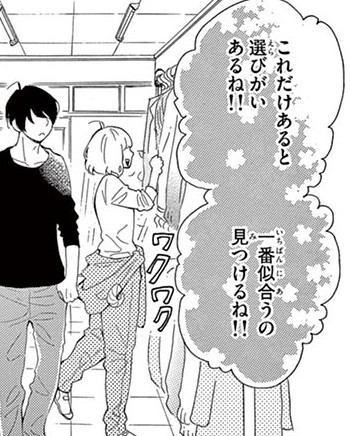
藤原くんはだいたい正しい » Volume 1 » Page 172As a member of the student council, Hitsuji comes up with the idea of having a cosplay theme to help build up excitement among students for the school’s sports day. However, Fujiwara, the student council president, fails to dress up. Upon hearing him say he doesn’t have a costume prepared, one of the drama club students suggests he pick from their club’s costumes. While Fujiwara isn’t enthusiastic at the prospect of dressing up, Hitsuji is excited by the club’s wide selection.
ヒツジ: 「これだけあると選( えら ) びがいあるね !!一番( いちばん ) 似( に ) 合( あ ) うの見( み ) つけるね !」 “When there are this many, it's worth it to choose from! I'll find the one that suits you best!” Challenge Yourself Show translation
Challenge
Why does Hitsuji think choosing a costume will be worthwhile?
ヒツジ: 「これだけあると選( えら ) びがいある ね!!一番( いちばん ) 似( に ) 合( あ ) うの見( み ) つけるね!」 Clues これだけあると the drama club has this many costumes available 選( えら ) びがいあるね! 一番( いちばん ) 似( に ) 合( あ ) うの見( み ) つけるねthe large selection makes choosing rewarding as they look for the best fit What does the speaker mean? There are many costumes to choose from, so they can find the best one. これだけあると points to the large selection, and 一番似合うの identifies finding the costume that suits Fujiwara best. There are only a few costumes, so the decision will be quick. これだけあると emphasizes how many choices the club has, not a limited selection. Fujiwara has already selected the costume he likes most. Hitsuji is excited to begin choosing and promises to find the best match. The choice is not settled yet. The drama club requires Fujiwara to make a costume himself. The club offers its existing costume collection. No one asks Fujiwara to sew a new one. Choosing is worthwhile because every costume fits him equally well. 一番似合うの means they are looking for the one that suits him best, not treating all choices as equal. The sports day costume theme has been canceled. Hitsuji remains excited about dressing Fujiwara for the event. The line does not cancel the theme.
The drama club has a large costume collection, which makes the search itself satisfying for Hitsuji. She wants to use all those options to find the costume that suits Fujiwara best.
View Full Example Fujiwara didn’t bring a costume for the sports day cosplay, so the drama club offers theirs. Hitsuji is thrilled: 選( えら ) びがいあるね, “it’s worth choosing from all these!” Her second ね, 見( み ) つけるね, is a promise: she’ll find the one that suits him best.
Example 18 of 19: Worth teasing with 〜甲斐がある Example 18 of 19
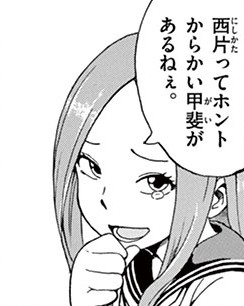
からかい上手の高木さん » Volume 2 » Page 141Takagi teases Nishikata, causing him to jump up from his chair and get scolded by the teacher. After sitting back down, Nishikata demands to know why Takagi is laughing.
高木( たかぎ ) :「西片( にしかた ) ってホントからかい甲斐( がい ) があるね ぇ。」 “Teasing you really is worth it.” Challenge Yourself Show translation
Challenge
Why does Takagi find Nishikata rewarding to tease?
高木( たかぎ ) :「西片( にしかた ) ってホントからかい 甲斐( がい ) がある Clues 西片( にしかた ) ってas for Nishikata からかい甲斐( がい ) がある is worth teasing or rewarding to tease ホント really, adding emphasis What does the speaker mean? His strong reactions make teasing him feel worthwhile. からかい甲斐( がい ) がある evaluates Nishikata as rewarding to tease, which fits the reaction Takagi just provoked. He has finally learned how to tease Takagi back. Takagi comments on the value of teasing Nishikata, not on him teasing her. He never reacts when she tries to tease him. The scene shows a conspicuous reaction, and that response is what makes the teasing rewarding. She thinks he deserves punishment from the teacher. 甲斐( がい ) がある concerns the satisfaction Takagi gets from teasing, not moral desert. She wants him to stop taking her jokes seriously. Takagi enjoys his reactions. She is not asking him to become less responsive. She says teasing him requires too much effort. 〜甲斐( がい ) がある is positive: the result makes the effort worth it.
Nishikata reacts so strongly that Takagi gets a satisfying result from teasing him. That is why she says he has からかい甲斐( がい ) .
View Full Example Takagi’s teasing made Nishikata jump up from his chair and get scolded by the teacher. When he demands to know why she’s laughing, she tells him: からかい甲斐( がい ) がある, “you’re worth teasing”. ねぇ invites him to agree, which he won’t.
Example 19 of 19: Receiving a throwing with 〜れる Example 19 of 19
ご注文はうさぎですか? » Volume 1 » Page 100After learning the fortunes she told didn’t come true for Chino and Rize, Cocoa lists the bad fortune she ran into.
ココア: 「そっかー」 “I see.” 「私( わたし ) あんこが落下( らっか ) してきたりスカートめくれちゃってたりシャロちゃんにお金( かね ) 投( な ) げられたり色々( いろいろ ) あって大変( たいへん ) だったよー」 “All sorts of things happened to me, like Anko falling on me, my skirt flipping up, and having Syaro-chan throw money at me, so it was rough.” 「占( うらな ) い勝負( しょうぶ ) はティッピーの勝( か ) ちだね 」 “Then Tippy wins the fortune-telling contest.” Challenge Yourself Show translation
Challenge
Which interpretation best matches the highlighted line?
ココア: 「そっかー」 「私( わたし ) あんこが落下( らっか ) してきたりスカートめくれちゃってたりシャロちゃんにお金( かね ) 投( な ) げられたり 色々( いろいろ ) あって大変( たいへん ) だったよー」 「占( うらな ) い勝負( しょうぶ ) はティッピーの勝( か ) ちだね」 Clues 投( な ) げられたり〜たり lists the things that happened to Cocoa What does the speaker mean? All sorts of things happened to me, like Anko falling on me, my skirt flipping up, and having Syaro-chan throw money at me, so it was rough. The line gives examples rather than a complete list. 投( な ) げられたり presents Cocoa as affected by Syaro throwing money. Cocoa says she threw money at Syaro during the unlucky day. The highlighted form is 投( な ) げられたり. Here 〜たり lists the things that happened to Cocoa, so this choice does not match the Japanese. Cocoa says Syaro caught money that someone else threw. The highlighted form is 投( な ) げられたり. Here 〜たり lists the things that happened to Cocoa, so this choice does not match the Japanese. Cocoa says the money was a deliberate reward rather than part of her bad luck. The highlighted form is 投( な ) げられたり. Here 〜たり lists the things that happened to Cocoa, so this choice does not match the Japanese.
〜たり lists the things that happened to Cocoa. The line gives examples rather than a complete list. 投( な ) げられたり presents Cocoa as affected by Syaro throwing money.
View Full Example Cocoa’s fortunes didn’t come true for Chino and Rize, because all the bad luck landed on her. She draws the conclusion: 占( うらな ) い勝負( しょうぶ ) はティッピーの勝( か ) ちだね, “Tippy wins the fortune-telling contest, then”. ね brings the others in on it.
Confirming with よね The speaker is fairly sure, but wants it locked in.
よね combines よ’s assertion with ね’s check. The speaker states something they believe and asks the listener to back it up: 明日( あした ) 、休( やす ) みだよね?, “tomorrow’s a day off, right?” Polite speech uses ですよね, and feminine speech has わよね. でしょうね works the same way, often hoping for a “no”.
Example 1 of 14: That said, she'll still show her homework with 〜つつも Example 1 of 14
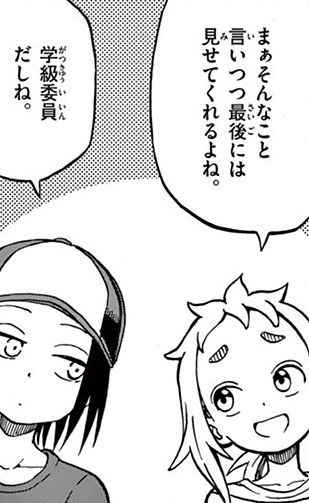
あしたは土曜日 » Volume 春・夏 » Page 122As summer break is half over, talk of summer homework comes up. Yukari says she won’t let Mina copy off of hers.
ミナ: 「まぁそんなこと言( い ) いつつ最後( さいご ) には見( み ) せてくれるよね 」 “Well, even though she says that, she'll show it to me in the end, you know.” サナエ: 「学級委員長( がっきゅういいんちょう ) だしね」 “She is the class representative, after all.” Challenge Yourself Show translation
Challenge
What does Mina expect Yukari to do despite her refusal?
ミナ: 「まぁそんなこと言( い ) いつつ 最後( さいご ) には見( み ) せてくれるよね」 サナエ: 「学級委員長( がっきゅういいんちょう ) だしね」 Clues そんなこと言( い ) いつつ even while saying that 最後( さいご ) にはin the end 見( み ) せてくれるshow it as a favor to the speaker よね states an expectation and seeks agreement What does the speaker mean? Yukari will eventually show Mina her homework. 言( い ) いつつ contrasts Yukari's refusal with the expected result, and 最後( さいご ) には見( み ) せてくれる says she will show it in the end. Yukari will stand by her refusal and never show it. 言( い ) いつつ introduces a contrast. Mina expects Yukari's eventual action to differ from what she says now. Mina will show Yukari her own homework. The giver-oriented くれる presents the showing as something Yukari will do for Mina, not the reverse. Yukari will complete Mina's homework for her. 見( み ) せる means to show. The line does not say Yukari will write or complete Mina's work. The teacher will show both girls the answers. The omitted subject remains Yukari from the preceding refusal. No teacher is introduced in these lines. Sanae will use her class position to demand the homework. Sanae mentions the class representative afterward, but Mina's expectation is that Yukari will voluntarily show the homework.
Mina treats Yukari’s refusal as something she says now but will not maintain. She expects Yukari to show her the homework in the end.
View Full Example Summer break is half over, and Yukari says she won’t let Mina copy her homework. Mina isn’t worried: 最後( さいご ) には見( み ) せてくれるよね, “she’ll show me in the end, right?” よね states what Mina believes and checks it with Sanae. Sanae agrees with だしね: Yukari is the class representative, after all.
Example 2 of 14: Limited edition with 限定 Example 2 of 14
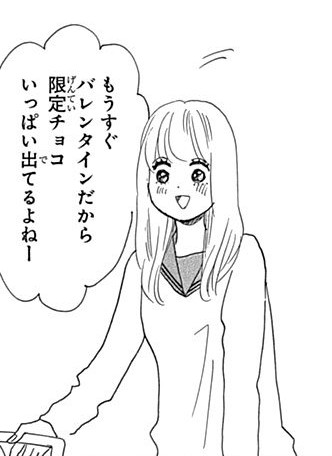
俺物語!! » Volume 6 » Page 103Takeo and Rinko meet up after school and stop somewhere for a drink and to chat. Rinko brings up February 14th, which is right around the corner.
凛子( りんこ ) :「もうすぐバレンタインだから限定( げんてい ) チョコいっぱい出( で ) てるよね ー」 “Since it's almost Valentine's, a lot of limited edition chocolates have come out.” Challenge Yourself Show translation
Challenge
What seasonal products does Rinko say are appearing?
凛子( りんこ ) :「もうすぐバレンタインだから限定( げんてい ) 出( で ) てるよねー」 Clues もうすぐバレンタインだから because Valentine's Day is coming soon 限定( げんてい ) チョコいっぱい出( で ) てるmany limited-edition chocolates are out What does the speaker mean? Many limited-edition chocolates for Valentine's Day. 限定( げんてい ) modifies チョコ, and いっぱい出( で ) てる says many have appeared. A single permanent chocolate flavor. いっぱい indicates many products, and 限定( げんてい ) makes them limited rather than permanent. Limited tickets for a Valentine's event. The noun after 限定( げんてい ) is チョコ, not tickets. Chocolate that will disappear before Valentine's Day. Rinko says the products are already out because the holiday is near. She does not give their removal date. Discounted drinks sold only after school. The line concerns seasonal chocolate and says nothing about drinks, discounts, or school hours. Homemade chocolate that Rinko has finished making. 出( で ) てる describes products appearing on the market, not Rinko completing her own batch.
Rinko notes that many limited-edition chocolates have appeared because Valentine’s Day is close. The omitted が would mark the chocolates as the things that are out.
View Full Example Takeo and Rinko have stopped for a drink after school, and Rinko brings up Valentine’s Day. 限定( げんてい ) チョコいっぱい出( で ) てるよねー, “lots of limited-edition chocolate is out, right?”, states it and invites Takeo to confirm. She may be hinting at something.
Example 3 of 14: Naru's place with 〜んち Example 3 of 14
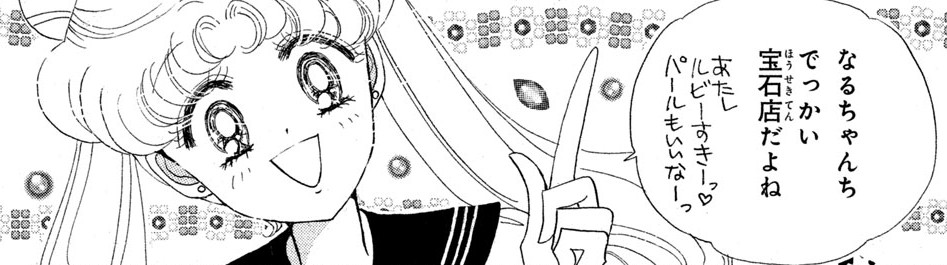
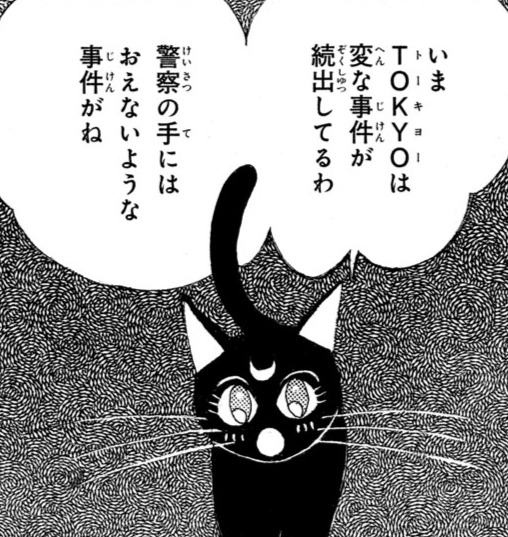
美少女戦士セーラームーン » Volume 1 » Page 13A lunchtime conversation about recent jewelry store robberies gives way to talk about jewelry and the kinds Usagi and her friends would like to own.
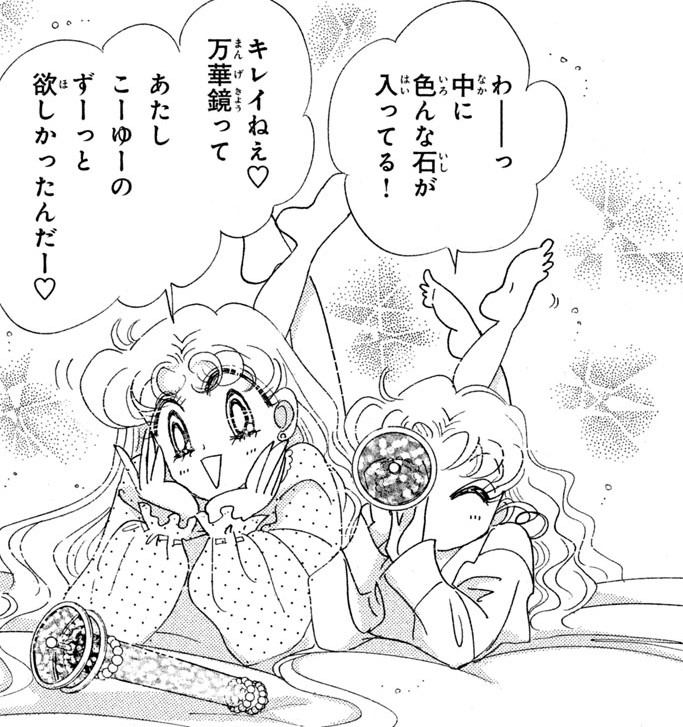
うさぎ: 「なるちゃんちでっかい宝石店( ほうせきてん ) だよね 。あたしルビーすきーっ♡ パールもいいなーっ」 “Naru 's place is a huge jewelry store, isn't it? (Me, I like rubies. Pearls are also nice.)” Challenge Yourself Show translation
Challenge
What does Usagi say about Naru's place?
うさぎ: 「なるちゃ んち でっかい宝石店( ほうせきてん ) だよね。あたしルビーすきーっ♡ パールもいいなーっ」 Clues なるちゃんち a casual contraction referring to Naru's home or place でっかい宝石店( ほうせきてん ) だよね she expects agreement that it is a huge jewelry store What does the speaker mean? Naru's place is a huge jewelry store. なるちゃんち identifies Naru's place, and でっかい宝石店 describes it as a huge jewelry store. Naru keeps a small jewelry collection at home. 宝石店 means a jewelry store, and でっかい describes the store as huge rather than a small personal collection. Naru wants to move into a jewelry store. 〜んち refers to the place already associated with Naru. The line does not express a wish to move. Usagi wants Naru to give her a ruby. Usagi says she likes rubies, but she does not ask Naru to give her one. Naru's family has stopped selling pearls. Usagi says pearls are nice too. Nothing says the store stopped selling them. Usagi is unsure whether the jewelry store belongs to Naru. だよね seeks shared agreement about a fact Usagi expects her friends to know, not basic uncertainty about the owner.
Usagi uses the casual contraction なるちゃんち for なるちゃんのうち, Naru’s place. She says it is a huge jewelry store and uses だよね to invite agreement.
View Full Example Talk at lunch has turned from jewelry store robberies to jewelry itself. Usagi turns to Naru: なるちゃんちでっかい宝石店( ほうせきてん ) だよね, “your family has a huge jewelry store, right?” よね checks something she already knows, and then she lists the jewels she likes.
Example 4 of 14: Surroundings filled with rich girls with 〜だらけ Example 4 of 14
ご注文はうさぎですか? » Volume 1 » Page 91During a library study session with her friends, Syaro wonders what it would be like if she attended Cocoa and Chiya’s school. She does attend the same school as Rize, but they are in different grades.
千夜( ちや ) :「んー…正直( しょうじき ) 窮屈( きゅうくつ ) よね 」 “Hmm... Honestly, it feels stifling.” 「私( わたし ) だったら周( まわ ) りがお嬢様( じょうさま ) だらけで気( き ) を遣( つか ) って疲( つか ) れちゃう」 “If it were me, I'd get tired of surroundings filled with rich girls and having to act proper.” Challenge Yourself Show translation
Challenge
Which interpretation best matches the highlighted line?
千夜( ちや ) :「んー…正直( しょうじき ) 窮屈( きゅうくつ ) よね」 「私( わたし ) だったら周( まわ ) りがお嬢様( じょうさま ) だらけ で気( き ) を遣( つか ) って疲( つか ) れちゃう」 Clues お嬢様( じょうさま ) だらけ お嬢様( じょうさま ) だらけ means filled with rich girls What does the speaker mean? If it were me, I'd get tired from being surrounded by rich girls and watching my manners. だらけ attaches to the noun before it and says the surroundings are covered or full of that thing. Chiya says she would enjoy being surrounded by rich girls. The highlighted form is お嬢様( じょうさま ) だらけ. Here お嬢様( じょうさま ) だらけ means filled with rich girls, so this choice does not match the Japanese. Chiya says the school is literally covered in expensive decorations. The highlighted form is お嬢様( じょうさま ) だらけ. Here お嬢様( じょうさま ) だらけ means filled with rich girls, so this choice does not match the Japanese. Chiya says Rize gets tired from taking care of all the students. The highlighted form is お嬢様( じょうさま ) だらけ. Here お嬢様( じょうさま ) だらけ means filled with rich girls, so this choice does not match the Japanese.
お嬢様( じょうさま ) だらけ means filled with rich girls. だらけ attaches to the noun before it and says the surroundings are covered or full of that thing.
View Full Example Syaro wonders what it would be like to go to Cocoa and Chiya’s school, and Chiya imagines the reverse. 窮屈( きゅうくつ ) よね, “it’d be stifling, wouldn’t it?”, drops the だ before よね, which is feminine speech.
Example 5 of 14: Thank you for always being by side with 本当にありがとう Example 5 of 14
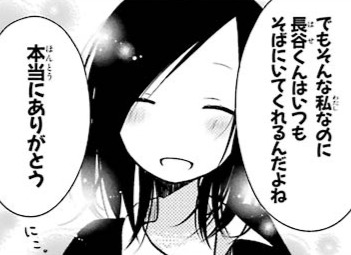
一週間フレンズ。 » Volume 4 » Page 130Due to a condition where she loses all memories of friends every Monday morning, Fujimiya acts cold toward classmates to avoid becoming friends. While eating lunch on the roof with Hase, she remarks how hard it is to act that way. Hase says it’s because she’s naturally a nice person. He recalls when he first tried becoming friends with her, how Fujimiya avoided eye contact with him and gave only brief responses. Fujimiya is shocked to hear how she had treated him.
藤宮( ふじみや ) :「でもそんな私( わたし ) なのに長谷( はせ ) くんはいつもそばにいてくれるんだよね 」 “But even though I was like that, Hase-kun, you're always by my side, aren't you?” 「本当( ほんとう ) にありがとう」 “Thank you, really.” Challenge Yourself Show translation
Challenge
Why does Fujimiya thank Hase?
藤宮( ふじみや ) :「でもそんな私( わたし ) なのに長谷( はせ ) くんはいつもそばにいてくれるんだよね」 「本当( ほんとう ) にありがとう Clues そんな私( わたし ) なのに even though I was like that, referring to how coldly she treated him いつもそばにいてくれる he is always by her side, presented as kindness she receives What does the speaker mean? He stayed by her side even when she treated him coldly. そんな私( わたし ) なのに contrasts her past behavior with Hase's choice to remain いつもそばに. He restored every memory she had lost. Fujimiya thanks him for staying close. She does not say that he cured her memory loss. He promised that he would stop trying to speak with her. いつもそばにいてくれる says he continues to stay by her side, not that he will withdraw. He kept her condition secret from every classmate. The line focuses on Hase remaining close despite her behavior. It does not mention secrecy. He brought lunch for her every day on the rooftop. いつも modifies his being by her side. The line does not say he supplied her lunches. He told her that she never needed to change how she treated people. Fujimiya looks back on her cold treatment, but she does not say Hase approved of it.
Fujimiya realizes that Hase kept supporting her even when she avoided him and acted coldly. 〜てくれる frames his staying close as kindness she has received, which leads to her heartfelt thanks.
View Full Example Fujimiya has just learned how coldly she treated Hase when he first tried to befriend her. いつもそばにいてくれるんだよね, “you’re always by my side, aren’t you?”, states it as a fact and asks him to confirm it. Then she thanks him.
Example 6 of 14: Thank you for the water with ありがとうございました Example 6 of 14
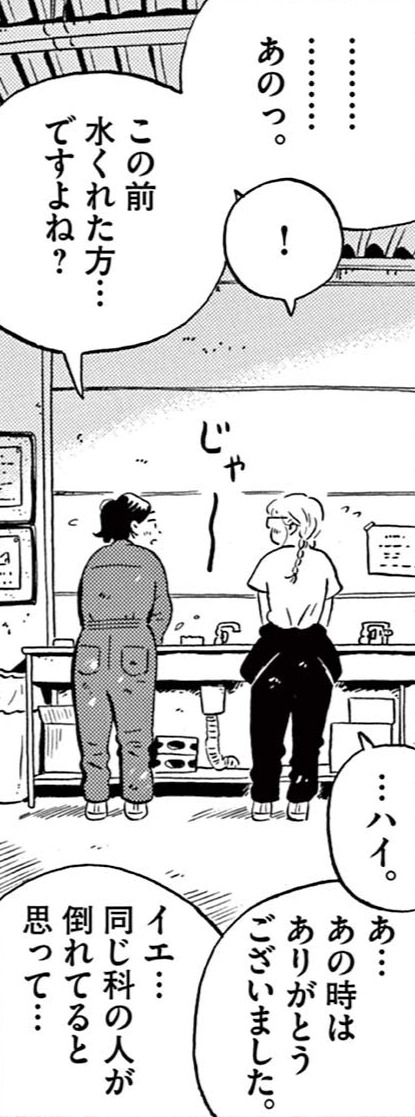
ひらやすみ » Volume 1 » Page 114Natsumi tried making new friends from college only to end up drunk and abandoned. At class one day, she finds herself face to face with the helpful person who had found her and briefly helped her afterward.
なつみ: 「……… ……… あのっ。」 “Um...” 「この前( まえ ) 水( みず ) くれた方( かた ) …ですよね ?」 “You're the one who gave me water before...right?” 女( おんな ) :「…はい。」 “...yes.” なつみ: 「あ…あの時( とき ) はありがとうございました。」 “Ah... Thank you for what you did back then.” 女( おんな ) :「イエ…同( おな ) じ科( か ) の人( ひと ) が倒( たお ) れてると思( おも ) って…」 “Not at all... I thought it was someone from the same department who had collapsed...” Challenge Yourself Show translation
Challenge
What is Natsumi thanking the woman for?
なつみ: 「……… ……… あのっ。」 「この前( まえ ) 水( みず ) くれた方( かた ) …ですよね?」 女( おんな ) :「…はい。」 なつみ: 「あ…あの時( とき ) はありがとうございました。」 女( おんな ) :「イエ…同( おな ) じ科( か ) の人( ひと ) が倒( たお ) れてると思( おも ) って…」 Clues この前( まえ ) 水( みず ) くれた方( かた ) the person who gave Natsumi water the other day あの時( とき ) はありがとうございました thanks her politely for help on that earlier occasion What does the speaker mean? Giving her water when she needed help earlier. 水( みず ) くれた identifies the helpful act, and あの時( とき ) は links Natsumi's thanks to that past occasion. Bringing water for their class today. この前( まえ ) and あの時( とき ) place the help in the past, not on the current day. Taking her to a different college department. The woman mentions their department only to explain why she stopped to help. Natsumi thanks her for the water. Introducing herself after class. Natsumi recognizes the woman through the earlier act of giving her water, not through an introduction. Keeping quiet about seeing her collapse. The thanks concerns help Natsumi received. Nothing in the line asks the woman to keep the incident secret. Helping her prepare for a class assignment. The specific act named is giving Natsumi water. No assignment appears in the exchange.
Natsumi recognizes the woman as the person who gave her water when she was in trouble. あの時( とき ) は frames that earlier incident, and ありがとうございました thanks her for the completed act of help.
View Full Example Natsumi got drunk and was left behind, and a stranger gave her water. Now she thinks she recognizes that woman in class. ですよね?, “it’s you, isn’t it?”, checks politely. The woman answers はい.
Example 7 of 14: Went to see a kindergarden sports day with 運動会 Example 7 of 14
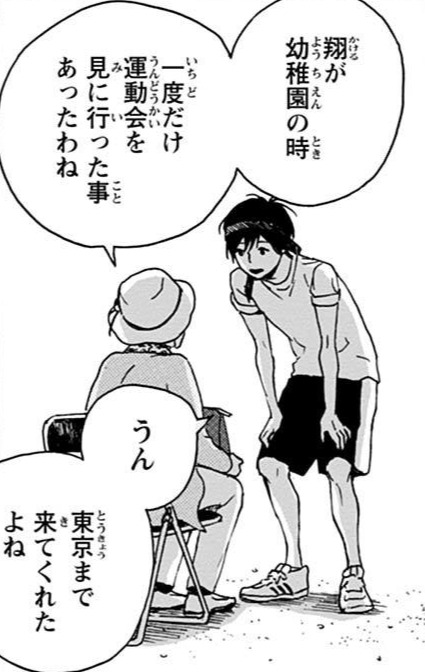
orange » Volume 4 » Page 67Kakeru’s grandmother unexpectedly shows up at the school sports day event.
おばあさん: 「翔( かける ) が幼稚園( ようちえん ) の時( とき ) 一度( いちど ) だけ運動会( うんどうかい ) を見( み ) に行( い ) った事( こと ) あったわね 」 “I went to see your sports day just once when you were in kindergarten, didn't I?” 翔( かける ) :「うん 東京( とうきょう ) まで来( き ) てくれたよね 」 “Yeah, you came all the way to Tokyo for me.” Challenge Yourself Show translation
Challenge
What past event are Kakeru and his grandmother recalling?
おばあさん: 「翔( かける ) が幼稚園( ようちえん ) の時( とき ) 一度( いちど ) だけ運動会( うんどうかい ) を見( み ) に行( い ) った事( こと ) あったわね」 翔( かける ) :「うん 東京( とうきょう ) まで来( き ) てくれたよね」 Clues 翔( かける ) が幼稚園( ようちえん ) の時( とき ) when Kakeru was in kindergarten 一度( いちど ) だけ運動会( うんどうかい ) を見( み ) に行( い ) ったwent just once to watch the sports day 東京( とうきょう ) まで来( き ) てくれたcame all the way to Tokyo for Kakeru What does the speaker mean? His grandmother came to Tokyo once to watch his kindergarten sports day. 翔( かける ) が幼稚園( ようちえん ) の時( とき ) sets the time, and 運動会( うんどうかい ) を見( み ) に行( い ) った states the purpose of her trip. Kakeru went to Tokyo to watch his grandmother compete. 東京( とうきょう ) まで来( き ) てくれた describes his grandmother coming to Tokyo, not Kakeru traveling there. His grandmother attended every sports day while he was in kindergarten. 一度( いちど ) だけ means she went only once, not every time. His grandmother came to take him home from kindergarten. Her stated purpose was 運動会( うんどうかい ) を見( み ) に行( い ) く, going to watch the sports day.
His grandmother made one trip to Tokyo to watch Kakeru’s sports day when he was in kindergarten. Kakeru remembers the trip as something she did for him.
View Full Example Kakeru’s grandmother shows up unexpectedly at the school sports day. She remembers coming once before, when he was in kindergarten: 見( み ) に行( い ) った事( こと ) あったわね. Kakeru confirms it with よね: she came all the way to Tokyo. Each ね checks a shared memory.
Example 8 of 14: Broadcasting music at school with 放送 Example 8 of 14
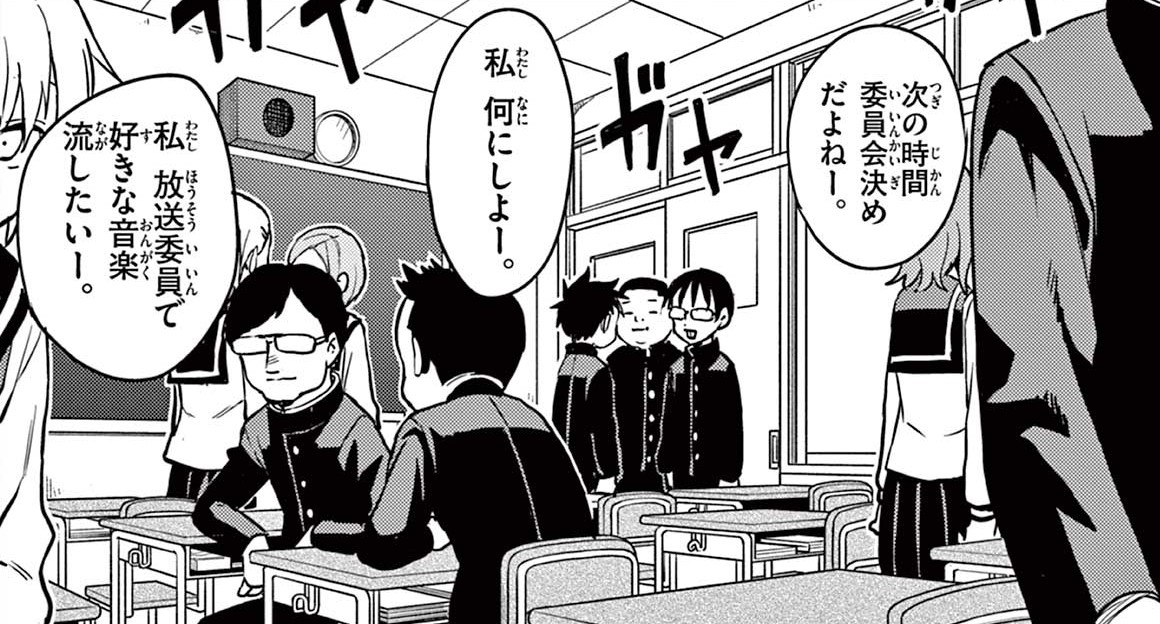
からかい上手の高木さん » Volume 19 » Page 88Nishika and Takagi’s class discusses what committees they plan to join.
生徒( せいと ) :「次( つぎ ) の時間( じかん ) 委員会( いいんかい ) 決( ぎ ) めだよね ー。」 “Next up is deciding the committee schedule, right?” 生徒( せいと ) :「私( わたし ) 何( なに ) にしよー」 “What should I pick?” 生徒( せいと ) :「私( わたし ) 放送( ほうそう ) 委員( いいん ) で好( す ) きな音楽( おんがく ) 流( なが ) したいー。」 “I want to play my favorite music as a member of the broadcasting committee.” Challenge Yourself Show translation
Challenge
Which committee does the student want, and why?
生徒( せいと ) :「次( つぎ ) の時間( じかん ) 委員会( いいんかい ) 決( ぎ ) めだよねー。」 生徒( せいと ) :「私( わたし ) 何( なに ) にしよー」 生徒( せいと ) :「私( わたし ) 放送( ほうそう ) 委員( いいん ) で好( す ) きな音楽( おんがく ) 流( なが ) したいー。」 Clues 放送( ほうそう ) 委員( いいん ) で"as a member of the broadcasting committee" 好( す ) きな音楽( おんがく ) 流( なが ) したい"want to play music I like," with the object marker を omitted What does the speaker mean? The broadcasting committee, so she can play music she likes. 放送( ほうそう ) 委員( いいん ) names the committee, and 流( なが ) したい states what she wants to do there. The music committee, so she can perform her own songs. She says 放送( ほうそう ) 委員( いいん ) , not a music committee, and 流( なが ) す means to play or broadcast music here. The broadcasting committee, so she can make school announcements. The committee is right, but her stated goal is to play music she likes. The class committee, so she can choose the schedule. 委員会( いいんかい ) 決( ぎ ) め is the class activity. It is not the committee she chooses. The library committee, so she can listen to music while working. The line names the broadcasting committee and says she wants to send music over the system. She has not decided which committee she wants. Her earlier question is followed by a specific choice, 放送( ほうそう ) 委員( いいん ) .
The student settles on the 放送( ほうそう ) 委員( いいん ) , the broadcasting committee. Her reason is 好( す ) きな音楽( おんがく ) 流( なが ) したい, she wants to play music she likes.
View Full Example Nishikata and Takagi’s class is talking about which committees to join. 次( つぎ ) の時間( じかん ) 委員会( いいんかい ) 決( ぎ ) めだよねー, “next period we choose committees, right?”, checks the schedule. Then everyone starts deciding.
Example 9 of 14: Experienced drinking tea with 〜た+ことがある Example 9 of 14
ご注文はうさぎですか? » Volume 1 » Page 63After a misunderstanding brings Cocoa and her friends to the teahouse where Syaro works, the group stays to have some tea.
ココア: 「やっぱダンディー・ライオンだよね !」 “Dandy Lion is definitely the one!” チノ: 「飲( の ) んだことあるんですか?」 “Have you drunk it before?” Challenge Yourself Show translation
Challenge
What does チノ mean in the highlighted line?
ココア: 「やっぱダンディー・ライオンだよね!」 チノ: 「飲( の ) んだことある んですか?」 Clues 飲( の ) んだことある飲( の ) んだことある asks about prior experienceWhat does the speaker mean? Have you drunk it before? Chino asks whether Cocoa has ever drunk dandelion tea, rather than whether she drank it at one known time. Chino asks whether Cocoa is drinking dandelion tea right now. The highlighted form is 飲( の ) んだことある. Here 飲( の ) んだことある asks about prior experience, so this choice does not match the Japanese. Chino states that Cocoa has definitely drunk it before. The highlighted form is 飲( の ) んだことある. Here 飲( の ) んだことある asks about prior experience, so this choice does not match the Japanese. Chino asks whether Cocoa wants to try the tea for the first time. The highlighted form is 飲( の ) んだことある. Here 飲( の ) んだことある asks about prior experience, so this choice does not match the Japanese.
飲( の ) んだことある asks about prior experience. Chino asks whether Cocoa has ever drunk dandelion tea, rather than whether she drank it at one known time.
View Full Example After a mix-up brings the group to Syaro’s tea shop, Cocoa picks her tea: やっぱダンディー・ライオンだよね!, “Dandy Lion is the one, right?” よね asserts and invites agreement at once. Chino wonders whether Cocoa has actually tried it.
Example 10 of 14: Misseeing something as a ghost as the park lake with 〜ちゃう Example 10 of 14
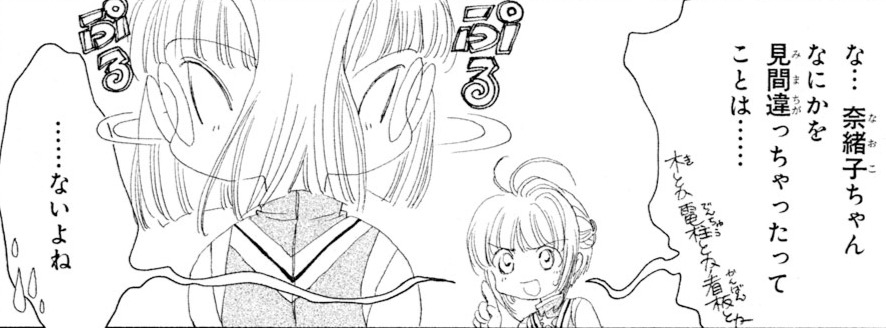
カードキャプターさくら » Volume 1 » Page 131After piano class, Naoko hurries home only to see a ghostly figure appear from within a lake at the park. She recalls the events to her friends at school.
桜( さくら ) :「な…奈緒子( なおこ ) ちゃん なにかを見( み ) 間( ま ) 違( ちが ) っちゃったってことは…… (木( き ) とか電柱( でんちゅう ) とか看板( かんばん ) とか)」 “Na... Naoko, could it be that you ended up seeing something wrong...... (like a tree or a utility pole or a sign or something)?” 「……ないよね 」 “......I guess not.” Challenge Yourself Show translation
Challenge
What possibility does Sakura hesitantly suggest?
桜( さくら ) :「な…奈緒子( なおこ ) ちゃん なにかを見( み ) 間( ま ) 違( ちが ) っちゃった ってことは…… (木( き ) とか電柱( でんちゅう ) とか看板( かんばん ) とか)」 「……ないよね」 Clues なにかを見( み ) 間( ま ) 違( ちが ) っちゃった Naoko accidentally mistook something she saw 木( き ) とか電柱( でんちゅう ) とか看板( かんばん ) とかexamples of ordinary objects such as a tree, utility pole, or sign ってことは……ないよね could it be that, followed by Sakura backing away from the suggestion What does the speaker mean? Naoko may have mistaken an ordinary object for the ghostly figure. 見( み ) 間( ま ) 違( ちが ) っちゃった suggests an accidental misidentification, and Sakura lists ordinary objects Naoko might have seen. Naoko may have seen the ghost turn into a tree. The tree is one possible object Naoko mistook for the figure. Sakura does not say the figure transformed. Naoko may have invented the story to frighten her friends. Sakura wonders whether Naoko misidentified what she saw, not whether she deliberately lied. Naoko may have gone to the wrong park after class. 見( み ) 間( ま ) 違( ちが ) う concerns seeing something incorrectly. It does not mean choosing the wrong location. Naoko may have read a warning on a sign incorrectly. 看板( かんばん ) is listed as an object she might have mistaken for the figure, not as text she misread. Naoko may have confused Sakura with someone near the lake. Sakura proposes a tree, utility pole, or sign as the mistaken object. She does not place herself at the lake.
Sakura wonders whether Naoko accidentally mistook an ordinary object for the ghostly figure. Her examples make the suggestion concrete, but ……ないよね shows that she doubts her own explanation.
View Full Example Naoko says she saw a ghost rise from the lake in the park. Sakura suggests she mistook something ordinary for it, like a tree or a sign, then backs off: ……ないよね, “no, I guess not”. よね checks, and the pause shows she doesn’t want to push.
Example 11 of 14: Receiving a scolding with 〜れる Example 11 of 14
ご注文はうさぎですか? » Volume 1 » Page 103Cocoa and her friends visit an indoor hot spring.
ココア: 「小( ちい ) さい頃( ころ ) 銭湯( せんとう ) で泳( およ ) いだっけ」 “Come to think of it, I used to swim at the public bath when I was little.” シャロ: 「それでよく怒( おこ ) られたわよね 」 “You used to get scolded for that a lot, right?” Challenge Yourself Show translation
Challenge
What does シャロ mean in the highlighted line?
ココア: 「小( ちい ) さい頃( ころ ) 銭湯( せんとう ) で泳( およ ) いだっけ」 シャロ: 「それでよく怒( おこ ) られた わよね」 Clues 怒( おこ ) られた怒( おこ ) られた presents Cocoa as the recipient of scoldingWhat does the speaker mean? You used to get scolded for swimming there a lot, right? The person who scolded her is omitted. それで points back to swimming in the public bath as the reason. Syaro says Cocoa used to scold other swimmers at the bath. The highlighted form is 怒( おこ ) られた. Here 怒( おこ ) られた presents Cocoa as the recipient of scolding, so this choice does not match the Japanese. Syaro says Cocoa was praised for swimming at the public bath. The highlighted form is 怒( おこ ) られた. Here 怒( おこ ) られた presents Cocoa as the recipient of scolding, so this choice does not match the Japanese. Syaro asks whether Cocoa should start swimming there again. The highlighted form is 怒( おこ ) られた. Here 怒( おこ ) られた presents Cocoa as the recipient of scolding, so this choice does not match the Japanese.
怒( おこ ) られた presents Cocoa as the recipient of scolding. The person who scolded her is omitted. それで points back to swimming in the public bath as the reason.
View Full Example Cocoa remembers swimming at the public bath when she was little. Syaro guesses the rest: それでよく怒( おこ ) られたわよね, “and you got scolded for it a lot, right?” わよね is the feminine version, a confident guess that asks for confirmation.
Example 12 of 14: Receiving saying with 〜れる Example 12 of 14
ご注文はうさぎですか? » Volume 1 » Page 4Cocoa takes a brief break from work to tell Chino something good that just happened.
ココア: 「この前( まえ ) お客( きゃく ) さんにココアちゃんはシスター・コンプレックスだねって言( い ) われちゃった」 “Earlier, it was said by a customer that I have a sister complex.” チノ: 「え…」 “Ah...” ココア: 「響( ひび ) きがかっこいいよね 」 “It sounds cool, doesn't it?” Challenge Yourself Show translation
Challenge
What does ココア mean in the highlighted line?
ココア: 「この前( まえ ) お客( きゃく ) さんにココアちゃんはシスター・コンプレックスだねって言( い ) われちゃった 」 チノ: 「え…」 ココア: 「響( ひび ) きがかっこいいよね」 Clues 言( い ) われちゃった言( い ) われちゃった = "I got told"What does the speaker mean? A customer told me I have a sister complex. The receiver of the saying is Cocoa, even though the sentence does not say 私が. Cocoa says she told a customer that the customer had a sister complex. The highlighted form is 言( い ) われちゃった. Here 言( い ) われちゃった = "I got told", so this choice does not match the Japanese. Cocoa says Chino was the person who called her sister-obsessed. The highlighted form is 言( い ) われちゃった. Here 言( い ) われちゃった = "I got told", so this choice does not match the Japanese. Cocoa says the customer denied that she had a sister complex. The highlighted form is 言( い ) われちゃった. Here 言( い ) われちゃった = "I got told", so this choice does not match the Japanese.
言( い ) われちゃった = “I got told”. The receiver of the saying is Cocoa, even though the sentence does not say 私が.
View Full Example A customer told Cocoa she has a sister complex, and she takes it as a compliment. 響( ひび ) きがかっこいいよね, “it sounds cool, doesn’t it?”, asks Chino to agree. Chino’s え… says she doesn’t.
Example 13 of 14: Yui's grandmother's place with 〜んち Example 13 of 14
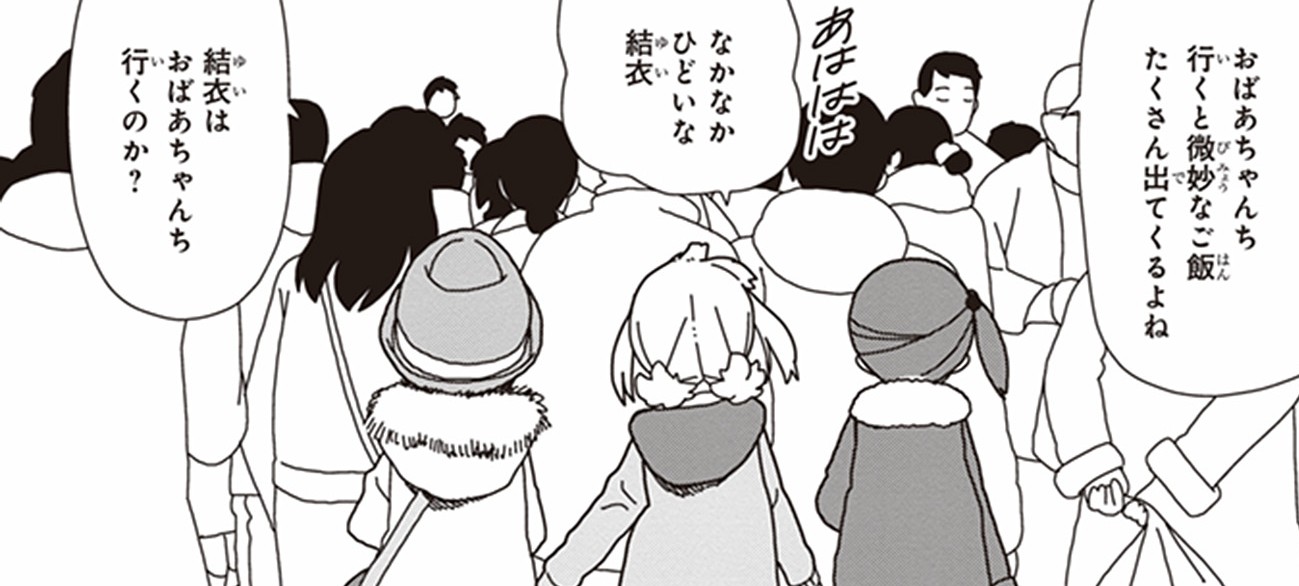
三ツ星カラーズ » Volume 5 » Page 127As the end of the year approaches, Yui and her friends discuss which New Year foods they like and dislike.
結衣( ゆい ) :「おばあちゃんち行( い ) くと微妙( びみょう ) なご飯( はん ) たくさん出( で ) てくるよね 」 “When I go to my grandma's house, a lot of not-so-good food is served.” さっちゃん: 「なかなかひどいな結衣( ゆい ) 」 “That's pretty bad, Yui.” 琴葉( ことは ) :「結衣( ゆい ) はおばあちゃんち行( い ) くのか?」 “Are you going to your grandma's house, Yui?” Challenge Yourself Show translation
Challenge
What does Yui say happens when she visits her grandmother?
結衣( ゆい ) :「おばあちゃ んち 行( い ) くと微妙( びみょう ) なご飯( はん ) たくさん出( で ) てくるよね」 さっちゃん: 「なかなかひどいな結衣( ゆい ) 」 琴葉( ことは ) :「結衣( ゆい ) はおばあちゃ んち 行( い ) くのか?」 Clues おばあちゃんち行( い ) くと when I go to Grandma's place 微妙( びみょう ) なご飯( はん ) たくさん出( で ) てくるa lot of questionable food gets served What does the speaker mean? She gets served a lot of food that she does not find very appealing. 微妙( びみょう ) describes the food as iffy, and たくさん出( で ) てくる says a lot of it appears or is served. Her grandmother serves one special dish that Yui loves. たくさん indicates many items, and 微妙( びみょう ) is not praise for food she loves. She cooks dinner for her grandmother every time. The food is the thing that 出( で ) てくる. Yui does not say she prepares it. Her grandmother refuses to serve New Year food. Yui says plenty of food is served. She does not describe a refusal. She visits only when the food is especially good. 行( い ) くと gives the usual result of visiting, while 微妙( びみょう ) makes her judgment negative. She brings questionable food from home to share. おばあちゃんち is the destination, and the food appears there rather than arriving with Yui.
Yui says that visits to her grandmother’s place bring out lots of food she finds questionable. Sacchan’s reply calls that a harsh thing to say.
View Full Example Yui and her friends are talking about which New Year’s foods they like. At her grandmother’s, a lot of so-so food comes out: 微妙( びみょう ) なご飯( はん ) たくさん出( で ) てくるよね. よね asks the others to agree, and Sacchan calls her out.
Example 14 of 14: Additionally, I'm happier having girls here with それに〜 Example 14 of 14
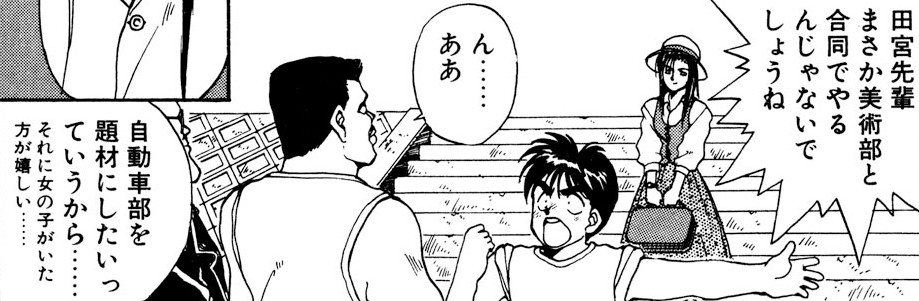
ああっ女神さまっ » Volume 2 » Page 75Kei’ichi is excited to spend four days at the beach with his university automobile club and Belldandy. His mood changes when he hears Sayoko call out to him.
螢一( けいいち ) :「田宮( たみや ) 先輩( せんぱい ) まさか美術部( びじゅつぶ ) と合同( ごうどう ) でやるんじゃないでしょうね 」 “Tamiya, don't tell me we're doing this with the art club!” 田宮( たみや ) :「ん……ああ。自動車部( じどうしゃぶ ) を題材( だいざい ) にしたいっていうから…… それに女( おんな ) の子( こ ) がいた方( ほう ) が嬉( うれ ) しい…」 “It's because they said they wanted to use the automobile club as a subject... Additionally, I'm happier having girls here.” Challenge Yourself Show translation
Challenge
What reason does Tamiya add for welcoming the joint trip?
螢一( けいいち ) :「田宮( たみや ) 先輩( せんぱい ) まさか美術部( びじゅつぶ ) と合同( ごうどう ) でやるんじゃないでしょうね」 田宮( たみや ) :「ん……ああ。自動車部( じどうしゃぶ ) を題材( だいざい ) にしたいっていうから…… それに 女( おんな ) の子( こ ) がいた方( ほう ) が嬉( うれ ) しい…」 Clues それに besides that, in addition 女( おんな ) の子( こ ) がいたgirls were there 〜方( ほう ) が the option that is preferable 嬉( うれ ) しいhappy or pleased What does the speaker mean? He would be happier if girls were there too. それに adds Tamiya's personal reason, and 女( おんな ) の子( こ ) がいた方( ほう ) が嬉( うれ ) しい says he would prefer having girls there. He thinks the art club would be happier without the automobile club. The line does not say the art club wants to be separate. Tamiya says that he would welcome having girls present. He wants the girls to use the automobile club as their art subject. That belongs to the earlier reason given by the art club. それに introduces Tamiya's separate reason for liking the plan. He is relieved that the two clubs canceled their joint trip. 合同( ごうどう ) でやる describes doing the trip jointly. Nothing in the exchange says it has been canceled. He tells Kei'ichi to be happy that Sayoko called out. 嬉( うれ ) しい describes Tamiya's reaction to having girls along, not an instruction to Kei'ichi. He would rather replace the automobile club members with girls. 女( おんな ) の子( こ ) がいた方( ほう ) が compares having girls present with not having them present. It does not say anyone will be replaced.
Tamiya first states the art club’s reason for joining the trip. With それに, he adds his own reason. He would be happier with girls there.
View Full Example Kei’ichi is looking forward to four days at the beach with the automobile club, until he hears Sayoko call out to him. まさか〜んじゃないでしょうね is “don’t tell me we’re…”. でしょうね asks for confirmation and hopes for a “no”. Tamiya’s answer isn’t the one he wanted.
Softening a Statement ね rounds the edges off even routine remarks.
ね makes a statement friendlier, even when there’s nothing to agree on. またね, “see you”, ありがとね, “thanks”, and 〜かもね, “maybe”, all sound warmer with it. After a condition, as in 〜たらね, it makes a gentle promise: “when …, okay?”
Example 1 of 11: Reaching out before shopping with 〜ておく Example 1 of 11
ご注文はうさぎですか? » Volume 1 » Page 78As Chino gathers her things after school, she recalled that Cocoa will be making stew for dinner.
チノ: 「にんじん以外( いがい ) を伝( つた ) えておこう」 “I'll let her know in advance everything except carrots.” ◯: 「またね ー」 “See you!” ◯: 「バイバーイ」 “Bye-bye!” Challenge Yourself Show translation
Challenge
チノ: 「にんじん以外( いがい ) を伝( つた ) えておこう 」 ◯: 「またねー」 ◯: 「バイバーイ」 伝( つた ) えておこう伝( つた ) えておこう means deciding to tell her in advanceWhat does the speaker mean? I'll let her know in advance everything except carrots. Chino plans to send the ingredient information before Cocoa shops for the stew. Chino decides to tell Cocoa that carrots are the only ingredient she wants. The highlighted form is 伝( つた ) えておこう. Here 伝( つた ) えておこう means deciding to tell her in advance, so this choice does not match the Japanese. Chino says she already gave Cocoa the list after the shopping was finished. The highlighted form is 伝( つた ) えておこう. Here 伝( つた ) えておこう means deciding to tell her in advance, so this choice does not match the Japanese. Chino decides not to tell Cocoa anything about the ingredients. The highlighted form is 伝( つた ) えておこう. Here 伝( つた ) えておこう means deciding to tell her in advance, so this choice does not match the Japanese.
伝( つた ) えておこう means deciding to tell her in advance. Chino plans to send the ingredient information before Cocoa shops for the stew.
View Full Example School is over, and Chino is gathering her things, remembering that Cocoa is making stew tonight. Her classmates head off with またねー, “see you!” ね turns a plain また, “again”, into a friendly goodbye.
Example 2 of 11: Coming to visit with 〜に来る Example 2 of 11
ご注文はうさぎですか? » Volume 1 » Page 67Chiya and Syaro visit Cocoa at the coffee shop.
ココア: 「二人( ふたり ) ともこんな天気( てんき ) なのに遊( あそ ) びに来( き ) てくれてありがとね 」 “Thanks, both of you, for coming to visit even in weather like this.” シャロ: 「ちょうどバイトの予定( よてい ) が空白( くうはく ) になっただけだし」 “I just happened to have a gap in my work schedule.” Challenge Yourself Show translation
Challenge
What does ココア mean in the highlighted line?
ココア: 「二人( ふたり ) ともこんな天気( てんき ) なのに遊( あそ ) びに来( き ) て くれてありがとね」 シャロ: 「ちょうどバイトの予定( よてい ) が空白( くうはく ) になっただけだし」 Clues 遊( あそ ) びに来( き ) て遊( あそ ) びに来( き ) て means coming to visitWhat does the speaker mean? Thanks, both of you, for coming to visit even in weather like this. The set expression uses "come to play" for a social visit, so "visit" fits the scene. Cocoa thanks Syaro for coming only to work her scheduled shift. The highlighted form is 遊( あそ ) びに来( き ) て. Here 遊( あそ ) びに来( き ) て means coming to visit, so this choice does not match the Japanese. Cocoa asks Chiya and Syaro to leave because of the weather. The highlighted form is 遊( あそ ) びに来( き ) て. Here 遊( あそ ) びに来( き ) て means coming to visit, so this choice does not match the Japanese. Cocoa says they visited because the weather was especially good. The highlighted form is 遊( あそ ) びに来( き ) て. Here 遊( あそ ) びに来( き ) て means coming to visit, so this choice does not match the Japanese.
遊( あそ ) びに来( き ) て means coming to visit. The set expression uses “come to play” for a social visit, so “visit” fits the scene.
View Full Example Chiya and Syaro have come to the café to see Cocoa despite the bad weather. ありがとね is a casual, warm “thanks”, and ね keeps it light. Syaro shrugs it off: her work schedule just happened to be free.
Example 3 of 11: Feeling a bit better with 気が晴れる Example 3 of 11
アオハライド » Volume 5 » Page 168Futaba had been feeling the weight of uncertainty of her standing with Kou. A general discussion about boys and relationships with her friend Kikuchi clears up her feelings.
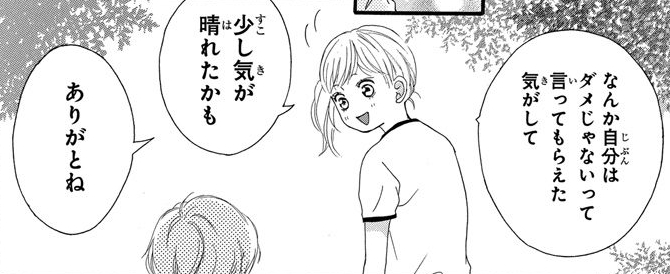
双葉( ふたば ) :「なんか自分( じぶん ) はダメじゃないって言( い ) ってもらえた気( き ) がして」 “It kind of felt like you were telling me I'm not hopeless.” 「少( すこ ) し気( き ) が晴( は ) れたかも」 “I may be feeling a bit better.” 「ありがとね 」 “Thanks.” Challenge Yourself Show translation
Challenge
What effect did the conversation have on Futaba?
双葉( ふたば ) :「なんか自分( じぶん ) はダメじゃないって言( い ) ってもらえた気( き ) がして」 「少( すこ ) し気( き ) が晴( は ) れた 「ありがとね」 Clues 自分( じぶん ) はダメじゃないって言( い ) ってもらえた気( き ) がしてshe felt as though she had been told that she was not hopeless 少( すこ ) し気( き ) が晴( は ) れたかもmaybe her feelings cleared up a little What does the speaker mean? It reassured her and made her feel a little better. Futaba feels she was told she is not hopeless, and 気( き ) が晴( は ) れた describes some of her emotional heaviness lifting. It convinced her that her worries about Kou were completely resolved. 少( すこ ) し and かも make the improvement modest and tentative. Futaba does not claim that every worry is gone. It made her think that something was wrong with her. ダメじゃない is negative, so Futaba feels reassured that she is not hopeless. It persuaded her to stop talking about relationships. Futaba describes relief from the conversation. She does not say she will avoid the subject. It made her feel worse because her friend criticized her. 言( い ) ってもらえた presents the remark as something Futaba benefited from, and she follows it by saying she feels better. It gave her confidence that Kou had confessed his feelings. Her friend reassures Futaba about herself. The line does not say that Kou confessed anything.
The conversation makes Futaba feel that she is not hopeless, which lifts some of the weight she has been carrying. 少( すこ ) し and かも show that the relief is real but limited.
View Full Example Futaba has been anxious about where she stands with Kou, and a talk with Kikuchi has helped. She thanks her with ありがとね, warm and a little shy after admitting she feels better.
Example 4 of 11: Get me some more cookies with おかわり Example 4 of 11
恋に恋するユカリちゃん » Volume 5 » Page 52Mina and Sanae go to Yukari’s house so the three can study. While Yukari studies, the other two slack off to the point when Mina complains that there are no more cookies. Yukari says that’s what happens when you eat them.
ミナ: 「じゃーおかわりくださーい。」 “Then, get me some more, please!” ユカリ: 「そのページ終( お ) わったらね 。」 “When you finish the page, okay?” Challenge Yourself Show translation
Challenge
What must Mina do before Yukari will give her more cookies?
ミナ: 「じゃーおかわり くださーい。」 ユカリ: 「そのページ終( お ) わったらね。」 Clues おかわりくださーい Mina asks for another serving そのページ終( お ) わったらね Yukari makes finishing the current page the condition What does the speaker mean? Finish the page she is supposed to be studying. そのページ終わったら means Yukari will consider the request once Mina finishes that page. Ask for another serving more politely. Mina already uses ください. Yukari responds with a condition about completing the page, not Mina's level of politeness. Find the cookies that are missing. Yukari does not ask Mina to search for cookies. She tells her to finish the page first. Wait for Yukari to finish studying her own page. そのページ points to the page Mina needs to complete, not a page Yukari promises to finish. Replace the cookies she and Sanae already ate. Yukari ties more cookies to studying. She does not demand that Mina replace the food. Stop studying and take a break with Sanae. 終わったら requires Mina to complete the page before receiving more, so stopping now would not meet the condition.
Mina asks for more cookies, but Yukari answers そのページ終わったらね. The 〜たら clause makes finishing the current page the condition Mina must meet first.
View Full Example Yukari is studying while Mina and Sanae slack off, and Mina asks for more cookies. そのページ終( お ) わったらね, “when you finish the page, okay?”, sets a condition. ね makes it a gentle bargain rather than a refusal.
Example 5 of 11: Reading a book to distract from waiting for a text message with 気を紛らす Example 5 of 11
ブラザー・トラップ » Volume 1 » Page 92Akari is expecting a text message from Izumi. Unknown to her, Izumi’s response was getting too long, so he switched to his computer to write up an e-mail instead.
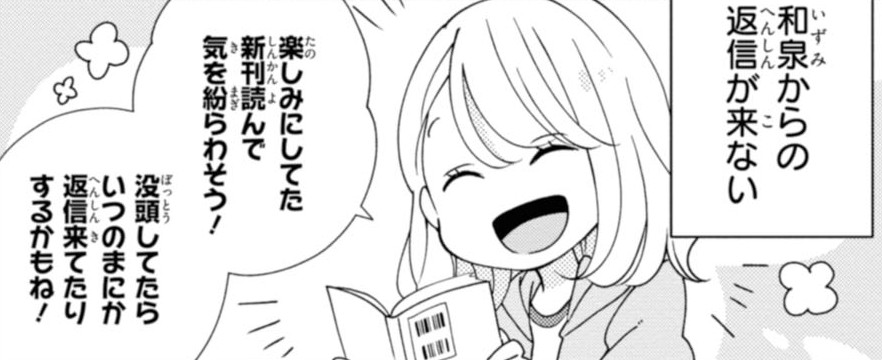
Narration: 「和泉( いずみ ) からの返信( へんしん ) が来( こ ) ない」 “I haven't received a reply from Izumi.” あかり: 「楽( たの ) しみにしてた新刊( しんかん ) 読( よ ) んで気( き ) を紛( まぎ ) らわそう!」 “I'll distract myself by reading the new book I've been looking forward to!” 「没頭( ぼっとう ) してたらいつのまにか返信( へんしん ) 来( き ) てたりするかもね !」 “Maybe if I get really absorbed in it, the reply will show up before I know it!” Challenge Yourself Show translation
Challenge
What does Akari decide to do while waiting for Izumi's reply?
Narration: 「和泉( いずみ ) からの返信( へんしん ) が来( こ ) ない」 あかり: 「楽( たの ) しみにしてた新刊( しんかん ) 読( よ ) んで気( き ) を紛( まぎ ) らわそう 「没頭( ぼっとう ) してたらいつのまにか返信( へんしん ) 来( き ) てたりするかもね!」 Clues 楽( たの ) しみにしてた新刊( しんかん ) 読( よ ) んでread the new volume she had been looking forward to 気( き ) を紛( まぎ ) らわそうlet's distract myself, expressing her decision 没頭( ぼっとう ) してたらif she becomes absorbed in it What does the speaker mean? Read a new book to take her mind off the wait. Akari links reading the 新刊( しんかん ) with 気( き ) を紛( まぎ ) らわそう, showing that the book is her chosen distraction. Write Izumi another message asking for an immediate reply. Akari chooses to occupy herself with a book. She does not send a follow-up message. Read the reply that Izumi has already sent. The narration says the reply has not arrived. The text she plans to read is a new book. Stop expecting any response from Izumi. She still hopes the reply may appear while she is absorbed in reading. She is easing the wait, not giving up. Send Izumi the book she has been saving. Akari plans to read the book herself. Nothing in the line suggests sending it to him. Keep watching her phone without doing anything else. 気( き ) を紛( まぎ ) らわす means redirecting her attention, so she deliberately turns to another activity.
Akari decides to read the new volume she has been anticipating so she will stop fixating on the missing reply. She hopes that once she is absorbed, Izumi’s message may arrive before she notices the time passing.
View Full Example Akari is waiting for a text from Izumi, so she decides to read a new book to take her mind off it. If she gets absorbed, the reply might show up before she knows it: かもね, “maybe”. ね keeps the hope light, as if she’s telling herself.
Example 6 of 11: Something like a general store with 〜か何か Example 6 of 11
ふらいんぐうぃっち » Volume 1 » Page 21Having just settled in at her relative’s house where she will be living, Makoto has a meal with her cousins.
真琴( まこと ) :「そーだ。近( ちか ) くに雑貨屋( ざっかや ) さんか何( なに ) かありますかね ?」 “Oh yeah, is there a general store or something nearby?” 圭( けい ) :「ん? 雑貨屋( ざっかや ) ?」 “Hm? A general store?” Challenge Yourself Show translation
Challenge
What kind of place is Makoto asking about?
真琴( まこと ) :「そーだ。近( ちか ) くに雑貨屋( ざっかや ) さんか何( なに ) か ありますかね?」 圭( けい ) :「ん? 雑貨屋( ざっかや ) ?」 Clues 近( ちか ) くにsomewhere nearby 雑貨屋( ざっかや ) さんか何( なに ) かa general store or another similar kind of shop What does the speaker mean? A nearby general store or something similar. 雑貨屋( ざっかや ) さん names the type of shop, and か何( なに ) か leaves room for a similar place. The exact location of the nearest supermarket. Makoto gives a broad category with か何( なに ) か rather than asking for one exact supermarket. A place where she can get a job nearby. The question asks whether a type of shop exists nearby. It does not mention employment. A relative's house close to the station. 雑貨屋( ざっかや ) is a general store, not a home, and no station appears in the question. A particular store that Kei recommended earlier. Makoto introduces the question herself and uses か何( なに ) か because the exact type does not matter. Any restaurant that serves dinner. The example category is a general store. Makoto does not ask about food or restaurants.
Makoto wants to know whether there is a general store, or some similar shop, nearby. か何( なに ) か keeps the request flexible instead of requiring that exact type of store.
View Full Example Makoto has just moved in with her relatives and is having dinner with her cousins. 雑貨屋( ざっかや ) さんか何( なに ) かありますかね?, “is there a general store or something nearby?”, softens the question with ね, so it sounds less like a demand for information.
Example 7 of 11: Working hard so as to satisfy customers with 〜ように Example 7 of 11
ご注文はうさぎですか? » Volume 1 » Page 50After visiting Chiya’s family’s café, Cocoa’s sense of work is reinvigorated.
ココア: 「私( わたし ) たちもお客( きゃく ) さんに満足( まんぞく ) してもらえるように頑張( がんば ) らなきゃね 」 “We've got to work hard too so that customers will be satisfied.” リゼ: 「だなー」 “Yeah.” Challenge Yourself Show translation
Challenge
What does ココア mean in the highlighted line?
ココア: 「私( わたし ) たちもお客( きゃく ) さんに満足( まんぞく ) してもらえる ように 頑張( がんば ) らなきゃね」 リゼ: 「だなー」 Clues もらえるように 満足( まんぞく ) してもらえるように gives the goalWhat does the speaker mean? We have to work hard so that our customers will be satisfied. Cocoa says they must work hard so that customers can leave satisfied. Cocoa says the customers should work harder for the café. The highlighted form is もらえるように. Here 満足( まんぞく ) してもらえるように gives the goal, so this choice does not match the Japanese. Cocoa says the customers are already satisfied, so the staff can stop trying. The highlighted form is もらえるように. Here 満足( まんぞく ) してもらえるように gives the goal, so this choice does not match the Japanese. Cocoa says they should work hard to make the menu harder to understand. The highlighted form is もらえるように. Here 満足( まんぞく ) してもらえるように gives the goal, so this choice does not match the Japanese.
満足( まんぞく ) してもらえるように gives the goal. Cocoa says they must work hard so that customers can leave satisfied.
View Full Example Seeing Chiya’s family’s café has inspired Cocoa. 頑張( がんば ) らなきゃね, “we’ve got to work hard”, is a resolution, and ね brings Rize into it. Rize agrees: だなー.
Example 8 of 11: Have to wear a yukata with 〜なくちゃ Example 8 of 11
キラキラとギラギラ » Volume 3 » Page 32Lulu has plans to visit a local festival with her friends from class. Her mother helps her dress for the occasion.
ママ: 「せっかくお祭( まつ ) りに行( い ) くんだから」 “Since you're going to the festival and all...” 「やっぱり浴衣( ゆかた ) くらい着( き ) なくちゃね 」 “You really should wear a yukata at least.” Challenge Yourself Show translation
Challenge
What does Lulu's mother say Lulu should do?
ママ: 「せっかくお祭( まつ ) りに行( い ) くんだから」 「やっぱり浴衣( ゆかた ) くらい着( き ) なくちゃ ね」 Clues せっかくお祭( まつ ) りに行( い ) くんだから since she has the special occasion of going to the festival 浴衣( ゆかた ) くらい着( き ) なくちゃねshe should wear at least a yukata, stated as a friendly expectation What does the speaker mean? Wear a yukata for the festival. 浴衣( ゆかた ) is the item before 着( き ) なくちゃ, and the first line gives the festival as the reason. Buy a yukata while she is at the festival. The verb is 着( き ) る, to wear, not buying. Her mother is already helping her dress. Attend the festival only if her friends wear yukata. Lulu's clothing is the topic of the expectation. The line sets no condition involving her friends. Wear something other than a yukata this time. やっぱり presents a yukata as the expected choice, not something to avoid. Change clothes after returning from the festival. The reason is that Lulu is about to go to the festival. The line does not concern changing afterward. Ask whether a yukata is required at the festival. Her mother states her own expectation with 着( き ) なくちゃね. She is not asking about a festival rule.
Lulu’s mother says that going to the festival calls for wearing at least a yukata. 着( き ) なくちゃ expresses the expectation casually, and ね keeps it friendly rather than strict.
View Full Example Lulu is going to a local festival with her friends, and her mother is helping her dress. 浴衣( ゆかた ) くらい着( き ) なくちゃね, “you’ve got to wear a yukata at least”, sounds like advice they both agree on. ね makes it a shared assumption.
Example 9 of 11: Worth the effort to build a garden with 〜甲斐がある Example 9 of 11
ARIA The MASTERPIECE » Volume 5 » Page 43A customer asks Akari to stop the gondola as she sees a house with a fantastic flower garden. The customer asks if it’s a special place, to which Alicia explains it’s an ordinary house. She says the flower bed and gardening are a barometer to measure the caliber of the woman of the household.
アリシア: 「ネオ・ヴェネツィアの街中( まちなか ) は残念( ざんねん ) ながら自然( しぜん ) の緑( みどり ) が少( すく ) ないですから」 “Since there's regrettably little natural greenery in the city of Neo-Venezia...” 「きっと奥様( おくさま ) 方( がた ) もがんばり甲斐( がい ) があるんでしょうね 」 “...surely the housewives also find it worth the effort.” View Full Example A customer admires a house’s flower garden, and Alicia explains that a garden is a point of pride for the woman of the house. With so little greenery in Neo-Venezia, the effort must feel worth it: 甲斐( がい ) があるんでしょうね. でしょうね makes it a gentle guess.
Example 10 of 11: A whiff of crime with 犯罪 Example 10 of 11
GALS! » Volume 1 » Page 31A classmate shows off her new satchel from Meisho Daichi High School. Ran wants one for herself, so she heads down to Shibuya in search of a Meisho Daichi student who’ll give her one. She accidentally steals one, which she later ruminates on in her room. As she talks to herself about how her pride cannot abide stealing, her police officer parents burst into her room, asking what was stolen and who the suspect is.
蘭( らん ) :「何( なん ) でもないって!! びっくりさせんなよ もーーーー!」 “It's nothing!! Don't scare me like that! Seriously!!” 泰三( たいぞう ) :「そ そうか スマン スマン…」 “Oh... okay. Sorry, sorry...” 清香( きよか ) :「犯罪( はんざい ) のニオイがするとつい…ね 」 “When I smell a crime, I just can't help myself...” Challenge Yourself Show translation
Challenge
How does Kiyoka excuse bursting into Ran's room?
蘭( らん ) :「何( なん ) でもないって!! びっくりさせんなよ もーーーー!」 泰三( たいぞう ) :「そ そうか スマン スマン…」 清香( きよか ) :「犯罪( はんざい ) Clues 犯罪( はんざい ) のニオイthe smell or hint of crime 〜がする to sense a smell, sound, or feeling 〜と when that trigger occurs つい unintentionally or by reflex …ね softens the trailing explanation What does the speaker mean? A hint of crime makes her react before she can stop herself. 犯罪( はんざい ) のニオイがすると sets the trigger, and つい presents her reaction as something she did without thinking. She noticed a literal bad smell coming from Ran's room. ニオイ is figurative here because 犯罪( はんざい ) modifies it. She sensed possible wrongdoing, not an odor in the room. She admits that she committed the crime Ran was describing. 犯罪( はんざい ) のニオイ means a hint of crime. Kiyoka is explaining why her police instincts made her rush in, not confessing. She says Ran always invents crimes to get attention. The line describes Kiyoka's reaction whenever she senses crime. It does not say Ran fabricated anything or does this repeatedly. She promises that she will ignore signs of crime next time. つい explains that she reacted without thinking. There is no promise about how she will behave in the future. She thinks Ran should apologize for frightening her parents. The trailing つい…ね is Kiyoka's sheepish excuse for her own reaction. It is not a demand for Ran to apologize.
Kiyoka frames possible wrongdoing as a smell that triggers her police instincts. The つい leaves her action unstated and excuses it as something she did before thinking.
View Full Example Ran was talking to herself about a theft, and her police officer parents burst in demanding details. Her mother explains: when she smells a crime, she just can’t help it. つい…ね trails off, and ね asks Ran to understand without spelling out the rest.
Example 11 of 11: It's not like you're a foreigner with 〜じゃあるまいし Example 11 of 11
名探偵コナン » Volume 1 » Page 61Shin’ichi’s teenage friend Ran enters Professor Agasa’s house looking for him, unaware that he was forced to take a poison that inadvertently turned the teenager into a young child. When Ran sees the boy and asks his name, Shin’ichi recalls Agasa’s suggestion to not reveal who he is. Panicking, he gives the name “Conan”, explaining the oddness of it by saying his father is a fan of author Arthur Conan Doyle.
蘭( らん ) :「コナンね ー…」 “Conan, huh?” 阿笠( あがさ ) :「なにがコナンだ!! 外国人( がいこくじん ) じゃあるまいし」 “What's with 'Conan'!? It's not like you're a foreigner...” コナン: 「しかたねーだろ? ほかに思( おも ) いつかなかったんだから…」 “It couldn't be helped, all right? I couldn't think up anything else...” Challenge Yourself Show translation
Challenge
Why does Agasa object to the name Conan?
蘭( らん ) :「コナンねー…」 阿笠( あがさ ) :「なにがコナンだ!! 外国人( がいこくじん ) じゃあるまいし 」 コナン: 「しかたねーだろ? ほかに思( おも ) いつかなかったんだから…」 Clues なにがコナンだ what is this 'Conan' supposed to be? 外国人( がいこくじん ) じゃあるまいしit is not as if you are a foreigner What does the speaker mean? The foreign-sounding name seems unsuitable for Shin'ichi. Agasa contrasts the name Conan with the fact that Shin'ichi is not a foreigner. Conan is already the name of someone in Ran's family. Agasa objects to the foreign name itself, not to a duplicate family name. Shin'ichi pronounced the name incorrectly. Nothing in the line concerns pronunciation. The name would reveal Shin'ichi's real identity. The improvised name hides his identity, even though Agasa finds it ridiculous. Ran asked for a traditional foreign name. Ran only asks who he is. Shin'ichi chooses the name in a panic. Agasa thinks Shin'ichi should admit that he is a foreigner. じゃあるまいし states the opposite: Shin'ichi is not a foreigner.
Agasa finds the conspicuously foreign name absurd for Shin’ichi. 外国人( がいこくじん ) じゃあるまいし means “it is not as if you are a foreigner”.
View Full Example Shin’ichi, shrunk into a child, blurted out “Conan” when Ran asked his name. Ran turns it over: コナンねー…, “Conan, huh…”. Repeating a word with ね shows the speaker thinking about it. Professor Agasa can’t believe the name either.
Making Sure with からね 〜からね ends a sentence with a reason or a promise and makes sure the listener has heard it. It’s often a reminder or a mild warning, “just so you know”. 先( さき ) に行( い ) くからね is “I’m going ahead, okay?”
Example 1 of 5: Because it's only this road with 〜だけ Example 1 of 5
からかい上手の高木さん » Volume 4 » Page 24Takagi convinces Nishikata to spend his summer practicing riding his bike with her on the back. One day, she asks Nishikata if he’s progressed on his summer homework, saying they should go to his house to work on it. Since the road back is wide and without cars, Takagi convinces Nishikata to ride doubles to his house.
西片( にしかた ) :「こ…この道( みち ) だけだからね 。」 “Because it's only this road, okay?” Challenge Yourself Show translation
Challenge
What limit does Nishikata place on riding together?
西片( にしかた ) :「こ…この道( みち ) だけ だからね。」 Clues この道( みち ) だけ only this road 〜だから because, giving his justification ね asks Takagi to accept the limit What does the speaker mean? He agrees to ride double only along this road. この道( みち ) だけ restricts his agreement to the current stretch, and ね presses Takagi to recognize that boundary. He agrees to ride double on every road except this one. だけ includes only this road. It does not exclude it. He says this road is the only route to his house. The restriction concerns their double-riding agreement, not the number of available routes. He asks Takagi to ride the bicycle for him. Nishikata is setting a condition on the ride, not changing who controls the bicycle. He promises they can ride together for the whole summer. この道( みち ) だけ narrows the permission to one road rather than extending it through summer. He refuses to ride on this road because it is unsafe. He reluctantly permits it here. だから explains why this limited case is acceptable.
Nishikata gives in only for the current road. だけ marks the narrow limit, and his final ね asks Takagi to accept it.
View Full Example Takagi has talked Nishikata into riding double on his bike back to his house, since the road is wide and empty. He sets a condition: この道( みち ) だけだからね, “only on this road, okay?” からね makes sure she knows he means it.
Example 2 of 5: Challenge deadline with 期限 Example 2 of 5
からかい上手の高木さん » Volume 4 » Page 49During their walk home after school, Takagi presents Nishikata with an impossible challenge. When he pushes back against it, she comes up with a new challenge, which Nishikata loses. As the two reach the point where they part ways, Takagi stops for a moment.
高木( たかぎ ) :「あの勝負( しょうぶ ) 期限( きげん ) ないからね 。」 “There's no deadline for that challenge.” Challenge Yourself Show translation
Challenge
What does Takagi say about their earlier challenge?
高木( たかぎ ) :「あの勝負( しょうぶ ) 期限( きげん ) Clues あの勝負( しょうぶ ) "that challenge," referring to one they both know 期限( きげん ) ない"has no deadline," with が omitted in casual speech What does the speaker mean? There is no deadline for it. 期限( きげん ) ない says that a deadline does not exist. Its deadline is today. The line says 期限( きげん ) ない, not that the deadline is today. She has canceled it. Takagi says the challenge has no deadline. She does not call it off. Nishikata has already lost it. The line discusses the time limit, not the result of the challenge. They need to decide its rules. There is no mention of rules or deciding them. She has forgotten what the challenge was. あの勝負( しょうぶ ) points to a challenge both speakers already recognize.
Takagi refers to their shared challenge with あの勝負( しょうぶ ) and says 期限( きげん ) ない, so Nishikata can still be held to it indefinitely.
View Full Example Nishikata lost Takagi’s challenge on the walk home, and as they reach the spot where they part, she stops. 期限( きげん ) ないからね, “there’s no deadline for that challenge”, is a parting reminder: she hasn’t forgotten, and it isn’t over.
Example 3 of 5: Bus pickup and drop off with 送迎 Example 3 of 5
アオのハコ » Volume 10 » Page 182After school, the girls’ basketball team walks to the location where they’re practicing for an upcoming match.
生徒: 「せめてバスで送迎( そうげい ) してくれれば…」 “If only they'd at least provide a bus to pick us up and drop us off” 生徒: 「徒歩( とほ ) 圏内( けんない ) だからね ぇ」 “It's within walking distance, after all.” Challenge Yourself Show translation
Challenge
What does the first student wish someone would provide?
生徒: 「せめてバスで送迎( そうげい ) 生徒: 「徒歩( とほ ) 圏内( けんない ) だからねぇ」 Clues せめて at least, presenting this as a minimum request 〜で送迎( そうげい ) してくれれば… if only they would provide pickup and drop-off transportation by that means What does the speaker mean? A bus to pick the team up and drop them off. 〜で marks the bus as the means of travel, and 送迎( そうげい ) する covers taking the team there and bringing them back. Permission for the team to walk to practice. Walking distance appears in the reply as the reason no shuttle is provided. It is not the first student's request. A bus that the team members can drive themselves. 〜てくれれば asks for someone else to provide the transportation. The students are not offering to drive. Someone to escort the team on foot. The requested 送迎( そうげい ) is explicitly by bus, not an escort for the walk. A shorter route within walking distance. The second student says the destination is already within walking distance. The wish is for transportation anyway. A different place where the team can practice. The line asks for pickup and drop-off service. It does not propose changing the practice location.
The first student wishes the team had a bus shuttle. せめて frames that as the least the school could do, while 送迎( そうげい ) includes both pickup and drop-off.
View Full Example The girls’ basketball team is walking to where they’ll practice for a match, and one of them wishes the school would at least send a bus. Another answers: 徒歩( とほ ) 圏内( けんない ) だからねぇ, “well, it’s within walking distance”. からねぇ offers the reason with a resigned shrug.
Example 4 of 5: I'll fix you dinner with 〜てあげる Example 4 of 5
名探偵コナン » Volume 3 » Page 171After a case wraps up, Conan parts ways with Kogoro and Ran to do something. When Conan returns home, Ran gets ready to prepare dinner.
蘭( らん ) :「おなかすいたでしょーー?」 “You're hungry, right?” 「今( いま ) 、何( なに ) か作( つく ) ってあげるからね !」 “I'll make you something right now!” コナン: 「うん!」 “'kay!” Challenge Yourself Show translation
Challenge
What does Ran offer to do for Conan?
蘭( らん ) :「おなかすいたでしょーー?」 「今( いま ) 、何( なに ) か作( つく ) ってあげる からね!」 コナン: 「うん!」 Clues 何( なに ) か作( つく ) ってmake something てあげる do it for someone What does the speaker mean? Make him something to eat. Ran asks if Conan is hungry, then offers to 何( なに ) か作( つく ) ってあげる. Ask him to prepare dinner for her. Ran is the one who will perform 作( つく ) る for Conan's benefit. Buy him a present tomorrow. 今( いま ) sets the action now, and the hunger question makes food the understood item. Teach him how to cook. She offers to make something herself, not to give a lesson. Let him choose a restaurant. The verb is 作( つく ) る, to make, rather than choosing or going out. Wait until he is no longer hungry. Her offer responds to his hunger by doing something for him now.
Ran offers to make Conan something because he is hungry. 〜てあげる presents the cooking as an action she will do for his benefit.
View Full Example Conan comes home after a case, and Ran is sure he’s hungry. 作( つく ) ってあげるからね, “I’ll make you something”, is a promise, and からね reassures him it’s coming.
Example 5 of 5: Experiencing danger during hide-and-seek with 〜目にあう Example 5 of 5
名探偵コナン » Volume 9 » Page 28During a hide-and-seek game at the park, Ayumi hides in a car trunk and falls asleep. She wakes to find the car moving and discovers a bag of money, a slimy saw, and what seems like a severed head. Conan, tracking her via their Detective Boys badges, prepares to pursue on his electric skateboard. Genta and Mitsuhiko join him on it, but Conan urges them to stay behind due to the danger.
元太( げんた ) :「歩美( あゆみ ) が危( あぶ ) ない目( め ) にあってんのに、じっとしてられっかよ!!」 “Ayumi is in danger, so how can I just stand by and do nothing?” 光彦( みつひこ ) :「そうですよ!! 女性( じょせい ) をお守( まも ) りするのは男( おとこ ) の義務( ぎむ ) ですからね !!」 “That's right! It's a man's duty to protect women!” Challenge Yourself Show translation
Challenge
Why does Genta refuse to stay behind?
元太( げんた ) :「歩美( あゆみ ) が危( あぶ ) ない目( め ) にあって 光彦( みつひこ ) :「そうですよ!! 女性( じょせい ) をお守( まも ) りするのは男( おとこ ) の義務( ぎむ ) ですからね!!」 Clues 歩美( あゆみ ) が危( あぶ ) ない目( め ) にあってんのにeven though Ayumi is going through something dangerous じっとしてられっかよ how could I stay still? What does the speaker mean? Ayumi is in danger, so he cannot sit still. The rhetorical じっとしてられっか rejects doing nothing while Ayumi is endangered. He thinks Ayumi has already returned safely. 危( あぶ ) ない目( め ) にあってんのに presents her danger as ongoing. He wants to continue the hide-and-seek game. His concern has shifted from the game to rescuing Ayumi. He believes Conan's skateboard is too slow. He does not criticize the skateboard. He insists on joining the pursuit. He has a duty to guard the park. Genta's reason is Ayumi's danger, not responsibility for the location. He wants Conan to wait while he calls the police. He rejects waiting and wants to take action immediately.
Genta says he cannot remain idle while Ayumi is in danger. 危( あぶ ) ない目( め ) にあう describes undergoing a dangerous experience.
View Full Example Ayumi is trapped in the trunk of a moving car, and Conan wants Genta and Mitsuhiko to stay behind. Mitsuhiko backs Genta up: protecting women is a man’s duty, 義務( ぎむ ) ですからね. からね gives the reason and makes sure Conan hears it.
Requests and Advice with 〜てね ね after a request makes it gentle: 待( ま ) っててね, “wait for me, okay?” It assumes the listener is happy to go along. Advice works the same way. 〜ことね, “you’d better…”, is common in feminine speech.
Example 1 of 4: Came to be studying with us with 〜ことになる Example 1 of 4
名探偵コナン » Volume 18 » Page 96A new student joins Conan’s elementary school classroom. The teacher introduces her.
先生( せんせい ) :「今日( きょう ) からみんなと勉強( べんきょう ) する事( こと ) になった、灰原( はいばら ) 哀( あい ) さんです!」 “This is Ai Haibara. It came to be that she'll be studying with us starting today.” 「みんな仲良( なかよ ) くしてあげてね !」 “Everyone be friendly with her!” Challenge Yourself Show translation
Challenge
What new arrangement does the teacher announce?
先生( せんせい ) :「今日( きょう ) からみんなと勉強( べんきょう ) する 事( こと ) になった灰原( はいばら ) 哀( あい ) さんです!」 「みんな仲良( なかよ ) くしてあげてね!」 Clues 今日( きょう ) からstarting today みんなと勉強( べんきょう ) する事( こと ) になった it has been arranged that she will study with everyone What does the speaker mean? Haibara will join the class starting today. The teacher introduces Haibara as someone who will study with everyone from today. Haibara will teach the class for one day. She will 勉強( べんきょう ) する with everyone, not teach them. The whole class will transfer to another school. The new arrangement concerns Haibara joining this group. Everyone must study alone starting today. みんなと means together with everyone. Haibara has finished studying with the class. 今日( きょう ) から marks the beginning, not the end, of the arrangement. The students may decide whether Haibara can enter. 〜ことになった presents the placement as already decided.
The teacher announces that Ai Haibara will begin studying with the class that day. 〜ことになった presents this as an established arrangement.
View Full Example A new student, Ai Haibara, has joined Conan’s class, and the teacher asks everyone to be friends with her: 仲良( なかよ ) くしてあげてね. ね makes it a warm request, the kind teachers make to young children.
Example 2 of 4: Clearing out a room with 〜ておく Example 2 of 4
ご注文はうさぎですか? » Volume 1 » Page 50After Cocoa suggests if she were staying at Chiya’s place rather than Chino’s, that she’d be working for Chiya’s family’s tea house, Chiya takes to the idea.
千夜( ちや ) :「じゃあ部屋( へや ) を空( あ ) けておくから早速( さっそく ) 荷物( にもつ ) をまとめて来( き ) てね 」 “Then I'll clear out a room in advance, so go gather your things and come right away.” ココア: 「誰( だれ ) か止( と ) めてよ!」 “Somebody stop her!” Challenge Yourself Show translation
Challenge
What does 千夜( ちや ) mean in the highlighted line?
千夜( ちや ) :「じゃあ部屋( へや ) を空( あ ) けておく から早速( さっそく ) 荷物( にもつ ) をまとめて来( き ) てね」 ココア: 「誰( だれ ) か止( と ) めてよ!」 Clues 空( あ ) けておく空( あ ) けておく means clearing a room and keeping it availableWhat does the speaker mean? Then I'll clear out a room in advance, so go gather your things and come right away. Chiya proposes preparing the room before Cocoa arrives with her belongings. Chiya says the room will remain occupied when Cocoa arrives. The highlighted form is 空( あ ) けておく. Here 空( あ ) けておく means clearing a room and keeping it available, so this choice does not match the Japanese. Chiya tells Cocoa to clear out her own room first. The highlighted form is 空( あ ) けておく. Here 空( あ ) けておく means clearing a room and keeping it available, so this choice does not match the Japanese. Chiya plans to prepare the room only after Cocoa moves in. The highlighted form is 空( あ ) けておく. Here 空( あ ) けておく means clearing a room and keeping it available, so this choice does not match the Japanese.
空( あ ) けておく means clearing a room and keeping it available. Chiya proposes preparing the room before Cocoa arrives with her belongings.
View Full Example Cocoa joked that she’d work at Chiya’s family’s café if she lived there, and Chiya takes her up on it at once. 荷物( にもつ ) をまとめて来( き ) てね, “go pack your things and come”, is a cheerful request. ね makes it sound already settled, which is why Cocoa wants someone to stop her.
Example 3 of 4: Not only physical wounds with 〜だけじゃなくても Example 3 of 4
くノ一ツバキの胸の内 » Volume 2 » Page 147During lunch, Mokurin sees someone new sitting with Tsubaki. She learns that it’s the transfer student, Rindou, who’s joined Tsubaki in the Dog Clan. Mokurin introduces herself as a member of the Monkey Clan, which Tsubaki explains handles medical treatment.
モクリン: 「怪我( けが ) だけじゃなくても困( こま ) ったことあったら言( い ) ってね 。」 “If you're having trouble with anything, not just injuries, let me know.” Challenge Yourself Show translation
Challenge
What does Mokurin invite Rindou to do?
モクリン: 「怪我( けが ) だけじゃなくても 困( こま ) ったことあったら言( い ) ってね。」 Clues 怪我( けが ) だけじゃなくても"even if it is not just an injury," broadening the offer of help 困( こま ) ったことあったら"if there is something troubling you," with が omitted after こと 言( い ) ってねa friendly request to tell her or let her know What does the speaker mean? Tell Mokurin about any trouble, not only injuries. 怪我( けが ) だけじゃなくても extends Mokurin's offer beyond injuries, and 言( い ) ってね asks Rindou to tell her. Tell Mokurin only when she has a physical injury. だけじゃなくても rejects that limit. Mokurin also offers help with other problems. Hide any injuries from the other clans. 言( い ) ってね asks Rindou to speak up, not keep the problem secret. Wait until a problem becomes serious before asking for help. The condition is simply having something troubling her. The line does not require it to become serious. Ask Tsubaki to handle every medical problem. Mokurin is offering her own help. She does not redirect Rindou to Tsubaki. Report only problems caused by ninja training. Mokurin says 困( こま ) ったこと, any troubling matter, without limiting the cause.
Mokurin begins with injuries, then removes that limit with 怪我( けが ) だけじゃなくても. She invites Rindou to tell her whenever anything is troubling her.
View Full Example Mokurin meets Rindou, the transfer student who joined Tsubaki’s clan. Mokurin’s clan handles medical care, and she offers more than that: if anything is wrong, 言( い ) ってね, “let me know”. ね makes it an open, friendly offer.
Example 4 of 4: Don't underestimate your mother with 甘く見る Example 4 of 4
怪盗セイント・テール » Volume 7 » Page 46Meimi’s mother stops by Meimi’s room with a couple of movie tickets. She says she and Meimi’s father have already seen the movie, so she’s offering them to Meimi. She says the movie is very romantic, and suggests Meimi has someone she’d want to see it with.
芽美( めいみ ) :「マ… ママ知( し ) って…」 “Mom, you knew...?” ママ: 「ママを甘( あま ) く見( み ) ないことね 」 “Don't underestimate Mom.” Challenge Yourself Show translation
Challenge
What warning does Meimi's mother give her?
芽美( めいみ ) :「マ… ママ知( し ) って…」 ママ: 「ママを甘( あま ) く見( み ) ない Clues ママを甘( あま ) く見( み ) ない she tells Meimi not to judge her mother too lightly 〜ないことね frames the warning as firm, knowing advice What does the speaker mean? Do not underestimate how much her mother knows. ママを甘く見ない warns Meimi not to assume that her mother is easy to fool or unaware. Do not tell her mother about the movie tickets. Her mother brought the tickets herself. The warning concerns underestimating her, not hiding the tickets. Do not assume the movie will be romantic. Her mother has already described the movie as romantic. 甘く見ない is about taking a person lightly. Do not invite her father to see the movie. Her parents have already seen it, but the warning does not tell Meimi whom to invite. Do not expect her mother to approve of any date. The line shows that her mother has noticed Meimi's feelings. It does not state that she disapproves. Do not ask how her mother learned about Saint Tail. The scene concerns Meimi's romantic interest, not her secret identity as Saint Tail.
Meimi is startled that her mother has noticed her feelings. Her mother replies ママを甘く見ないことね, warning Meimi not to underestimate how perceptive she is.
View Full Example Meimi’s mother offers her movie tickets and hints that Meimi has someone she’d like to see a romantic movie with. Meimi is shocked that she knows. 〜ないことね is “you’d better not”: 甘( あま ) く見( み ) ないことね, “don’t underestimate your mom”. ね keeps it playful.
Realizing with のね and んだね のね, and んだね in casual speech, mark something the speaker has just worked out from what they see or hear: “so that’s it” or “I see”. ね asks the listener to confirm the conclusion.
疲( つか ) れてるんだね。You’re tired, aren’t you? Example 1 of 6: Receiving a held image with 〜れる Example 1 of 6
ご注文はうさぎですか? » Volume 1 » Page 58Syaro returns home after seeing Rize at the store.
シャロ: 「リゼ先輩( せんぱい ) に余計( よけい ) なイメージもたれた…」 “A wrong impression of me has become held by Rize-senpai...” 「あと頭( あたま ) にへんな生物( せいぶつ ) が…」 “And there was a strange creature on her head...” 千夜( ちや ) :「ココアちゃん達( たち ) に会( あ ) ったのね !」 “So you met Cocoa and the others!” Challenge Yourself Show translation
Challenge
What does シャロ mean in the highlighted line?
シャロ: 「リゼ先輩( せんぱい ) に余計( よけい ) なイメージもた れた …」 「あと頭( あたま ) にへんな生物( せいぶつ ) が…」 千夜( ちや ) :「ココアちゃん達( たち ) に会( あ ) ったのね!」 Clues もたれた イメージもたれた means Rize formed an impression What does the speaker mean? Rize-senpai formed a strange impression of me... The literal image of something "being held" becomes "Rize has an impression of me" in this context. Syaro says she formed an odd impression of Rize. The highlighted form is もたれた. Here イメージもたれた means Rize formed an impression, so this choice does not match the Japanese. Syaro says she wanted Rize to misunderstand her. The highlighted form is もたれた. Here イメージもたれた means Rize formed an impression, so this choice does not match the Japanese. Syaro says Rize's favorable opinion of her remained unchanged. The highlighted form is もたれた. Here イメージもたれた means Rize formed an impression, so this choice does not match the Japanese.
イメージもたれた means Rize formed an impression. The literal image of something “being held” becomes “Rize has an impression of me” in this context.
View Full Example Syaro comes home upset that Rize got the wrong idea about her, and she mentions a girl with a strange creature on her head. Chiya puts it together: ココアちゃん達( たち ) に会( あ ) ったのね!, “so you met Cocoa and the others!” のね marks her conclusion.
Example 2 of 6: Thank you very much for bringing my daughter back with どうもありがとう Example 2 of 6
よつばと! » Volume 1 » Page 45Yousuke’s daughter Yotsuba wanders off while he’s moving things into their new home. One of his new neighbors offers to keep an eye out for her. Later, he finds Yotsuba outside with the neighbors.
葉介( ようすけ ) :「あぁ連( つ ) れて帰( かえ ) ってくれたんだね 」 “Ah, so you brought her back home.” 「どうもありがとう」 “Thank you so much.” あさぎ: 「いえいえ 私( わたし ) はたいした事( こと ) はなにも」 “No, no, it was nothing at all.” 恵那( えな ) :「ただいま…」 “I'm home...” Challenge Yourself Show translation
Challenge
What is Yousuke thanking the neighbors for?
葉介( ようすけ ) :「あぁ連( つ ) れて帰( かえ ) ってくれたんだね」 「どうもありがとう 」 あさぎ: 「いえいえ 私( わたし ) はたいした事( こと ) はなにも」 恵那( えな ) :「ただいま…」 Clues 連( つ ) れて帰( かえ ) ってくれたんだねhe realizes that they kindly brought Yotsuba back home どうもありがとう a warm expression of thanks for that help What does the speaker mean? Bringing Yotsuba back home. 連( つ ) れて帰( かえ ) ってくれた names the helpful action, and くれた presents it as a favor Yousuke received. Helping him move furniture into the house. The thanks follows Yousuke's realization that the neighbors brought his daughter back, not help with the move. Inviting Yotsuba to stay for dinner. 帰( かえ ) ってくれた concerns returning her home. No dinner invitation is mentioned. Finding a missing box from the move. The person brought back is Yotsuba. The line does not refer to an object or box. Introducing themselves to Yotsuba. Yousuke thanks them for taking care of Yotsuba and returning her, not simply meeting her. Watching his house while he went outside. The kindness marked by くれた is bringing Yotsuba home, not guarding the house.
Yousuke realizes that his new neighbors found Yotsuba and brought her back. He recognizes that favor with くれた and then thanks them warmly with どうもありがとう.
View Full Example Yotsuba wandered off while her father was moving in, and a neighbor offered to watch for her. Now Yousuke finds Yotsuba outside with the neighbors and works out what happened: 連( つ ) れて帰( かえ ) ってくれたんだね, “so you brought her back”. Then he thanks them.
Example 3 of 6: Demolishing the movie theater with 解体 Example 3 of 6
名探偵コナン » Volume 23 » Page 12Conan and his friends go to the theater to see a movie. There, they discover this is the last day before the theater closes.
コナン: 「そっか!それで場内( じょうない ) にロープとかが落( お ) ちてたんだね !」 “Oh, I see! That's why there were ropes and stuff lying around the venue!” オーナー: 「スマンのう… 業者( ぎょうしゃ ) の者( もの ) が上映( じょうえい ) 時間( じかん ) ギリギリまで解体( かいたい ) 作業( さぎょう ) の準備( じゅんび ) をしとったから…」 “Sorry about that... The contractor's crew was rushing to get the dismantling ready right up until showtime...” スタッフ: 「まったく… 明日( あした ) まで待( ま ) ってくれればいいものを…」 “Honestly... They could've at least waited until tomorrow...” Challenge Yourself Show translation
Challenge
Why were ropes and other materials lying around the theater?
コナン: 「そっか!それで場内( じょうない ) にロープとかが落( お ) ちてたんだね!」 オーナー: 「スマンのう… 業者( ぎょうしゃ ) の者( もの ) が上映( じょうえい ) 時間( じかん ) ギリギリまで解体( かいたい ) 作業( さぎょう ) の準備( じゅんび ) をしとったから…」 スタッフ: 「まったく… 明日( あした ) まで待( ま ) ってくれればいいものを…」 Clues 解体( かいたい ) 作業( さぎょう ) の準備( じゅんび ) preparations for demolition work 上映( じょうえい ) 時間( じかん ) ギリギリまでright up until showtime What does the speaker mean? Contractors had been preparing to demolish the theater until showtime. The owner connects the materials to last-minute preparations for 解体( かいたい ) 作業( さぎょう ) . The staff had decorated the theater for a festival. The materials belonged to demolition preparations, not decorations. The audience brought ropes for the final screening. The owner says the contractor's crew left them during its work. Workers had finished rebuilding the theater. 解体( かいたい ) means dismantling or demolition, not reconstruction. The ropes were clues deliberately planted by Conan. Conan notices them and then learns their practical source from the owner. The staff planned to move the screening outside. The issue is demolition work being prepared too close to the screening time.
The contractor’s crew had been preparing the theater for demolition right up until showtime. That work explains the ropes and other materials left inside.
View Full Example Conan and his friends learn it’s the theater’s last day before closing, which explains the ropes he saw lying around: 落( お ) ちてたんだね! そっか, “oh, I get it”, and んだね connect what he saw to what he has just learned.
Example 4 of 6: Interested in a defector with 入れ込む Example 4 of 6
名探偵コナン » Volume 24 » Page 189Gin and Vodka finally find Sherry, but after multiple gunshots are fired, she escapes. Vodka thinks they should continue to search for her, but Gin says there’s no way she’ll stay in town after their encounter.
ベルモット: 「あら、随分( ずいぶん ) 入( い ) れ込( こ ) んでるのね …」 “Oh my... You're rather interested in her, aren't you...” 「その小娘( こむすめ ) に…」 “That little girl...” ジン: 「悪( わる ) かったなベルモット…」 “Sorry, Vermouth...” Challenge Yourself Show translation
Challenge
What does Vermouth imply about Gin's attitude toward Sherry?
ベルモット: 「あら、随分( ずいぶん ) 入( い ) れ込( こ ) んでる 「その小娘( こむすめ ) に…」 ジン: 「悪( わる ) かったなベルモット…」 Clues 随分( ずいぶん ) 入( い ) れ込( こ ) んでるyou are quite personally invested その小娘( こむすめ ) に in that little girl What does the speaker mean? He has taken an unusually strong interest in her. 随分( ずいぶん ) 入( い ) れ込( こ ) んでる suggests deep attention or personal investment. He has completely forgotten about her. Vermouth observes the opposite: Gin remains strongly focused on her. He considers her too unimportant to pursue. The teasing remark points to how much attention he is giving her. He believes she has already left the country. Her location is not Vermouth's point. She comments on Gin's degree of interest. He wants Vermouth to protect her. No protective request appears in the exchange. He is interested only in the town where she escaped. その小娘( こむすめ ) に marks Sherry as the target of his interest.
Vermouth teases Gin for being unusually invested in Sherry. 入( い ) れ込( こ ) んでる describes an ongoing, strong personal interest in her.
View Full Example Gin let Sherry get away, but he’s sure she has left town. Vermouth picks up on how much he cares: 随分( ずいぶん ) 入( い ) れ込( こ ) んでるのね, “you’re quite taken with her”. のね is her conclusion, and a tease.
Example 5 of 6: When you're small with 〜うちは Example 5 of 6
ふらいんぐうぃっち » Volume 5 » Page 49During a visit with Anzu’s family, Makoto receives a request to babysit for another witch. Things are fine at first, but after a while, rain begins to pour inside. Anzu’s mother realizes that the child they’re watching over has rain magic.
杏子( あんず ) の母( はは ) :「小( ちい ) さいうちはコントロールできないんだろうね。不安( ふあん ) になると今( いま ) みたいに降( ふ ) らせちゃうんだね 」 “You don't have control while you're small, right? When he gets uneasy, he makes it rain like just now.” 真琴( まこと ) :「なるほど。そうですよね。いきなり知( し ) らない所( ところ ) じゃ心細( こころぼそ ) いですよ。我慢( がまん ) してたんですね 」 “I see. So that's it. It's a little scary suddenly being in a place you don't know. You've been patient, haven't you?” Challenge Yourself Show translation
Challenge
What does Anzu's mother infer about the child's rain magic?
杏子( あんず ) の母( はは ) :「小( ちい ) さいうちは コントロールできないんだろうね。不安( ふあん ) になると今( いま ) みたいに降( ふ ) らせちゃうんだね」 真琴( まこと ) :「なるほど。そうですよね。いきなり知( し ) らない所( ところ ) じゃ心細( こころぼそ ) いですよ。我慢( がまん ) してたんですね」 Clues 小( ちい ) さいうちはコントロールできないthe child cannot control it while still young 不安( ふあん ) になると今( いま ) みたいに降( ふ ) らせちゃうwhen the child feels uneasy, the magic unintentionally makes it rain What does the speaker mean? The child cannot control it yet and causes rain when uneasy. 小( ちい ) さいうちは limits the lack of control to childhood, and 不安( ふあん ) になると gives the trigger for the rain. The child deliberately makes it rain whenever visitors arrive. 降( ふ ) らせちゃう presents the rain as an unintended result, not a deliberate greeting. The magic works only when the child feels calm. The stated trigger is 不安( ふあん ) になる, becoming uneasy, not relaxing. The child has already learned to stop the rain at will. コントロールできない says the child cannot yet control the magic. Rain magic disappears permanently after childhood. The temporary stage concerns control while young. The line does not say the magic itself will disappear. The rain comes from an unfamiliar place, not from the child. The mother connects the child's unease directly to making it rain like it is now.
Anzu’s mother concludes that the child is still too young to control the rain magic. Anxiety triggers it, so the unfamiliar setting has caused the child to make rain fall indoors without meaning to.
View Full Example Rain started pouring indoors while Makoto was babysitting a young witch. Anzu’s mother works it out: he can’t control his magic yet, and 降( ふ ) らせちゃうんだね, “so he makes it rain when he’s anxious”. Makoto reaches her own conclusion with polite んですね: he’d been holding it in.
Example 6 of 6: A picked-up earring with イヤリング Example 6 of 6
俺物語!! » Volume 4 » Page 92Takeo runs after a mother and her child to give them a shoe they dropped. Due to Takeo’s large size and loud steps, the mother and child get frightened and run from him. After he manages to return the dropped item, Takeo returns to his friends. Rinko remarks that the scene was like “A Bear in the Forest ”. Sunakawa recalls the song.
砂川( すなかわ ) :「あーイヤリング拾( ひろ ) って追( お ) いかけるやつね 」 “Ah, the one who picked up an earring and chased after.” 猛男( たけお ) :「そうか 熊( くま ) だと思( おも ) われたのか」 “I see. It's that I was thought of as a bear?” Challenge Yourself Show translation
Challenge
What scene from the song does Sunakawa recall?
砂川( すなかわ ) :「あーイヤリング 拾( ひろ ) って追( お ) いかけるやつね」 猛男( たけお ) :「そうか 熊( くま ) だと思( おも ) われたのか」 Clues イヤリング拾( ひろ ) って追( お ) いかけるやつ the one where someone picks up an earring and chases after its owner 熊( くま ) だと思( おも ) われたTakeo realizes he was mistaken for a bear What does the speaker mean? A bear picks up an earring and runs after the person who dropped it. イヤリング is what gets picked up, and 追( お ) いかける describes chasing after the owner. The bear connection explains the comparison to Takeo. A woman chases a bear to recover her earring. The remembered figure picks up the earring and does the chasing, so the roles are reversed here. A bear steals an earring and hides in the forest. 拾( ひろ ) う means pick up, not steal, and the next action is chasing after someone. Takeo buys an earring for Rinko and loses it. Sunakawa recalls a known song scene rather than describing Takeo buying jewelry. A child drops a shoe while chasing a bear. The shoe belongs to the real-life incident. The song reference specifically names an earring. Sunakawa mistakes Rinko for a bear wearing earrings. Takeo concludes that the frightened mother and child mistook him for the bear.
Sunakawa recalls the song scene in which a bear picks up a dropped earring and runs after its owner. That mirrors Takeo chasing the mother and child to return their lost shoe.
View Full Example Takeo chased a mother and child to return a dropped shoe, and they ran from him. Rinko compares it to the song “A Bear in the Forest”. Sunakawa places it: イヤリング拾( ひろ ) って追( お ) いかけるやつね, “ah, the one where (the bear) picks up an earring and chases after her”.
Feminine わね In feminine speech, ね often follows a noun or な-adjective with no だ: きれいね, “it’s pretty”. わね adds soft emphasis after verbs and adjectives, as in 似合( にあ ) ってるわね, “it suits you”. Like わよ, these sound feminine and a little refined, and manga gives them to mothers, older women, and elegant characters.
Example 1 of 8: Asking to have tea with 〜てもいい Example 1 of 8
ご注文はうさぎですか? » Volume 1 » Page 63Following a misunderstanding, Cocoa and her friends ended up at the tea house where Syaro works.
ココア: 「せっかくだからお茶( ちゃ ) してってもいいかな?」 “Since we have the chance, would it be okay if we had some tea ?” シャロ: 「しょうがないわね ー」 “I guess it can't be helped.” Challenge Yourself Show translation
Challenge
What does ココア mean in the highlighted line?
ココア: 「せっかくだからお茶( ちゃ ) してっ てもいい かな?」 シャロ: 「しょうがないわねー」 Clues お茶( ちゃ ) してってもいい お茶( ちゃ ) してってもいい asks permission to stay for tea What does the speaker mean? Since we have the chance, would it be okay if we had some tea? Cocoa checks whether the group may have tea before leaving the shop. Cocoa asks permission for Syaro to leave the teahouse. The highlighted form is お茶( ちゃ ) してってもいい. Here お茶( ちゃ ) してってもいい asks permission to stay for tea, so this choice does not match the Japanese. Cocoa says the group has already ordered tea without asking. The highlighted form is お茶( ちゃ ) してってもいい. Here お茶( ちゃ ) してってもいい asks permission to stay for tea, so this choice does not match the Japanese. Cocoa asks permission to help Syaro distribute fliers. The highlighted form is お茶( ちゃ ) してってもいい. Here お茶( ちゃ ) してってもいい asks permission to stay for tea, so this choice does not match the Japanese.
お茶( ちゃ ) してってもいい asks permission to stay for tea. Cocoa checks whether the group may have tea before leaving the shop.
View Full Example A misunderstanding brought the group to the tea shop where Syaro works, and Cocoa asks if they can stay for tea. Syaro agrees with a show of reluctance: しょうがないわねー, “I suppose it can’t be helped”. わね gives it a ladylike sigh.
Example 2 of 8: Good-looking winter uniform with 冬服 Example 2 of 8
ARIA The MASTERPIECE » Volume 2 » Page 44Winter has arrived, and Alicia and Akari have switched to wearing their winter uniforms. The two greet Aika outside.
アリシア: 「冬服( ふゆふく ) よく似( に ) 合( あ ) ってるわね 」 “Your winter uniform looks really good on you.” Challenge Yourself Show translation
Challenge
アリシア: 「冬服( ふゆふく ) よく似( に ) 合( あ ) ってるわね」 似合( にあ ) うto suit someone or look good on them よく well; describes how well something suits someone here 〜てる casual 〜ている; describes a current state here What does the speaker mean? It looks really good on Aika. よく似合( にあ ) ってる compliments how well the uniform suits Aika. Aika wears it often. よく can mean often, but here it modifies 似合( にあ ) う, meaning to suit someone, rather than a verb meaning to wear. It used to look good on Aika. 似合( にあ ) ってる describes the present. A past description would use 似合( にあ ) っていた or casual 似合( にあ ) ってた.
Alicia says Aika’s winter uniform looks really good on her. よく strengthens the compliment, and わね gives it a warm, conversational tone.
View Full Example Winter has come, and Alicia and Akari have switched to winter uniforms. They meet Aika outside, and Alicia compliments her: よく似合( にあ ) ってるわね, “it suits you well”. Alicia is gentle and grown-up, and わね fits her.
Example 3 of 8: Worth making a meal with 〜甲斐がある Example 3 of 8
薫る花は凛と咲く » Volume 3 » Page 172Rintaro’s mother is overjoyed when her son has friends over for the first time in his life. She prepares a large meal for them to eat.
絢斗( あやと ) :「すごく美味( おい ) しいです!」 “This is incredibly delicious!” 杏子( きょうこ ) :「よく食( た ) べるわね ! 作( つく ) りがいがあるわー」 “You sure do eat a lot! It makes cooking worthwhile!” Challenge Yourself Show translation
Challenge
Why does Kyoko say that cooking the meal feels worthwhile?
絢斗( あやと ) :「すごく美味( おい ) しいです!」 杏子( きょうこ ) :「よく食( た ) べるわね! 作( つく ) りがいがある わー」 Clues すごく美味( おい ) しいです Ayato enthusiastically praises the food よく食( た ) べるわね! 作( つく ) りがいがある seeing the guests eat well makes her cooking effort rewarding What does the speaker mean? Rintaro's friends enjoy the food and eat plenty of it. 美味しい praises the meal, and よく食べる gives Kyoko the visible result that makes 作りがいがある true. The meal required less work than Kyoko expected. 作りがいがある says the effort feels rewarding. It does not say that the cooking was easy or required little work. Rintaro prepared most of the meal for his friends. Kyoko is the one who cooked, and she describes her own effort as worthwhile. Ayato promises to cook for the family next time. Ayato praises the food, but he does not offer to prepare a future meal. Kyoko finally learned how to make this particular dish. Her satisfaction comes from the guests eating happily, not from mastering a new recipe. The guests eat slowly so that the meal lasts longer. よく食べる means they eat well or eat plenty, not that they deliberately eat slowly.
Ayato calls the food delicious, and Kyoko sees the boys eating heartily. Their enjoyment makes the work she put into the meal feel rewarding, which she expresses with 作りがいがある.
View Full Example Rintaro has friends over for the first time, and his mother has cooked a feast. When they dig in, she’s delighted: よく食( た ) べるわね!, “you sure eat a lot!” Her next line says it makes cooking worthwhile.
Example 4 of 8: Better to re-learn how to swim with 〜た+方がいい Example 4 of 8
ご注文はうさぎですか? » Volume 1 » Page 104Rize and her friends visit an indoor hot spring. Rize admits she doesn’t know how to swim.
ココア: 「私( わたし ) のクロール見( み ) てー」 “Look at my front crawl!” シャロ: 「泳( およ ) ぎ方( かた ) を覚( おぼ ) え直( なお ) した方( ほう ) がいいわね 」 “You had better relearn how to swim.” Challenge Yourself Show translation
Challenge
What does シャロ mean in the highlighted line?
ココア: 「私( わたし ) のクロール見( み ) てー」 シャロ: 「泳( およ ) ぎ方( かた ) を覚( おぼ ) え直( なお ) した方( ほう ) がいい わね」 Clues 覚( おぼ ) え直( なお ) した方( ほう ) がいい覚( おぼ ) え直( なお ) した方( ほう ) がいい recommends relearningWhat does the speaker mean? You had better relearn how to swim. Syaro judges that Cocoa should replace her mistaken swimming technique with the correct one. Syaro praises Cocoa's swimming as already perfect. The highlighted form is 覚( おぼ ) え直( なお ) した方( ほう ) がいい. Here 覚( おぼ ) え直( なお ) した方( ほう ) がいい recommends relearning, so this choice does not match the Japanese. Syaro tells Rize that she should relearn how to swim. The highlighted form is 覚( おぼ ) え直( なお ) した方( ほう ) がいい. Here 覚( おぼ ) え直( なお ) した方( ほう ) がいい recommends relearning, so this choice does not match the Japanese. Syaro says Cocoa should stop swimming rather than correct her technique. The highlighted form is 覚( おぼ ) え直( なお ) した方( ほう ) がいい. Here 覚( おぼ ) え直( なお ) した方( ほう ) がいい recommends relearning, so this choice does not match the Japanese.
覚( おぼ ) え直( なお ) した方( ほう ) がいい recommends relearning. Syaro judges that Cocoa should replace her mistaken swimming technique with the correct one.
View Full Example Rize has admitted she can’t swim, and Cocoa shows off her front crawl. Syaro gives her verdict: 覚( おぼ ) え直( なお ) した方( ほう ) がいいわね, “you’d better relearn how to swim”. わね makes the advice sound refined, and a little cutting.
Example 5 of 8: Protective hand mirror with 手鏡 Example 5 of 8
美少女戦士セーラームーン » Volume 5 » Page 160Seeing Chibiusa leaving Hotaru’s house, Haruka and Michiru stop over to pick her up. Michiru asks what the two were talking about, and Chibiusa explains that it was a conversation about amulets and their mysterious protective powers. She asks if Michiru has one. Michiru says her mirror may be protective, to which Chibiusa says it must be an amulet.
みちる: 「あたしのこの手鏡( てかがみ ) はそんな可愛( かわい ) らしい物( もの ) じゃないわね 」 “This hand mirror of mine isn't something that cute.” Challenge Yourself Show translation
Challenge
What does Michiru say about her hand mirror?
みちる: 「あたしのこの手鏡( てかがみ ) 可愛( かわい ) らしい物( もの ) じゃないわね」 Clues あたしのこの手鏡( てかがみ ) she singles out the particular hand mirror she carries そんな可愛( かわい ) らしい物( もの ) じゃないわね she denies that it is the same kind of cute object Chibiusa described What does the speaker mean? It is not the sort of cute charm Chibiusa has in mind. そんな points back to Chibiusa's idea, and 可愛らしい物じゃない rejects that description of Michiru's mirror. It is a cute hand mirror that Chibiusa gave her. じゃない negates the cute classification, and Michiru identifies the mirror as her own. It has no protective power because it is only a mirror. Michiru distinguishes its appearance from a cute charm. She does not deny that it may protect her. It belongs to Usagi rather than Michiru. あたしの explicitly identifies the hand mirror as Michiru's. It is too large to hold in one hand. 手鏡 means a hand mirror. The contrast concerns whether it is a cute object, not its size. It is prettier than Chibiusa's amulet. Michiru says it is not that sort of cute thing. She does not compare which object is prettier.
Michiru says that her hand mirror is not the kind of cute object Chibiusa has been describing. The line rejects the appearance and category, not the possibility that the mirror has protective power.
View Full Example Chibiusa has been talking with Hotaru about lucky charms, and she asks whether Michiru has one. Michiru’s hand mirror may protect her, but it’s nothing so cute: 可愛( かわい ) らしい物( もの ) じゃないわね. わね suits her elegant, slightly mysterious manner.
Example 6 of 8: A long-desired kaleidoscope with 万華鏡 Example 6 of 8
美少女戦士セーラームーン » Volume 7 » Page 24Usagi and Chibiusa look at the kaleidoscopes Mamoru bought them at the carnival.
ちびうさ: 「わーーーっ 中( なか ) に色( いろ ) んな石( いし ) が入( はい ) ってる」 “Wow! There are all kinds of stones inside!” うさぎ: 「キレイね え♡ 万華鏡( まんげきょう ) って」 “It's so pretty♡ A kaleidoscope...” 「あたし こーゆーの ずーっと 欲( ほ ) しかったんだー♡」 “I've wanted one of these for so long♡” Challenge Yourself Show translation
Challenge
How does Usagi react to the kaleidoscope?
ちびうさ: 「わーーーっ 中( なか ) に色( いろ ) んな石( いし ) が入( はい ) ってる」 うさぎ: 「キレイねえ♡ 万華鏡( まんげきょう ) 「あたし こーゆーの ずーっと 欲( ほ ) しかったんだー♡」 Clues キレイねえ♡ 万華鏡( まんげきょう ) って she admires how pretty a kaleidoscope is こーゆーのずーっと欲( ほ ) しかったんだー♡ she says she has wanted this kind of thing for a long time What does the speaker mean? She thinks it is pretty and says she has long wanted one. キレイ expresses admiration, and ずーっと欲しかった says the desire has lasted a long time. She dislikes the stones inside and wants to return it. Usagi calls the kaleidoscope pretty and speaks warmly about having wanted one. She says Chibiusa has wanted one for a long time. あたし makes Usagi the person with the long-held wish, not Chibiusa. She is surprised that Mamoru made the kaleidoscope himself. The scene says Mamoru bought the kaleidoscopes. Usagi comments on their beauty and her old wish. She expected a mirror but received colored stones instead. Usagi identifies the object as a kaleidoscope and admires it. She does not complain that it is the wrong gift. She has only just learned what a kaleidoscope is. Saying she has wanted this kind of thing for a long time shows prior interest, not a first introduction.
Usagi admires the kaleidoscope and says she has wanted this kind of object for a long time. ずーっと stretches the duration, while 欲しかったんだ gives the confession an emotional tone.
View Full Example Mamoru bought Usagi and Chibiusa kaleidoscopes at the carnival. キレイねえ, “it’s so pretty”, follows the な-adjective キレイ with ね and no だ, the feminine pattern. The stretched ねえ shows how taken she is.
Example 7 of 8: Went and brought the wrong textbook with 〜ちゃう Example 7 of 8
あしたは土曜日 » Volume 春・夏 » Page 10Mina is startled to learn that today is Friday.
ミナ: 「どうしよう!!木曜日( もくようび ) の教科書( きょうかしょ ) 持( も ) ってきちゃったよ!」 “What'll I do?! I ended up bringing my textbook for Thursday!” ユカリ: 「相( あい ) 変( か ) わらずドジね ー。」 “You're such a klutz, as usual.” Challenge Yourself Show translation
Challenge
What mistake has Mina just realized she made?
ミナ: 「どうしよう!!木曜日( もくようび ) の教科書( きょうかしょ ) 持( も ) ってきちゃった よ!」 ユカリ: 「相( あい ) 変( か ) わらずドジねー。」 Clues どうしよう what should I do, expressing alarm 木曜日( もくようび ) の教科書( きょうかしょ ) Thursday's textbook 持( も ) ってきちゃったended up bringing, with regret about the result What does the speaker mean? She brought Thursday's textbook even though today is Friday. Mina names 木曜日( もくようび ) の教科書( きょうかしょ ) , and 持( も ) ってきちゃった marks bringing it as an unfortunate completed mistake. She forgot to bring any textbook at all. Mina did bring a textbook. Her problem is that it is the one for Thursday. She brought the correct Friday textbook but left it at home. The book with her is explicitly 木曜日( もくようび ) の教科書( きょうかしょ ) , not the correct Friday book. She lost Thursday's textbook after class. 持( も ) ってきちゃった says she brought the book here. It does not say she lost it. She accidentally took Yukari's textbook. The line identifies the book by day, not by owner. Yukari's textbook is never mentioned. She has decided to bring the Thursday book tomorrow. 〜ちゃった marks a completed action with a regrettable result, not a future plan.
Mina has arrived with Thursday’s textbook on Friday. 持( も ) ってきちゃった presents the mistake as already completed and now impossible to ignore.
View Full Example Mina has just realized she brought Thursday’s textbook on a Friday. Yukari isn’t surprised: 相変( あいか ) わらずドジねー, “you’re such a klutz, as usual”. The noun ドジ takes ね with no だ.
Example 8 of 8: A poison's composition with 成分 Example 8 of 8
名探偵コナン » Volume 14 » Page 15A client tells Detective Mouri about the condition in which she found her deceased husband. Hearing the details, Conan identifies the likely poison, including the composition, the dosage required to kill, and the internal effects it has on a person. When Ran asks how he knows all this, Conan covers by saying the monster villain on the kid’s TV show he watched explained it.
蘭( らん ) :「随分( ずいぶん ) 丁寧( ていねい ) な怪人( かいじん ) ね毒( どく ) の成分( せいぶん ) まで教( おし ) えてくれるなんて…」 “What a polite villain... Going so far as to tell the poison's composition...” コナン: 「そんな怪人( かいじん ) いねーよ…」 “No such monster exists...” Challenge Yourself Show translation
Challenge
What makes Ran sarcastically call the television villain considerate?
蘭( らん ) :「随分( ずいぶん ) 丁寧( ていねい ) な怪人( かいじん ) ね… 毒( どく ) の成分( せいぶん ) 教( おし ) えてくれるなんて…」 コナン: 「そんな怪人( かいじん ) いねーよ…」 Clues 毒( どく ) の成分( せいぶん ) までeven the poison's composition 教( おし ) えてくれるなんてto think that he would tell you What does the speaker mean? He supposedly explained even the poison's composition. まで shows that the implausibly detailed explanation went as far as the chemical composition. He warned viewers never to use poison. Ran focuses on the technical information he supposedly provided, not a safety warning. He gave Conan an antidote. No antidote is mentioned. Conan claims the show supplied his knowledge. He politely apologized to every victim. 丁寧( ていねい ) is sarcastic here because of the thorough explanation. He concealed the poison's identity from Conan. The supposed villain did the opposite by explaining its composition. He taught Ran how to make a television program. The information concerns the poison, not producing the show.
Ran mocks Conan’s excuse by imagining a villain helpful enough to explain even the poison’s chemical makeup. Conan’s reply admits that no such villain exists.
View Full Example Conan explained a poison in detail and claimed he learned it from a TV villain. Ran is impressed by the villain: 随分( ずいぶん ) 丁寧( ていねい ) な怪人( かいじん ) ね, “what a considerate villain”. ね follows the noun directly, with no だ. Conan mutters that no such villain exists.
Mid-Sentence ね ね can come in the middle of a sentence, after a phrase, to keep the listener with the speaker: 昨日( きのう ) ね、駅( えき ) でね…, “so yesterday, at the station…”. It’s common in chatty speech, storytelling, and children’s speech. そうですね and そのですね work as fillers while the speaker thinks.
Example 1 of 5: Dueling like in Ancient Rome with 古代 Example 1 of 5
カードキャプターさくら » Volume 3 » Page 21Li seems fired up over something with Sakura. Yamazaki suggests whatever the issue is be settled when they play badminton during that day’s physical education class. Li asks why things have to be settled via badminton.
山崎( やまざき ) :「知( し ) らないの?バドミントンっていうのはね 古代( こだい ) ローマから伝( つた ) わる由緒( ゆいしょ ) 正( ただ ) しい決闘( けっとう ) 方法( ほうほう ) でね 」 “You don't know? Badminton is a time-honored method of dueling that has been passed down since ancient Rome.” 「負( ま ) けたほうはもう それはひどいめに……」 “The loser suffers a truly terrible fate.” Challenge Yourself Show translation
Challenge
What claim does Yamazaki make about badminton?
山崎( やまざき ) :「知( し ) らないの?バドミントンっていうのはね 古代( こだい ) 伝( つた ) わる由緒( ゆいしょ ) 正( ただ ) しい決闘( けっとう ) 方法( ほうほう ) でね」 「負( ま ) けたほうはもう それはひどいめに……」 Clues 古代( こだい ) ローマから伝( つた ) わるhanded down from Ancient Rome 由緒( ゆいしょ ) 正( ただ ) しい決闘( けっとう ) 方法( ほうほう ) a time-honored method of dueling 負( ま ) けたほうはas for the person who loses What does the speaker mean? It is an ancient Roman dueling method with a terrible fate for the loser. Yamazaki links badminton to 古代( こだい ) ローマ and calls it a 由緒( ゆいしょ ) 正( ただ ) しい決闘( けっとう ) 方法( ほうほう ) , then hints at what happens to the loser. It replaced dueling after the fall of Ancient Rome. から伝( つた ) わる makes Ancient Rome the claimed origin. It does not place badminton after Roman dueling ended. It was a game used to choose Roman teachers. Yamazaki calls it a method of 決闘( けっとう ) , dueling. He says nothing about selecting teachers. It is a modern sport that only resembles an ancient duel. Yamazaki claims direct transmission from Ancient Rome, not a modern resemblance. It is a safe way to avoid deciding who wins. He explicitly mentions the person who loses and hints at a terrible consequence. It began as a punishment for people who lost Roman duels. Badminton itself is described as the dueling method. It is not presented as a later punishment.
Yamazaki spins badminton as a time-honored duel passed down from Ancient Rome, complete with an ominous fate for the loser. The line presents his tall tale as an explanation for settling the dispute through badminton.
View Full Example Li seems fired up over something with Sakura, and Yamazaki suggests they settle it with badminton in PE. When Li asks why badminton, Yamazaki explains, ね by ね: バドミントンっていうのはね…決闘( けっとう ) 方法( ほうほう ) でね. Each ね keeps Li hanging on. Yamazaki is known for tall tales.
Example 2 of 5: Chinese history lesson on talismans with 中国 Example 2 of 5
カードキャプターさくら » Volume 3 » Page 158Sakura had to take a detour to get to class. She tells her friends at school about the shrine she saw along the way. Naoko says the talismans from there are popular, as they can grant wishes for things such as exams and romance.
山崎( やまざき ) :「お守( まも ) りっていうのはね むかし 中国( ちゅうごく ) で守( まも ) り札( ふだ ) を袋( ふくろ ) にいれたのがはじまりらしいよ」 “You know, apparently good-luck charms began long ago in China, when people put protective talismans into bags.” 奈緒子( なおこ ) :「今回( こんかい ) は本当( ほんとう ) っぽいね」 “This time it sounds true, huh?” 千春( ちはる ) :「まだ わかんないわよ」 “We don't know that yet!” Challenge Yourself Show translation
Challenge
How does Chiharu respond to Naoko's reaction?
山崎( やまざき ) :「お守( まも ) りっていうのはね むかし 中国( ちゅうごく ) 守( まも ) り札( ふだ ) を袋( ふくろ ) にいれたのがはじまりらしいよ」 奈緒子( なおこ ) :「今回( こんかい ) は本当( ほんとう ) っぽいね」 千春( ちはる ) :「まだ わかんないわよ」 Clues まだ with a negative, something is not the case yet わかんない a casual contraction of わからない, meaning do not know What does the speaker mean? She says they still cannot tell whether the story is true. まだわかんない leaves the truth of the story unsettled. She says she knows the story is false. わかんない means she does not know. She has not declared the story false. She agrees that this story is true. The negative わかんない challenges Naoko's reaction instead of agreeing with it.
Naoko says this story sounds true, but Chiharu replies that they do not know yet. She remains skeptical without calling it false.
View Full Example Sakura passed a shrine on the way to school, and Naoko says its charms are popular. Yamazaki starts a history lesson: お守( まも ) りっていうのはね, “charms, you see…”. The ね after the topic draws everyone in before the claim. Naoko thinks it sounds true this time, with a ね of her own: 本当( ほんとう ) っぽいね.
Example 3 of 5: Strange incidents on after another in Tokyo with 続出 Example 3 of 5
美少女戦士セーラームーン » Volume 1 » Page 28Luna introduces herself to Usagi, but Usagi thinks she’s dreaming if a cat is speaking to her. Luna gives Usagi a special brooch, then proceeds to explain the dire situation that has brought them together.
ルナ: 「いまTOKYOは変( へん ) な事件( じけん ) が続出( ぞくしゅつ ) してるわ」 “Strange incidents are popping up all over Tokyo these days.” 「警察( けいさつ ) の手( て ) にはおえないような事件( じけん ) がね 」 “Incidents that seem beyond the police's control, you know.” Challenge Yourself Show translation
Challenge
What situation does Luna say Tokyo is facing?
ルナ: 「いまTOKYOは変( へん ) な事件( じけん ) が続出( ぞくしゅつ ) 「警察( けいさつ ) の手( て ) にはおえないような事件( じけん ) がね」 Clues 変( へん ) な事件( じけん ) が続出( ぞくしゅつ ) してるstrange incidents are continuing to appear one after another 警察( けいさつ ) の手( て ) にはおえないような事件( じけん ) the incidents seem beyond what the police can handle What does the speaker mean? Strange incidents are appearing in succession beyond police control. 続出してる describes repeated new incidents, and 警察の手にはおえない says they seem too much for the police to handle. One old case has kept the police busy for years. 続出 means multiple incidents are appearing one after another, not one case continuing for a long time. The police are causing strange incidents throughout Tokyo. The police are described as unable to handle the incidents, not as their cause. Tokyo has returned to normal after a series of crimes. してる presents the incidents as an ongoing situation now, not something that has ended. Only Luna and Usagi have noticed a single minor problem. Luna describes repeated serious incidents that exceed ordinary police control. The police have solved each incident as soon as it appeared. 手にはおえない means the cases appear beyond their ability to manage, not that they solved them promptly.
Luna tells Usagi that strange incidents are appearing one after another across Tokyo. She adds that these cases seem beyond the police, which explains why Usagi’s new role is necessary.
View Full Example Luna has given Usagi a brooch and is explaining why they’ve met. Strange incidents keep happening in Tokyo, ones the police can’t handle: 事件( じけん ) がね. The sentence stops on the subject and ね, with the verb from her previous line understood, as if a long story is coming.
Example 4 of 5: Wanted you to eat the cookies I baked with 〜てほしかった Example 4 of 5
好きな子がめがねを忘れた » Volume 6 » Page 39During cooking class, Komura has trouble concentrating as the girl he likes, Mie, and another boy who seems to like her, Azuma, are teamed up and seem to be getting along well together. After class, Komura sulks away. On his way home, Mie catches up with him. She gives him a bag with the cookies she baked in class.
三重( みえ ) :「小村( こむら ) くんに食( た ) べてほしかったのはね 」 “I wanted you to eat them.” Challenge Yourself Show translation
Challenge
Why did Mie save the cookies for Komura?
三重( みえ ) :「小村( こむら ) くんに食( た ) べてほしかった のはね」 Clues 小村( こむら ) くんにKomura is the person she had in mind 食( た ) べてほしかったshe wanted him to eat them What does the speaker mean? She specifically wanted Komura to eat them. 小村( こむら ) くんに marks Komura as the person whose action she wanted. She wanted Komura to give them to Azuma. Mie's desired action is for Komura himself to 食( た ) べる, eat them. She did not want anyone to eat them. 〜てほしかった expresses a positive wish for the eating to happen. She wanted to ask Komura for his cookies. Mie gives him the cookies she baked and describes what she wanted him to do. She had forgotten who baked them. The line focuses on the intended recipient, not uncertainty about the baker. She wanted Komura to help bake another batch. The verb in the desired action is 食( た ) べる, not making or helping.
Mie saved the cookies because she wanted Komura in particular to eat them. Past ほしかった describes the wish she had when she set them aside.
View Full Example Komura sulked off after cooking class, where Mie was paired with Azuma. Mie catches up to give him her cookies. 食( た ) べてほしかったのはね, “the one I wanted to eat them…”, pauses with ね right before the important part: it’s him.
Example 5 of 5: Underutilized talent with 才能 Example 5 of 5
くノ一ツバキの胸の内 » Volume 1 » Page 151During a free day from training, Touwata and Mizubashou approach Tsubaki to request a favor. She would like Tsubaki to challenge Benisumomo to a one-on-one fight.
トウワタ: 「そのですね … ベニセンパイは才能( さいのう ) があるのにそれにかまけて、ぜんっぜん努力( どりょく ) しないんです。」 “Well, you see... Beni-senpai has talent, but she takes it for granted and doesn't put in any effort at all.” 「いっつも一人( ひとり ) で昼寝( ひるね ) するってどっか行( い ) って。」 “She always goes off somewhere to take a nap alone.” Challenge Yourself Show translation
Challenge
What is Touwata's complaint about Beni-senpai?
トウワタ: 「そのですね… ベニセンパイは才能( さいのう ) 努力( どりょく ) しないんです。」 「いっつも一人( ひとり ) で昼寝( ひるね ) するってどっか行( い ) って。」 Clues 才能( さいのう ) があるのに"even though she has talent," setting up a frustrated contrast それにかまけて "resting on that" and neglecting what she should do ぜんっぜん努力( どりょく ) しない "does not make any effort at all" What does the speaker mean? She relies on her talent and makes no effort. それ refers to Beni-senpai's 才能( さいのう ) , and それにかまけて…努力( どりょく ) しない states Touwata's complaint. She works hard but lacks natural talent. Touwata says Beni-senpai has talent and does not put in effort, the reverse of this reading. She trains alone because nobody can keep up with her. The second line says she goes away alone to nap, not to train. She spends all her effort helping the younger students. ぜんっぜん努力( どりょく ) しない says she makes no effort at all. She is talented but too nervous to fight anyone. Touwata criticizes complacency and napping. She does not mention nervousness. She wants Tsubaki to teach her the fundamentals. Touwata wants Tsubaki to challenge Beni-senpai. The line does not present a request from Beni herself.
Touwata concedes that Beni-senpai has 才能( さいのう ) , then complains that she rests on it and makes no effort. Her habit of going off alone to nap supports that accusation.
View Full Example Touwata and Mizubashou have come to ask Tsubaki a favor. Touwata starts with そのですね…, “well, you see…”, a filler while she works up to it. Then it comes out: Beni has talent but never puts in any effort.
Getting Attention with ねえ Standalone ねえ opens a conversation, often wheedling.
Supplemental Examples Try finding this grammar in the following examples: