Someone else's desire with 〜たがる
Grammar: Hope » 〜たがる
〜たがる describes what someone else wants to do, as read from their behavior: 行きたがる “(they) want to go”.
Japanese reserves plain 〜たい for the speaker’s own inner desire; other people’s desires are only visible from outside, and たがる marks exactly that outside view.
Usage Notes
たがる replaces the い of 〜たい: 帰りたい → 帰りたがる. For a current, ongoing desire, 〜たがっている is the usual form; bare たがる suggests a tendency (“is always wanting to”).
The suffix がる (“show signs of”) works the same way on emotion adjectives: 怖がる “act scared”, 嫌がる “show reluctance”, 欲しがる “want (something)”. Unlike たい, たがる keeps を on the object.
Formation
View formation details
-
Verb (たい-stem) + たがる
- 弟は何でも知りたがる
- "My little brother wants to know everything."
-
〜たがっている (current desire)
- 彼女は帰りたがっている
- "She wants to go home (I can tell)."
-
〜たがらない (negative)
- 息子は野菜を食べたがらない
- "My son doesn't want to eat vegetables."
-
Adjective stem + がる
- 犬は雷を怖がっている
- "The dog is acting scared of the thunder."
- Note: がる turns inner-feeling adjectives into observable behavior.
Reading Someone’s Desire from Behavior
たがっている reports what someone’s actions reveal.
A Standing Tendency
Bare たがる paints a habit of wanting.
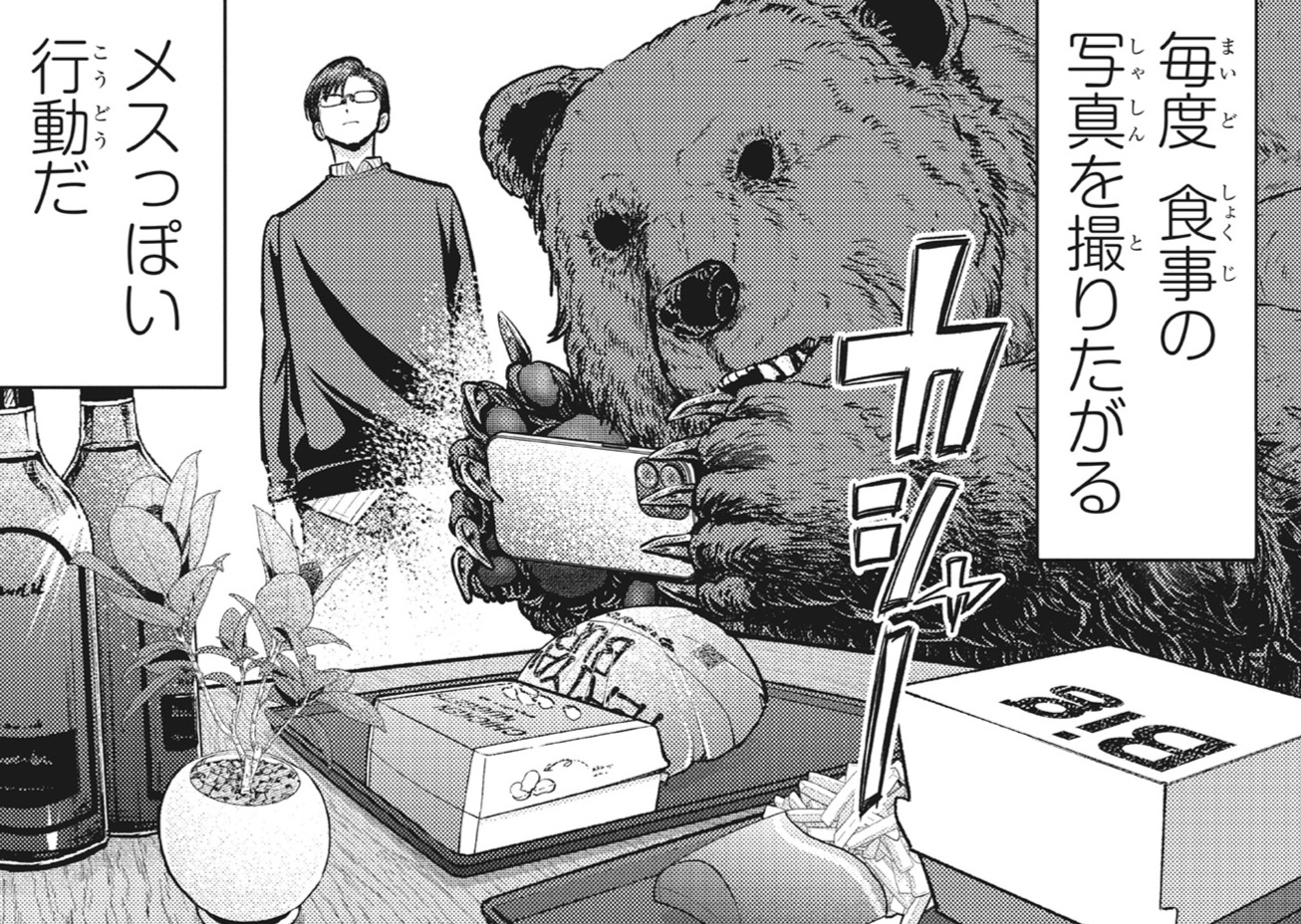
Kumada observes the bear that’s been living in his apartment for a while now, trying to determine from its personality traits whether it’s male or female.
- (熊田):
- 「毎度 食事の写真を取りたがる」
- “It always wants to take photos of its meals.”
- 「メスっぽい行動だ」
- “That's pretty feminine behavior.”
Reluctance in Others
たがらない reports visible unwillingness.
Related Grammar
-
Wanting to do with 〜たい
- たい is for the speaker's own desire; たがる observes someone else's.
-
Want you to do something with 〜てほしい
- てほしい wants someone else to act; たがる reports that someone else wants to act.