Starting something with 〜出す
Grammar: Time and Sequence
Add 出す to a verb stem for an abrupt or spontaneous beginning. Depending on the verb, English may use “start to ~” or “burst out ~ing”.
Usage Notes
〜出す marks a sudden or spontaneous beginning for actions outside the subject’s control.
Use 〜始める for a neutral “begin to”. 〜出す says that the action starts suddenly.
Related Grammar
-
〜(始:はじ)める
- Used for the start of other actions.
-
Managing to complete an action with 〜終える
- Used when effort is required to complete an actions.
-
Completing an action with 〜終わる
- Used when effort is not required to complete an actions.
Examples
Figuring out the password with 見つけ出す
Grammar Explanation: Starting something with 〜出す
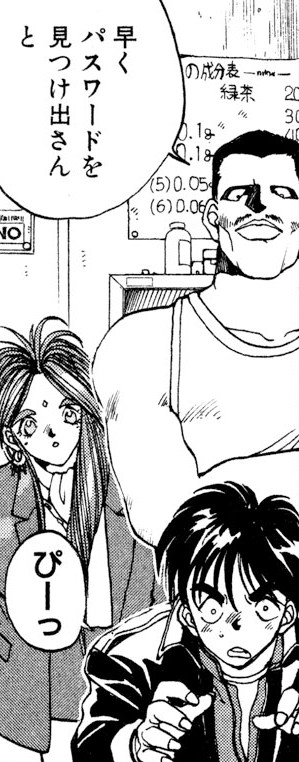
Kei’ichi must enter the university system to add a record showing Belldandy is enrolled. He only has a brief window of opportunity before Professor Ozawa logs into the system and discovers she isn’t enrolled. The only thing standing in Kei’ichi’s way is the university’s enrollment records password protection.
- 田宮:
- 「早く パスワードを見つけ出さんと」
- “If you don't hurry and figure out that password...”
Suddenly remembering with 思い出す
Grammar Explanation: Starting something with 〜出す
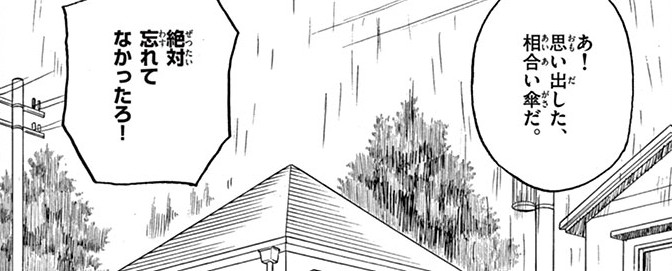
Takagi and Nishikata share an umbrella to walk home after school. Takagi says she completely forgot the term for two people sharing an umbrella. Nishika, with embarrassment, mutters that it’s あいあいがさ. When Takagi asks him to repeat it louder, he keeps quiet in his embarrassment.
- 高木:
- 「あ! 思い出した、相合い傘だ。」
- “Ah, I just remembered, it's (相合:あいあ)い(傘:がさ).”
- 西片:
- 「絶対忘れてなかったろ!」
- “You totally didn't forget it!”