That said with だって
Grammar: Emphasis » だって
At the start of a sentence, だって answers something already said by giving a reason or an excuse. English uses “because”, “but”, or “well”. Asked why the vegetables are still on the plate, a kid might say だって苦いんだもん, “but they’re bitter!”
This page covers だって at the start of a sentence. After a noun, a question word, or a verb, だって means “even”, “any”, or “even if”, and each of those uses has its own page.
Usage Notes
Sentence-initial だって is casual, and it sounds defensive. It’s common from children, and from characters acting like children. The speaker expects pushback and gets the excuse in first. A parent who has heard enough might answer だってじゃない, roughly “don’t ‘but’ me”. In polite conversation, でも or an explanation with 〜んです does the same work. Formal writing uses なぜなら〜からだ.
This だって always answers something, such as a question, a complaint, or the speaker’s own claim that needs backing up. It can’t open a new topic.
Formation
View formation details
- だって + reason
- だって誰も教えてくれなかったんだもん
- "But nobody told me!"
- Note: Sentences that start with だって often end with もん, し, or じゃん.
- だって + objection
- だって約束したじゃん
- "But you promised!"
- だって + reason + し
- だって誰も見てないし
- "Well, nobody's looking."
- Note: し hints that there are more reasons where that one came from.
- だって + reason + んだから
- だって本当のことなんだから
- "Well, it's the truth!"
- だってさ + reason
- だってさ、先生がいいって言ったんだもん
- "But the teacher said it was okay!"
- Note: さ is filler, a bit like "you know".
- だってー (whining)
- だってー、眠いんだもーん
- "But I'm sleepy!"
- Note: Stretching the vowels turns the excuse into a whine.
Giving a Reason with だって
At the start of a sentence, だって looks back at something already said and gives the reason for it. The speaker usually expects an argument and gets the defense in first. English tends to use “because” or “well”.
Example 1 of 2: I say that because I thought it up with だって
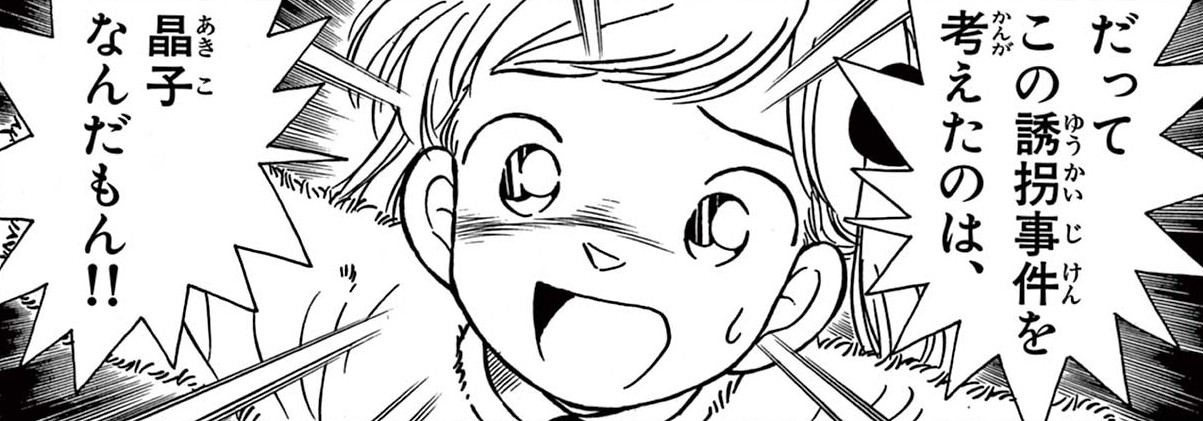
A fake kidnapping ploy turns into an actual kidnapping. After the kidnapped child is safe, her father goes after their butler for concocting the scheme. The daughter, Akiko, protects the butler, saying she’s the bad one.
- 晶子:
- 「だってこの誘拐事件を考えたのは、晶子なんだもん!!」
- “I say that because I'm the one who thought up the kidnapping plot!”
A staged kidnapping has turned into a real one. Akiko is safe now, and her father turns on the butler who went along with the scheme. Akiko steps in and says the fault is hers. Her next line backs that up. だって gives the reason, and 考えたのは晶子なんだ says she’s the one who came up with the plan. She refers to herself by name, as young children often do.
Example 2 of 2: I say that because it'd be impossible with だって
The もん at the end is part of the pattern. Sentences that start with だって very often end in もん or んだもん, and the pair turns the reason into an excuse. Casual reasons with 〜もん covers that ending.
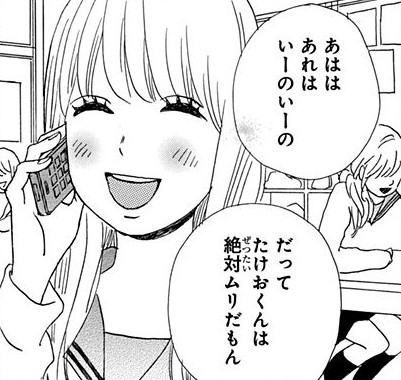
Takeo hopes to get into the same college as his girlfriend, Rinko. Going into a mock exam, he listed the top college Rinko is aiming for. However, the results came back saying it would be impossible for him to get into Rinko’s top choice. Rinko tells Takeo she didn’t do well for that college either, so they should both aim for her second choice. Takeo asks if Rinko is okay with giving up on her top choice.
- 凛子:
- 「あはは あれはいーのいーの」
- “Ha ha, I'm okay with that.”
- 「だってたけおくんは絶対ムリだもん」
- “I say that because it'd be impossible for you to go, Takeo.”
Takeo wants to attend the same college as his girlfriend, Rinko, but a mock exam says her first choice is out of his reach. Rinko suggests they both aim for her second choice. When Takeo asks whether she’s okay with that, she laughs it off with あれはいーのいーの, “that’s fine”. だって gives her reason, and たけおくんは絶対ムリ, “it’s impossible for you”, turns out to be literal. Her first choice is a women’s college.
Pushing Back with だって
After someone else’s complaint, だって works like “you say that, but”. The speaker usually doesn’t deny the complaint. They explain why it shouldn’t count.
Example 1 of 2: You say that, but it's not important with だって
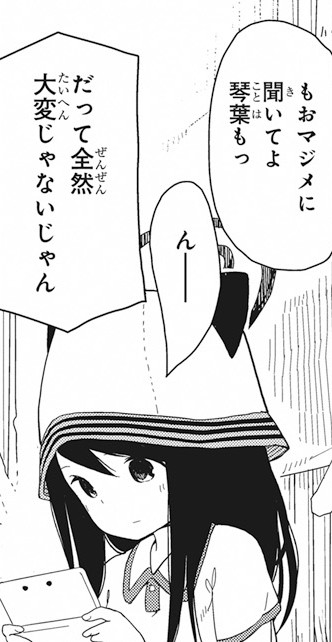
Yui hurries to her clubhouse to tell her friends, Kotoha and Sacchan, about a big case: there’s a cat that looks like a panda. However, Sacchan doesn’t engage in the topic and Kotoha continues playing her video game.
- 結衣:
- 「もおマジメに聞いてよ 琴葉もっ」
- “Geez, listen seriously. You too, Kotoha.”
- さっちゃん:
- 「だって全然大変じゃないじゃん」
- “You say that, but it's not a big deal at all, right?”
Yui has rushed into the clubhouse with a big case. She’s found a cat that looks like a panda. Sacchan doesn’t react, and Kotoha keeps playing her game. When Yui tells them to listen properly, Sacchan gives her reason for not caring. 全然大変じゃない says it’s no big deal at all, and じゃん asks Yui to admit it.
Example 2 of 2: You say that, but I didn't hear a rule against it with だって
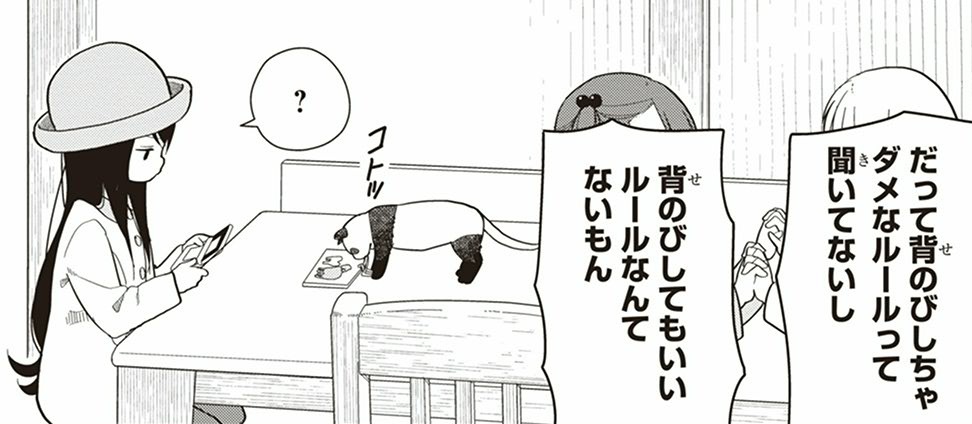
Standing back to back, Sacchan is slightly taller than Yui. Yui questions whether Sacchan is standing tip-toed, which Sacchan denies, but Yui looks and sees that Sacchan is.
- さっちゃん:
- 「だって背のびしちゃダメなルールって聞いてないし」
- “You say that, but I didn't hear a rule against tiptoes.”
- 結衣:
- 「背のびしてもいいルールなんてないもん」
- “There's no way there'd be a rule allowing tiptoes!”
Sacchan and Yui are comparing heights back to back, and Yui catches Sacchan on tiptoe. Sacchan doesn’t deny it. Her defense is that nobody told her tiptoe was against the rules. The し at the end hints that she has more excuses where that one came from.
Answering a Question with だって
A “why” question, どうして or なんで, is the most direct setup for だって. The answer gives the reason and nothing else.
Example 1 of 2: Why must I bring you your lunch with 〜なければならない
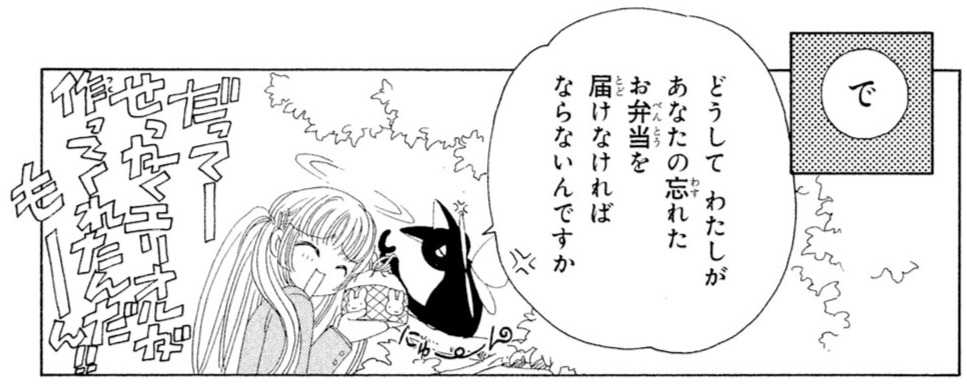
Spinel Sun calls out to Ruby Moon at school. After a brief discussion, Spinel Sun gets to the reason for his appearance there.
- スピネル・サン:
- 「で」
- “So.”
- 「どうして わたしがあなたの忘れたお弁当を届けなければならないんですか」
- “Why do I have to deliver the lunch you forgot?”
- ルビー・ムーン:
- 「だってー せっかくエリオルが作ってくれたんだもーーん!!」
- “Well, because Eriol went to all that trouble to make it for me!!”
Spinel Sun has been stuck delivering the lunch Ruby Moon forgot and wants to know why. The answer starts with a drawn-out だってー and ends with an even longer もーーん. Stretching both ends turns the excuse into a whine. せっかく〜てくれた says Eriol went to the trouble of making the lunch, so it couldn’t go to waste.
Example 2 of 2: Proportional to the degree of walking to with 〜ば〜ほど
The question doesn’t have to be spoken. A remark that calls for an explanation works the same way.
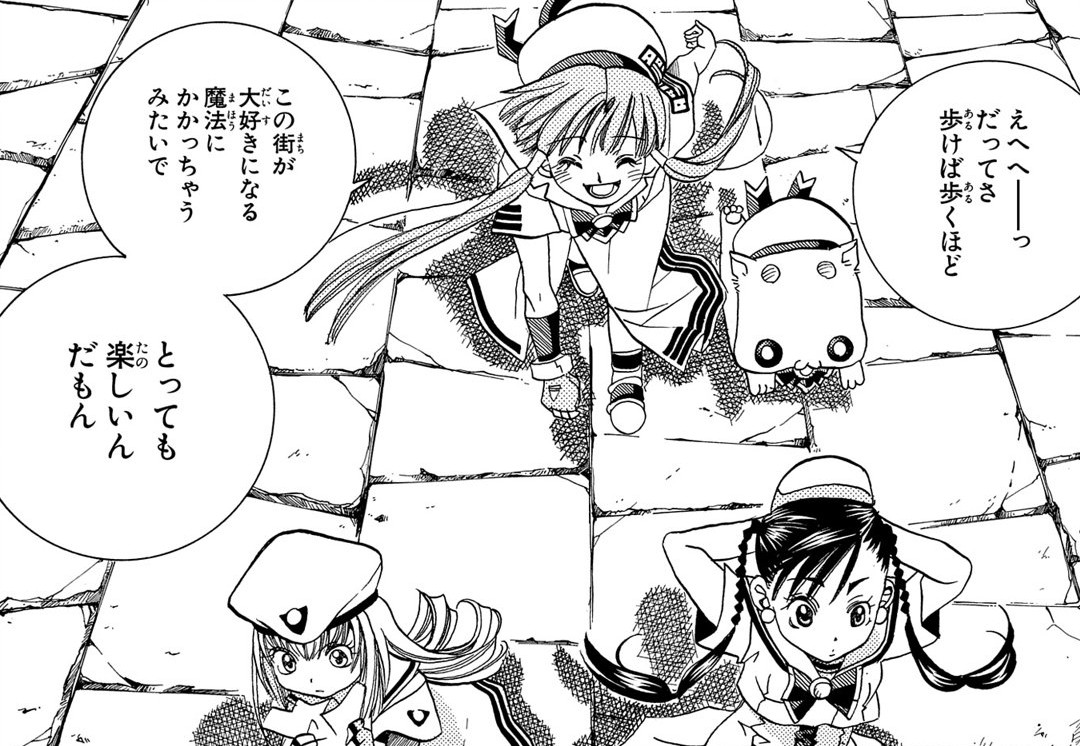
Akari, Aika, and Alice find themselves on a treasure hunt through town, as each map they follow leads them to another map. Aika remarks how Akari is in high spirits.
- 灯里:
- 「えへへーーっ だってさ歩けば歩くほどこの街が大好きになる魔法にかかっちゃうみたいでとっても楽しいんだもん」
- “Ehehe, that's because the more we walk, it's like falling under the spell of loving this city. It's very enjoyable!”
Akari, Aika, and Alice are following a chain of treasure maps through town, and Aika comments on how cheerful Akari is. Akari explains. The さ after だって is filler, a bit like “you know”, and it buys her a moment before the reason. The more they walk, the more she loves the city. もん closes this one too.
Comparing だって with でも, だから, and なぜなら
English “but” and “because” both translate sentence-initial だって, so it overlaps with several other words.
In a reply, でも and だって often work the same way.
- でも、まだ眠くない。
But I’m not sleepy yet.
- だって、まだ眠くないんだもん。
- But I’m not sleepy yet!
Told to go to bed, a kid could say either one. The だって line, with its もん, sounds more like an excuse. Only だって can give the reason for something the speaker just said. でも can’t do that. Someone who answers every suggestion with one or the other gets called でもでもだって.
だから runs the other way. It comes after a reason and leads to the result, “so”. だって comes after the result and goes back for the reason.
- 眠い。だから寝る。
I’m sleepy. So I’m going to bed.
- 寝る。だって眠いもん。
- I’m going to bed. I mean, I’m sleepy.
なぜなら is the formal “because”. Like だって, it comes after the result, and the reason usually ends in からだ. なぜなら belongs in essays and speeches, and だって belongs in conversation.
- なぜなら、時間が足りなかったからだ。
- That’s because there wasn’t enough time.
Further Reading
- だって, Bunpro (bunpro.jp)
- Japanese grammar spotlight: だって vs だから, Self Taught Japanese (selftaughtjapanese.com)
- だって, デジタル大辞泉 via Weblio (www.weblio.jp)
Related Grammar
- Casual reasons with 〜もん
- だって opens the excuse and もん closes it. Most of the reasons on this page end in もん.
- Even with 〜だって
- After a noun, だって means "even" or "too", as in 私だって行きたい.
- Anyone and always with 誰だって and いつだって
- After a question word, だって means "any", as in 誰だって.
- Even if with 〜たって
- After a verb, たって and だって mean "even if", as in いくら呼んだって.
- Quoting and reporting with と and って
- At the end of a sentence, as in 大丈夫だって, だって is だ plus the quoting って. That page covers hearsay and insisting.
- Objective reason with 〜ので
- ので puts the reason in the same sentence as the result. だって adds it afterward, usually in self-defense.