The copula だ
Grammar: Assertion and Declaration
だ is the plain “is”. It links a noun or な-adjective to what it describes and asserts it as fact.
Usage Notes
だ conjugates: past だった, negative じゃない and ではない, conjectural だろう. Its polite counterpart is です.
Casual sentences drop だ freely, especially in questions (「元気?」) and feminine speech (「きれいね」).
Before the explanatory の it becomes な, as covered on the 〜のだ page.
Formation
View formation details
-
Noun + だ
- 彼は高校生だ
- "He's a high school student."
-
な-adjective + だ
- この町は静かだ
- "This town is quiet."
-
〜だった (past)
- 昨日は休みだった
- "Yesterday was a day off."
-
〜じゃない (negative)
- 冗談じゃない
- "This is no joke."
-
Dropped だ (casual)
- あれ、先生?
- "Huh, is that the teacher?"
- Note: Casual speech, questions, and feminine speech often omit だ entirely.
-
Noun + な + の (before explanatory の)
- 猫なんだ
- "It's a cat, you see."
- Note: だ changes shape to な before the explanatory の/んだ.
Stating What Something Is
The plain assertion of identity or property.
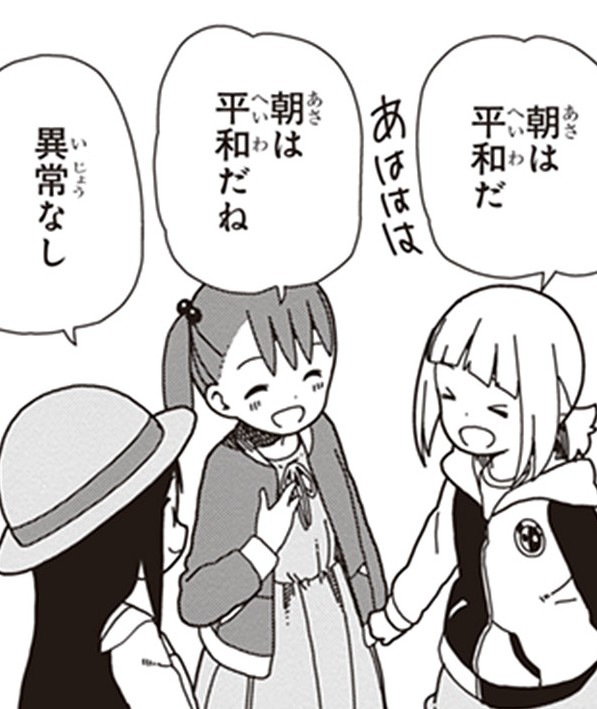
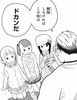
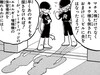
Yui, Sacchan, and Kotoha go on an early-morning patrol to check for any issues in their neighborhood. Because it’s so early, none of the shops are open yet, and the streets are empty.
- さっちゃん:
- 「朝は平和だ」
- “Morning is peaceful.”
- 結衣:
- 「朝は平和だね」
- “Morning is peaceful, isn't it?”
- 琴葉:
- 「異常なし」
- “No abnormalities.”
The Dramatic Standalone
A bare noun plus だ carries force.
だ Dropped
Casual and feminine speech leave the copula silent.
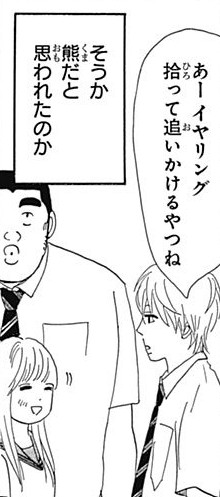
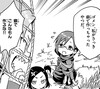
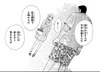
Takeo runs after a mother and her child to give them a shoe they dropped. Due to Takeo’s large size and loud steps, the mother and child get frightened and run from him. After he manages to return the dropped item, Takeo returns to his friends. Rinko remarks that the scene was like “A Bear in the Forest”. Sunakawa recalls the song.
- 砂川:
- 「あーイヤリング拾って追いかけるやつね」
- “Ah, the one who picked up an earring and chased after.”
- 猛男:
- 「そうか 熊だと思われたのか」
- “I see. It's that I was thought of as a bear?”
Here, だ is omitted after やつ.
Related Grammar
-
Polite style with です and ます
- です is the polite counterpart of だ.
-
Reasoning with 〜のだ
- The explanatory pattern where だ appears as な.
-
Presuming with 〜だろう and 〜でしょう
- だろう is the conjectural form of だ.
-
Past tense with 〜た・〜だ
- The verb-ending だ (as in 読んだ) is the past-tense marker, a different だ from the copula.
Supplemental Examples