Thinking or feeling something with 〜気がする
Grammar: Conjecture » 〜気がする
気がする following a word or phrase ending with a verb, adjective, or noun, has the meaning of “I feel that ~” (「〜と感じる」) or “I think that ~” (「〜と思う」).
「〜と思う」 states a thought more directly. 「〜気がする」 is closer to 「たぶん〜と思う」, “I think perhaps ~”.
To express conjecture (推量), feeling (感覚), or impression (印象), ような may be used. In this case, the meaning does not change.
Usage Notes
気がする presents an impression based on a vague feeling rather than a firm claim.
It appears after a full clause with ような, as in 〜ような気がする. That wording makes the statement softer than saying 〜と思う.
Further Reading
- 〜気がする|日本語能力試験 JLPTにない文型 (edewakaru.com)
Examples
Feeling running is better after all with 〜気がする
Grammar Explanation: Thinking or feeling something with 〜気がする
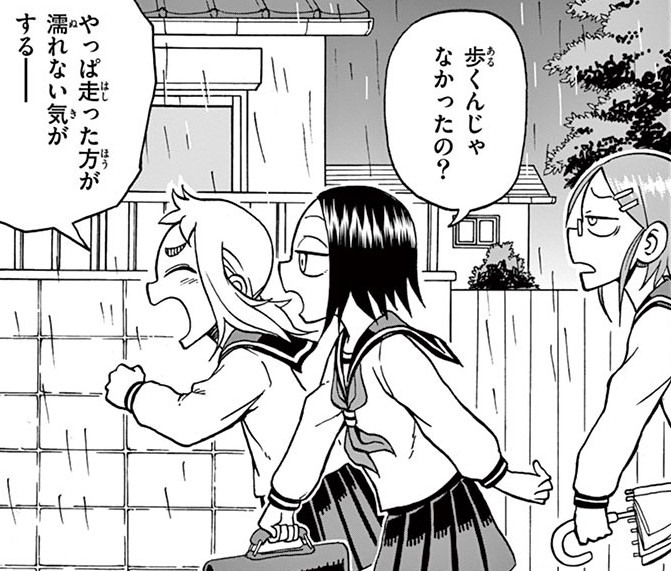
Mina proclaims she knows a shocking fact about being caught in the rain: it doesn’t matter whether you walk or run because you’ll get wet the same amount either way. Sanae says she heard running it better to avoid getting as wet. Mina says if it starts raining, she’ll walk, and Sanae has to run.
- サナエ:
- 「歩くんじゃなかったの?」
- “Weren't you going to walk?”
- ミナ:
- 「やっぱ走った方が濡れない気がするーーー」
- “Sure enough, I feel running's better to not get wet!”
Feeling you've gained weight with 〜気がする
Grammar Explanation: Thinking or feeling something with 〜気がする
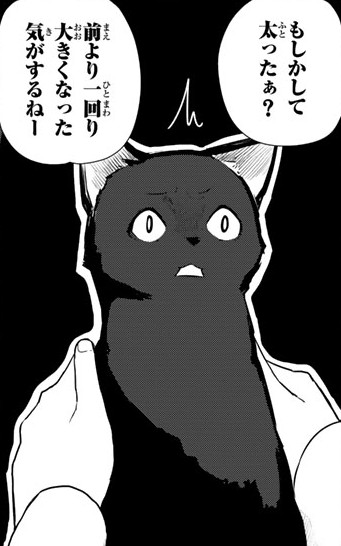
Nao sees Makoto’s cat, Chito. She stops to pet the cat when she notices something.
- なお:
- 「もしかして太ったぁ?前より一回り大きくなった気がするねー」
- “Could it be you've gotten fatter? I feel you've grown a size bigger than before.”
Thinking it cost more with 〜気がする
Grammar Explanation: Thinking or feeling something with 〜気がする
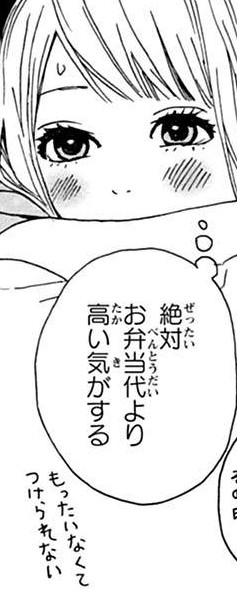
As thanks for Naho making him lunches, Kakeru gives her a jewel-encrusted hair clip. In her room later, Naho looks over the piece.
- 菜穂:
- 「絶対お弁当代より高い気がする」
- “I think it definitely cost more than lunch.”