To end up being with 〜ことになる
Grammar: Time and Sequence » 〜ことになる
〜ことになる says that circumstances, rules, or other people bring about a result or decision. When the speaker makes the decision personally, use 〜ことにする instead.
Further Reading
- ことになる/する & ようになる/する (maggiesensei.com)
Examples
Came to be studying with us with 〜ことになる
Grammar Explanation: To end up being with 〜ことになる
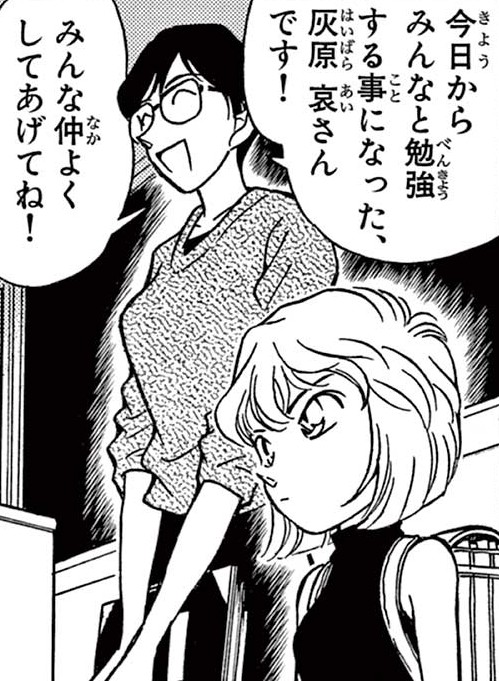
A new student joins Conan’s elementary school classroom. The teacher introduces her.
- 先生:
- 「今日からみんなと勉強する事になった、灰原 哀さんです!」
- “This is Ai Haibara. It came to be that she'll be studying with us starting today.”
- 「みんな仲良くしてあげてね!」
- “Everyone be friendly with her!”
To end up betraying with 〜ことになる
Grammar Explanation: To end up being with 〜ことになる
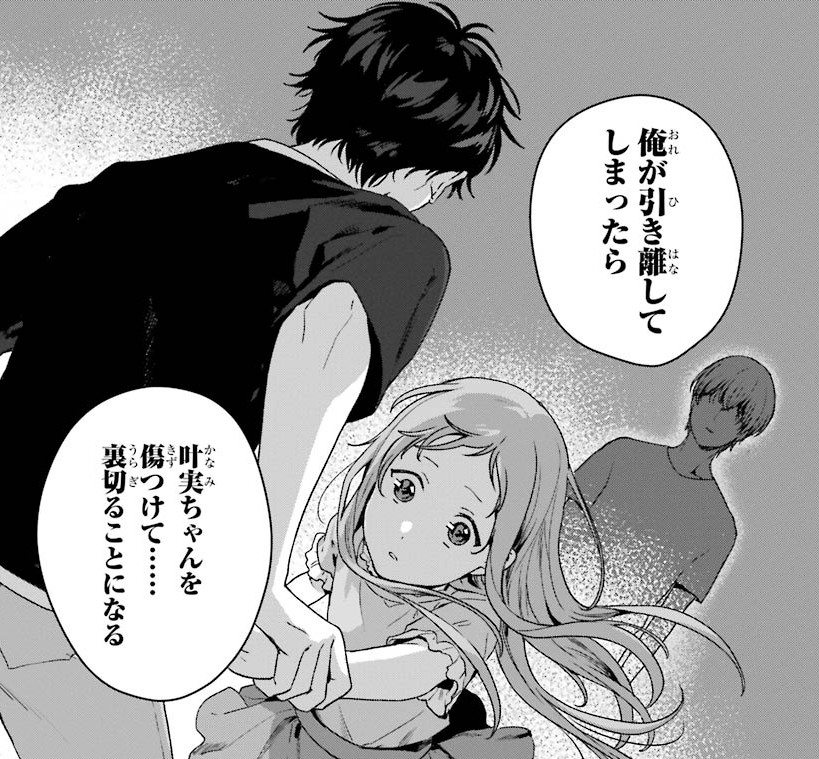
Makoto explains to Misuzu that he’s been looking into various things since meeting Kanami, such as housing for orphans. However, he realizes what Kanami wishes for is to have her once-kind brother back to the way he used to be.
- 真:
- 「俺が引き離してしまったら」
- “If I separate her from him...”
- 「叶実ちゃんを傷つけて…… 裏切ることになる」
- “...I'd be hurting Kanami... I'd end up betraying her.”
To end up cleaning for you with 〜ことになる
Grammar Explanation: To end up being with 〜ことになる
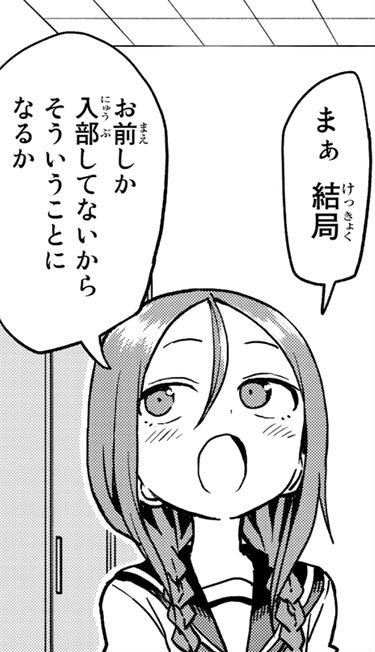
Urushi and Ayumu give their makeshift clubroom a cleaning to welcome potential new members. Considering that Urushi was the only club member before he joined, Ayumu remarks how she alone had cleaned the room for his sake last year.
- うるし:
- 「まぁ 結局」
- “Well, in the end...”
- 「お前しか入部してないからそういうことになるか」
- “You were the only new member, so it ended up as you say, huh?”