〜すぎる says that an action or quality goes past the right amount. English usually translates it as “too” or “too much”. The speaker is often complaining, warning, or making an excuse.
すぎる comes from the verb 過ぎる, “to pass” or “to go beyond”. It attaches to verb stems and adjectives, and it appears in both kana and kanji.
Usage Notes
〜すぎる conjugates like any other る-verb. 〜すぎた reports excess in the past, and 〜すぎて can give the excess as the reason for what follows. In a negative question, 〜すぎない? can ask “isn’t it too…?” A statement with 〜すぎない means “not too…”.
The judgment is usually negative, but casual speech also uses すぎる for emphatic praise. Context tells you which reading fits.
Formation
View formation details
Verb (stem) + すぎる
昨日は食べすぎた
"I ate too much yesterday."
い-adjective (drop い) + すぎる
この靴は小さすぎる
"These shoes are too small."
な-adjective + すぎる
このテストは簡単すぎる
"This test is too easy."
いい → よ + すぎる
それは都合が良すぎる
"That's too convenient."
Note: いい changes to よ, as in よかった and よくない.
Adjective ない → なさ + すぎる
自信がなさすぎる
"You have far too little confidence."
Verb or adjective stem + すぎ
考えすぎだよ
"You're overthinking it."
Note: The whole expression ending in 〜すぎ can function as a noun. Adjectives use the same stem as before すぎる, as in 高すぎ.
〜すぎて + result
高すぎて買えない
"It's too expensive to buy."
Doing Something Too Much
With a verb, すぎる attaches to the stem, the form that comes before ます. 食べる becomes 食べすぎる, “eat too much”, and 飲む becomes 飲みすぎる, “drink too much”.
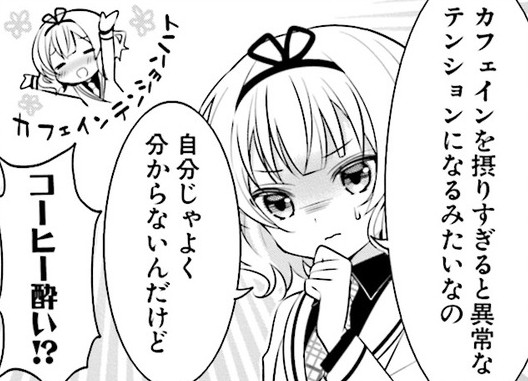
Cocoa thinks Syaro avoids coffee because it tastes bitter, so she suggests sugar and milk. Syaro says the taste isn’t the problem. 摂る, “take in”, becomes 摂りすぎる, “take in too much”. The conditional と connects that excess to its effect. Syaro says she seems to get unusually hyper when she consumes too much caffeine, which the others call being “drunk on coffee”.
Too Much of a Quality
An い-adjective drops its final い before すぎる. 高い becomes 高すぎる, and かわいい becomes かわいすぎる. A な-adjective takes すぎる after its stem, without な, as in 静かすぎる.
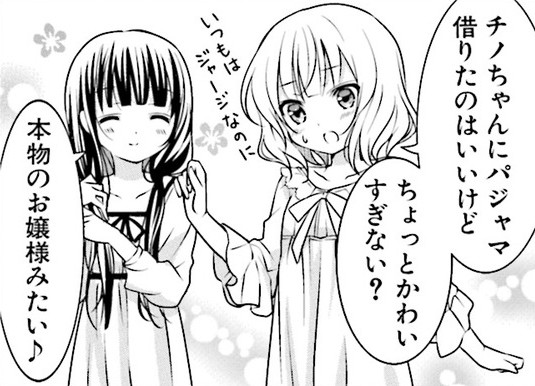
Syaro and Chiya are unexpectedly spending the night at Chino’s house, and Syaro has borrowed a pair of Chino’s pajamas. かわいすぎない? is a negative question, “aren’t these too cute?” She usually wears a tracksuit and seems uncomfortable in pajamas this cute. The question invites agreement, and ちょっと softens her objection. Chiya answers with a compliment instead. She says Syaro looks like a real young lady.
Example 2 of 2: Furthermore, this room is too warm with さらに〜
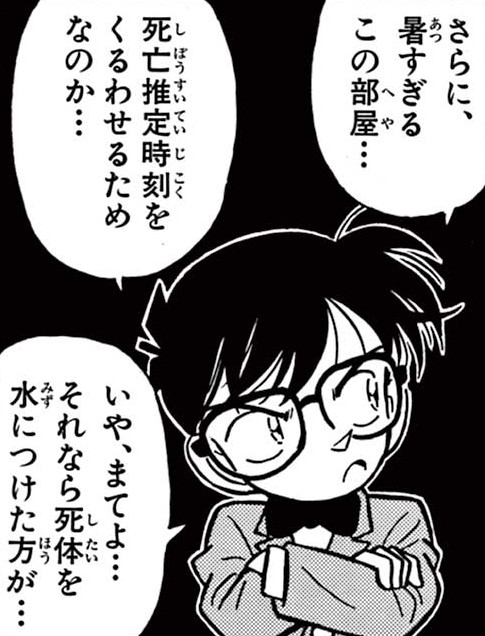
Upon walking in on a murder scene, Conan goes right to work making observations about the blood-covered body and its surroundings. He notes how the room is torn apart save for one upright chair beside the deceased.
コナン:
「さらに、暑すぎるこの部屋…」
“Furthermore, this room is too warm...”
「死亡推定時刻をくるわせるためなのか…」
“Is it to confuse the estimated time of death...?”
「いや、まてよ… それなら死体を水につけた方が…」
“No, wait... If that's the case, it would be better to put the corpse in water...”
Conan is listing what he notices at a murder scene. Instead of この部屋は暑すぎる, “this room is too hot”, he says 暑すぎるこの部屋, “this too-hot room”. The heat goes past normal, and that makes it a clue. He wonders whether someone heated the room to throw off the estimated time of death.
Nouns Before すぎる
Casual speech also puts すぎる after some nouns that describe a quality.
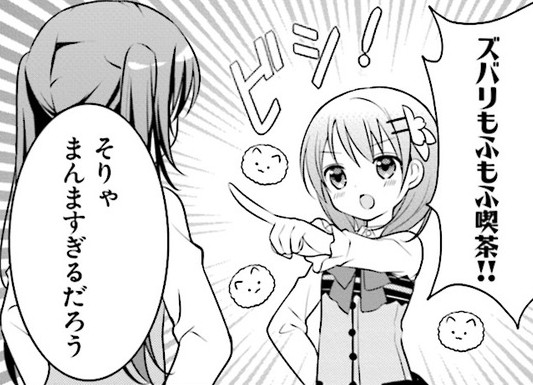
The girls are thinking up a new name for the café, and Cocoa suggests もふもふ喫茶, “Fluffy Café”, after its rabbit mascot. まんま is a casual form of まま, “as is”. Rize’s まんますぎる says the name copies the rabbit too directly. A natural English translation is “too literal”.
Giving a Reason with すぎて
The て-form すぎて presents the excess as a cause, and the next clause gives the result. English often says “so … that …”. When the result is something that can’t happen, English uses “too … to …”, as in 高すぎて買えない, “too expensive to buy”.
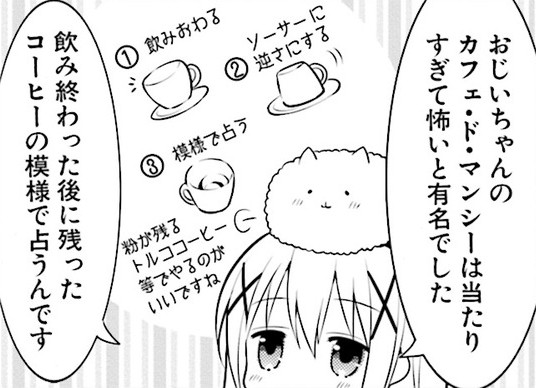
Chino describes the fortunes her grandfather used to read from the pattern left in a coffee cup. A prediction that comes true “hits”, or 当たる. Accuracy is usually a good thing in a fortune. His predictions were so accurate that people found them frightening, so 怖い follows as the result.
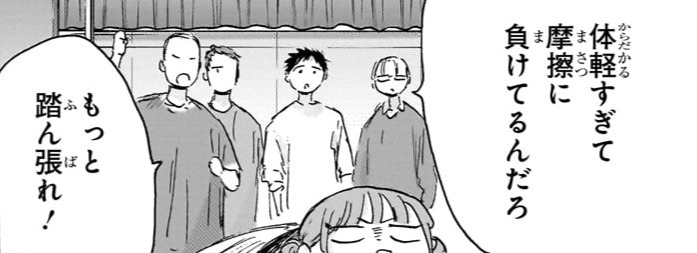
Example 2 of 5: Too light-weight to overcome friction with 摩擦
With the end of the school year, the sports clubs turn their attention to cleaning the gym. The boys make a race out of wiping the floor. When the girls decide to give it a go, Hina joins in, but she finds herself unable to move forward like the others do. Her attempts to advance only cause her socks to slip, keeping her in place.
匡:
「体軽すぎて摩擦に負けてるんだろ」
“I guess she's too light to overcome the friction.”
The sports clubs are cleaning the gym, and the boys have turned wiping the floor into a race. When Hina joins in, her socks slip and she stays in place. Kyou’s explanation starts with 体軽すぎて, “she’s too light”. The rest of the line gives the result, 摩擦に負けてる, “losing to friction”. Casual speech drops the が after 体.
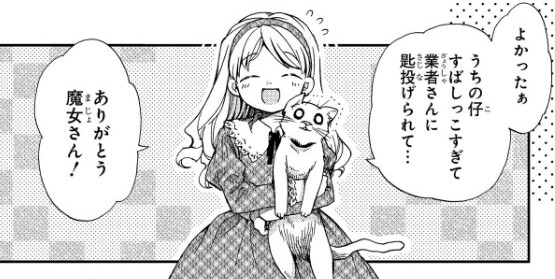
Example 3 of 5: Giving up catching a cat with 匙を投げる
Eve takes the job of catching a cat that ran away from its owner. Following a successful mid-air catch off the roof and into a tree, Eve returns the cat to its owner.
お城ちゃん:
「よかったぁ うちの仔すばしっこすぎて業者さんに匙投げられて…」
“Thank goodness! Our little one was so quick that the hired help gave up on us...”
Eve has caught a runaway cat and brought it back to its young owner. The girl explains why the hired help gave up on it. すばしっこい means “nimble”, so すばしっこすぎて is “so quick that…”. The cat’s speed is the cause, and the result is 匙投げられて, the help giving up on the job.
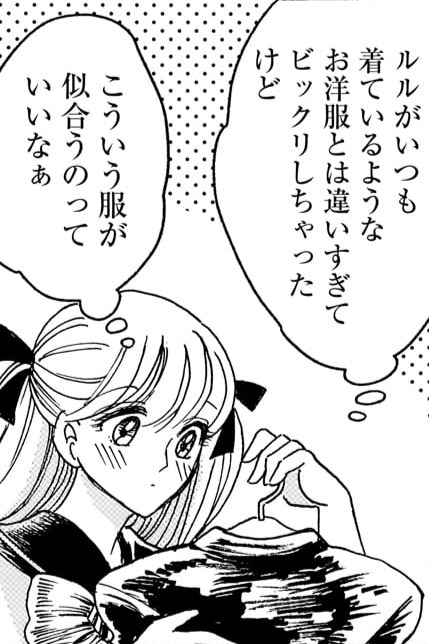
Example 4 of 5: Very different Western clothing with 洋服
Lulu goes clothes shopping with her friends from class. The outfits at the clothing shop are glaring, but Kyouko tries one on and Lulu finds it very suited to her.
ルル:
「ルルがいつも着ているようなお洋服とは違いすぎてビックリしちゃったけど」
“They were so different from the clothes I usually wear that I was surprised, but...”
「こういう服が似合うのっていいなぁ」
“It must be nice to look good in clothes like these.”
Lulu is shopping for clothes with friends from class, and the outfits in this shop are flashy. 違う is a verb, so すぎる attaches to its stem, 違い. 違いすぎて, “so different” from what she usually wears, is why she was startled, ビックリしちゃった. けど introduces her thought that it must be nice to look good in clothes like these.
Example 5 of 5: Too many clothing options with 選択肢
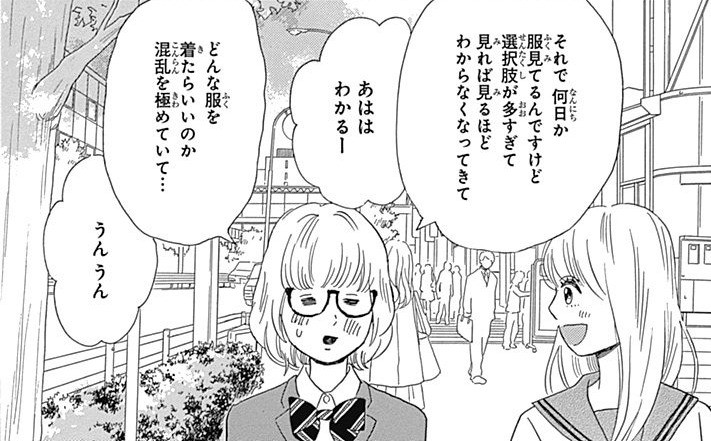
Yukika has invited Sunakawa to go out with her, and he has agreed. She texted Yamato that she was in town shopping for clothes but couldn’t decide, and Yamato came to meet her. Yamato tells her it makes sense to put in the effort when she’s going out with the person she likes.
ゆきか:
「それで何日か服見てるんですけど選択肢が多すぎて見れば見るほどわからなくなってきて」
“So I've been looking at clothes for a few days, but there are too many options. The more I look, the less sure I am.”
Yukika has asked Yamato to help her pick an outfit for an outing with the boy she likes. 多い drops its い before すぎる, so 多すぎて is “there are so many”. The flood of options is the cause, and the result is that she can’t tell what she wants anymore.
The Noun Form すぎ
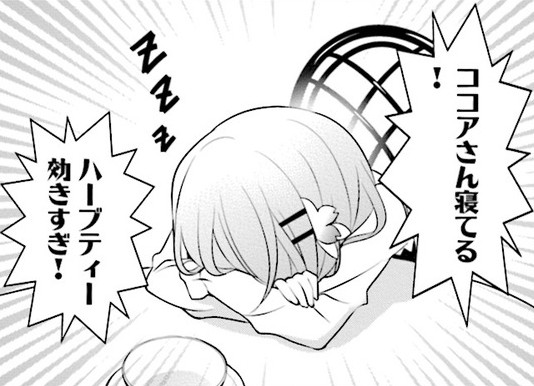
Expressions ending in 〜すぎ can function as nouns. 食べすぎ means “overeating”, and 高すぎ means “being too high”. These expressions can also stand as short reactions, as in 効きすぎ!, “it worked too well!”.
Syaro chose an herbal tea for each friend, based on what she thought would do them the most good. Now Cocoa is asleep. 効く means “take effect”, and 効きすぎ! is a short shout of “it worked too well!”
Example 2 of 6: Too much exposure with 〜すぎる
Example 2 of 6
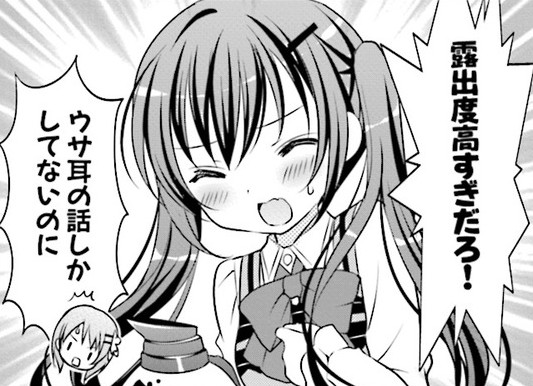
An expression ending in 〜すぎ can take だ like a noun predicate. Here, だろ reinforces a protest.
Cocoa suggests the café staff wear rabbit ears, but Rize pictures a skimpy bunny girl outfit. 露出度 is the “degree of exposure”, so 露出度高すぎ means far too much skin. Here Rize uses だろ to press her objection, closer to “come on!”
Example 3 of 6: Gotten all warped from playing video games with 〜じゃう
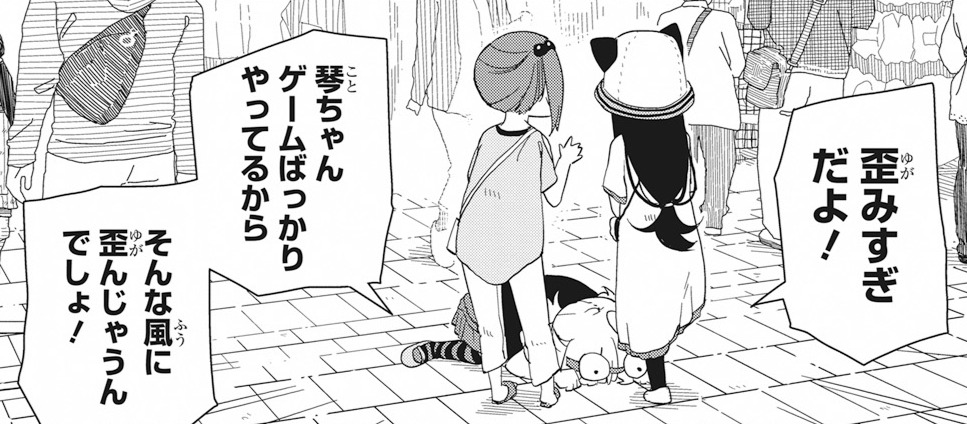
Sacchan tries crawling on the ground to help find the cat that’s been stealing from the area lately. Kotoha takes this opportunity to step on Sacchan’s head.
さっちゃん:
「歪みすぎだよ!」
“You're way too twisted!”
「琴ちゃんゲームばっかりやってるからそんな風に歪んじゃうんでしょ!」
“It's 'cause you only ever play video games, Koto-chan, that's why you've gotten all warped like that!”
Sacchan is crawling on the ground to look for a cat, and Kotoha takes the chance to step on her head. 歪む means “warp”, and 歪みすぎだよ is the noun form with だよ, “you’re way too twisted!” Sacchan blames all the video games Kotoha plays.
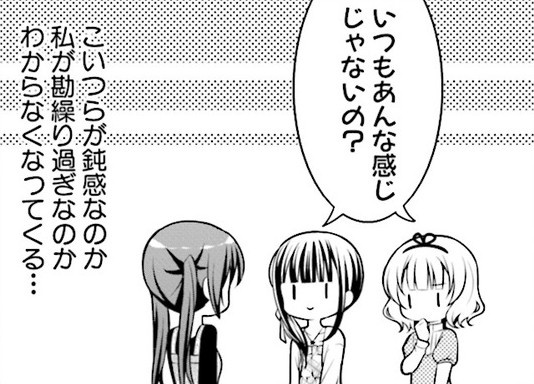
Chino and Cocoa seem to have gotten over their fight already, and Syaro and Chiya ask whether the two aren’t always like that. 勘繰る means “suspect a hidden motive”, and 勘繰り過ぎ means reading too much into things. In 勘繰り過ぎなのか, な connects the noun expression to のか. Rize wonders whether Syaro and Chiya are oblivious or she is the one overthinking.
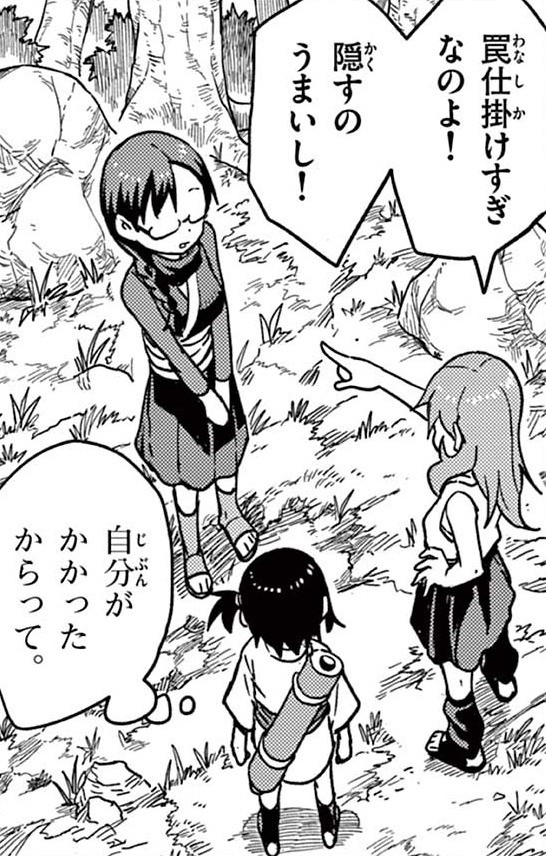
Touwata gets caught in yet another of Mizubashou’s traps and complains that she sets too many. Mizubashou says making traps calms her down. Benisumomo scolds Touwata for not paying attention, but steps into a trap herself in the middle of her lecture. Afterward, she points at Mizubashou and declares traps banned.
Benisumomo has just stepped into one of Mizubashou’s traps. 罠仕掛けすぎ means “setting too many traps”, with を dropped after 罠. な connects the noun form to のよ.
Example 6 of 6: Too easily lured by food with 釣られる
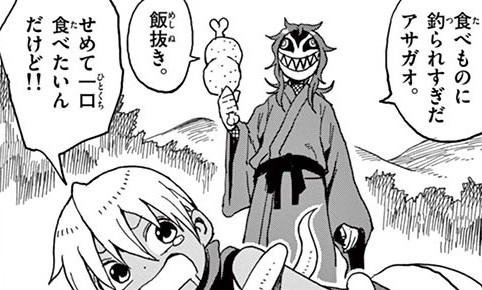
Ms. Hana has canceled lessons for a game of tag. She plays a man chasing the students, to teach them to run from men, and anyone she catches goes without dinner. While the girls hide, a drumstick of meat lies out in the open. Asagao leaps for it, ignoring a warning that it’s an obvious trap, and snakes wrap around her.
Asagao went for a drumstick left out as bait and walked right into the teacher’s trap. 食べものに釣られすぎだ, “you’re way too easy to lure with food”, puts the noun form すぎ before だ as a flat verdict.
Too Good and Too Little
良すぎる uses the よ- stem of いい. In 都合が良すぎる, “too convenient”, the excess can suggest something suspicious.
The adjective ない becomes なさすぎる. 自信がなさすぎる describes an excessive lack of confidence. After negative verbs, both 〜なすぎる and 〜なさすぎる occur, as in 知らなすぎる and 知らなさすぎる, “know far too little”. Usage guides differ on the latter form. Traditional guidance favors 知らなすぎる, while teaching materials also use forms such as 掃除しなさすぎる, “do far too little cleaning”.
Keep the order clear. 食べすぎない means “not eat too much”. 食べなすぎる or 食べなさすぎる means “eat too little”.
Not every adjective ending in ない takes なさ. 少ない follows the regular rule and becomes 少なすぎる, “too few”.
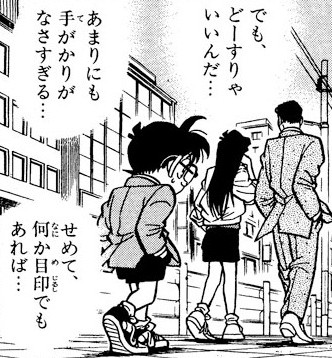
Masami Hirota’s father has been found hanged in his apartment, and the police say it was murder. Masami is missing, and her glasses turned up near the scene. Ran is crushed, and Conan resolves to find Masami before it’s too late.
コナン:
「でも、どーすりゃいいんだ…」
“But what am I supposed to do...”
「あまりにも手がかりがなさすぎる…」
“There are way too few clues...”
「せめて、何か目印でもあれば…」
“If only there were some kind of marker, at least...”
Masami Hirota has gone missing after her father’s murder, and Conan wants to find her before it’s too late. 手がかりがない, “there are no clues”, becomes 手がかりがなさすぎる, “there are far too few clues”. あまりにも adds to the excess.
Casual speech can use 〜すぎる to strengthen praise without suggesting a problem. おいしすぎる can mean “so delicious”, and かわいすぎる can mean “unbelievably cute”. A positive adjective alone does not guarantee praise, though. In the pajamas example, Syaro feels the cuteness is excessive for her.
As a main verb, 過ぎる means “pass” or “go past”. 時間が過ぎる means time passes. Some compounds keep that meaning, so 通り過ぎる means “pass by”, not “pass too much”. After a time or age, 過ぎ means “after” or “past”, as in 三時過ぎ, “after three”, or 三十過ぎ, “over thirty”.
〜に過ぎない means “nothing more than” or “merely”. It limits something instead of calling it excessive, as in 噂に過ぎない, “it’s only a rumor”.