まで marks an endpoint. After a verb, it means “until”. The situation in the main clause holds up to the moment that action happens. After a time word, it says when something stops, as in 明日まで, “until tomorrow”.
The verb before まで stays in dictionary form, even when the sentence is about the past. The same まで also marks how far a trip goes, “as far as” a place, and how far something reaches, “even”.
Usage Notes
With a negative main clause, 〜まで〜ない means “not until”. 終わるまで帰れない says that going home can’t happen before the work is done. まで and までに are easy to mix up. まで goes with an action that fills the whole span, such as waiting or working. までに sets a deadline for an action that happens once, at some point before it.
After a place, まで focuses on the far end of the trip. 駅まで歩く, “walk to the station”, says where the walk stops. When the trip is long or takes effort, English often says “all the way to”, especially when わざわざ or こんな comes with it.
Formation
View formation details
Verb (dictionary form) + まで
雨がやむまで待とう
"Let's wait until the rain stops."
Note: The dictionary form stays even in a past sentence, as in 着くまで寝ていた.
Verb (dictionary form) + まで + negative
宿題が終わるまで遊べない
"I can't play until my homework is done."
Noun (time) + まで
五時まで働く
"I work until five."
今 + まで
今まで知らなかった
"I didn't know until now."
〜から + 〜まで
九時から五時まで働く
"I work from nine to five."
Noun (time) + までに
五時までに帰る
"I'll be home by five."
Note: Sets a deadline instead of a span.
Noun (place) + まで
駅まで歩く
"I'll walk to the station."
Noun + まで (even)
弟まで笑った
"Even my little brother laughed."
Verb (て-form) + まで
嘘をついてまで行きたいの?
"You want to go so badly that you'd lie?"
Until an Action Happens
After a verb, まで names the moment something stops. The verb stays in dictionary form, and the main clause says what holds until then.
Cocoa runs into Syaro outside and asks whether she’s handing out fliers today. 配り終える joins 配る, “hand out”, and 終える, “finish”. With 全部, “all of them”, the endpoint is the moment the last flier is gone. Syaro can’t go home before then.
Syaro’s main clause is negative. A positive main clause says what keeps going until the endpoint. 雨がやむまで待とう means “let’s wait until the rain stops”.
The dictionary form stays even when the sentence is about the past. 着くまで寝ていた, “I slept until we arrived”, uses 着く, not 着いた. The verb at the end of the sentence carries the tense.
Negative Main Clauses with 〜まで〜ない
When the main clause is negative, 〜まで〜ない says that something won’t happen before the endpoint. English usually says “not until” or “can’t … until”.
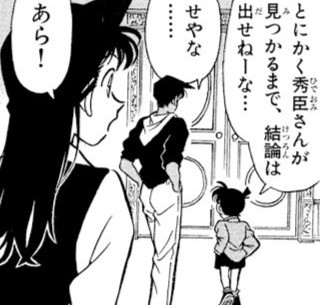
Conan and Heiji end up staying at the same mansion when a murder occurs. They decide to put their heads together to try and determine who the culprit is.
コナン:
「とにかく秀臣さんが見つかるまで、結論は出せねーな…」
“Anyway, I guess we can't come to a conclusion until we find Hideomi...”
Conan and Heiji are staying at the same mansion when a murder happens, and they’ve teamed up to work out who did it. 見つかる means “be found”, so が marks Hideomi as the one who has to turn up. 出せねー is a rough way to say 出せない, “can’t reach”. No conclusion comes before Hideomi does. Heiji agrees with せやな, Kansai for そうだな.
Until a Time
After a time word, まで marks when something stops. 明日まで means “until tomorrow”, and 五時まで means “until five”.
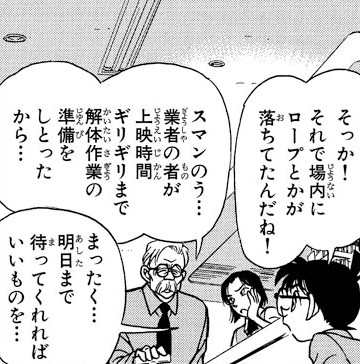
Example 1 of 2: Demolishing the movie theater with 解体
Conan and his friends have come to see a movie, and it turns out to be the theater’s last day. Conan noticed ropes lying around inside, and the owner apologizes. The demolition crew kept preparing right up to 上映時間, “showtime”. キリキリまで pushes that endpoint to the last possible moment. A staff member grumbles with 明日まで待ってくれればいいものを. 〜ばいいものを means “it would have been fine if…”, so the crew could have waited until tomorrow.
Example 2 of 2: An hour until sunset with 日没
Example 2 of 2
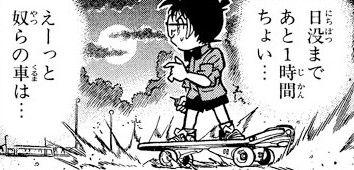
まであと plus an amount says how much is left before an endpoint.
During a game of hide-and-seek in the park, Ayumi hides in the trunk of a car only to fall asleep. Since the car drove off a while ago, Conan plans to track Ayumi’s communication badge with his tracking glasses and follow the vehicle on his turbo-engine skateboard. Since the engine is solar-powered, he can only use it during sunlight.
During a game of hide-and-seek, Ayumi hid in a car’s trunk and fell asleep, and the car drove off with her. Conan plans to chase it on his skateboard, but the engine runs on solar power. 日没 is “sunset”. あと means “remaining”, and ちょい is casual for “a little more”. He has just over an hour of daylight left.
Up to Now with 今まで
今まで means “until now” or “so far”. With a negative past, as in 今まで気付かなかった, the speaker has only just noticed something.
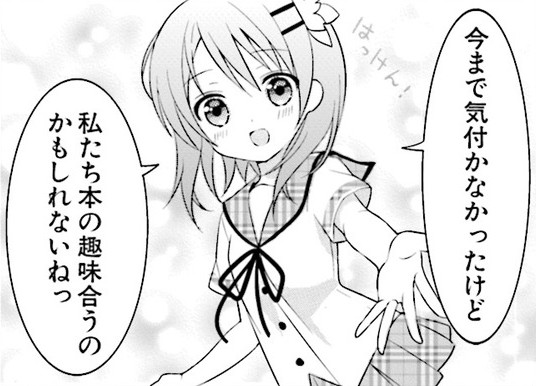
Example 1 of 3: Might have similar tastes with 〜かもしれない
At the library, Chino can’t remember the title of the book she wants, and Cocoa thinks she knows which one it is. It’s the first sign Cocoa has seen that they might like the same books. 今まで気付かなかった admits she missed it before, and けど leads into what she’s realized.
Example 2 of 3: Losing all that built-up friendship with 水の泡になる
Example 2 of 3
With の, 今まで can describe a noun. 今までの努力 is “the effort up to now”.
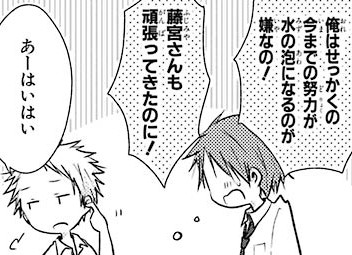
Although Fujimiya loses her memory of friends every Monday morning, she and Hase have become close enough that she feels comfortable around him when meeting him “for the first time” at school each Monday. Hase fears that progress will be lost during summer break.
長谷:
「俺はせっかくの今までの努力が水の泡になるのが嫌なの!」
“I hate seeing all my hard work up to now go down the drain!”
Every Monday, Fujimiya loses her memories of her friends. Even so, she and Hase have grown close enough that she’s at ease with him each time they meet “for the first time”. Hase is afraid summer break will undo that. 今までの努力 is everything he’s put in so far. せっかくの adds “hard-won”, and 水の泡になる means “go to waste”.
Example 3 of 3: Difficult to call out with 〜にくい
Example 3 of 3
今まで also shows up in set phrases. 今まで通り means “the same as before”, and 今までで一番 means “the best yet”.
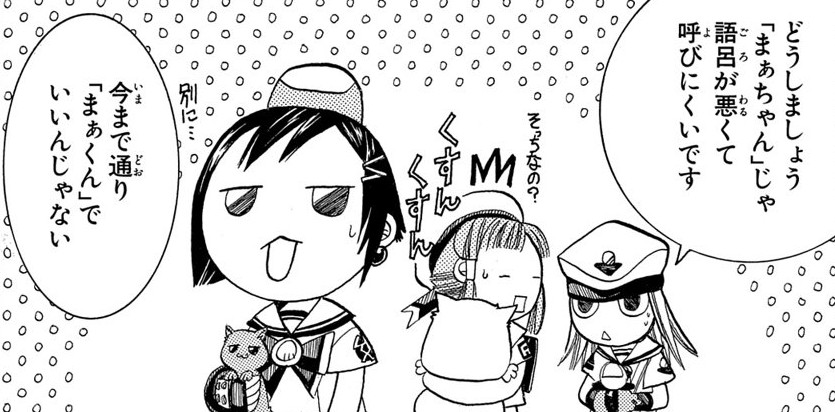
A trip to the vet showed that Alice’s kitten, Maa-kun, is a girl. Alice worries that まぁちゃん sounds awkward to call out. Aika suggests keeping the old name, 今まで通り, “the same as before”.
Setting a Range with から〜まで
から marks where a span starts, and まで marks where it ends. 九時から五時まで means “from nine to five”, and 大阪から東京まで means “from Osaka to Tokyo”. The two often appear together, but either one can stand alone.
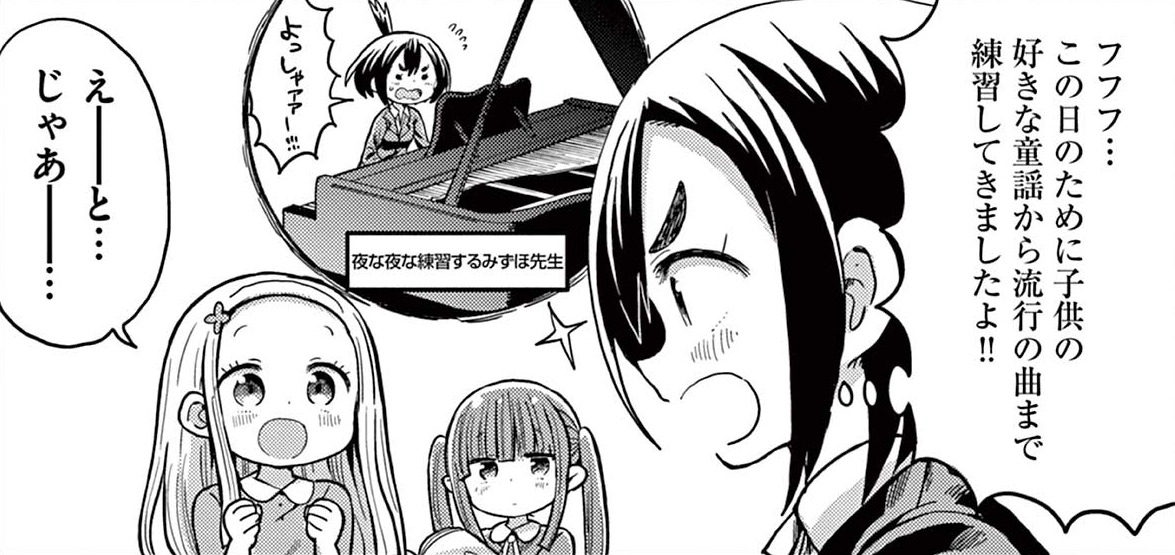
Ms. Mizuho is a new teacher. During her student teaching in Tokyo, a class survey called her lessons boring, and she wants her first graders to have fun. Today she is leading them on a school exploration. In the music room, the children crowd around the grand piano, and Sami asks whether it plays any songs. Ms. Mizuho sees her chance. She sits down at the piano, offers to play, and asks the class for requests.
みずほ先生:
「フフフ… この日のために子供の好きな童謡から流行の曲まで練習してきましたよ!!」
“Heh heh heh... For this day, I've practiced everything from the nursery rhymes kids love to the latest hits!!”
Ms. Mizuho, a new teacher, wants her first graders to enjoy their school exploration, and the music room piano is her chance to show off. 子供の好きな童謡から流行の曲まで sets the two ends of what she practiced, from the nursery rhymes kids like to the latest hits. Naming both ends says she has everything in between covered.
Example 2 of 2: A bread machine that kneads the dough with 生地をこねる
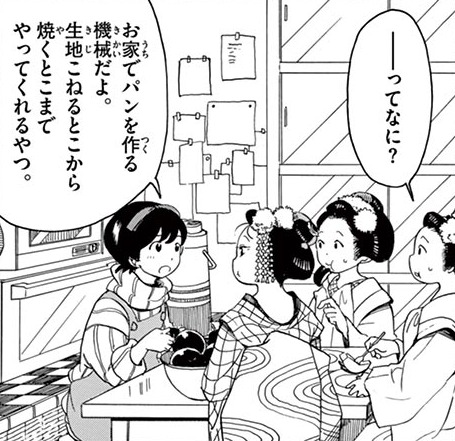
Kiyo and the maiko of the house sit around a bowl of apples in the kitchen. The talk has turned to a “home bakery”, and one of the maiko repeats the unfamiliar words.
舞妓さん:
「――ってなに?」
“...What's that?”
キヨ:
「お家でパンを作る機械だよ。生地こねるとこから焼くとこまでやってくれるやつ。」
“It's a machine for making bread at home. It does it all for you, from kneading the dough to baking the bread.”
The maiko have never heard of a home bakery, so Kiyo explains it. 生地こねるとこから焼くとこまで names the first and last steps of making bread, kneading the dough and baking it. から〜まで takes in every step between, so the machine does the whole job.
Adding に turns the endpoint into a deadline. まで goes with an action that fills the whole span. までに goes with an action that happens once, at some point before the deadline.
五時まで待つ。
I’ll wait until five.
五時までに帰る。
I’ll be back by five.
Waiting lasts all the way to five, so it takes まで. Coming home happens once, so it takes までに. 五時まで帰る sounds wrong, because coming home doesn’t last until five. The negative is fine, though. 五時まで帰らない means “I won’t be back until five”, because being away does last that long.
After a place, まで marks where a trip ends. に and へ also mark destinations, but まで puts the focus on how far the trip goes. 学校まで行く means “go as far as the school”.
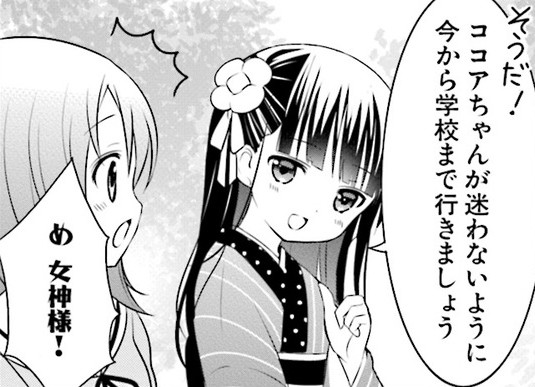
Example 1 of 3: Going to school together so as to not get lost with 〜ように
Cocoa got lost looking for her new school and ran into Chiya, who will be going to the same one. Chiya offers to walk her there now, so she won’t get lost later. 今から means “starting now”, and it isn’t paired with まで here. から gives the time they set out, and まで gives the place where they’ll stop. Cocoa is so grateful she calls Chiya a goddess.
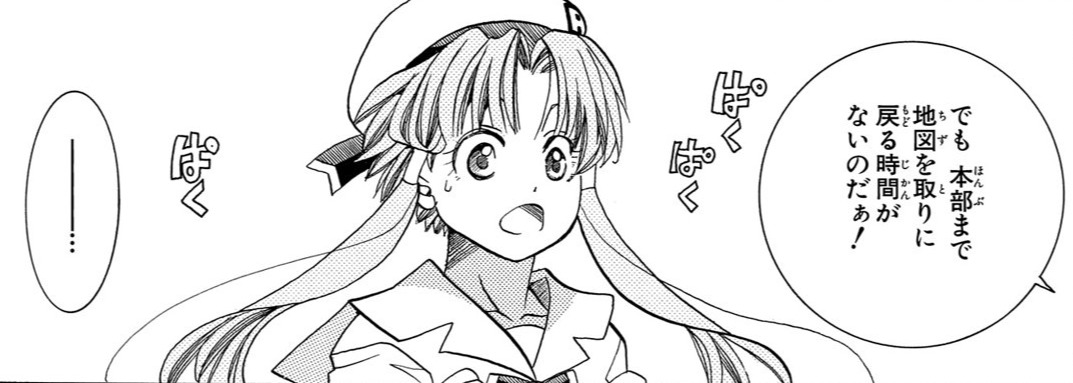
Example 2 of 3: No time to return to headquarters with 本部
Akari encounters Woody while he’s out on a delivery run. He stopped to show off for some kids, but in the process, he seems to have lost his city map, and he has a terrible sense of direction. Akari asks if he has the delivery addresses, which he says he does.
ウッディー:
「でも 本部まで地図を取りに戻る時間がないのだぁ!」
“But I don't have time to go back to headquarters to get a map!!”
Woody is out on a delivery run, and he has lost his city map. He also has a terrible sense of direction. 本部まで戻る is “go back to headquarters”, with まで marking where that trip would end. 地図を取りに, “to get a map”, is the purpose, and he has no time for the trip.
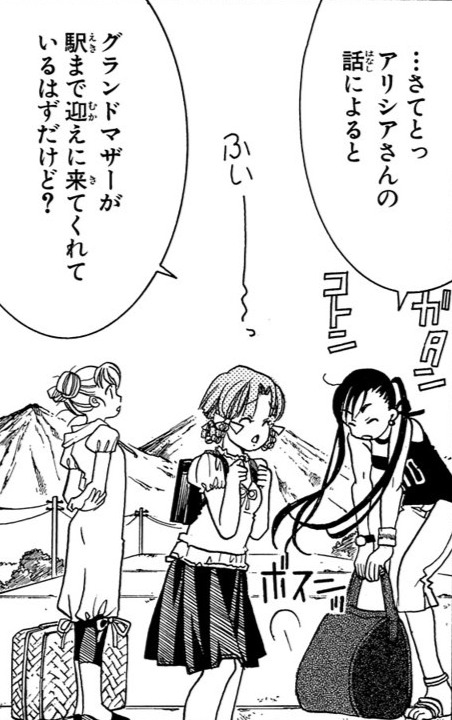
Akari, Aika, and Alice have taken the train to visit Grandmother, who founded Aria Company. Alicia told them she would meet them. 駅まで迎えに来てくれている is “is coming to the station to meet us”, and まで makes the station the end of Grandmother’s trip. はずだけど? shows Aika expected to see her by now.
All the Way There
When the trip is long or takes effort, まで often comes out in English as “all the way to”. The speaker is usually thanking someone or pointing out the trouble they went to.
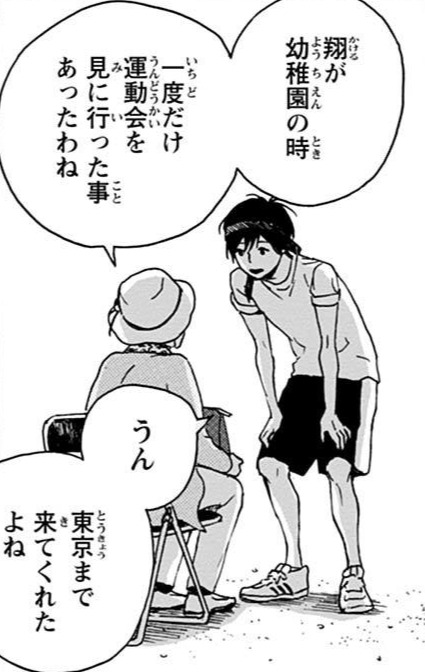
Example 1 of 3: Went to see a kindergarden sports day with 運動会
Kakeru’s grandmother shows up unexpectedly at his school’s sports day. She remembers going to see his sports day once, back when he was in kindergarten. Kakeru remembers too. 東京まで来てくれた says she came all the way to Tokyo for him, and てくれた frames the trip as a kindness.
Example 2 of 3: Coming all the way up here in the mountains with 足を運ぶ
Example 2 of 3
わざわざ, “go out of one’s way”, and こんな, “a place like this”, often come with まで in polite thanks.
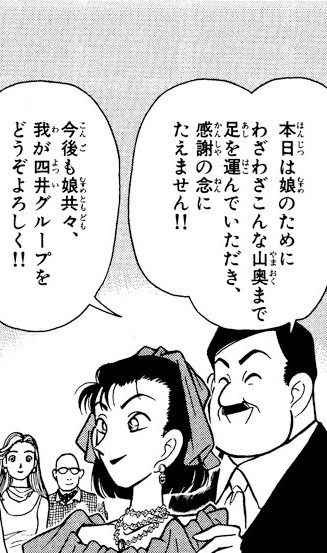
A large gathering takes place in a mansion deep in the mountains, in celebration of Reika, daughter of the head of Yotsui Group. After Reika blows out the candles on her birthday cake, her father congratulates her on turning 24, then he turns and addresses their guests.
四井:
「本日は娘のためにわざわざこんな山奥まで足を運んでいただき、感謝の念にたえません!!」
“I can't thank you enough for coming all the way up here in the mountains today for my daughter!”
「今後も娘共々、我が四井グループをどうぞよろしく!!」
“Please continue to be favorable to both my daughter and my Yotsui Group in the future!”
The Yotsui family is throwing Reika’s birthday party at a mansion deep in the mountains. After she blows out the candles, her father, the head of the Yotsui Group, turns to thank the guests. 山奥 means “deep in the mountains”, so こんな山奥まで stresses how far everyone traveled. 足を運ぶ means “make the trip”, and the humble いただき makes the thanks formal.
Example 3 of 3: Coming all the way out here with 足を運ぶ
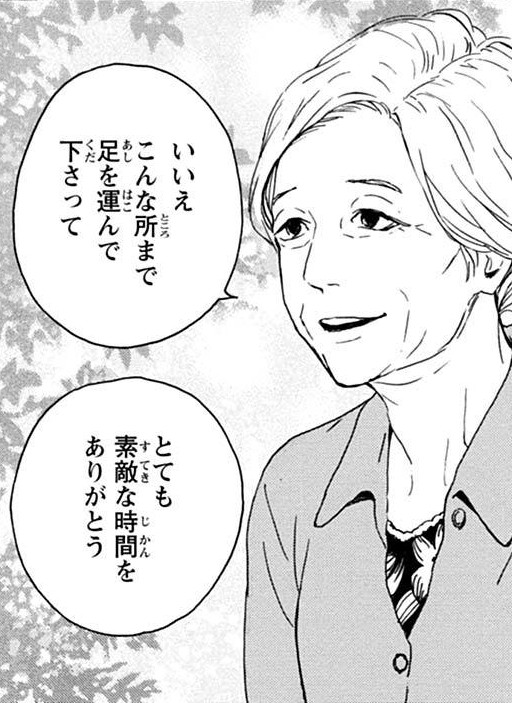
Suwa and his friends are leaving Kakeru’s grandmother’s house, and Suwa apologizes for the bother. She thanks them instead. こんな所まで is “all the way out to a place like this”, and 足を運んで下さって is a polite “for making the trip”.
How Far Something Reaches
まで also marks how far something extends. The endpoint can be a part of the body, as in 頭まで濡れる, “get wet up to the head”.
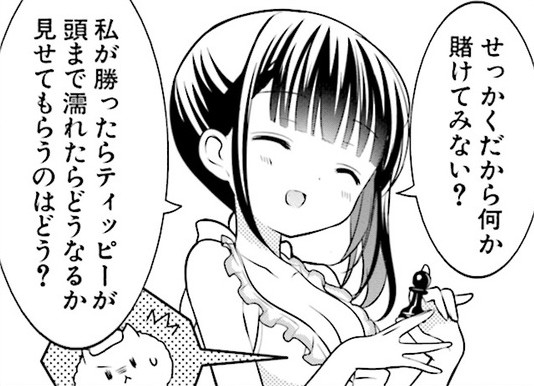
Chiya and Chino are about to play chess at an indoor hot spring, and Chiya proposes a bet. If she wins, she wants to see what Tippy looks like wet all the way up to his head.
Example 2 of 2: Asking to teach with 〜てもいい
Example 2 of 2
With そこ, まで means “that far” or “to that extent”. そこまで often pushes back on a claim that went further than it should.
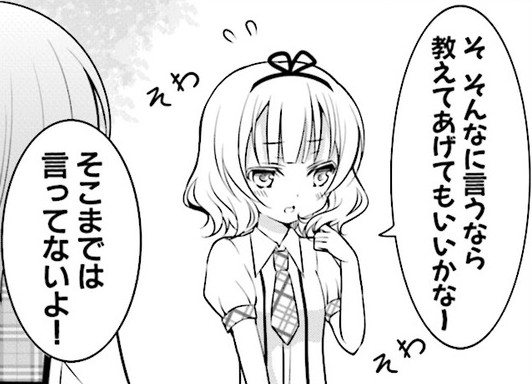
Syaro has been invited to study at the library with the others, and she’s picturing Rize praising her for helping out. She answers as if they had begged her, starting with そんなに言うなら, “if you insist that much”. Cocoa never insisted. そこまでは言ってない means “I didn’t go that far”. The は after まで draws the line. Cocoa said something, just not that.
Even with まで
After a noun that isn’t a time or place, まで often means “even”. も just adds one more item. まで says the list went further than anyone expected.
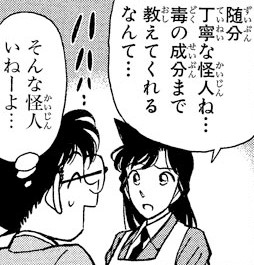
A client tells Detective Mouri about the condition in which she found her deceased husband. Hearing the details, Conan identifies the likely poison, including the composition, the dosage required to kill, and the internal effects it has on a person. When Ran asks how he knows all this, Conan covers by saying the monster villain on the kid’s TV show he watched explained it.
蘭:
「随分 丁寧な怪人ね… 毒の成分まで教えてくれるなんて…」
“What a polite villain... Going so far as to tell the poison's composition...”
A client tells Detective Mouri how she found her husband dead. Conan names the likely poison, along with what it’s made of, the deadly dose, and what it does to the body. When Ran asks how he knows, he says a villain on a kids’ TV show explained it. 成分 is “composition”. 成分まで教えてくれる says the villain went as far as explaining what the poison is made of. なんて marks Ran’s surprise, and she remarks on what a polite villain he must be.
Going as Far as Doing with 〜てまで
After a て-form, まで means “go as far as doing”. The speaker usually thinks the action goes too far. 嘘をついてまで行きたいの? asks “you want to go so badly that you’d lie?”
〜までもない, after a dictionary-form verb, says there’s no need to go as far as doing something. The most common case is 言うまでもない, “needless to say” or “it goes without saying”.