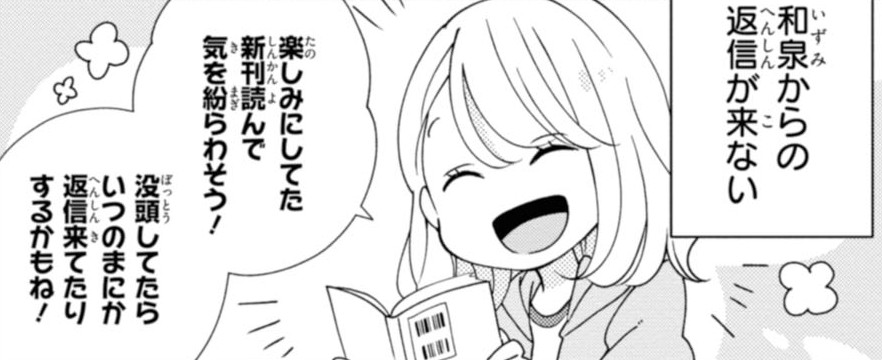
Akari is expecting a text message from Izumi. Unknown to her, Izumi’s response was getting too long, so he switched to his computer to write up an e-mail instead.
Narration:
「和泉からの返信が来ない」
“I haven't received a reply from Izumi.”
あかり:
「楽しみにしてた新刊読んで気を紛らわそう!」
“I'll distract myself by reading the new book I've been looking forward to!”
「没頭してたらいつのまにか返信来てたりするかもね!」
“Maybe if I get really absorbed in it, the reply will show up before I know it!”
Akari is waiting for a text from Izumi, and it hasn’t come. 気を紛らわす is “take one’s mind off something”, and 紛らわそう is its volitional. Nobody else is in the room. She’s talking herself into a plan: read the new book she’s been looking forward to.
Invitation or Suggestion
With another person present, the listener can be pulled into a shared action:
帰ろう “let’s return”
食べよう “let’s eat”
行こう “let’s go”
The plain volitional is used with familiar listeners.
Example 1 of 6: Going to look at the stars with 〜に行く
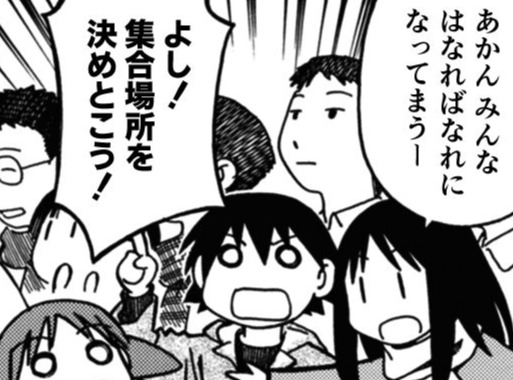
Chiyo and her classmates are at a crowded shrine for New Year’s, and Ayumu worries they’ll get separated. 決めとこう is 決めておこう, “let’s decide ahead of time”, with ておく shortened to とく. Tomo’s よし! rallies the group.
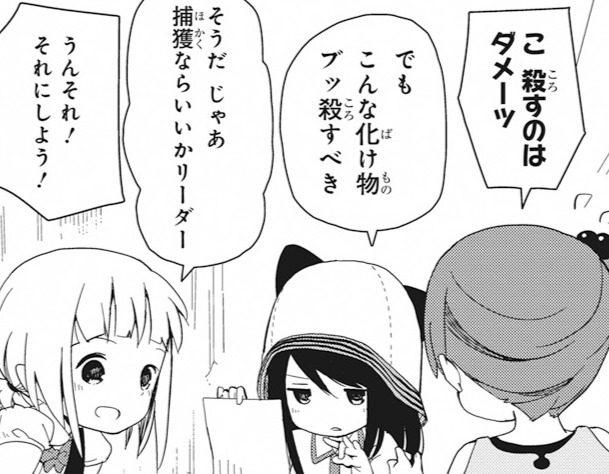
Yui, Sacchan, and Kotoha are friends who’ve formed a group called Colors to protect their neighborhood. Yui is the group’s leader.
Yui hurries to the Colors clubhouse with news of a cat she saw. She draws it on paper, but Sacchan sees it as the sketch of a monster. Kotoha looks over the drawing and asks if they’re going to kill it.
Yui spotted a cat, but her drawing makes it look like a monster, and Kotoha wants to kill it. Sacchan suggests capturing it instead. Yui is the leader, and それにしよう, “let’s go with that”, settles it for the group.
Example 4 of 6: Hoping baked bread is tasty with 〜といい
Cocoa has surprised everyone with a special bread she came up with. Chiya’s 食べてみましょう, “let’s try it”, invites the whole group to taste it together. Chiya speaks politely even with friends, so she uses ましょう.
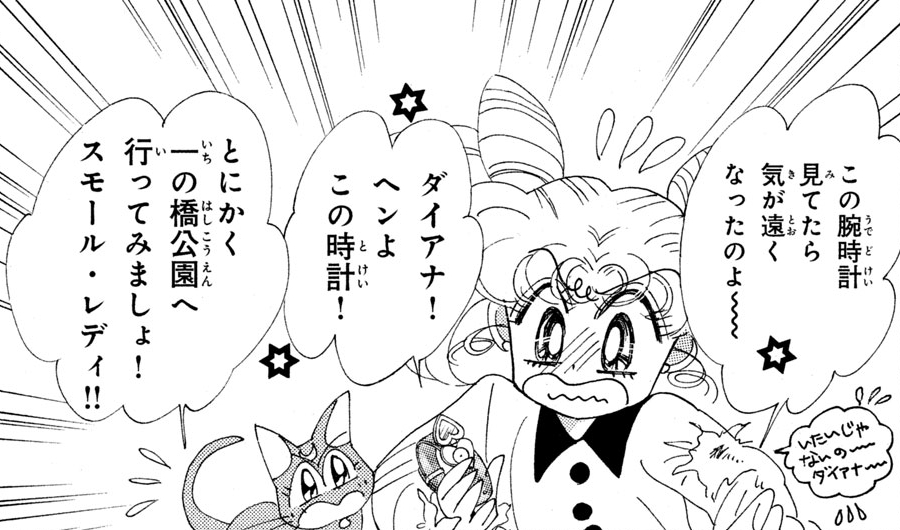
At the stroke of midnight, Chibiusa wakes to a mysterious glow from her new wristwatch. She gets out of bed in a daze, and begins to leave the room. Her cat, Diana, bites her on the arm, returning Chibiusa from her trance.
ちびうさ:
「この腕時計見てたら気が遠くなったのよ〰〰」
“While I was looking at this wristwatch, I became lightheaded〰”
「ダイアナ! ヘンよ この時計!」
“Diana! Something is strange about this watch!”
ダイアナ:
「とにかく 一の橋公園へ行ってみましょ! スモール・レディ!!」
“Anyway, let's try going to Ichinohashi Park! Small Lady!!”
Chibiusa’s new wristwatch began to glow at midnight and put her in a trance, until her cat Diana bit her. Diana suggests going to Ichinohashi Park. 行ってみましょ is ましょう with the final う dropped, which sounds lighter and more eager.
Chiya and Chino are about to play chess at an indoor hot spring, and Chiya has proposed a bet. Chino names her own stakes. 〜事にしましょう is “let’s make it that…”, a polite way to propose terms. Cocoa wasn’t asked, and she wants to know why she’s been dragged in.
Forceful Invitation or Suggestion
〜ましょう is the polite counterpart for less familiar or higher-status listeners, but it presents the speaker’s intention on the assumption that the listener shares it, so it can come off as a somewhat forceful invitation.
The invitation can be further split into two types, depending on whether the listener is part of the group or being pulled into the group.
A group type invitation is where speaker and listener are treated as one group doing the action together.
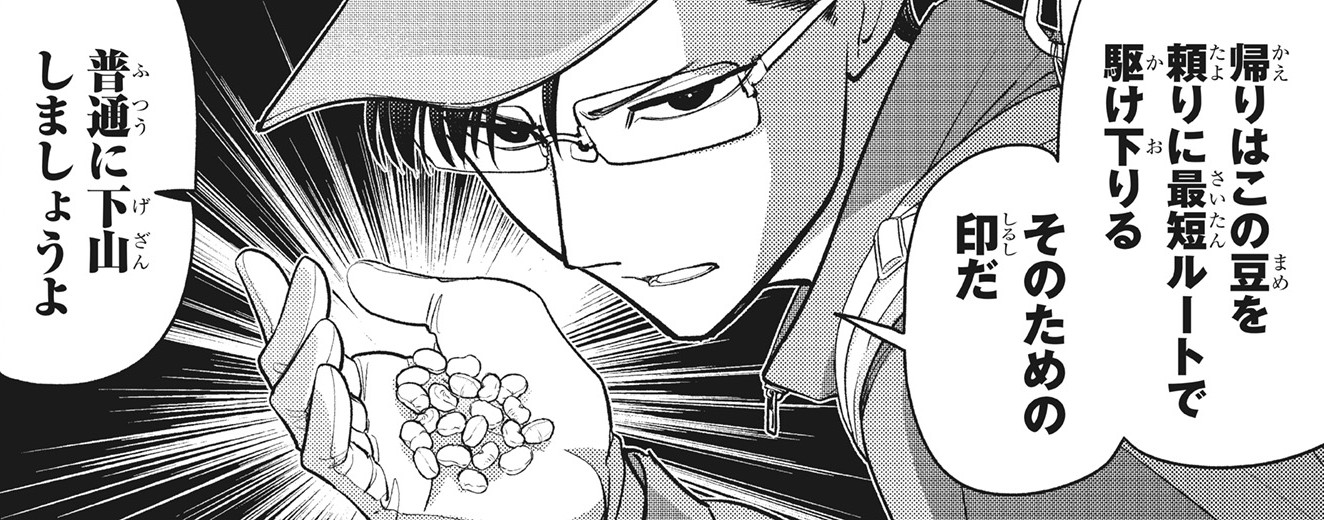
Kumada takes a trip to the mountain, in hope that the bear living in his apartment will follow him there, then he can run away and leave the bear stranded behind. He has with him his employee Sanami, an expert on mountains, to act as a guide. During their hike, Sanami asks Kumada why he’s placing beans on the ground as they go.
熊田:
「帰りはこの豆を頼りに最短ルートで駆け下りる」
“On the way back, I'll use these beans as a guide and run down by the shortest route.”
Kumada has brought Sanami, a mountain expert, on a hike so he can lose the bear that lives in his apartment. He plans to run down the mountain by the shortest route, following beans he dropped on the way up. 普通に下山しましょうよ is “let’s just go down normally”. よ pushes the suggestion as the obvious choice.
Example 3 of 4: Going to school together so as to not get lost with 〜ように
Example 3 of 4
A pull-in type invitation is where the speaker tries to draw the listener into the speaker’s action.
Cocoa got lost looking for her new school and met Chiya, who will go to the same school. Chiya doesn’t ask whether Cocoa wants to go. 今から学校まで行きましょう, “let’s go to the school now”, pulls her straight into the walk. 迷わないように, “so you won’t get lost”, is the reason.
Example 4 of 4: Lunch on the rooftop with 屋上
Example 4 of 4
As this use of 〜ましょう can feel pushy, when the speaker is asking whether the listener wants to join, ませんか is often softer. Because it asks about the listener’s intention, it sounds more polite.
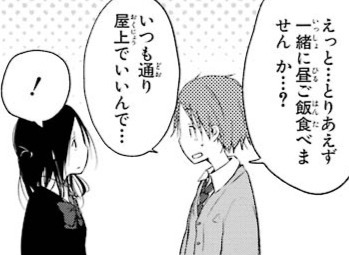
After Hase finally became friends with Fujimiya, her warning came to pass: her weekly memory reset, which causes her to forget her friends on Monday morning, left her with no recollection of spending time with Hase last week. Hase asks Fujimiya to be his friend, but realizes that it was too sudden, so he decides to create an opportunity to remind her of last week.
長谷:
「えっと…とりあえず 一緒に昼ご飯食べません か…?」
“Um, for now, how about we have lunch together...?”
It would be pushy to say, “Let’s eat on the rooftop together,” so instead Hase asks, “Won’t you eat on the rooftop together?” This form of question carries an expectation of refusal from the listener, reducing pressure from the listener to respond in the positive.
A response like 「行きましょう」 can mean more than a plain “yes”. This kind of answer shows agreement while also presenting the speaker’s own move toward the same action, and can feel more active than 「はい、行きます」.
Example 1 of 2: Agreeing to go somewhere else with 賛成
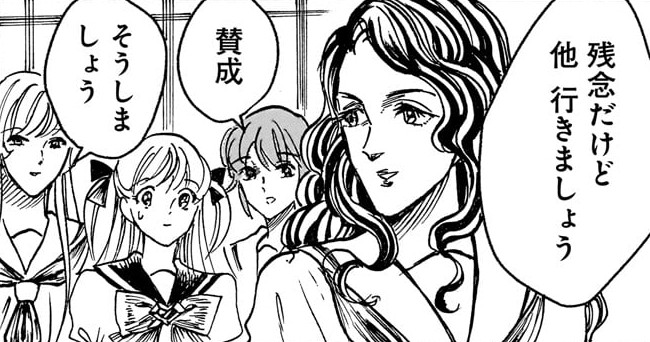
After moving and transferring schools, Lulu has finally made some friends in class. Following some after-school shopping, they stop by the group’s favorite café, only to find it filled to the brim with hoodlums.
Lulu and her new friends find their favorite café full of hoodlums. Kyouko suggests going somewhere else with 行きましょう. Kiyomi says 賛成, “agreed”. Miyoko answers そうしましょう, “let’s do that”, which joins the plan as something they’ll all do.
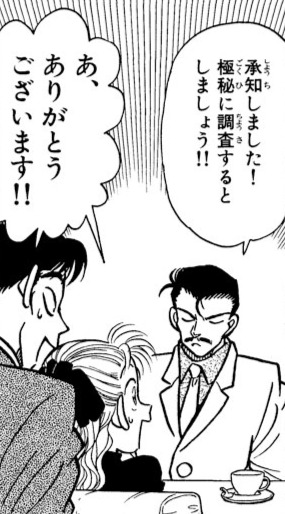
Detective Mouri’s favorite idol, Yoko, comes to his agency after receiving threatening calls and candid photos. Her manager hopes to keep the matter quiet to protect her image.
Yoko, Mouri’s favorite idol, has been getting threatening calls, and her manager wants the matter kept quiet. 承知しました, “understood”, is the plain acceptance. 〜とするとしましょう, “let’s say we’ll…”, then takes up the request as a plan they share: a discreet investigation.
Fuuka finds Yotsuba wandering around in her pajamas and indoor slippers. She escorts Yotsuba back home to change. When they get there, Yotsuba finds a note from her father saying he’s gone to the store and for her to watch over the house.
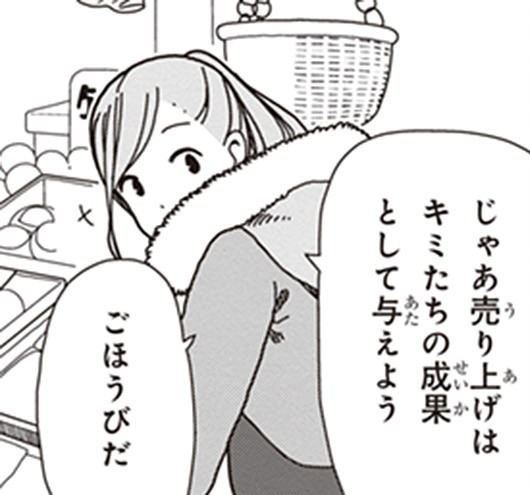
Sacchan’s mother has an overstock of bananas at her fruit shop, so she gives them to Sacchan and her friends to sell around the neighborhood. Later, Sacchan returns having sold all the bananas.
Sacchan’s mother had too many bananas at her fruit shop, so she had Sacchan and her friends sell them around the neighborhood. They sold every one. 与える is “award”, and 与えよう offers them the money like a judge handing out a prize. ごほうびだ, “it’s a reward”, follows.
If the volitional appears with か, a question word, かな, or an explicit contrast between options, it often marks deliberation rather than a settled plan. When 〜ようかな or ⒶしようかⒷしようか is used, the speaker is leaning toward action, but not there yet.
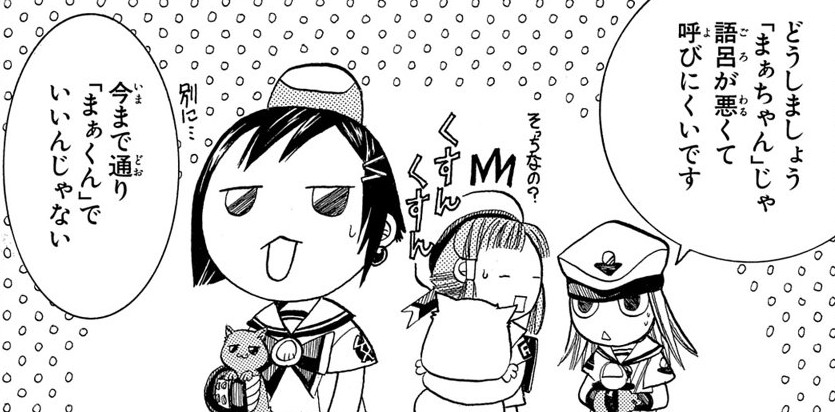
A trip to the vet showed that Alice’s kitten, Maa-kun, is a girl. どうしましょう is the polite form of どうしよう, “what should I do?”. Alice isn’t asking anyone in particular. She’s working through the problem: まぁちゃん is awkward to call out.
The volitional form appears in many larger expressions, which narrows the meaning.
Adding と思う to the volitional form softens and personalizes what would otherwise be a fairly direct statement of intention. Because this is revealing the speaker’s thoughts, it is never used as an invitation.
Example 1 of 8: Thinking of revealing the truth with 〜ようと思う
Cocoa is lost on her way to the house where she’ll be staying, so she stops at a café. 休憩しようと思った, “I thought I’d take a break”, explains why she came in. けど leads into her real question, where the Kafuu residence is.
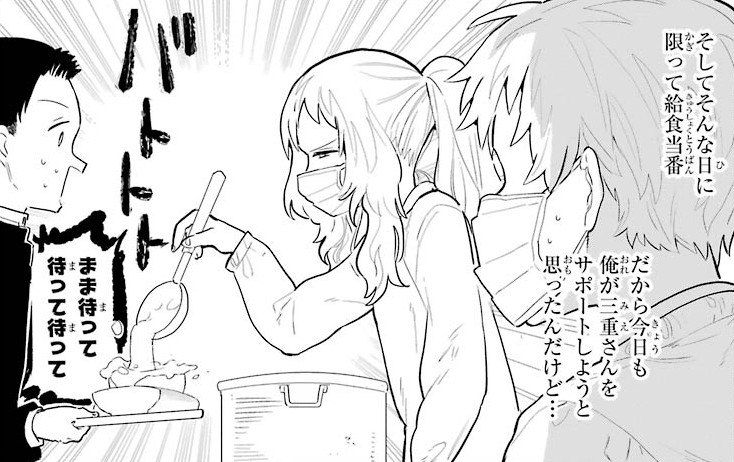
Example 3 of 8: Lunch duty today of all days with 〜に限って
Komura and Mie have serving duty in the cafeteria. Normally this wouldn’t be an issue, except today Mie accidentally stepped on her glasses and broke them, and can barely see without them.
小村:
「そしてそんな日に限って給食当番」
“Thus, on a day such as that (of all days), she has lunch duty.”
「だから今日も俺が三重さんをサポートしようと思ったんだけど…」
“Therefore, I thought I'd support Mie today as well, but...”
Mie broke her glasses this morning and can barely see, and today she’s on lunch-serving duty. Komura narrates his plan: サポートしようと思った, “I thought I’d help her out”. The trailing けど hints that the plan is about to go wrong.
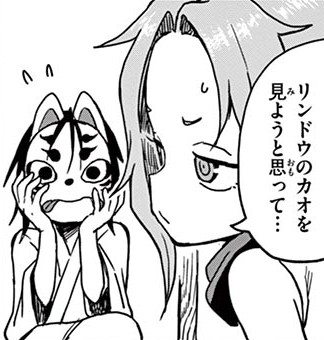
Example 4 of 8: Thought I would see her face with 〜ようと思う
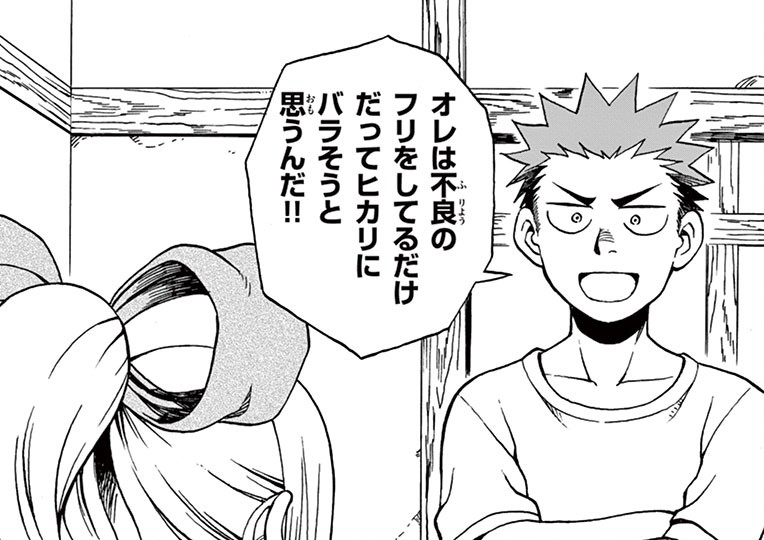
Sazanka reached for Rindou’s mask while she slept, and Rindou woke up and backed away. When Tsubaki asks what’s going on, Sazanka explains with 見ようと思って, “I thought I’d see her face”. The て-form leaves the rest of the excuse hanging.
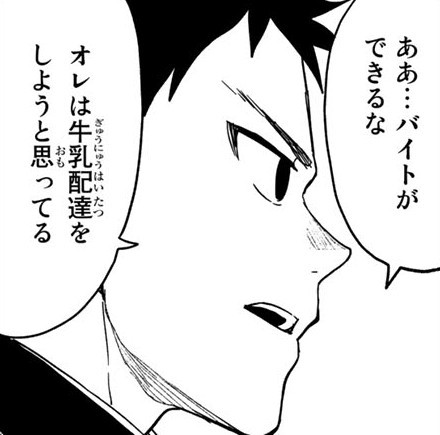
Example 5 of 8: Thinking of delivering milk with 〜ようと思う
Example 5 of 8
The progressive 〜と思っている pushes it even further toward “I’ve been thinking/planning to…”, suggesting the thought isn’t just occurring to the speaker right now but has been on their mind for a while.
Ayumu’s held this intention for a length of time, and he still holds that intent now that he can finally go through with it.
Example 6 of 8: Not moving while staring with 〜ながら
Example 6 of 8
The pattern 〜(よ)うとする doesn’t express the speaker’s own will or a suggestion. Instead, 〜(よ)うと functions adverbially to mark an attempted action. In 〜(よ)うとする, it means “to try to do X” or “to be about to do X”.
Cocoa buys Chino a puzzle to make up for finishing the one Chino had been working on. The two and their friends work at putting the new puzzle together.
チノ:
「ココアさんさっきからピース見つめながら動かない…」
“Cocoa-san has been staring at the puzzle piece while not moving for a while now...”
「その…責任取ろうと無理しないでください」
“Um... Please don't push yourself trying to take responsibility.”
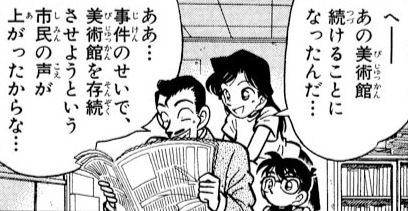
After a murder at an art museum, Ran reads in the paper that the museum will stay open after all. Mouri explains that the case led citizens to call for keeping it, 存続させようという市民の声. The volitional is what the public was saying: “let’s keep it going”.
Example 8 of 8: Don't care if it troubles you with 知ったことか
Example 8 of 8
〜(よ)うと on its own can mean “even if”. The speaker brushes a possibility aside.
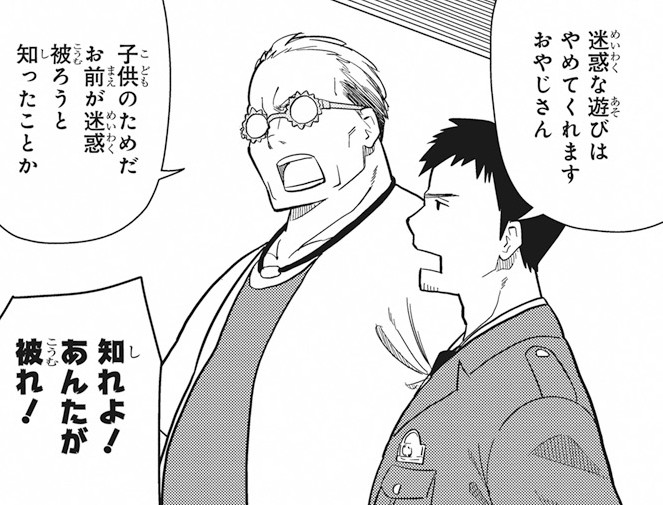
Oyaji presented Colors with a bomb to defuse via a riddle, which led to problems for Officer Saitou. After Colors successfully defuses the bomb, Saitou tells Oyaji to stop playing bothersome games.
おやじ:
「子供のためだ。お前が迷惑被ろうと知ったことか」
“It's for the kids. I don't care if it will cause you trouble.”
Oyaji gave the Colors a bomb to defuse with a riddle, and it caused trouble for Officer Saitou, who tells him to stop. 被る is “suffer”, so 迷惑被ろうと is “even if you’re put out”. 知ったことか, “as if I care”, dismisses it. It’s all for the kids.
What the Volitional Is Not
It is not the normal way to make a neutral future announcement.
When the speaker is telling someone what they will do later, they use the dictionary form or 〜ます, not the bare volitional.
Neutral future announcement: 「わたしは6時に帰ります」 “I will return at 6 o’clock.”
Volitional decision: 「わたしは6時に帰りましょう」 “I shall return at 6 o’clock.”
English contracts both decision and future statement as “I’ll”, whereas Japanese splits them more often.
It is often too direct for simply informing someone of one’s intention.
If the speaker wants to tell the listener that they intend to do something, it is more normal to attach と思う. The bare volitional by itself tends to mean self-talk or invitation, while 〜ようと思う makes the intention report explicit.
Futher:
〜ようと思います is used for a present or temporary decision of the speaker.
〜ようと思っています is used for an intention held over a period of time, and one that can also be attributed to other people.
The polite volitional is not a monologue form.
〜ましょう is used with listeners, especially non-close or higher-status listeners, and not for soliloquy.
A speaker saying 「寝ましょう」 to themself sounds odd in ordinary speech, while 「寝よう」 is normal.
Determining the Volitional
If you are uncertain how the volitional is being used, ask yourself the following questions:
Who is supposed to perform the action?
Is the speaker deciding, inviting, offering, or still deciding (unsettled)?
Does the listener share the action, benefit from it, or choose whether it happens?
Is the sentence plain 〜よう, polite 〜ましょう, or question-like 〜ようか/〜ましょうか?
Are there hesitation markers like かな, どうしよう, or an A-or-B choice?