〜ましょう is the polite counterpart for less familiar or higher-status listeners, but it presents the speaker’s intention on the assumption that the listener shares it, so it can come off as a somewhat forceful invitation.
The invitation can be further split into two types, depending on whether the listener is part of the group or being pulled into the group.
A group type invitation is where speaker and listener are treated as one group doing the action together.
As this use of 〜ましょう can feel pushy, when the speaker is asking whether the listener wants to join, ませんか is often softer. Because it asks about the listener’s intention, it sounds more polite.
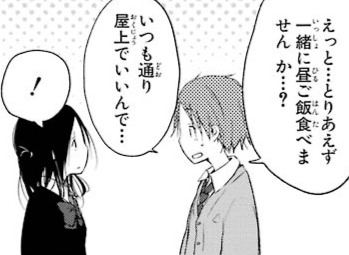
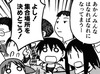
After Hase finally became friends with Fujimiya, her warning came to pass: her weekly memory reset, which causes her to forget her friends on Monday morning, left her with no recollection of spending time with Hase last week. Hase asks Fujimiya to be his friend, but realizes that it was too sudden, so he decides to create an opportunity to remind her of last week.
長谷:
「えっと…とりあえず 一緒に昼ご飯食べません か…?」
“Um, for now, how about we have lunch together...?”
It would be pushy to say, “Let’s eat on the rooftop together,” so instead Hase asks, “Won’t you eat on the rooftop together?” This form of question carries an expectation of refusal from the listener, reducing pressure from the listener to respond in the positive.
Accepting an Invitation by Joining It
A response like 「行きましょう」 can mean more than a plain “yes”. This kind of answer shows agreement while also presenting the speaker’s own move toward the same action, and can feel more active than 「はい、行きます」.
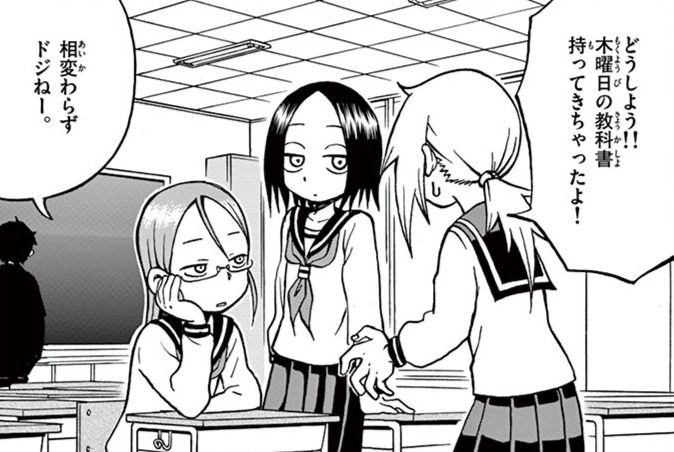
Fuuka finds Yotsuba wandering around in her pajamas and indoor slippers. She escorts Yotsuba back home to change. When they get there, Yotsuba finds a note from her father saying he’s gone to the store and for her to watch over the house.
If the volitional appears with か, a question word, かな, or an explicit contrast between options, it often marks deliberation rather than a settled plan. When 〜ようかな or ⒶしようかⒷしようか is used, the speaker is leaning toward action, but not there yet.
The volitional form appears in many larger expressions, which narrows the meaning.
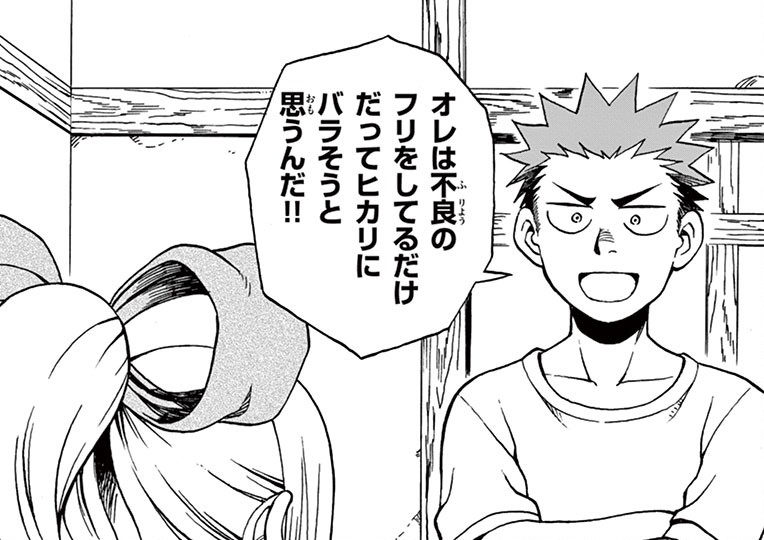
Adding と思う to the volitional form softens and personalizes what would otherwise be a fairly direct statement of intention. Because this is revealing the speakers thoughts, it is never used as an invitiation.
Kenji is revealing the intention he has in mind, with no expectation that Kyoko will join him in revealing his secret to Hikari.
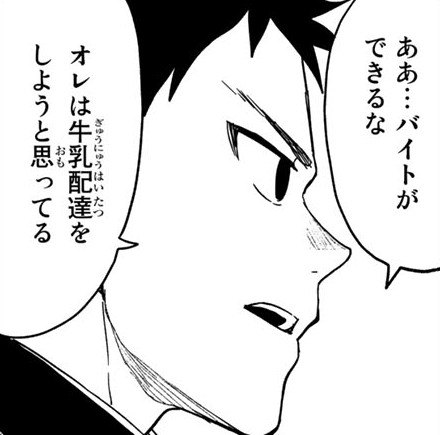
The progressive 〜と思っている pushes it even further toward “I’ve been thinking/planning to…”, suggesting the thought isn’t just occurring to the speaker right now but has been on their mind for a while.
Ayumu’s held this intention for a length of time, and he still holds that intent now that he can finally go through with it.
The pattern 〜(よ)うとする doesn’t express the speaker’s own will or a suggestion. Instead, 〜(よ)うと functions adverbially to mark an attempted action. In 〜(よ)うとする, it means “to try to do X” or “to be about to do X”.
Cocoa buys Chino a puzzle to make up for finishing the one Chino had been working on. The two and their friends work at putting the new puzzle together.
チノ:
「ココアさんさっきからピース見つめながら動かない…」
“Cocoa-san has been staring at the puzzle piece while not moving for a while now...”
「その…責任取ろうと無理しないでください」
“Um... Please don't push yourself trying to take responsibility.”
Here, it’s a negated request, to let Cocoa know she does not need to attempt the action.
What the Volitional Is Not
It is not the normal way to make a neutral future announcement.
When the speaker is telling someone what they will do later, they use the dictionary form or 〜ます, not the bare volitional.
Neutral future announcement: 「わたしは6時に帰ります」 “I will return at 6 o’clock.”
Volitional decision: 「わたしは6時に帰りましょう」 “I shall return at 6 o’clock.”
English contracts both decision and future statement as “I’ll”, whereas Japanese splits them more often.
It is often too direct for simply informing someone of one’s intention.
If the speaker wants to tell the listener that they intend to do something, it is more normal to attach と思う. The bare volitional by itself tends to mean self-talk or invitation, while 〜ようと思う makes the intention report explicit.
Futher:
〜ようと思います is used for a present or temporary decision of the speaker.
〜ようと思っています is used for an intention held over a period of time, and one that can also be attributed to other people.
The polite volitional is not a monologue form.
〜ましょう is used with listeners, especially non-close or higher-status listeners, and not for soliloquy.
A speaker saying 「寝ましょう」 to themself sounds odd in ordinary speech, while 「寝よう」 is normal.
Determining the Volitional
If you are uncertain how the volitional is being used, ask yourself the following questions:
Who is supposed to perform the action?
Is the speaker deciding, inviting, offering, or still deciding (unsettled)?
Does the listener share the action, benefit from it, or choose whether it happens?
Is the sentence plain 〜よう, polite 〜ましょう, or question-like 〜ようか/〜ましょうか?
Are there hesitation markers like かな, どうしよう, or an A-or-B choice?