Want to say or do something with 〜たい+ことがある
Grammar: Hope » 〜たい+ことがある
〜たい+ことがある expresses that there is some specific thing the speaker wants to do, say, ask, or talk about.
It is often closer to “I have something I want to…” than “I sometimes want to…”.
Usage Notes
This pattern is common when introducing a topic or bringing something up: for example, 言いたいことがある, 聞きたいことがある, or 話したいことがある.
It can sound direct, so speakers often soften it with ちょっと or 〜んだけど. Do not confuse it with dictionary-form 〜ことがある (sometimes do) or past 〜たことがある (have done before).
Formation
View formation details
- Verb (たい form) + ことがある
- 先生に聞きたいことがある
- "I have something I want to ask the teacher."
- Verb (たい form) + ことがあるんだ(けど)…
- ちょっと言いたいことがあるんだけど…
- "I have something I want to say, but…"
- Common set phrases
- 言いたいことがある/聞きたいことがある/話したいことがある
- "I have something I want to say / ask / talk about."
Related Grammar
- Wanting to do with 〜たい (Desire)
- Want you to do something with 〜てほしい (Desire toward someone else)
- Sometimes with 〜ことがある (Frequency)
- Previous experience with 〜た+ことがある (Past experience)
Examples
Want to ask a favor with 〜たい+ことがある
Grammar Explanation: Want to say or do something with 〜たい+ことがある
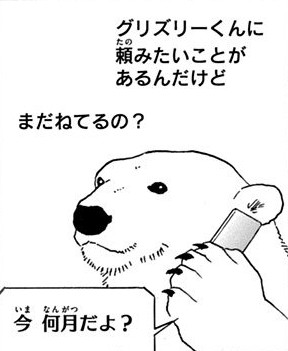
Grizzly is deep into his winter hibernation when his phone starts ringing. He answers, knowing only Polar Bear would be calling him during hibernation.
- シロクマ:
- 「グリズリーくんに頼みたいことがあるんだけど」
- “Grizzly, I want a favor from you.”
- 「まだねてるの?」
- “Are you still sleeping?”
- グリズリー:
- 「今 何月だよ?」
- “What month is it now?”
Want to say something with 〜たい+ことがある
Grammar Explanation: Want to say or do something with 〜たい+ことがある
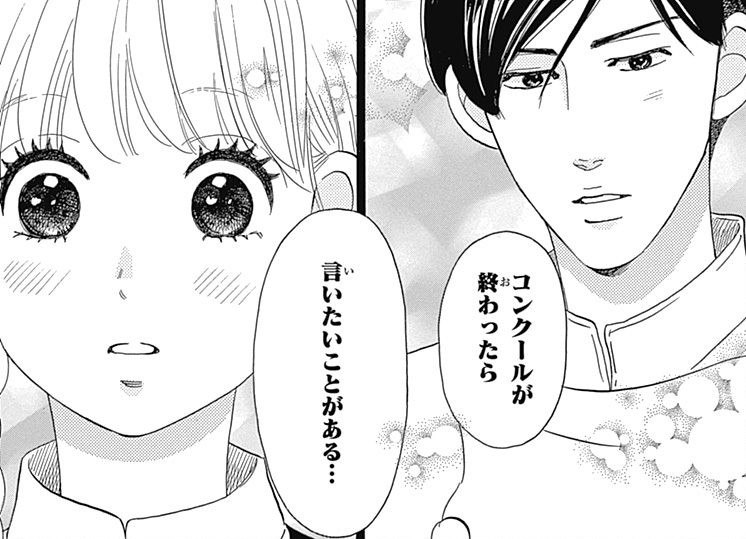
Ichinose normally shuns his inferior co-workers. When Rinko starts working at the confectionery, she unknowingly becomes Ichinose’s muse. Even after learning of her boyfriend, Ichinose still convinces Rinko to spend long hours helping him prepare for an upcoming competition. He plans to confess his feelings to Rinko after he wins the competition.
- 一之瀬:
- 「コンクールが終わったら言いたいことがある…」
- “When the competition is over, there's something I want to tell you.”