Want you to do something with 〜てほしい
Grammar: Hope » 〜てほしい
〜てほしい says that the speaker wants someone else to do something. The verb goes in the て-form, and ほしい follows. 来てほしい means “I want you to come”, and 手伝ってほしい means “I want you to help”.
〜たい is for the speaker’s own actions. 〜てほしい is for actions by someone else, or for events the speaker hopes will happen, such as the rain stopping. The person who should act usually takes に.
ほしい conjugates like an い-adjective. 〜てほしくない and 〜ないでほしい both mean “I don’t want you to”, and 〜てほしかった means “I wanted you to”.
Usage Notes
〜てほしい states a wish plainly. Said to the person who would act, it works as a request, and toward a superior it can sound like a demand. 〜てほしいんだけど and 〜てほしいんですが soften it into a lead-in. 〜てもらいたい means nearly the same thing, and humble 〜ていただきたい suits formal speech. For an actual request, 〜てください or 〜てもらえますか is safer.
Like たい, a statement with てほしい gives the speaker’s own wish, and a question asks about the listener’s. For anyone else, quote the wish with 〜てほしいって or use 〜てほしがる. After a て-form, ほしい is usually written in kana.
Formation
View formation details
- Verb (て-form) + ほしい
- もう少し待ってほしい
- "I want you to wait a little longer."
- Person + に + Verb (て-form) + ほしい
- 先生に説明してほしい
- "I want the teacher to explain."
- Note: に marks the person who should act.
- Thing + が + Verb (て-form) + ほしい
- 雨がやんでほしい
- "I want the rain to stop."
- Note: Verbs whose て-form ends in で take でほしい.
- 〜ないでほしい (want someone not to)
- 誰にも言わないでほしい
- "I don't want you to tell anyone."
- 〜てほしくない (don't want someone to)
- 無理してほしくない
- "I don't want you to push yourself."
- 〜てほしかった (past)
- もっと早く言ってほしかった
- "I wish you had told me sooner."
- Note: Often a wish that didn't come true.
- 〜させてほしい (let me)
- 私にもやらせてほしい
- "I want you to let me try too."
- 〜てほしい + noun
- 読んでほしい本がある
- "There's a book I want you to read."
- 〜てほしいんだけど (soft request)
- ちょっと手伝ってほしいんだけど
- "I was hoping you could help me a bit."
Wanting Someone Else to Act
ほしい on its own means “want” for a thing, as in 時間がほしい, “I want time”. After a て-form, the thing wanted becomes an action, and someone else does it.
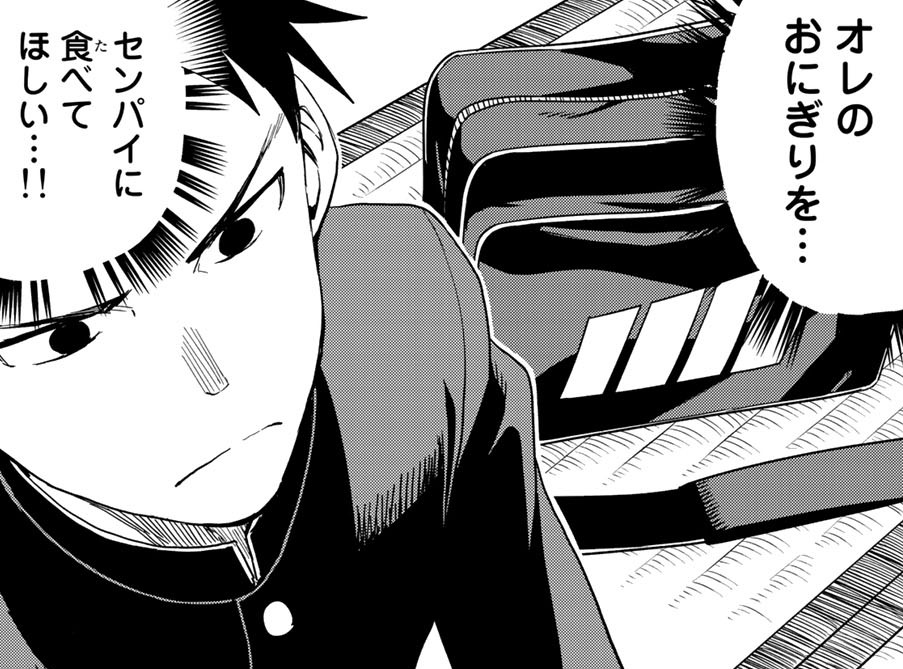
As they start a shogi game after school, Ayumu hears Urushi’s stomach growl. She pretends there wasn’t a sound, but Ayumu realizes she’s hiding that she’s hungry. If he can avoid embarrassing her, Ayumu has the solution in his school bag.
- 歩:
- 「オレのおにぎりを… センパイに食べてほしい…!!」
- “I want her to eat my rice ball.”
Ayumu and Urushi are starting a shogi game after school when her stomach growls. She acts as if nothing happened, but Ayumu can tell she’s hungry. He has a rice ball in his bag, and he wants to offer it without embarrassing her.
In a plain sentence, the eater would take が, as in センパイがおにぎりを食べる. With てほしい, the eater takes に, so センパイに marks the person Ayumu wants to do the eating. オレのおにぎりを keeps its を.
Marking the Person with に
The person you want to act usually takes に. 先生に説明してほしい means “I want the teacher to explain”. The verb can be anything that person could do, including いる, “be” or “stay”.
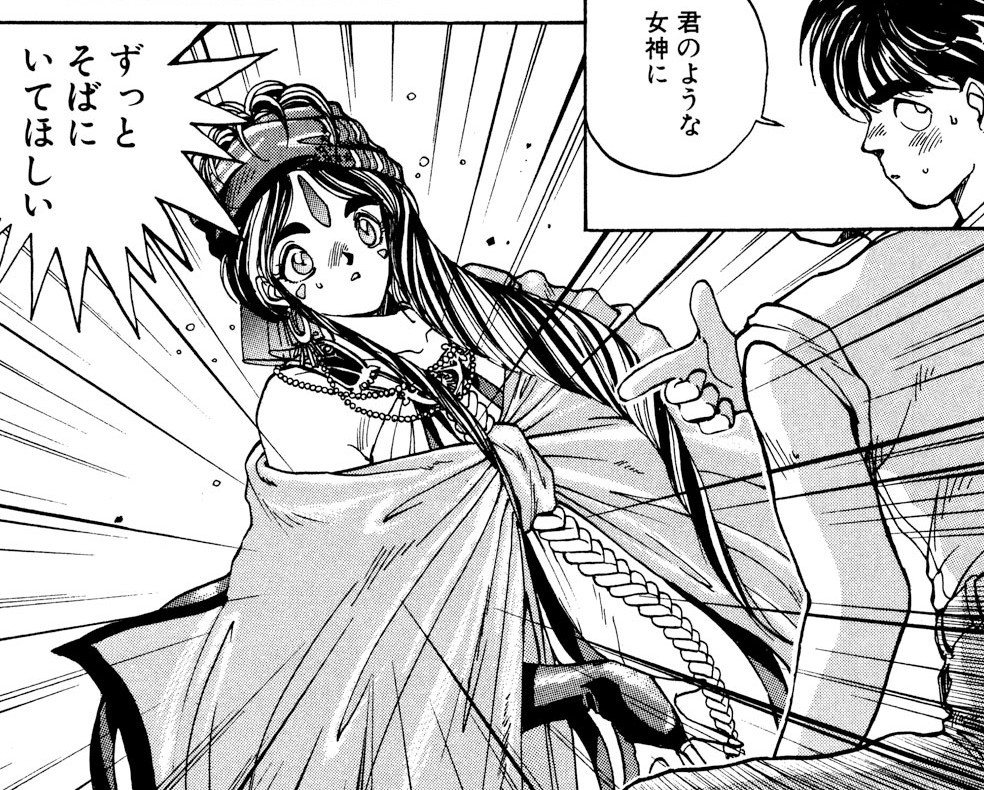
After accidentally dialing the Goddess Technical Help Line, Kei’ichi finds himself face-to-face with a Goddess offering him a wish. After a brief conversation, Kei-ichi flippantly makes a wish.
- 螢一:
- 「君のような女神にずっとそばにいてほしい」
- “I want a Goddess like you to always be by my side.”
Kei’ichi dialed a wrong number and reached the Goddess Technical Help Line. Now the goddess Belldandy is in front of him, offering him a wish, and he makes one without thinking it through. に marks 君のような女神, “a goddess like you”, as the one who should do it, and ずっとそばにいてほしい asks her to stay by his side forever.
With いる, てほしい wants a state to last. ている forms work the same way. 待っていてほしい, usually shortened to 待っててほしい, means “I want you to wait for me”.
に can take は or も after it, like other particles. にも adds the person to others, “them too”, and には sets the person apart, “as for them”. Both show up further down this page.
Wishing for Events with が
てほしい isn’t limited to people. It can wish for weather, an event, or a change in a situation. The thing that should happen takes が. 雨がやんでほしい means “I want the rain to stop”.

As they decorate their Christmas tree, Chii learns from her mother that kids need to be good because Santa is always watching. Chii wants Christmas to arrive soon so she doesn’t have to keep being good, until she takes a look at the decorated tree.
- ちー:
- 「ずっとこのままでもいいなー。」
- “It'd be fine if things stayed like this forever.”
- 「でもクリスマスもはやくきてほしいなー。」
- “But I want Christmas to also hurry and come.”
While Chii and her mother decorate their Christmas tree, Chii learns that Santa is always watching, so kids have to be good. She wants Christmas to hurry up so she can stop being good. Then she looks at the finished tree and wishes things could stay like this forever.
Her second line keeps the first wish anyway. クリスマスも takes the place of クリスマスが and adds Christmas as a second wish. はやくきてほしい is “I want it to come soon”, with 来る in its て-form, 来て. Christmas can’t decide to come early. てほしい still works, because it’s a wish about what happens, not an order.
Conjugating like an い-Adjective
ほしい ends in い, so it conjugates like an い-adjective such as 高い. The て-form before it stays the same.
| Form | Example | Meaning |
|---|---|---|
| 〜てほしい | 来てほしい | want you to come |
| 〜てほしくない | 来てほしくない | don’t want you to come |
| 〜てほしかった | 来てほしかった | wanted you to come |
| 〜てほしくなかった | 来てほしくなかった | didn’t want you to come |
| 〜てほしくて | 来てほしくて | want you to come, so… |
A negative verb before ほしい gives a second way to say “don’t want”, 〜ないでほしい. Both negatives are covered below.
Past Wishes with 〜てほしかった
〜てほしかった is the past form. It often describes a wish that didn’t come true, like English “I wish you had…”. もっと早く言ってほしかった means “I wish you had told me sooner”.
Example 1 of 2: Wanted to you taste-test with 〜てほしかった
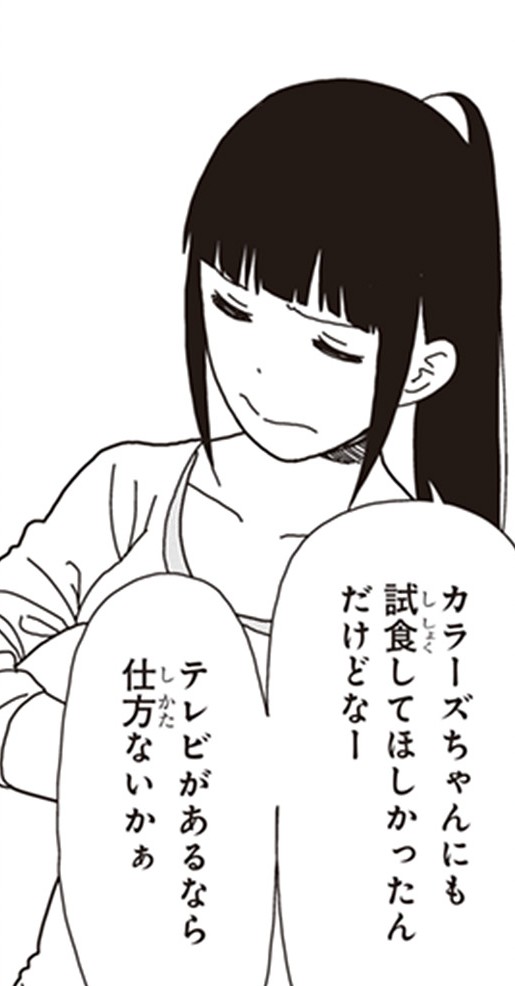
Momoka notices the trio Colors pestering a television cameraman. She intervenes to help him, telling the girls that she is heading to her family’s bakery to have taste-testing of her new type of rice ball.
- ももか:
- 「カラーズちゃんにも試食してほしかったんだけどなー」
- “I wanted you all to do some taste-testing as well, but...”
- 「テレビがあるなら仕方ないかぁ」
- “If it's television, it can't be helped, huh?”
The Colors, a trio of girls, are pestering a TV cameraman, and Momoka steps in to help him. She mentions that she’s on her way to her family’s bakery to taste-test her new rice ball. カラーズちゃんにも試食してほしかった says she had wanted the Colors to try it too. にも adds them to the people she had in mind.
Example 2 of 2: Wanted you to eat the cookies I baked with 〜てほしかった
Past ほしかった doesn’t always mean the wish failed. It can also describe a wish the speaker had earlier and is acting on now.

During cooking class, Komura has trouble concentrating as the girl he likes, Mie, and another boy who seems to like her, Azuma, are teamed up and seem to be getting along well together. After class, Komura sulks away. On his way home, Mie catches up with him. She gives him a bag with the cookies she baked in class.
- 三重:
- 「小村くんに食べてほしかったのはね」
- “I wanted you to eat them.”
In cooking class, Mie was teamed up with Azuma, a boy who seems to like her. Komura couldn’t concentrate and sulked off after class. On his way home, Mie catches up and gives him a bag of the cookies she baked. 小村くんに食べてほしかったのは means “the ones I wanted you to eat”. の turns the wish into a noun, and は makes it the topic. Her wish started back in class, so it’s past.
Mie says 小村くん where English says “you”. Japanese speakers often use the listener’s name instead of あなた.
Not Wanting with 〜ないでほしい and 〜てほしくない
There are two negatives. 〜ないでほしい makes the verb negative, “I want you not to”. 〜てほしくない makes ほしい negative, “I don’t want you to”. English usually translates both as “I don’t want you to”.
Example 1 of 2: Don't want you to misunderstand with 〜ないでほしい

After failing to trick Nishikata with a prank, Takagi asks him if he doesn’t like her teasing him.
- 高木:
- 「勘違いしないでほしいんだけど、西片が好きだからやってるんだよ。」
- “I don't want you to misunderstand. It's because I like you that I do it.”
Takagi’s prank on Nishikata has failed, and she asks whether he dislikes her teasing. 勘違いする means “get the wrong idea”. Its negative て-form, 勘違いしないで, plus ほしい asks Nishikata not to.
Example 2 of 2: Don't want you to worry with 〜てほしくない
The negative て-form here is ないで, not なくて. 言わなくてほしい is wrong.
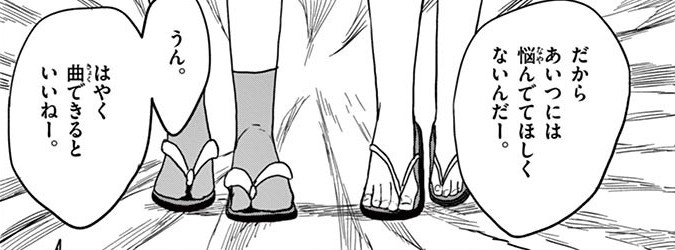
Kagetsu is overworking herself trying to write a song for her group’s upcoming performance.
With a typhoon passing by, she worries their outdoor stage may get ruined. Hototogisu offers to sneak out and check, and Mukuge goes with her.
Outside, Hototogisu says that Kagetsu stops humming when she’s worried, and it’s lonely without her humming.
- ホトトギス:
- 「だからあいつには悩んでてほしくないんだー。」
- “That's why I don't want her to be worrying.”
- ムクゲ:
- 「うん。はやく曲できるといいねー。」
- “Mm-hmm. It'd be nice if she could finish her song quickly.”
Kagetsu is overworking herself on a song for her group’s performance, and a passing typhoon threatens their outdoor stage. Hototogisu and Mukuge sneak out to check on it. Outside, Hototogisu says that Kagetsu stops humming when she’s worried, and it’s lonely without the humming.
あいつには marks Kagetsu, and the は sets her apart, “as for her”. 悩んでて is 悩んでいて with the い dropped, so the wish is about an ongoing state. Hototogisu doesn’t want Kagetsu to keep worrying.
The two negatives often overlap. ないでほしい targets the action. Said to the listener, it works as a request not to do something.
Asking to Be Allowed with 〜させてほしい
With a causative verb, てほしい means “I want you to let me”. 説明する becomes the causative 説明させる, “let someone explain”, and its て-form takes ほしい.
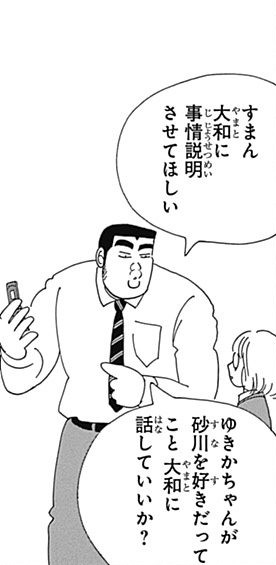
Takeo tries helping the girl who likes his friend Sunakawa. When Takeo receives a call from his own girlfriend, he realizes he’s alone with another girl.
- 猛男:
- 「すまん大和に事情説明させてほしい」
- “Sorry, I'd like you to let me explain the situation to Yamato.”
- 「ゆきかちゃんが砂川を好きだってこと大和に話していいか?」
- “Is it all right if I tell Yamato you like Suna?”
Takeo has been helping Yukika, a girl who likes his friend Sunakawa. When his girlfriend Yamato calls, he realizes he’s alone with another girl. すまん, “sorry”, opens his request to Yukika.
Watch the に here. 大和に marks who will hear the explanation, not who should act. Yukika is the one being asked to allow it, and she goes unmentioned because she’s the listener.
In polite speech, the same request would be 説明させてください, covered in 〜させてください. Takeo’s すまん and plain てほしい keep it casual. His next line, 話していいか?, asks again with 〜てもいい.
Asking What Someone Wants
In a statement, てほしい gives the speaker’s wish. In a question, it asks about the listener’s, and the person who would act is often the speaker. 手伝ってほしい? means “do you want me to help?”

Chinatsu gets home from school just as her mother is heading out to buy food for dinner. Chinatsu is invited to come along, but she says she’ll stay home as there’s a TV show she wants to watch.
- お母さん:
- 「じゃあ何か買ってきてほしい物ある?」
- “Then, is there anything you'd like me to buy?”
Chinatsu gets home just as her mother is leaving to shop for dinner. Chinatsu is staying home to watch a TV show, so her mother asks whether she wants anything. 買ってくる means “go buy and come back with”. 買ってきてほしい describes 物, “a thing you want me to buy”, and ある? asks whether there is one. The mother never says “me”. The question makes it clear whose wish it is and who would do the shopping.
A てほしい form can describe any noun this way, like an い-adjective. 読んでほしい本 is “a book I want you to read”.
Talking About Someone Else’s Wish
As with 〜たい, a plain statement with てほしい claims to know what’s in someone’s head. It sticks to the speaker’s own wish. To report someone else’s, quote it with って or と言っていた, or add らしい.
〜てほしがる describes a wish you can see in someone’s behavior, the same way 〜たがる does for たい. 弟がゲームを買ってほしがっている means “my little brother wants us to buy him a game”.
Softer Wishes with 〜てもらいたい and 〜ていただきたい
Said to the person who would act, てほしい works as a blunt request. Nearby patterns change the tone.
- 手伝ってほしい。
I want you to help.
- 手伝ってもらいたい。
I’d like you to help.
- 手伝っていただきたいです。
I would like you to help.
- 手伝ってもらえますか。
- Could you help?
〜てもらいたい combines 〜てもらう, “have someone do”, with たい. It means nearly the same thing as てほしい.

After a fight, Cocoa and Chino are finally on good terms again until Cocoa flips a pancake she’s cooking and it lands on Chino’s face. Soon after, Chino finds Cocoa face down on the table with a dying message written in ketchup.
- チノ:
- 「大変です!ココアさんがケチャップで死んでます!」
- “This is terrible! Cocoa's died in a pool of ketchup!”
- リゼ:
- 「構ってもらいたいんだよ真に受けるな」
- “She just wants attention from you, so don't take it seriously.”
Cocoa lies face down at the table next to a “dying message” written in ketchup, and Chino panics. Rize explains the stunt. 構う means “pay attention to someone”, so 構ってもらいたい means Cocoa wants someone to pay attention to her. 構ってほしい would mean the same thing. The んだ presents the wish as Rize’s explanation, which makes it natural to say about someone else.
〜ていただきたい is the humble form of 〜てもらいたい, common at work and in announcements. To someone above you, a bare 〜てほしい can sound like a demand, so a question such as 〜てもらえますか or 〜ていただけますか is the safer way to ask.
In casual speech, 〜てほしいんだけど turns a request into a hint, “I was hoping you’d…”, and lets the listener offer before being asked outright. Takagi’s ないでほしいんだけど above has the same shape.
Comparing てほしい with たい and ほしい
Japanese has three common ways to say “want”, and they split by what’s wanted.
| Pattern | Example | Meaning |
|---|---|---|
| 〜たい | 手伝いたい | I want to help |
| Noun + がほしい | 手伝いがほしい | I want help |
| 〜てほしい | 手伝ってほしい | I want you to help |
〜たい is for the speaker’s own action. ほしい alone is for a thing. 〜てほしい is for an action by someone else, or for something the speaker wants to happen.
Further Reading
- 〜てほしい To Express What You Want Someone To Do, Tofugu (tofugu.com)
- てほしい, Bunpro (bunpro.jp)
- Desire and Suggestions, Tae Kim's Guide to Learning Japanese (guidetojapanese.org)
Related Grammar
- Wanting to do with 〜たい
- たい wants to do something yourself. てほしい wants someone else to do it.
- Having someone do something with 〜てもらう
- 〜てもらいたい means nearly the same as てほしい. Humble 〜ていただきたい is the formal version.
- Someone else's desire with 〜たがる
- 〜てほしがる reports what someone else wants another person to do.
- Hoping with 〜といい
- といい hopes for an outcome without naming anyone who should act.
- Please let me with 〜させてください
- The polite request that matches casual させてほしい.
- Making and letting with 〜せる・〜させる
- The causative form gives させてほしい, "I want you to let me".
- Ongoing actions and resulting states with 〜ている
- 〜ていてほしい, often shortened to 〜ててほしい, wants a state to continue.
- Reasoning with 〜のだ
- てほしいんだ presents a wish as an explanation, and てほしいんだけど leads into a request.