いざ〜となると means “when it actually comes to ~”. Something that was only planned or imagined now has to be done for real. The reaction often differs from what was expected: hesitation, nerves, or finding it harder than it looked.
Usage Notes
いざ stresses that this is for real, not just talk or plans. となると sets up the point where you actually have to do it, which may still be just ahead: in いざ買うとなると, “when it actually comes to buying it”, the speaker hasn’t bought anything yet.
いざ comes first, then a dictionary-form verb or a noun naming the occasion, then となると. When the context makes the occasion clear, いざとなると stands alone.
On its own, いざ is also an old-fashioned “Now then!” or “Here goes!” said before starting something, as in いざ、勝負! That use isn’t covered here.
Formation
View formation details
いざ + Verb (dictionary form) + となると
いざ告白するとなると、何も言えなくなる。
"When it actually comes to confessing, I can't say a thing."
いざ + Noun + となると
いざ本番となると緊張する。
"When it's actually time for the performance, I get nervous."
いざとなると
いざとなると彼は頼りになる。
"When it counts, he's dependable."
When It Actually Comes to Doing It
いざ + dictionary-form verb + となると means “when it actually comes to doing it”. The speaker has reached the point of really doing something they had only thought or talked about before. The action doesn’t have to have started.
What follows is usually a reaction that differs from what was expected: hesitation, nerves, or finding it harder than it looked. A contrast with the earlier expectation often comes first, with が, けど, or でも: 言うのは簡単だが、いざやるとなるとなかなかできない, “It’s easy to say, but when it actually comes to doing it, it’s hard.”
A noun naming the occasion can take the verb’s place: いざ本番となると, “when it’s actually time for the performance”, or いざ出発となると, “when it’s actually time to leave”.
となれば and となったら attach the same way and keep this meaning: いざ家を買うとなったら、かなりの資金が必要だ, “When it actually comes to buying a house, you need a lot of money.” Only the bare いざとなれば and いざとなったら lean toward “if it comes to that”, covered below.
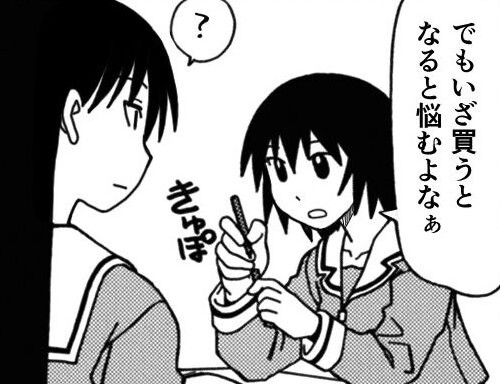
Flipping through a catalog in the classroom, Kagura tells Sakaki she wants a mountain bike and points out one she likes. She has saved up her New Year’s money and earned a little from a part-time job.
神楽:
「でもいざ買うとなると悩むよなぁ」
“But when it actually comes to buying one, it's hard to decide.”
Kagura wants a mountain bike and has saved up for one, but she still can’t settle on which to get. いざ買うとなると points to the moment she actually has to buy, and 悩む is the hesitation she didn’t expect.
Once It’s Really Happening with Other Conditionals
いざ also comes before a clause ending in the conditional と or たら, often after 〜てみる. These often tell what happened once the moment arrived: いざ人前に出ると、足がすくんでしまった, “Once I actually got in front of people, my legs froze.”
Here too, things can turn out better than expected: いざやってみると案外簡単だった, “When I actually tried it, it was easier than I thought.”
Example 1 of 3: Embarrassing to say out loud with いざ口にすると
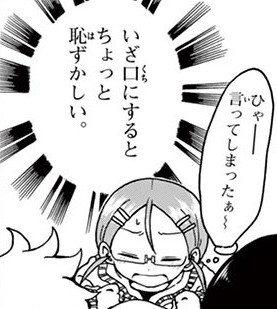
Yukari is having a sleepover with Mina and Sanae and wants them to stay up talking like on a school trip. When Sanae says she came prepared, Yukari hopes for love stories, but Sanae tells a ghost story instead. Fed up, Yukari blurts out that they should be talking about crushes.
ユカリ:
「ひゃー 言ってしまったぁ〜」
“Eek! I went and said it~”
「いざ口にするとちょっと恥ずかしい。」
“Now that I've actually said it out loud, it's kind of embarrassing.”
At a sleepover, Yukari has been angling for love talk all night, and she finally blurts out that they should talk about crushes. 口にする means “say out loud”. いざ marks the moment the wish became real, and と tells what she felt once it did: she’s embarrassed.
Example 2 of 3: Excited now that the day is here with いざ当日になってみると
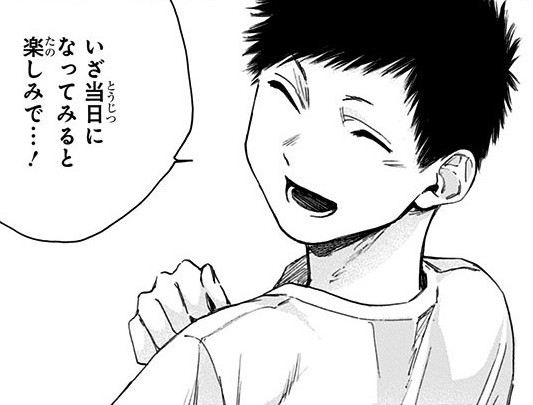
The badminton tournament Taiki has been training for starts today. Chinatsu, who lives at his family’s house, gets up early and finds him already outside doing radio calisthenics. He tells her he couldn’t sit still, and that he thought he’d be tense and stiff with nerves.
大喜:
「いざ当日になってみると楽しみで…!」
“But now that the day's actually here, I'm excited...!”
On the morning of his badminton tournament, Taiki tells Chinatsu he expected to be stiff with nerves. いざ当日になってみると, “now that the day’s actually here”, sets the real day against what he pictured, and the surprise runs the good way: he’s excited.
Example 3 of 3: Nobody in the interview room with いざ入ったら
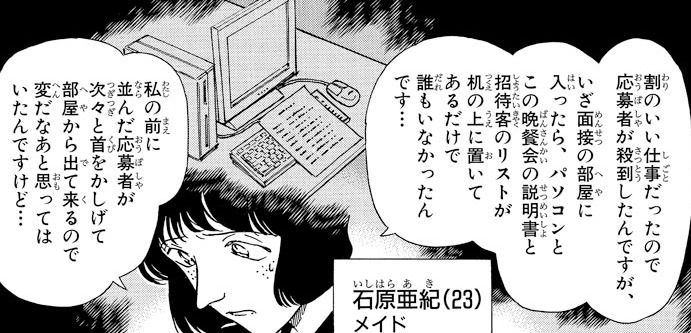
Kogoro, Ran, and Conan have arrived at a remote mansion whose owner has invited several famous detectives to dinner. The maid who greets them admits she has never met the owner. Asked about the guest list, she says she was given it at her job interview, and that the interview was a strange one.
“It paid well, so applicants came flooding in. But when I actually went into the interview room, there was just a computer, instructions for this dinner party, and the guest list on the desk. Nobody was there…”
「私の前に並んだ応募者が次々と首をかしげて部屋から出て来るので変だなあと思ってはいたんですけど…」
“The applicants in line ahead of me came out of the room one after another, looking puzzled, so I did think it was odd…”
The maid at a remote mansion explains how she got her job. After waiting in line with a crowd of applicants, she finally walked into the interview room. いざ marks the moment the interview should have started, and たら leads to what she found: papers on a desk and nobody there.
When It Counts with いざとなると
いざとなると stands alone when the context makes the occasion clear: “when it comes down to it” or “when it really matters”. It often describes how someone tends to act at the decisive moment: いざとなると緊張して何も言えない, “When it really matters, I get nervous and can’t say anything.” Casual speech says いざってなると.
The result can also be better than expected: いざとなると彼は意外と冷静だ, “When it counts, he’s surprisingly calm.”
Example 1 of 2: Anxious now that it's real with いざとなると
Yukari, Mina, and Sanae have been following Takagi’s family home. Watching them, Yukari sighs that she wants a marriage like that. When Takagi catches them, Yukari admits she hoped to learn the secret to a happy marriage, then reveals she’s getting married soon. Takagi congratulates her, and Mina starts to answer for her.
ミナ:
「すっかりマリッジブルーになっちゃって。」
“She's got a full-blown case of marriage blues.”
ユカリ:
「いざとなるとすっごく不安なのよ〜」
“Now that it's actually happening, I'm sooo nervous!”
Yukari has always wanted a marriage like Takagi’s, and now her own wedding is coming up. いざとなると needs no verb here, since everyone knows the occasion. Now that the wedding is real, she’s 不安, “anxious”.
Example 2 of 2: Scared when it comes down to it with いざとなると
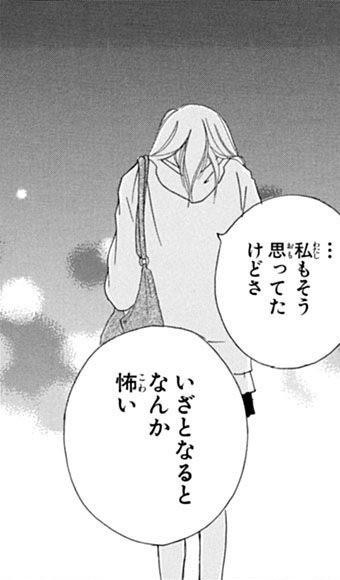
Sayu sees her boyfriend Daiki leaning close to another girl’s face, as if kissing her, and runs off. Her friends catch up. One insists Daiki was only getting something out of the girl’s eye, but Sayu keeps asking what she’ll do if they really were kissing. Ninako reminds her that she once said she’d fight anyone who came to take Daiki away.
さゆ:
「…私もそう思ってたけどさ」
“...I thought so too, but...”
「いざとなるとなんか怖い」
“Now that it's actually happening, I'm kind of scared.”
Sayu once said she’d fight anyone who tried to take her boyfriend Daiki, and now another girl may really be after him. She thought she’d fight too, but いざとなると, now that it’s actually happening, she’s 怖い, “scared”.
If It Comes to That with いざとなったら and いざとなれば
いざとなったら and いざとなれば usually mean “if it comes to that” or “if push comes to shove”. In this use, the speaker often pictures an emergency or a tough spot, and what follows is a backup plan or reassurance: いざとなったら僕が助けてあげよう, “If it comes to that, I’ll help you.”
いざという時, casually いざって時, names that moment: “when it really matters” or “in an emergency”, as in いざという時に備える, “to prepare for an emergency”.
いざとなったら can also tell what happened when the moment came, the same as いざとなると: 告白しようとしたが、いざとなったら何も言えなくなった, “I tried to confess, but when the moment came, I couldn’t say anything.”
Example 1 of 2: If anything happens, Conan will protect me with いざとなったら
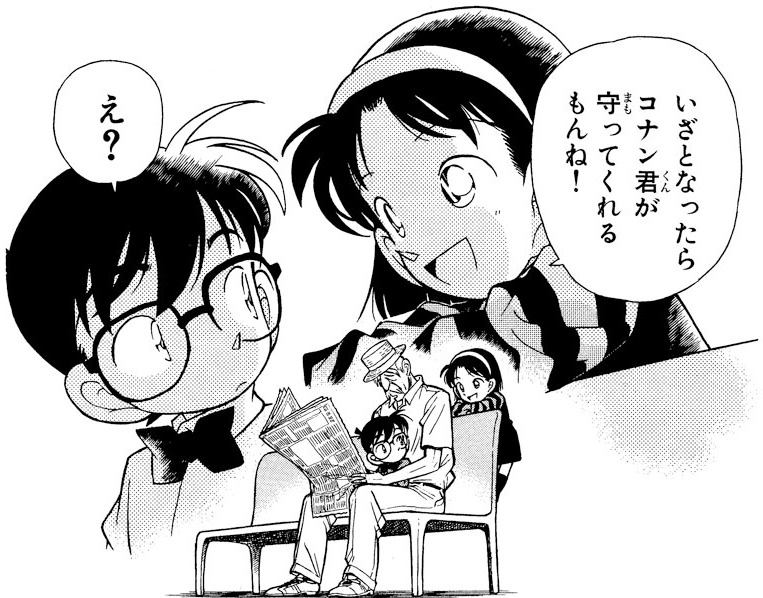
During a game of hide-and-seek in the park, Conan hides on a bench behind an old man’s newspaper. The paper reports a fourth victim of a kidnapper who kills pretty girls. Ayumi is hiding on the same bench. She jokes that a girl like her must be in real danger, but says she isn’t worried.
Ayumi and Conan are hiding on the same bench, behind a newspaper about a kidnapper who targets pretty girls. Ayumi admits she could be next, but she isn’t worried. いざとなったら pictures the kidnapper actually coming for her, and the backup plan is Conan: コナン君が守ってくれる, “Conan will protect me”.
Example 2 of 2: Awakening hidden power with いざとなれば
Nagi and Maria have dressed Hayate up as a cat-eared girl. Klaus, the head butler, has warned that a Sanzenin butler must always act like a man, and Hayate fears he’ll be fired if Klaus sees him like this. Klaus spots him in the garden, takes him for an intruder, and gives chase. The outfit slows Hayate down, so he ties a cloth over his face to fight back unrecognized, only to find he can’t see.
ハヤテ:
「ええい!! 人間いざとなれば眠れる力が目覚めるはず!!」
“Argh!! When push comes to shove, a person's hidden power is bound to awaken!!”
Hayate, dressed as a cat-eared girl, is fleeing Klaus and can’t let himself be recognized. He ties a cloth over his face to fight back, then finds he can’t see. いざとなれば pictures a desperate moment like this one, and what he counts on is hidden strength: 眠れる力が目覚めるはず, “a person’s hidden power is bound to awaken”.