While with 〜うちは
Grammar: Time and Sequence » 〜うちは
〜うちは frames a condition as true during one period and implies that things may change after it ends: “while” or “as long as”.
Usage Notes
〜うちは frames a condition as true only during a certain period. It implies that things may change once that period ends.
It is used for contrasts like “while I’m a student”, “while it’s still bright”, or “as long as this condition holds”.
Further Reading
- How to use うちに & うちは (maggiesensei.com)
Related Grammar
-
During with うちに
- Used when referring to a period of time, especially when taking advantage of an opportunity.
-
During the same time with 間に
- Used when one action takes place during another.
- Concurrent events with ながら
Examples
When you're small with 〜うちは
Grammar Explanation: While with 〜うちは
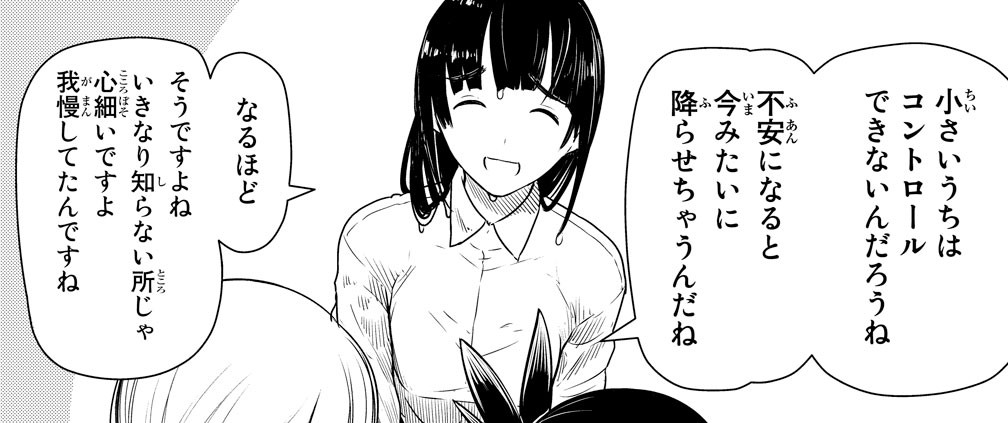
During a visit with Anzu’s family, Makoto receives a request to babysit for another witch. Things are fine at first, but after a while, rain begins to pour inside. Anzu’s mother realizes that the child they’re watching over has rain magic.
- 杏子の母:
- 「小さいうちはコントロールできないんだろうね。不安になると今みたいに降らせちゃうんだね」
- “You don't have control while you're small, right? When he's uneasy, it pours like just now.”
- 真琴:
- 「なるほど。そうですよね。いきなり知らない所じゃ心細いですよ。我慢してたんですね」
- “I see. So that's it. It's a little scary suddenly being in a place you don't know. You've been patient, haven't you?”