Without doing and please don't with 〜ないで
Grammar: Negation » 〜ないで
〜ないで is a verb’s negative form plus で. It has two main jobs.
At the end of a sentence, it asks someone not to do something: 行かないで!, “don’t go!” Add ください for the polite version: 行かないでください, “please don’t go”.
In the middle of a sentence, it says one action happens without another, or instead of another: 傘を持たないで出かけた, “I went out without an umbrella”. 〜ずに means the same thing and is common in writing.
Usage Notes
ないで works the way the て-form does, but for an action that doesn’t happen. 見て can end a request (“look”) or link two actions (“look, and then…”). 見ないで does the same: “don’t look” or “without looking”.
As a request, bare ないで is casual, for friends, family, and people below the speaker. ないでください is the polite version, and it can be caring, as in 心配しないでください, “please don’t worry”. Compared with the prohibitive な, 行くな, which is an order, ないで asks.
Between clauses, ないで describes how an action is done or what’s done instead. To give a reason, as in “I couldn’t, so…”, Japanese normally uses なくて. The last section compares the two.
Some lookalikes aren’t this ないで. じゃないでしょ is じゃない plus でしょ. 〜ないではいられない is “can’t help doing”, and 〜ないでもない is “it’s not that I won’t”, as in 行かないでもない, “I might go”.
Formation
View formation details
- Verb (ない-form) + で
- 泣かないで
- "don't cry"
- Verb (ない-form) + で + ください
- ここで写真を撮らないでください
- "please don't take pictures here"
- Verb (ない-form) + で + verb
- 朝ご飯を食べないで学校に行った
- "I went to school without eating breakfast"
- Verb (ない-form minus ない) + ずに (する → せずに)
- 何も言わずに帰った
- "I went home without saying anything"
- Verb (て-form) + (い)ないで + command
- 寝てないで手伝って
- "quit lying around and help"
Please Don’t with 〜ないで
On its own at the end of a sentence, ないで asks someone not to do something. 行かないで is “don’t go”. It’s ないでください with ください dropped, so it belongs to casual speech with friends, family, and people below the speaker.
ね after it makes a friendly reminder: 食べないでね, “don’t eat it, okay?” To report a request, add って or と: 短くしないでって言った is “I told them not to make it short”.
Example 1 of 2: Visiting at every break with 〜ごとに
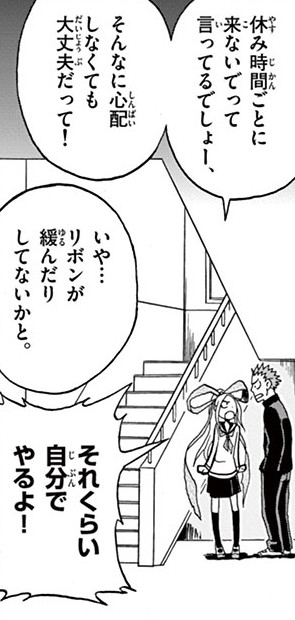
Due to concern about his sister’s ribbon, which seals away her need to attack people for their blood, Kenji takes every opportunity he can to check up on her at school.
- キョーコ:
- 「休み時間ごとに来ないでって言ってるでしょー、そんなに心配しなくても大丈夫だって!」
- “I'm telling you, you don't need to check up on me every break period. I'll be fine even without you worrying about me!”
- ケンジ:
- 「いや… リボンが緩んだりしてないかと。」
- “No, I'm just checking whether your ribbon's come loose.”
- キョーコ:
- 「それくらい自分でやるよ!」
- “I can handle that much on my own!”
Kyouko’s brother Kenji keeps checking on her at school to make sure the ribbon that seals her vampire urges hasn’t come loose. 来ないで is “don’t come”. Kyouko has told him this before, so she quotes it with って and adds 言ってるでしょー, “I keep telling you!”
Example 2 of 2: Just call me Grandma with 〜てちょうだい
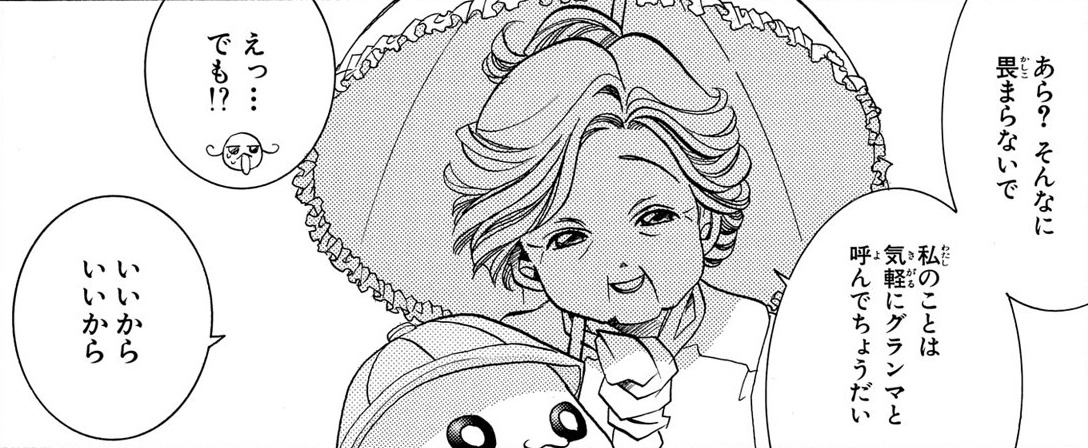
Akari, Aika, and Alice have come to the countryside to train under Grandma, the legendary undine who founded Aria Company. When she greets them by name, Akari blurts out, “Are you… Grandma?” Aika scolds her, then introduces herself with stiff formality, calling the woman “the illustrious Grandmother”, and saying it is an honor to meet her.
- グランマ:
- 「あら? そんなに畏まらないで」
- “Oh? There's no need to be so formal.”
- 「私のことは気軽にグランマと呼んでちょうだい」
- “Feel free to just call me Grandma.”
- 藍華:
- 「えっ… でも!?」
- “Huh? But...!?”
- グランマ:
- 「いいから いいから」
- “Never mind that, it's fine.”
Aika has just introduced herself to the founder of Aria Company in her stiffest polite Japanese. Grandma tells her 畏まらないで, “don’t be so formal”. It’s a kindly older woman speaking to a young apprentice, and the request is for Aika’s sake.
Pushing Back with 〜ないでよ
With よ, ないで often objects to something the listener is doing or has just done. よ presses the point on the listener, so 変なこと言わないでよ is “don’t say weird stuff!” The same よ can follow ないでください, as in 驚かさないでくださいよ, “don’t scare me like that”.
Example 1 of 2: Don't suspect only me with 〜だけ
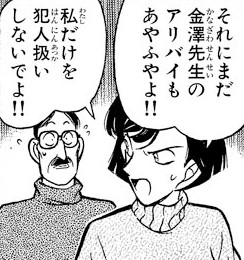
In a snow-covered mountain villa, a room full of suspects listen as Detective Mouri explains how their host was murdered. The accused notes she has a receipt showing she was at the convenience store at the bottom of the mountain when the murder took place.
- 中原:
- 「それにまだ金澤先生のアリバイもあやふやよ!!」
- “Moreover, Mr. Kanazawa's alibi is also vague!”
- 「私だけを犯人扱いしないでよ!!」
- “Don't treat only me as the suspect!”
Detective Mouri is going over a murder in a snowbound mountain villa, and Ms. Nakahara is under suspicion. She points out that another suspect’s alibi is shaky too. 犯人扱いする is “to treat someone as the culprit”. With よ and two exclamation marks, her ないで is a protest against what the detective is already doing.
Example 2 of 2: No one in a ruin like this with 〜わけない
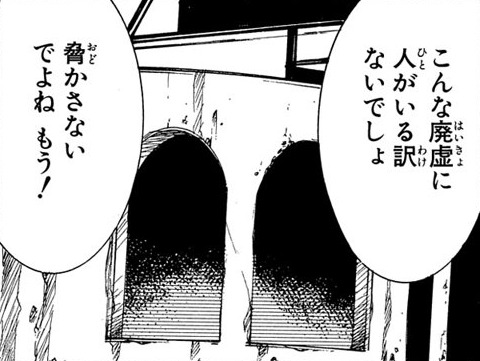
While chasing President Aria in a training gondola, Akari and Aika follow a narrow canal and come out among the ruins of an old settlement from the days when Aqua was still called Mars. Akari glances up at a pair of empty windows and says she felt as if someone was watching them.
- 藍華:
- 「こんな廃虚に人がいる訳ないでしょ」
- “There's no way anyone's in a ruin like this.”
- 「脅かさないでよね もう!」
- “Don't scare me like that, geez!”
Akari and Aika have followed a canal into the ruins of an old settlement, and Akari says she felt as if someone was watching them from the empty windows. Aika says no one could be in a place like this, then tells Akari off for scaring her. 脅かす is “to scare”, so 脅かさないで is “don’t scare me”. よね presses the complaint, and もう! is pure exasperation.
Adding ください, くれ, or ちょうだい
ないで takes the same request words as the て-form, and each one sets the tone the same way.
| Form | Who uses it |
|---|---|
| 見ないで | friends, family, people below the speaker |
| 見ないでくれ | mostly men, to people close to them or below them |
| 見ないでちょうだい | more often women, to people close to them or below them, like a parent to a child |
| 見ないでくれる? 見ないでもらえる? | friends, as a question |
| 見ないでください | polite, but direct: signs, building staff to users, doctors to patients, teachers to students |
| 見ないでいただけますか | strangers and superiors, as a careful request |
Older speakers in manga sometimes use ないでおくれ, an old-fashioned くれ.
ないでください doesn’t ask what the listener wants, so as an instruction it fits settings where the listener is expected to comply. To a superior, a question form like ないでいただけますか is safer.
The limit falls away when ないでください is a plea, as in どうか怒らないでください, “please don’t be angry”, or when it looks after the listener. 心配しないでください, “please don’t worry”, and 無理しないでください, “please don’t push yourself”, are fine to anyone.

Cocoa buys Chino a puzzle to make up for finishing the one Chino had been working on. The two and their friends work at putting the new puzzle together.
- チノ:
- 「ココアさんさっきからピース見つめながら動かない…」
- “Cocoa-san has been staring at the puzzle piece while not moving for a while now...”
- 「その…責任取ろうと無理しないでください」
- “Um... Please don't push yourself trying to take responsibility.”
Cocoa finished the jigsaw puzzle Chino had been working on, so she bought Chino a new one to make up for it. Now Cocoa has been frozen over a single piece for a while. Chino tells her not to push herself trying to take responsibility. This is the caring ないでください: Chino is thinking of Cocoa, not herself.
Without Doing
In the middle of a sentence, ないで describes how the next action is done: without doing something. 傘を持たないで出かけた is “I went out without an umbrella”. 寝ないで待ってた is “I waited up without sleeping”. The same person does both things.
なくて doesn’t work here. 朝ご飯を食べないで行った is “I went without eating breakfast”, but 食べなくて行った sounds wrong.
も after the object is common and adds “even”: 挨拶もしないで帰った is “left without even saying goodbye”, which often sounds like a complaint.
Instead of Doing
ないで can also mean “instead of”. The first verb names what you’d expect, and the second says what happens in its place. 電車に乗らないで歩いて帰った is “I walked home instead of taking the train”.
Here the two halves can have different subjects: 森部長は来ないで、林副社長が来た, “Mori didn’t come; Hayashi came instead”. In this use, なくて works too.
It often carries criticism: 勉強しないで遊んでばかりいる, “he just plays instead of studying”.
A common casual version puts ないで after a て-form: 〜て(い)ないで. It names something the listener is doing right now and follows with what they should do instead, usually as a command. ぼーっとしてないで手伝って is “quit spacing out and help”. Rough speakers say てねえで or てねーで.
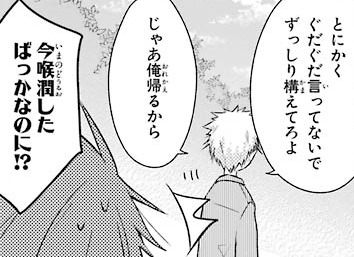
Fujimiya’s mother has asked Hase to meet her at the park on Sunday, and he’s anxious about what she wants. On Saturday he calls Kiryuu out to the same park to talk it over. Kiryuu, thirsty and without his wallet, gets Hase to buy him a drink. Hase admits he could have just phoned, but he wanted Kiryuu to set him straight in person.
- 桐生:
- 「とにかく ぐだぐだ言ってないで ずっしり構えてろよ」
- “Anyway, quit whining and hold steady.”
- 「じゃあ俺帰るから」
- “Okay, I'm heading home.”
- 長谷:
- 「今喉潤したばっかなのに!?」
- “You only just wet your whistle, and you're leaving?!”
Hase has called Kiryuu out to the park to talk about a meeting with Fujimiya’s mother that has him worried. ぐだぐだ言う is “to grumble on and on”, and 言ってないで tells Hase to quit doing it. The second half says what to do instead: ずっしり構えてろ, “hold steady”, a plain command with よ.
The Written Form 〜ずに
ずに does the same linking jobs as ないで, “without” and “instead of”, with the same subject in both halves. It’s common in writing, and it’s heard in speech too. To form it, replace ない with ずに: 言わない becomes 言わずに. する is the exception: it becomes せずに, not しずに. 来る becomes 来ずに.
A few set phrases use ずに even in casual talk. まあ、そう言わずに is “come on, don’t say that”, used to coax someone, with the rest of the sentence left unsaid. 遠慮せずに is “without holding back”.

As a form of exam, Makoto is tasked with catching a plush bear that’s skilled at escaping.
- 支部長:
- 「魔法は使わずに制限時間は1時間よ」
- “Your time limit is one hour during which you cannot use magic.”
Makoto’s exam is to catch a stuffed bear that’s good at escaping, and the branch chief is laying down the rules. 魔法は使わずに is “without using magic”. The verb it describes goes unsaid: Makoto has to catch the bear, and do it without magic.
Expressions Built on ないで
A few expressions follow ないで and keep its “without doing” sense.
- 〜ないでいる is “stay without doing” or “keep not doing”. 誰にも言えないでいる is “I haven’t been able to tell anyone”.
- 〜ないでおく is “leave something undone on purpose”. It’s 〜ておく after ないで. That’s not the same as 〜ておかない, “not do ahead of time”. 今は聞かないでおこう is “I won’t ask for now”.
- 〜ないですむ is “get by without having to”, usually about avoiding something unwelcome. 怒られないですんだ is “I got away without being scolded”.
- 〜ないでいい is “you don’t have to”, the same as 〜なくていい. 気にしないでいいよ is “don’t worry about it”.
ないで or なくて
Both are negative て-forms, so learners often mix them up. Use ないで for how someone does something, and なくて for what caused a feeling or a result.
| ないで | なくて | |
|---|---|---|
| “without doing” | 朝ご飯を食べないで来た | ✗ |
| “please don’t” | 行かないで | ✗ |
| “instead of” | 部長は来ないで、副社長が来た | 部長は来なくて、副社長が来た |
| cause | limited: casual speech, before words like 困る | 会えなくて残念だ |
| adjectives and nouns | ✗ | 高くなくて, 学生じゃなくて |
友達に会えなくて残念です, “it’s a shame I couldn’t see my friends”, gives the reason for a feeling, so it takes なくて. Casual speech sometimes uses ないで for a reason before words like 困る, but it often sounds wrong, so stick with なくて.
Further Reading
- 〜ないで(要求), 日本語文型バンク (NINJAL) (ninjal.ac.jp)
- 〜ずに, 日本語文型バンク (NINJAL) (ninjal.ac.jp)
- 文法を楽しく!! 「〜て〜」(2), 日本語教育通信 57 (Japan Foundation) (jpf.go.jp)
- Vないでください, 東京外国語大学言語モジュール (coelang.tufs.ac.jp)
- ないで, デジタル大辞泉 and 精選版 日本国語大辞典 (Kotobank) (kotobank.jp)
Related Grammar
- Negation with 〜ない
- How to make the ない-form that ないで is built on.
- Requests with 〜てください and 〜てくれ
- The positive partner. 行ってください asks someone to go. 行かないでください asks them not to.
- The prohibitive な
- 行くな orders someone not to go. 行かないで asks them not to.
- Want you to do something with 〜てほしい
- 〜ないでほしい, "I want you not to", is a more indirect way to ask someone not to do something.
- Doing in advance with 〜ておく
- ておく can follow ないで. 〜ないでおく means "leave something undone on purpose".
- Connecting actions with 〜て・〜で
- ないで links actions the way the て-form does, for an action that doesn't happen.