Worth it with 〜甲斐がある
Grammar: Appraisal
The noun 甲斐 means “worth” or “effect”. 甲斐がある says that the time or effort spent on something produced a worthwhile result. In English, it often means “be worth doing” or “pay off”.
Usage Notes
Use 〜甲斐がある when a result justifies hard work, practice, waiting, or another investment of time. The negative form 〜甲斐がない means “not worth it” or “pointless”.
After a noun, add の: 「noun の甲斐がある」. A preceding verb may use its dictionary form (待つ), completed form (待った), or stem (待ち). After a verb stem, かい becomes がい. Writers often use hiragana instead of the kanji, and speakers may drop 「が」.
Formation
View formation details
-
Verb (dictionary form) + 甲斐がある
- 登る甲斐があると思う
- "I think it's worth climbing."
-
Verb (past tense) + 甲斐がある
- 協力した甲斐があった
- "My effort paid off."
-
Verb stem + がい + がある
- 教えがいがある
- "It's rewarding to teach."
-
Noun + の + 甲斐がある
- 準備の甲斐がある
- "The preparation was worthwhile."
-
Negative form: Verb (past/dictionary form) + 甲斐がない/甲斐もなく
- 協力の甲斐もなく、失敗した
- "Despite my effort, it failed."
Further Reading
- 甲斐がある (JLPT N2) | Bunpro – Japanese Grammar Explained (bunpro.jp)
- 【JLPT N2】文法・例文:〜かいあって / 〜かいもなく (nihongokyoshi-net.com)
- 【N2文法】~甲斐がある/~甲斐があって/~甲斐がない/~甲斐もなく (mainichi-nonbiri.com)
- 【JLPT N2】「かいがある」「がいがある」 (jn1et.com)
Examples
Worth making a meal with 〜甲斐がある
Grammar Explanation: Worth it with 〜甲斐がある
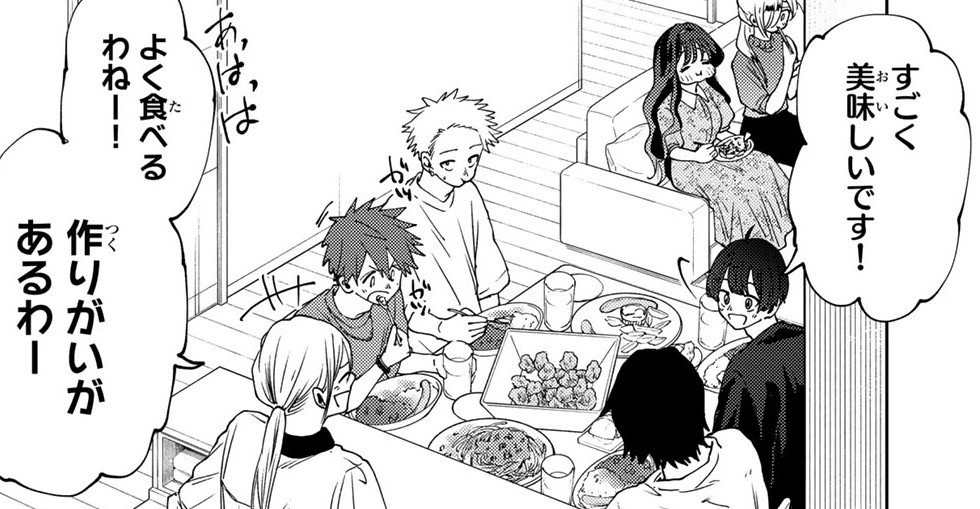
Rintaro’s mother is overjoyed when her son has friends over for the first time in his life. She prepares a large meal for them to eat.
- 絢斗:
- 「すごく美味しいです!」
- “This is incredibly delicious!”
- 杏子:
- 「よく食べるわね! 作りがいがあるわー」
- “You sure do eat a lot! It makes cooking worthwhile!”
Worth selecting a costume with 〜がいある
Grammar Explanation: Worth it with 〜甲斐がある
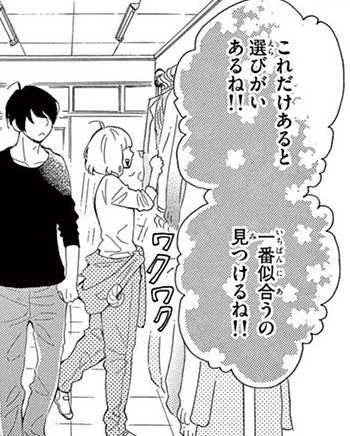
As a member of the student council, Hitsuji comes up with the idea of having a cosplay theme to help build up excitement among students for the school’s sports day. However, Fujiwara, the student council president, fails to dress up. Upon hearing him say he doesn’t has a costume prepared, one of the drama club students suggests he pick from their club’s costumes. While Fujiwara isn’t enthusiastic at the prospect of dressing up, Hitsuji is excited by the club’s wide selection.
- ヒツジ:
- 「これだけあると選びがいあるね!!一番似合うの見つけろね!」
- “When there are this many, it's worth it to choose from! Let's find the one that suits you best!”
Worth teasing with 〜甲斐がある
Grammar Explanation: Worth it with 〜甲斐がある
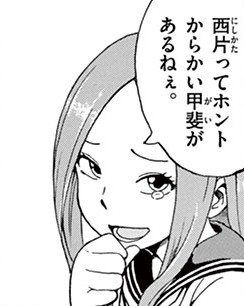
Takagi teases Nishikata, causing him to jump up from his chair and get scolded by the teacher. After sitting back down, Nishikata demands to know why Takagi is laughing.
- 高木:
- 「西片ってホントからかい甲斐があるねぇ。」
- “Teasing you really is worth it.”