Putting on an innocent act with 猫を被る
猫を被る refers to hiding one’s true personality and acting gentle and docile. It can also mean pretending not to know something, similar to “play innocent” in English.
Literal Meaning
The expression translates word for word as “wear a cat”. The verb 被る means to put something on the head, creating the image of wearing a cat’s quiet appearance over one’s true character.
Usage Notes
This idiom is used when someone shows unusual restraint around anyone they want to impress.
猫を被っている describes the ongoing act, and can also be used to refer to oneself. 猫を被っていた looks back on a period when the person kept up the appearance. The noun 猫被り labels a person who puts on this kind of act.
Dictionary Definition
本性をかくしておとなしそうに見せる。また、知っていながら知らないふりをする。
To hide one's true nature and make oneself look meek. Also, to pretend not to know something despite knowing it.
精選版 日本国語大辞典
Examples
Being innocent at school with 猫を被る
Idiom Explanation: Putting on an innocent act with 猫を被る
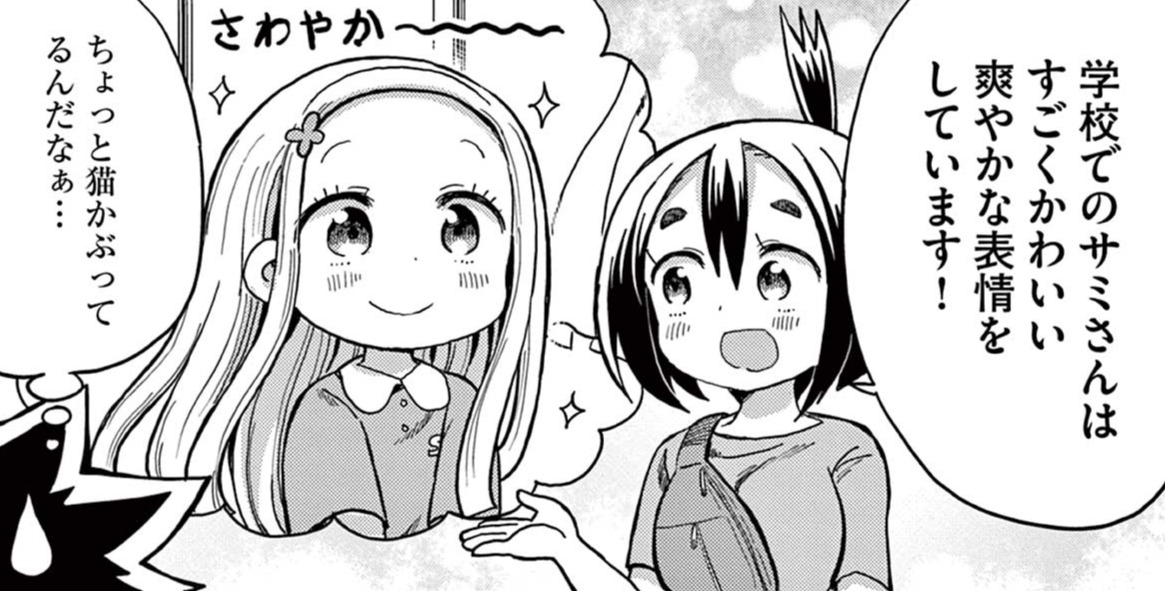
Sami and her father go to the park to play. There, they see Sami’s teacher. The teacher is surprised to see Sami’s rambunctious behavior, as it’s different from the Sami she sees at school.
- 先生:
- 「学校でのサミさんはすごくかわいい爽やかな表情をしています!」
- “At school, Sami has such a cute and delightful expression!”
- パパ:
- 「ちょっと猫かぶってるんだなぁ…」
- “She's just putting on a front, isn't she...”