Absence and nothingness with 無
無 means a state where an object or action lacks purpose, value, or effect. It expresses that no matter how hard you try, it will not lead to results, or that something makes no sense (nonsense).
- Grade 4
- WaniKani level 17
- 12 strokes
Words with 無
- Limits and Possibility
- 無理 むり Impossible
- 無限 むげん Infinity
- Presence and Omission
- 無事 ぶじ Safety
- 無料 むりょう Free of charge
- 無断 むだん Without permission
- Value and Meaning
- 無駄 むだ Waste
- 無意味 むいみ Meaningless
- Attention and Distinction
- 無視 むし Ignore
- 無差別 むさべつ Indiscriminate
- 無差別殺人 むさべつさつじん Indiscriminate murder
- Ability and Knowledge
- 無能 むのう Incompetent
- 無知 むち Ignorance
The bold kana are the part 無 contributes. Words in a dashed box have no manga example yet.
How to Read 無
む is the reading to try first. ぶ belongs to a smaller set of words, and 無事 is the one you will meet most. Others are 無礼, 無難, and 無愛想.
無い and 無し are ない and なし written in kanji. They mean what the kana mean.
Limits and Possibility
無理 (むり) (Impossible)
無理 means impossible, unreasonable, or too demanding. In conversation, it can mean “that’s impossible” or warn someone not to push too hard.
It combines 無 (without) with 理 (reason) to show something without reasoning.
Example 1 of 4: Can't let you push yourself with 〜させられない
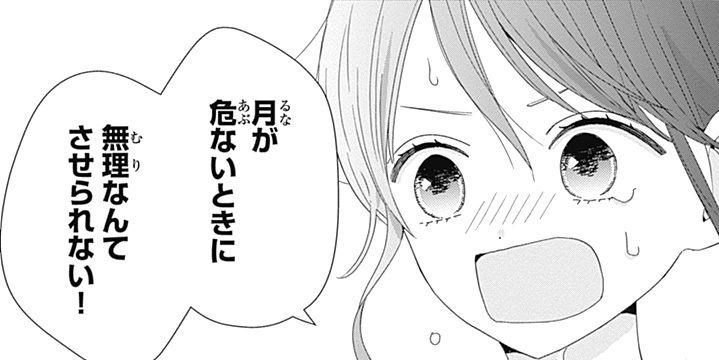
Ayumu and Luna end up hiding in a hot spring bath while two other boys soak nearby, and Luna overheats waiting for them to leave. When the boys finally go, Luna is too dizzy to walk, but he won’t let Ayumu go out first to get help, because then someone would see her. Seeing him suffer for her sake, Ayumu stands up.
- 歩:
- 「月が危ないときに無理なんてさせられない!」
- “You're in trouble, Luna! I can't let you push yourself like this!”
Example 2 of 4: Even looking like a trap with 〜さえ
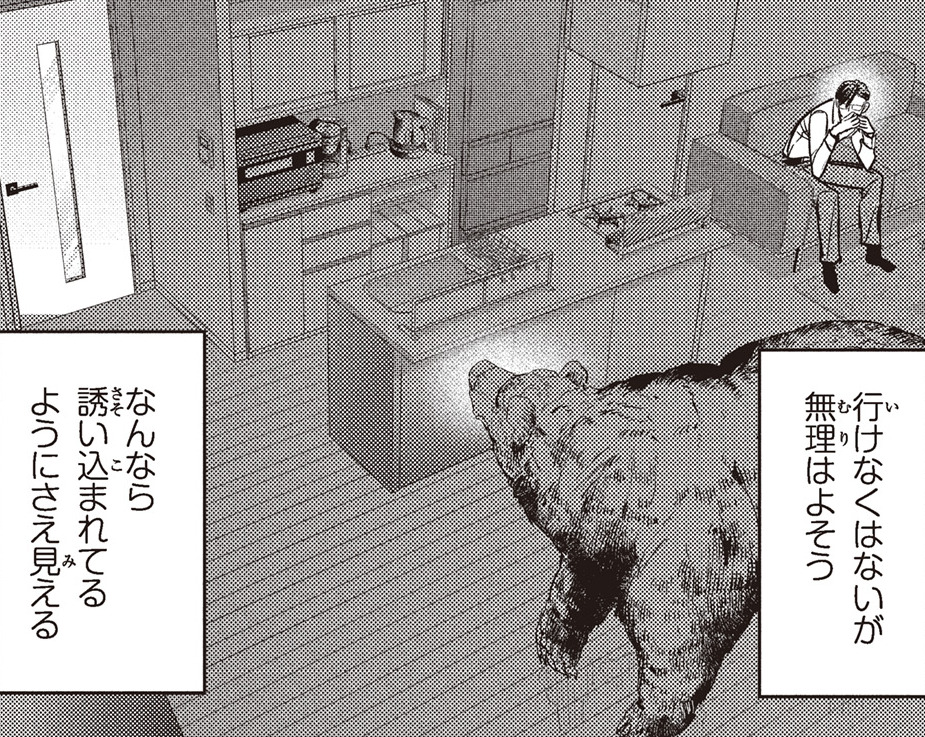
Kumada comes home from work to find a huge, very real bear in his apartment. A cup of coffee doesn’t calm him down. He tells himself to sort out the situation, admits he knows nothing about bears and has no physical strength to speak of, and resolves to raise his odds of survival. His first concern is an escape route.
- 熊田:
- 「行けなくはないが無理はよそう」
- “I could make it, but let's not push my luck.”
- 「なんなら誘い込まれてるようにさえ見える」
- “If anything, it even looks like I'm being lured in.”
Example 3 of 4: I'd totally die in the heat with 〜じゃう
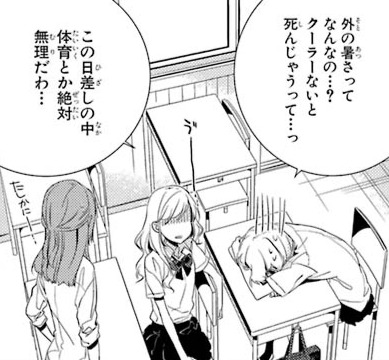
On a summer day, Hori and her friends in class can’t ignore the heat.
- 由紀:
- 「外の暑さってなんなの…? クーラーないと死んじゃうって…っ」
- “What's with this heat outside...? I'd totally die without the AC...”
- 「この日差しのなか体育とか絶対無理だわ…」
- “There's no way I can do PE in this blazing sun...”
Example 4 of 4: Not moving while staring with 〜ながら
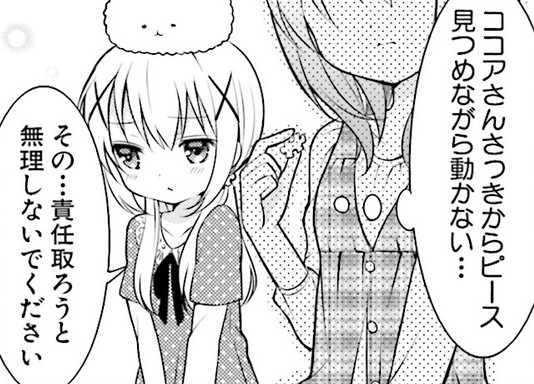
Cocoa buys Chino a puzzle to make up for finishing the one Chino had been working on. The two and their friends work at putting the new puzzle together.
- チノ:
- 「ココアさんさっきからピース見つめながら動かない…」
- “Cocoa-san has been staring at the puzzle piece while not moving for a while now...”
- 「その…責任取ろうと無理しないでください」
- “Um... Please don't push yourself trying to take responsibility.”
Presence and Omission
無事 (ぶじ) (Safety)
無事 describes being safe and unhurt, with nothing going wrong.
It combines 無 (without) with 事 (incident) to show being without incident.
Example 1 of 2: Furthermore, it's just a bonus item with それに〜
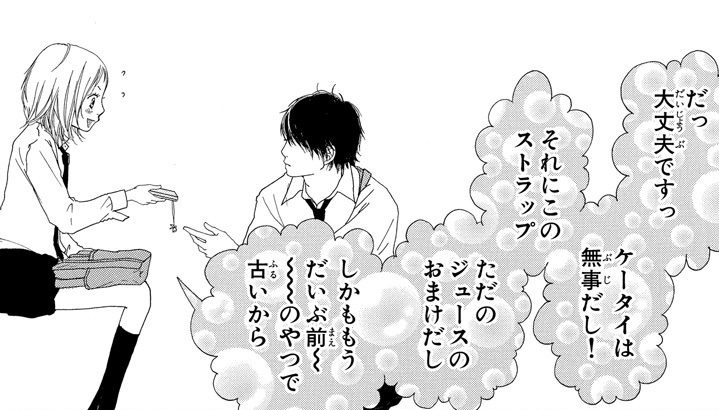
After school, Ninako notices Ren sleeping a few seats away on the train. When Ren wakes and rushes for his stop, he knocks Ninako’s phone from her hand. The phone hits the floor, and the strap charm breaks. Ren misses his exit while apologizing and offers to replace the charm.
- 仁奈子:
- 「だっ 大丈夫ですっ」
- “I—it's all right.”
- 「ケータイは無事だし!」
- “Since my cell phone is safe!”
- 「それにこのストラップただのジュースのおまけだし」
- “Furthermore, this strap was just a freebie that came with some juice.”
- 「しかももうだいぶ前〜〜〜〜のやつで古いから」
- “Plus, it's from way back when, so it's old.”
Example 2 of 2: Reelected class representative with 当選
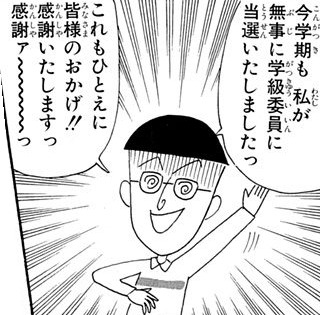
The second term has just begun at Maruko’s school, and her class has held its vote for class representative. Maruo held the post last term and loves the job.
- 丸尾くん:
- 「今学期も 私が 無事に学級委員に 当選いたしましたっ」
- “This term, too, I have been duly elected class representative!”
- 「これもひとえに 皆様のおかげ!! 感謝いたしますっ 感謝ァ〜〜〜っ」
- “I owe it all to you, everyone!! I thank you! Thaaank youuu!”
無断 (むだん) (Without permission)
無断 describes doing something without asking permission or giving notice.
It combines 無 (without) with 断 (decision) to show something done without approval.
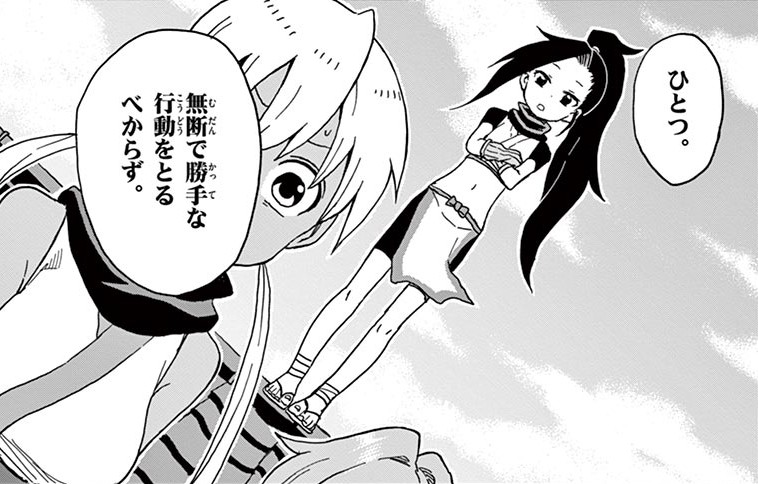
Sazanka sneaks out of class, leaving the teacher to send Asagao to bring her back. As Asagao chases Sazanka across the rooftops near the upper grade classroom, Tsubaki spots them. She meets them up on the roof and recites the school’s first rule.
- ツバキ:
- 「ひとつ。無断で勝手な行動をとるべからず。」
- “One: Doing as you please without permission is strictly forbidden.”
Attention and Distinction
無差別殺人 (むさべつさつじん) (Indiscriminate murder)
無差別殺人 is killing people at random, without choosing particular victims.
It combines 無差別 (indiscriminate) with 殺人 (murder) to show killing without choosing victims.
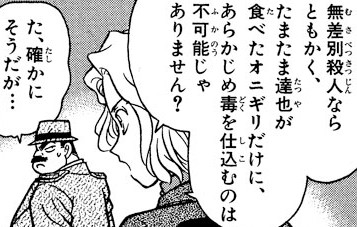
Sonoko is invited to a band’s after party. During the get-together, the band’s singer Tatsuya eats a rice ball only to collapse and die. The police are called in, and Inspector Megure discovers the victim was poisoned. He accuses the man who prepared the food, but Conan bites into a rice ball to show it’s safe. The victim’s manager, Mari, agrees.
- 麻理:
- 「無差別殺人ならともかく、たまたま達也が食べたオニギリだけに、あらかじめ毒を仕込むのは不可能じゃありません?」
- “If it were indiscriminate murder, that's one thing but since it was just the rice ball Tatsuya happened to eat, wouldn't it be impossible to poison it beforehand?”
- 目暮:
- 「た、確かにそうだが…」
- “Th-that's true, but...”
Ability and Knowledge
無能 (むのう) (Incompetent)
無能 means incompetent or incapable. It can describe a person or the lack of ability itself.
It combines 無 (nothing) with 能 (ability) to show lack of ability.
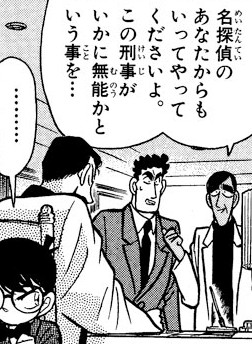
Police detective Yokomizo isn’t about to let Sasai, his prime murder suspect, leave. Sasai reminds the officer that he has photographic proof that he wasn’t near the victim at the time of the murder. He calls for Detective Mouri to back him up.
- 笹井:
- 「名探偵のあなたからもいってやってくださいよ。 この刑事がいかに無能かという事を…」
- “You, the great detective, should tell him yourself. Just how incompetent this police detective is...”
Building Bigger Words
These patterns come up again and again in manga. Learn the pattern and you can read words you've never seen.
無〜 む (lacking it)
Put 無 in front of a noun and you get its absence. 無意味 and 無差別 above are built this way.
- 無意識 むいしき without being aware of it
- 無関係 むかんけい unrelated
- 無責任 むせきにん irresponsible
- 無防備 むぼうび defenseless
無 + one kanji む (having none of it)
- 無敵 むてき unbeatable
- 無力 むりょく powerless
- 無口 むくち of few words
- 無数 むすう countless
無〜 ぶ (the same idea, read ぶ)
- 無礼 ぶれい rude
- 無難 ぶなん safe, unobjectionable
- 無愛想 ぶあいそう unfriendly
- ご無沙汰 ごぶさた a long time without contact
Where 無 Breaks the Pattern
The meaning above carries you through most words. These are the ones where it won't, or where the reading is a surprise.
- 無茶 (むちゃ) reckless, absurd
The kanji are borrowed for their sound. Tea has nothing to do with it. 無駄 above is spelled the same way. You’ll also see this word in katakana, as ムチャ.
- 無理矢理 (むりやり) by force
無理 keeps its meaning here, but 矢理 is only a spelling for やり. Manga print 無理やり as well.
Check Yourself
What does 無 mean?
Absence and nothingness.
Read These Without Furigana
無理
無事
無断
無差別殺人
無能
Work Out a New Word
関係 is a connection between things. Read 無関係 in this line. What is the speaker claiming?
「なんたってオレは事件とは無関係なんだからな…」
Show the answer
無関係, unrelated. “After all, I’ve got nothing to do with the case…”
無事 looks as if it should be むじ. How is it read, and what does it mean?
Show the answer
無事, safe and sound. It is one of the words where 無 is ぶ.