Aeons and calamity with 劫
劫 is a concept originating from Buddhism that represents an incredibly long, near-infinite period of time. It is a translation of the Sanskrit word kalpa, which serves as the largest unit of time in ancient Indian cosmology. In its literal Chinese character origins, 劫 can mean to threaten, rob, or plunder.
Etymology
This kanji is a phono-semantic compound made from 力 (force) as the semantic component and 去 (depart) as the phonetic component (コウ), giving the meaning “using physical force to stop someone who is trying to leave”.
The Buddhist meaning came separately through 劫波, a Chinese transliteration of Sanskrit kalpa. As the short form of that word, 劫 came to mean a vast cosmic aeon.
Aversion
億劫 (Troublesome)
億劫 describes something that feels tiresome or too much trouble to begin.
It combines 億 (immense number) with 劫 (aeon) to show something that feels endlessly burdensome.
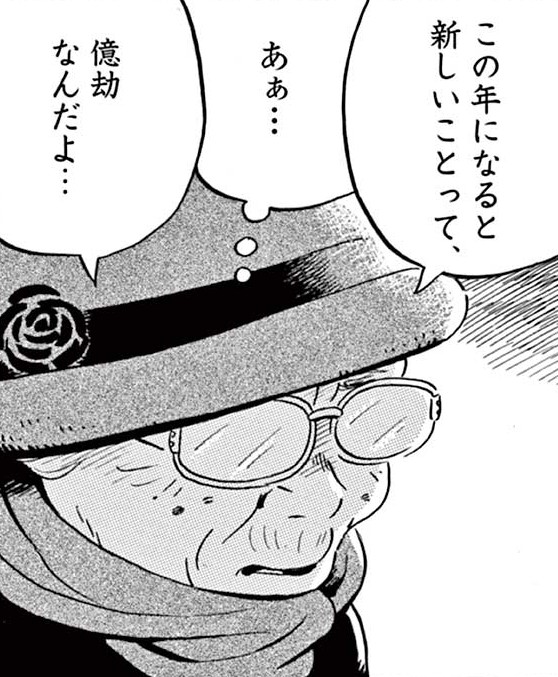
At dusk, Hanae takes the bus to the grocery store to buy ingredients for dinner. There she encounters Hiroto, doing the same on his way home from work. Hiroto says he rode his motorcycle today and can give Hanae a lift home. She refuses, as she’s never ridden on a motorcycle before.
- はなえ:
- 「この年になると新しいことって、億劫なんだよ…」
- “At my age, trying new things is such a hassle…”