Binding and results with 結
結 means tie, bind, or join. In compounds, it can also refer to forming something, reaching a conclusion, or a result.
- Grade 4
- JLPT N1 (estimate)
- WaniKani level 17
- 12 strokes
Words with 結
- Outcomes
- 結局 けっきょく In the end
- 結果 けっか Result
- 結論 けつろん Conclusion
- Relationships
- 結婚 けっこん Marriage
- Formation
- 結成 けっせい Formation
- 結晶 けっしょう Crystal
- 結構 けっこう Quite
- Unity
- 結束 けっそく Unity
- 団結 だんけつ Solidarity
- Completion
- 完結 かんけつ Completion
The bold kana are the part 結 contributes. Words in a dashed box have no manga example yet.
How to Read 結
Every word on this page reads 結 as けつ.
At the front of a word, けつ tightens to けっ when the next sound is k or s: 結果, 結婚, 結成. It stays けつ before other sounds, as in 結論 and 結末, and at the end of a word, as in 完結.
The verb is 結ぶ, to tie or to join. Hair is the one thing you 結う.
Etymology
This kanji is a phono-semantic compound comprised of 糸 (thread) as the semantic component and 吉 as the phonetic component (ケツ).
Outcomes
結局 (けっきょく) (In the end)
結局 describes how things turned out in the end.
It combines 結 (end, conclude) with 局 (situation, stage) to show the final situation reached.
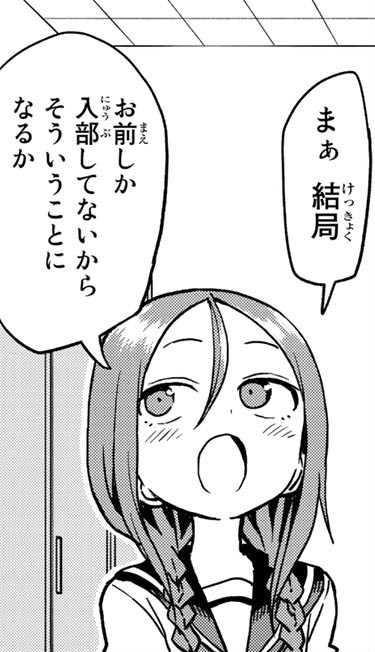
Urushi and Ayumu give their makeshift clubroom a cleaning to welcome potential new members. Considering that Urushi was the only club member before he joined, Ayumu remarks how she alone had cleaned the room for his sake last year.
- うるし:
- 「まぁ 結局」
- “Well, in the end...”
- 「お前しか入部してないからそういうことになるか」
- “You were the only new member, so it ended up as you say, huh?”
結論 (けつろん) (Conclusion)
結論 means a conclusion reached through reasoning, discussion, or examination of facts.
It combines 結 (tie together) with 論 (reasoning) to show a reasoned conclusion tied up at the end.
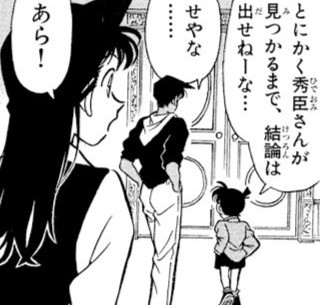
Conan and Heiji end up staying at the same mansion when a murder occurs. They decide to put their heads together to try and determine who the culprit is.
- コナン:
- 「とにかく秀臣さんが見つかるまで、結論は出せねーな…」
- “Anyway, I guess we can't come to a conclusion until we find Hideomi...”
- 平次:
- 「せやな……」
- “That's right.”
- 蘭:
- 「あら!」
- “Oh!”
Formation
結晶 (けっしょう) (Crystal)
結晶 means a crystal. Figuratively, it can be the product of sustained effort, as in “the crystallization of hard work”.
It combines 結 (congeal, form together) with 晶 (sparkling clarity) to show matter bound into a clear crystalline form.
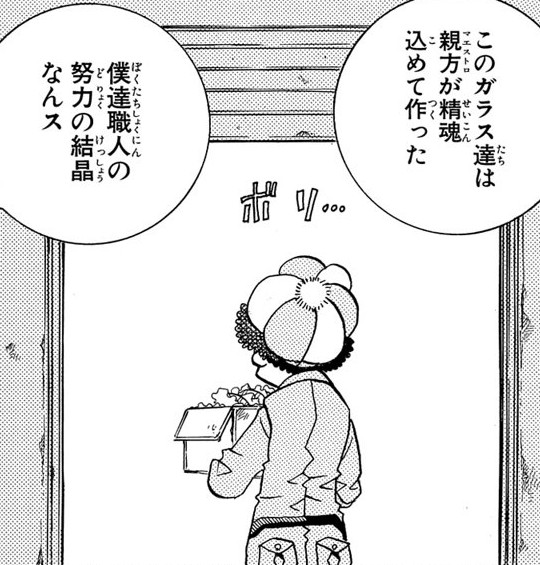
Akari picks up a box containing glassware items for her to transport. One of the employees from the shop making the glassware takes the box from her to place in her gondola. After he does this a second time, Akari says she can help carry the boxes, but he refuses.
- 職人:
- 「このガラス達は親方が精魂込めて作った」
- “These pieces of glass were made with the maestro's heart and soul poured into them.”
- 「僕達職人の努力の結晶なんス」
- “They're the crystallization of our craftsmen's efforts.”
結構 (けっこう) (Quite)
結構 as an adverb means “quite” or “fairly”, more than you’d expect. As a な-adjective it means “fine” or “enough”, as in 結構です, “no, thank you”.
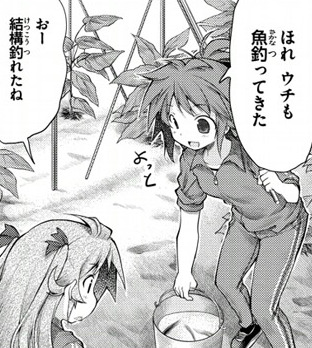
The village kids are having an outdoor cookout at school. Komari and Hotaru have been picking vegetables in the school garden, and Komari is sore that she forgot to bring work gloves. Natsumi walks over and asks if they got any vegetables, and Komari answers that they got a few, more or less.
- 夏海:
- 「ほれ ウチも魚釣ってきた」
- “Here, I went and caught some fish too.”
- 小鞠:
- 「おー 結構釣れたね」
- “Ooh, you caught quite a few.”
Building Bigger Words
These patterns come up again and again in manga. Learn the pattern and you can read words you've never seen.
結婚〜 けっこん (marriage)
- 結婚式 けっこんしき wedding
- 結婚相手 けっこんあいて the person you marry
- 結婚指輪 けっこんゆびわ wedding ring
- 政略結婚 せいりゃくけっこん marriage arranged for advantage
結果〜 けっか (result)
- 結果的 けっかてき as it turned out
- 結果発表 けっかはっぴょう announcement of results
〜結 けつ (drawing together or closing)
- 集結 しゅうけつ gathering in one place
- 凍結 とうけつ freezing
- 直結 ちょっけつ direct link
- 終結 しゅうけつ the end of a conflict
結び むすび (tying)
- 結ばれる むすばれる to be joined as a couple
- 縁結び えんむすび matchmaking
Where 結 Breaks the Pattern
The meaning above carries you through most words. These are the ones where it won't, or where the reading is a surprise.
- 結構 (けっこう) quite, fine, no thanks
The third most common 結 word in manga, and tying explains none of its uses. Before an adjective it means “quite”. As a verdict it means “fine”. As an answer to an offer it means “no, thank you”.
- 結界 (けっかい) magical barrier
A boundary that seals a space off. Fantasy and occult stories use it for the barrier a priest or mage puts up.
Check Yourself
What does 結 mean?
Binding and results.
Read These Without Furigana
結局
結論
結晶
結構
Work Out a New Word
末 is the end of something. Read 結末 in this line. Is it けっ or けつ?
「たとえ運命で結末が決まってたとしても」
Show the answer
結末, the ending. The next sound is m, so けつ stays whole. “Even if fate had already decided how it ends.”
You know 結婚. 式 is a ceremony. What is 結婚式, and how is it read?
Show the answer
結婚式, a wedding.