Body and substance with 体
体 primarily means “body” or “the shape or structure of something”. It is an important character used not only to refer to the physical body but also to the essence or structure of things, and even to the idea of acquiring or mastering something.
- Grade 2
- JLPT N4 (estimate)
- WaniKani level 5
- 7 strokes
Words with 体
- Bodies
- Body and Substance
- 大体 だいたい In the first place
- 体調 たいちょう Physical condition
- 体験 たいけん Experience
- 全体 ぜんたい Whole
- 個体 こたい Individual organism
- Conflict and Force
- People and Identity
- 正体 しょうたい True identity
- Shapes and Structures
- 具体 ぐたい Concrete
The bold kana are the part 体 contributes. Words in a dashed box have no manga example yet.
How to Read 体
たい in compounds, からだ alone. Manga often print 身体 with the furigana からだ instead of しんたい.
A third reading, てい, appears in a few words about outward appearance, such as 体裁 and 世間体, how you look in the eyes of others.
Etymology
This kanji is built from 亻 (person) and 本 (root, base, origin). These invoke imagery of the person together with the base or central structure that supports them, bringing attention to the body’s main frame and essential substance.
Bodies
体 (からだ) (Body)
体 means the body or physique of a person or animal. It can also refer to physical health or condition.
Example 1 of 2: Care for not only Lou's face but also her body with 〜だけでなく〜も
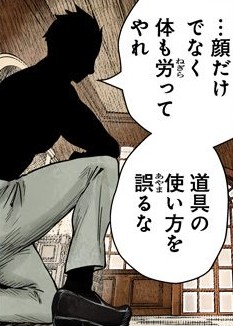
Benjamin suggests Louise do push-ups alongside Lou, her “Living Doll”. When Louise tires quickly, Benjamin tells her to care for Lou’s body as well as her face.
- ベンジャミン:
- 「顔だけでなく体も労ってやれ。」
- “Take care of not only her face but also her body.”
- 「道具の使い方を誤るな」
- “Don't misuse your tools.”
Example 2 of 2: Too light-weight to overcome friction with 摩擦
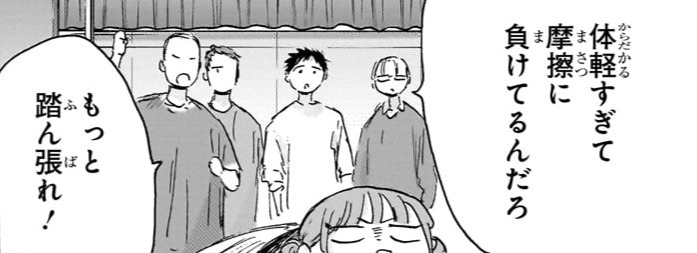
With the end of the school year, the sports clubs turn their attention to cleaning the gym. The boys make a race out of wiping the floor. When the girls decide to give it a go, Hina joins in, but she finds herself unable to move forward like the others do. Her attempts to advance only cause her socks to slip, keeping her in place.
- 匡:
- 「体軽すぎて摩擦に負けてるんだろ」
- “I guess she's too light to overcome the friction.”
- 西田:
- 「もっと踏ん張れ!」
- “Dig your feet in harder!”
身体 (しんたい) (Body)
身体 is the human body. It is more formal than 体.
It combines 身 (body) with 体 (body or substance) to show the physical body.
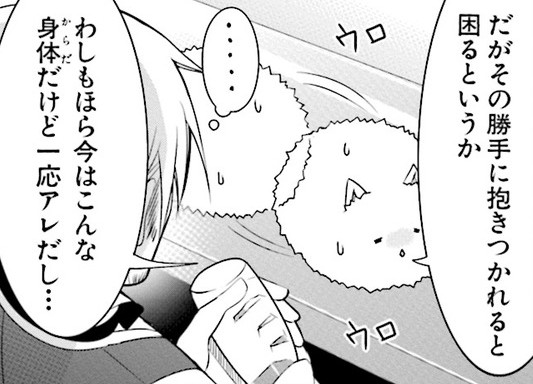
Tippy is glad that Cocoa is around to be friends with Chino, but it’s a problem for him.
- ティッピー:
- 「だがその勝手に抱きつかれると困るというか」
- “But being hugged like that without warning is a bit troubling.”
- 「わしもほら今はこんな身体だけど一応アレだし…」
- “I may have a body like this now, but I'm still, you know...”
本体 (ほんたい) (Main body)
本体 is the main unit of something, apart from its accessories or packaging. It also means the real thing behind a decoy or a disguise.
It combines 本 (base/origin) with 体 (body/substance) to show the main body or fundamental substance.
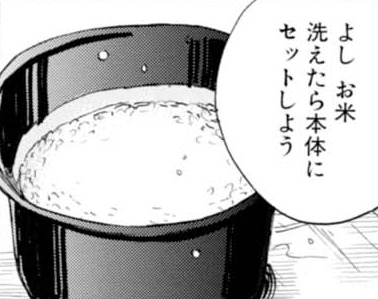
Machi has always cooked rice over a wood fire, so Natsu brings her a new pressure IH rice cooker. Wary of electrical appliances, Machi has taken the inner pot out of the cooker.
- ナツ:
- 「よし お米洗えたら本体にセットしよう」
- “Okay, once the rice is washed, let's put it in the cooker.”
死体 (したい) (Dead body)
死体 refers to the body of a dead person or animal. It is blunt and clinical, so it can sound cold when used for a person.
It combines 死 (dead) with 体 (body) to show a dead body.
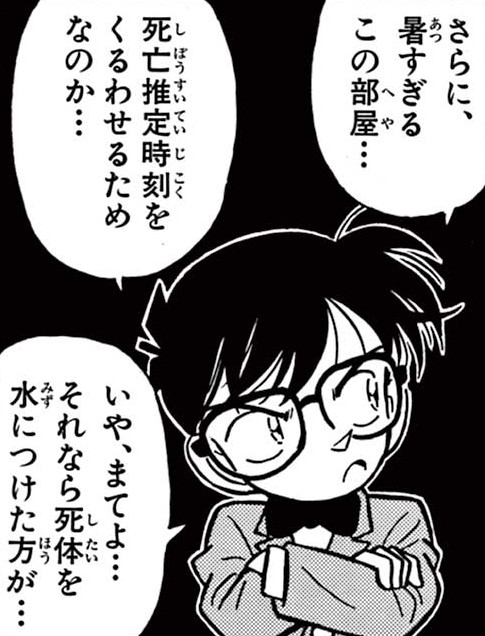
Upon walking in on a murder scene, Conan goes right to work making observations about the blood-covered body and its surroundings. He notes how the room is torn apart save for one upright chair beside the deceased.
- コナン:
- 「さらに、暑すぎるこの部屋…」
- “Furthermore, this room is too warm...”
- 「死亡推定時刻をくるわせるためなのか…」
- “Is it to confuse the estimated time of death...?”
- 「いや、まてよ… それなら死体を水につけた方が…」
- “No, wait... If that's the case, it would be better to put the corpse in water...”
体育 (たいいく) (Physical education)
体育 means physical education, exercise taught to develop fitness and physical skills.
It combines 体 (body) with 育 (raise/develop) to show the cultivation of the body.
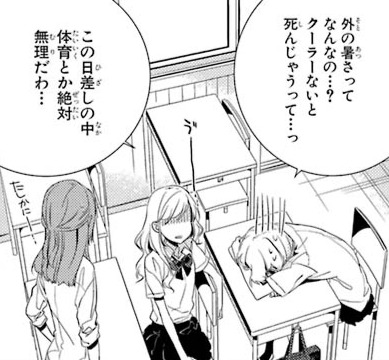
On a summer day, Hori and her friends in class can’t ignore the heat.
- 由紀:
- 「外の暑さってなんなの…? クーラーないと死んじゃうって…っ」
- “What's with this heat outside...? I'd totally die without the AC...”
- 「この日差しのなか体育とか絶対無理だわ…」
- “There's no way I can do PE in this blazing sun...”
解体 (かいたい) (Dismantling)
解体 means taking something apart. It can refer to dismantling a machine, demolishing a building, disbanding an organization, or dissecting a body.
It combines 解 (separate) with 体 (body) to show a body being taken apart.
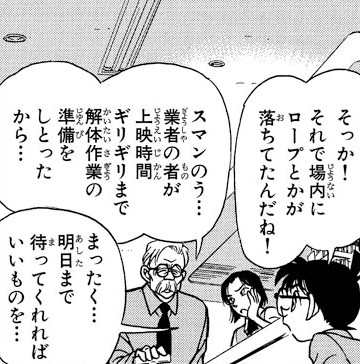
Conan and his friends go to the theater to see a movie. There, they discover this is the last day before the theater closes.
- コナン:
- 「そっか!それで場内にロープとかが落ちてたんだね!」
- “Oh, I see! That's why there were ropes and stuff lying around the venue!”
- オーナー:
- 「スマンのう… 業者の者が上映時間ギリギリまで解体作業の準備をしとったから…」
- “Sorry about that... The contractor's crew was rushing to get the dismantling ready right up until showtime...”
- スタッフ:
- 「まったく… 明日まで待ってくれればいいものを…」
- “Honestly... They could've at least waited until tomorrow...”
天体望遠鏡 (てんたいぼうえんきょう) (Astronomical telescope)
天体望遠鏡 is a telescope for looking at the stars and planets.
It combines 天体 (heavenly body) with 望遠鏡 (telescope) to show a telescope for the sky.
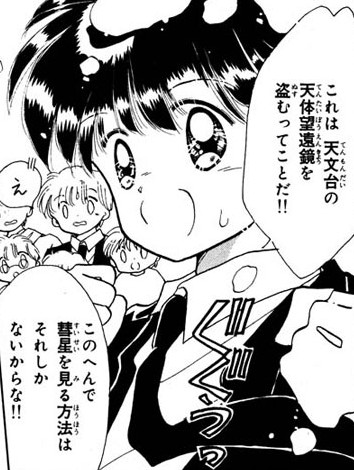
Asuka Jr. receives a challenge notice from Saint Tail, stating her intent to steal Graham Comet on Christmas Eve. One of his friends wonders how Saint Tail will steal a comet. Asuka Jr. thinks it over for a moment.
- アスカ Jr.:
- 「これは 天文台の天体望遠鏡を盗むってことだ!!」
- “That means stealing the observatory's telescope!!”
- 「このへんで彗星を見る方法はそれしかないからな!!」
- “Since that's the only way to see a comet around here!!”
Body and Substance
大体 (だいたい) (In the first place)
大体 means “roughly” or “mostly”. At the start of a complaint, it means “in the first place”.
It combines 大 (large) with 体 (body) to show the general outline.
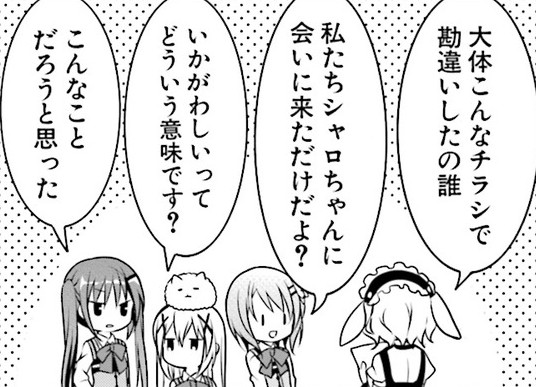
Syaro tries to find out who’s responsible for Chiya and the others visiting her workplace.
- シャロ:
- 「大体こんなチラシで勘違いしたの誰」
- “Who misunderstood this flyer in the first place?”
- ココア:
- 「私たちシャロちゃんに会いに来ただけだよ?」
- “We just came to see you, Syaro-chan.”
- チノ:
- 「いかがわしいってどういう意味です?」
- “What does “shady” mean?”
- リゼ:
- 「こんなことだろうと思った」
- “I figured it was something like this.”
体調 (たいちょう) (Physical condition)
体調 is how well your body is doing on a given day. 体調が悪い means you feel unwell.
It combines 体 (body) with 調 (condition/tune) to show the condition of the body.
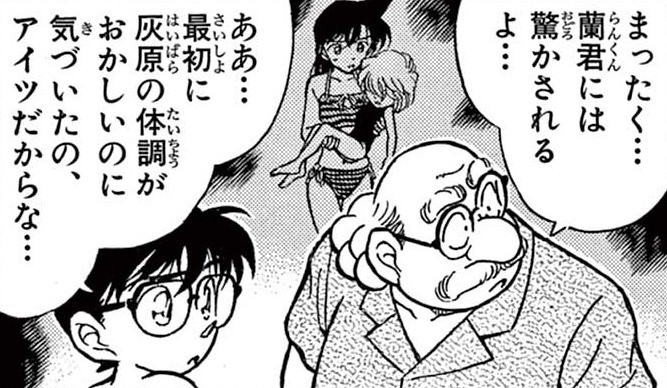
Professor Agasa takes Conan and the other kids to a beach in Izu, where they run into Ran and Sonoko. When Haibara says she’s tired, Ran comes ashore with her and Conan, and Haibara turns out to have sunstroke. Once Haibara starts to recover, Ran tells her to speak up the next time she feels sick, and heads back to join the others.
- 阿笠:
- 「まったく…蘭君には驚かされるよ…」
- “Honestly... Ran never stops amazing me...”
- コナン:
- 「ああ…最初に灰原の体調がおかしいのに気づいたの、アイツだからな…」
- “Yeah... She's the one who noticed something was wrong with Haibara first.”
Conflict and Force
体力 (たいりょく) (Physical strength)
体力 is the physical strength and stamina needed to work or exercise.
It combines 体 (body) with 力 (power) to show the power of the body.
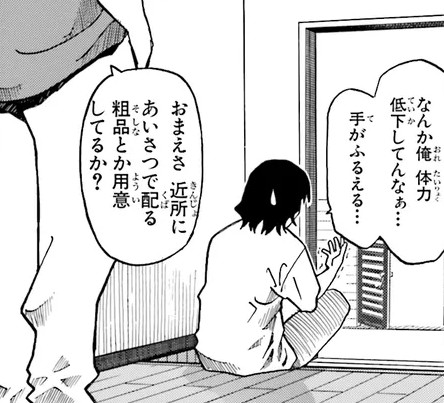
Jumbo helps his friend Yousuke move into his new house. After unboxing things, Yousuke stops for a break.
- 葉介:
- 「なんか俺 体力低下してんなあ… 手がふるふる…」
- “Man, I feel like my stamina is dropping... My hands are shaking...”
- ジャンボ:
- 「おまえさ 近所にあいさつで配る粗品とか用意してるか?」
- “Hey, are you preparing any little gifts to hand out to your neighbors when you go around saying hello?”
体操 (たいそう) (Gymnastics)
体操 is a set of movements, such as stretching and bending, done to exercise the body. It is also the competitive sport of gymnastics.
It combines 体 (body) with 操 (control) to show disciplined control of the body.
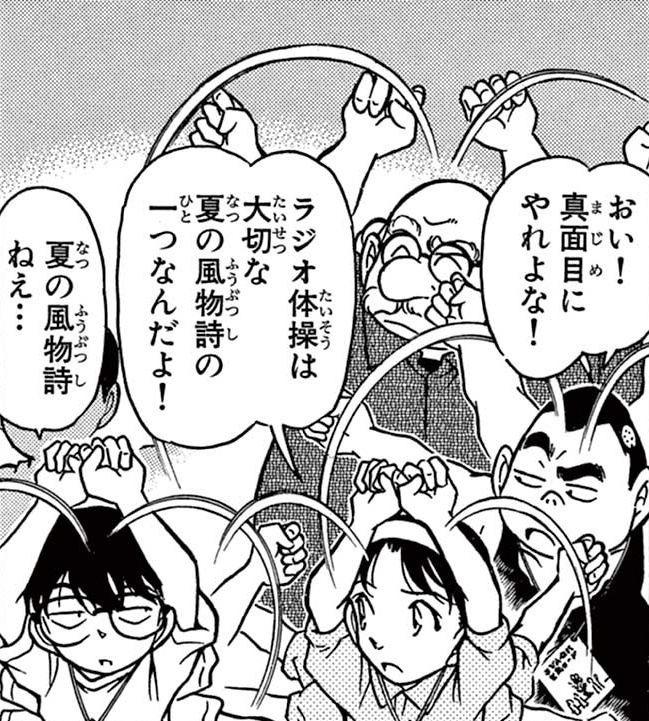
Conan has joined the other children for radio exercises at school. As everyone follows the routine, he broods over how he should be enjoying his summer vacation as a second-year high school student. Instead, he is stuck exercising with elementary schoolers and wonders what he is doing there.
- 元太:
- 「おい! 真面目にやれよな!」
- “Hey! Take this seriously!”
- 歩美:
- 「ラジオ体操は大切な夏の風物詩の一つなんだよ!」
- “Radio exercises are one of those treasured signs of summer!”
- コナン:
- 「夏の風物詩ねえ…」
- “A sign of summer, huh...”
Building Bigger Words
These patterns come up again and again in manga. Learn the pattern and you can read words you've never seen.
体〜 たい (of the body)
- 体重 たいじゅう body weight
- 体温 たいおん body temperature
- 体内 たいない inside the body
- 体質 たいしつ the way your body is made
〜体 たい (a body or a mass of something)
- 肉体 にくたい the flesh
- 遺体 いたい a dead person's remains
- 物体 ぶったい object
- 液体 えきたい liquid
- 団体 だんたい organized group
Page words with a piece added
- 体育館 たいいくかん gym
- 体育祭 たいいくさい school sports day
- 具体的 ぐたいてき concrete, specific
Where 体 Breaks the Pattern
The meaning above carries you through most words. These are the ones where it won't, or where the reading is a surprise.
- 一体 (いったい) what on earth
The most common 体 word in manga, and bodies have little to do with how it is used. In front of a question it adds force, as in 一体何, “what on earth”. It can also mean one body, or acting as one.
- 自体 (じたい) itself
Placed after a noun, it points at the thing itself and nothing around it, as in 話自体, the story itself.
Check Yourself
What does 体 mean?
Body and substance.
Read These Without Furigana
体
身体
本体
死体
体育
解体
Work Out a New Word
温 is warmth. Read 体温 in this line. What is the cat boasting about?
「なんですか「ネコ科の体温なめんなよ」って」
Show the answer
体温, body temperature. “What do you mean, ‘Don’t underestimate a feline’s body heat’?”
How is 体 read by itself, and how in 体力?
Show the answer
体 by itself, and 体力. たい is the reading inside compounds.