Boundaries and limits with 限
限 means “limit”, “boundary”, or “scope”. It is used in words establishing standards or defining limits.
Etymology
This kanji isa phono-semantic compound comprised of 阝 / 阜 (mound, embankment) as the semantic component and 艮 as the phonetic component (ゲン).
These invoke imagery of reaching the edge of an embankment and being forced to stop there.
Boundaries
限界 (Limit)限界( げんかい ) means the limit or boundary beyond which something cannot go.
It combines 限 (limit ) with 界 (boundary ) to show a boundary line .
Example 1 of 3: At one's limit with 限界 Example 1 of 3
あしたは土曜日 »
Volume 秋・冬 » Page 16
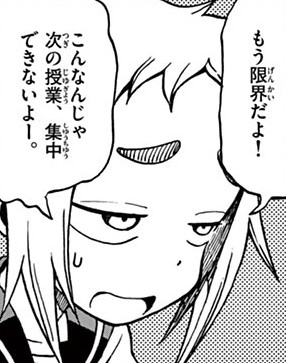
Mina wants to hurry and eat her lunch, as she’s very hungry. Yukari reminders her they still have one more class first.
ミナ:
「もう限界( げんかい ) 次( つぎ ) の授業( じゅぎょう ) 、集中( しゅうちゅう ) できないよー。」
“I'm already at my limit! As things are, come next class I won't be able to concentrate.”
Challenge Yourself
Show translation
Challenge
Why does Mina think the next class will go badly?
Clues
もう限界( げんかい ) だ
already at one's limit
こんなんじゃ
if things stay like this
集中( しゅうちゅう ) できないcannot concentrate
What does the speaker mean?
She is too hungry to concentrate through another class.
もう限界( げんかい ) だ describes Mina's hunger as unbearable, and こんなんじゃ connects that condition to being unable to concentrate.
She thinks the next class will be too difficult to understand.
Mina says she cannot 集中( しゅうちゅう ) , but she does not criticize the class material as difficult.
She is worried that she will arrive late for class.
The problem is her condition during class, not whether she can arrive on time.
She wants to skip class because she is sleepy.
Nothing in the line mentions sleep. Her 限界( げんかい ) comes from the hunger described in the scene.
She believes the next class has been canceled.
次( つぎ ) の授業( じゅぎょう ) is treated as something she still has to sit through.
She says eating lunch has already ruined her concentration.
Mina has not eaten lunch yet. こんなんじゃ refers to remaining as hungry as she is now.
Mina says she has reached her limit from hunger. If she has to remain like this, she believes she will be unable to concentrate in the next class.
View Full Example
Example 2 of 3: Being at my limit is no good with あかん Example 2 of 3
名探偵コナン »
Volume 12 » Page 125
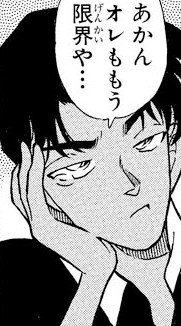
At a special event, the expected host doesn’t show for dinner. After finishing their meals, the guests continue to wait until past midnight. As most guests decide to retire to their rooms for the night, Heiji finds himself yawning.
平次( へいじ ) :「あかんオレももう限界( げんかい )
“No good, I'm also already at my limit...”
Challenge Yourself
Show translation
Challenge
What does Heiji mean by あかん in this scene?
Clues
あかん
this is no good, I cannot manage
オレももう限界( げんかい ) や
I am already at my limit too
What does the speaker mean?
He cannot keep going because he has reached his limit.
もう限界( げんかい ) や explains あかん as Heiji giving in to exhaustion.
He thinks the dinner tasted bad.
His limit after waiting late into the night is the issue, not the food's quality.
He believes everyone else should remain awake.
オレも shows that he is joining the others who are retiring.
He has decided to leave the event immediately.
The line says he is exhausted, without specifying that he will depart the location.
He wants another meal before sleeping.
The scene takes place after dinner, and his reaction comes with fatigue.
He says that his limit is still far away.
もう限界( げんかい ) means he is already at that limit.
Heiji says he cannot keep waiting because he too has reached his limit. あかん is the Kansai equivalent of “no good” or “I can’t”, and や is the Kansai copula.
View Full Example
Example 3 of 3: The limit of teamwork with 限界 Example 3 of 3
ARIA The MASTERPIECE »
Volume 4 » Page 275
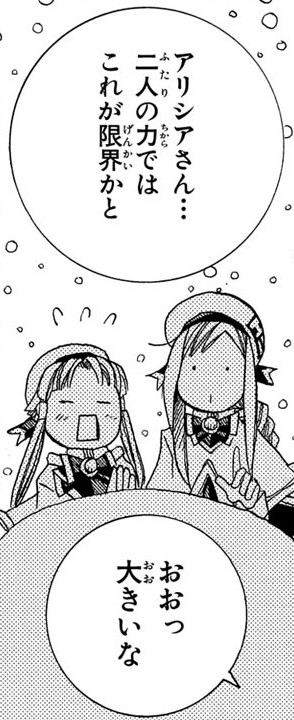
On a snowy day, Alicia starts making a snowball. As it gets bigger, Akari joins in. They continue to roll the snowball until it grows too big for them to keep pushing. At that moment, a random person passing by notices their effort.
灯里( あかり ) :「アリシアさん… 二人( ふたり ) の力( ちから ) ではこれが限界( げんかい )
“Alicia... This is the limit of what we can do together.”
男( おとこ ) :「おおっ 大( おお ) きいな」
“Oh! That's a big one.”
View Full Example
Restrictions and Controls
限定 (Limitation)限定( げんてい ) means limiting something to a particular scope, quantity, group, or condition.
It combines 限 (limit ) with 定 (fix ) to show something fixed within clear bounds .
Example 1 of 2: Limited edition with 限定 Example 1 of 2
俺物語!! »
Volume 6 » Page 103
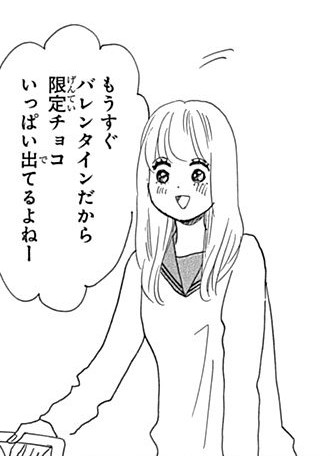
Takeo and Rinko meet up after school and stop somewhere for a drink and to chat. Rinko brings up February 14th, which is right around the corner.
凛子( りんこ ) :「もうすぐバレンタインだから限定( げんてい ) 出( で ) てるよねー」
“Since it's almost Valentine's, a lot of limited edition chocolates have come out.”
Challenge Yourself
Show translation
Challenge
What seasonal products does Rinko say are appearing?
Clues
もうすぐバレンタインだから
because Valentine's Day is coming soon
限定( げんてい ) チョコいっぱい出( で ) てるmany limited-edition chocolates are out
What does the speaker mean?
Many limited-edition chocolates for Valentine's Day.
限定( げんてい ) modifies チョコ, and いっぱい出( で ) てる says many have appeared.
A single permanent chocolate flavor.
いっぱい indicates many products, and 限定( げんてい ) makes them limited rather than permanent.
Limited tickets for a Valentine's event.
The noun after 限定( げんてい ) is チョコ, not tickets.
Chocolate that will disappear before Valentine's Day.
Rinko says the products are already out because the holiday is near. She does not give their removal date.
Discounted drinks sold only after school.
The line concerns seasonal chocolate and says nothing about drinks, discounts, or school hours.
Homemade chocolate that Rinko has finished making.
出( で ) てる describes products appearing on the market, not Rinko completing her own batch.
Rinko notes that many limited-edition chocolates have appeared because Valentine’s Day is close. The omitted が would mark the chocolates as the things that are out.
View Full Example
Example 2 of 2: Seasonal exclusive product with 限定 Example 2 of 2
からかい上手の高木さん »
Volume 3 » Page 136
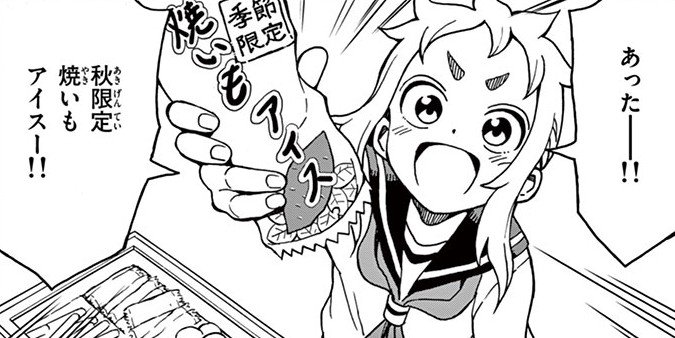
Mina stops by a local convenience store to buy a seasonal ice cream.
ミナ:
「あった!秋( あき ) 限定( げんてい ) 焼( や ) きいもアイスー!!」
“They have it! The autumn-exclusive baked sweet potato ice cream!”
Challenge Yourself
Show translation
Challenge
What is Mina excited to find?
Clues
あった!
an excited "There it is!" or "They have it!"
秋( あき ) 限定( げんてい ) "limited to autumn" or "available only in autumn"
焼( や ) きいもアイス"baked sweet potato ice cream"
What does the speaker mean?
Autumn-only baked sweet potato ice cream.
秋( あき ) 限定( げんてい ) modifies 焼( や ) きいもアイス, so the flavor is available only in autumn.
Baked sweet potatoes that are discounted for autumn.
限定( げんてい ) means limited or exclusive here, not discounted, and the product is ice cream.
Ice cream that has sold out for the season.
あった shows that Mina found it in stock.
A new ice cream shop that opens in autumn.
The noun is 焼( や ) きいもアイス, a flavor of ice cream, not a shop.
Sweet potato ice cream available all year.
秋( あき ) 限定( げんてい ) limits its availability to autumn.
An autumn gift made from baked sweet potatoes.
アイス identifies the item as ice cream, not a gift.
Mina’s あった shows that she has found the item she wanted. It is 秋( あき ) 限定( げんてい ) 焼( や ) きいもアイス, baked sweet potato ice cream sold only in autumn.
View Full Example
入場制限 (Admission restriction)入場制限( にゅうじょうせいげん ) means an admission restriction or limit on the number of people allowed to enter a venue.
It combines 入場 (admission ) with 制限 (restriction ) to show a limit on entry to a venue .
俺物語!! »
Volume 4 » Page 50
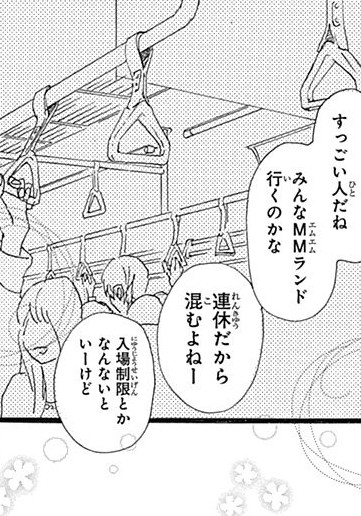
Takeo and his friends board the train bound for the amusement park, MM Land.
凛子( りんこ ) :「すっごい人( ひと ) だね。みんなMMランド行( い ) くのかな」
“There's a lot of people here. I wonder if everyone's going to MM Land.”
隼人( はやと ) :「連休( れんきゅう ) だから混( こ ) むよねー」
“It's a long holiday, so it'll be crowded.”
愛( あい ) :「入場( にゅうじょう ) 制限( せいげん ) とかなんないといーけど」
“I hope they don't restrict admission or anything.”
Challenge Yourself
Show translation
Challenge
What problem does Ai worry they may face at the amusement park?
Clues
連休( れんきゅう ) だから混( こ ) むit will be crowded because of the long holiday
入場( にゅうじょう ) 制限( せいげん ) とかなんないといーけどI hope it does not turn into admission restrictions or anything like that
What does the speaker mean?
The park may restrict admission because of the crowds.
入場( にゅうじょう ) 制限( せいげん ) is limiting entry, and the preceding crowd discussion supplies the reason for the concern.
The train may stop before reaching the park.
Ai names an admission problem at the destination, not a disruption to the train.
The park may close for the entire holiday.
Restricting how many people enter is not the same as closing completely.
Their group may be required to split up.
The line worries about entry limits generally and does not describe a group rule.
Only adults may be allowed into the park.
No age restriction appears. The concern comes from crowding.
The park may charge extra during the holiday.
Ai discusses whether admission will be limited, not whether the price will change.
Ai worries that the long-holiday crowds could make the park restrict admission. The contracted といー expresses her hope that this problem will not occur.
View Full Example
Time Boundaries
門限 (Curfew)門限( もんげん ) means a curfew, the time by which someone must return or a gate must close.
It combines 門 (gate ) with 限 (limit ) to show the time limit of the gate .
三ツ星カラーズ »
Volume 4 » Page 78
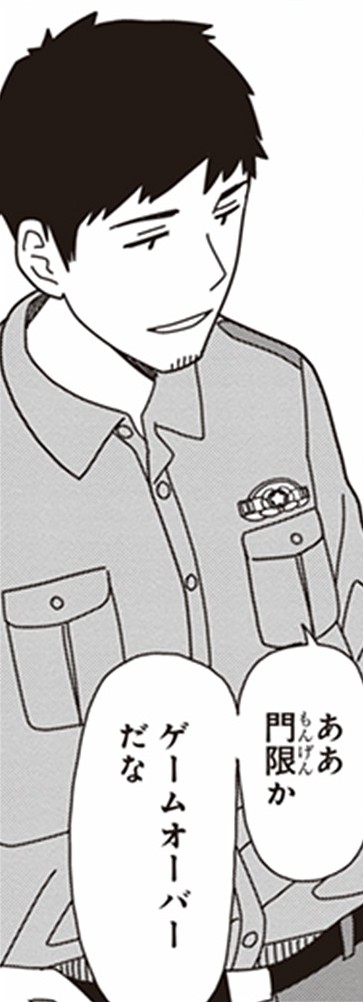
After finding evidence of a UFO encounter, the group Colors sets out to find aliens. The case is cut short when the 5PM bell chimes, signalling that the young trio has to head home for the day.
斎藤( さいとう ) :「ああ門限( もんげん )
“Ah, curfew time? I suppose it's Game Over.”
Challenge Yourself
Show translation
Challenge
Why does Saitou declare the alien case game over?
Clues
門限( もんげん ) かso it is curfew, recognizing the cutoff time
ゲームオーバーだな
the game is over, then
What does the speaker mean?
The girls have reached the time when they must go home.
門限( もんげん ) is their curfew, so the search ends when that time arrives.
They have proved that the UFO evidence was fake.
Saitou names curfew as the reason the case ends, not the quality of the evidence.
The aliens have already left the neighborhood.
The line says nothing about aliens leaving. It responds to the curfew signal.
Saitou has won a game against the Colors.
ゲームオーバー is figurative here. The actual stopping point is 門限( もんげん ) .
The girls are forbidden from investigating aliens again.
Curfew ends today's search, but the line does not impose a permanent ban.
The neighborhood has closed its gates for the night.
門限( もんげん ) refers to the girls' required return time here, not a literal gate closing.
Saitou hears the signal and recognizes that the girls have reached curfew. Their search must stop for the day, so he jokingly calls it game over.
View Full Example
期限 (Deadline)期限( きげん ) means a deadline or the period during which something remains valid.
It combines 期 (set time ) with 限 (limit ) to show a fixed time boundary or deadline.
Example 1 of 2: Challenge deadline with 期限 Example 1 of 2
からかい上手の高木さん »
Volume 4 » Page 49
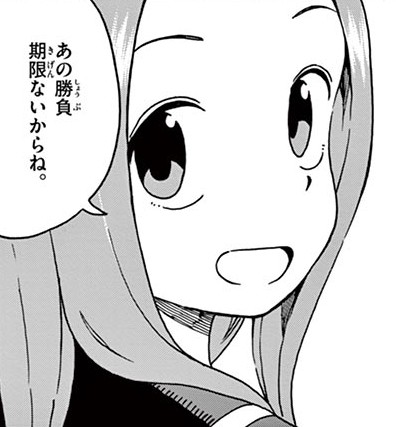
During their walk home after school, Takagi presents Nishikata with an impossible challenge. When he pushes back against it, she comes up with a new challenge, which Nishikata loses. As the two reach the point where they part ways, Takagi stops for a moment.
高木( たかぎ ) :「あの勝負( しょうぶ ) 期限( きげん )
“There's no deadline for that challenge.”
Challenge Yourself
Show translation
Challenge
What does Takagi say about their earlier challenge?
Clues
あの勝負( しょうぶ )
"that challenge," referring to one they both know
期限( きげん ) ない"has no deadline," with が omitted in casual speech
What does the speaker mean?
There is no deadline for it.
期限( きげん ) ない says that a deadline does not exist.
Its deadline is today.
The line says 期限( きげん ) ない, not that the deadline is today.
She has canceled it.
Takagi says the challenge has no deadline. She does not call it off.
Nishikata has already lost it.
The line discusses the time limit, not the result of the challenge.
They need to decide its rules.
There is no mention of rules or deciding them.
She has forgotten what the challenge was.
あの勝負( しょうぶ ) points to a challenge both speakers already recognize.
Takagi refers to their shared challenge with あの勝負( しょうぶ ) and says 期限( きげん ) ない, so Nishikata can still be held to it indefinitely.
View Full Example
Example 2 of 2: Sell-by date with 期限 Example 2 of 2
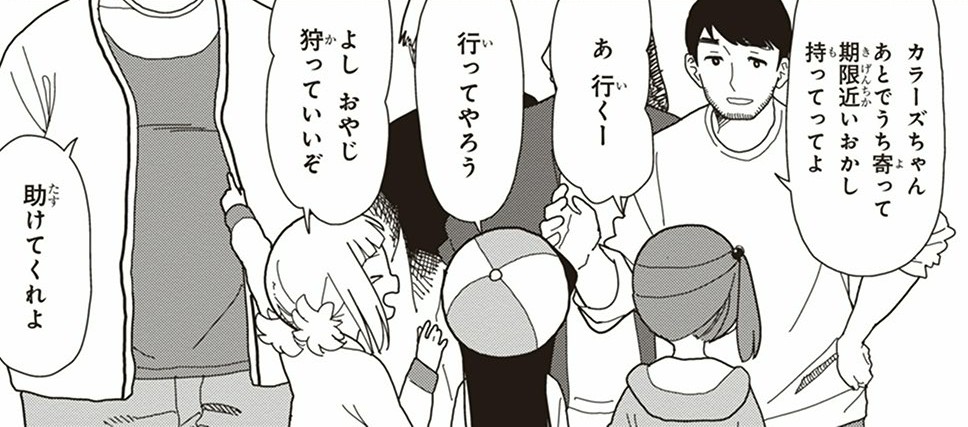
三ツ星カラーズ »
Volume 2 » Page 102
The confectionery shop owner is out shopping when the trio Colors appears.
おかし屋( や ) :
「カラーズちゃんあとでうち寄( よ ) って期限( きげん ) 近( ちか ) いおかし持( も ) ってってよ」
“Colors, stop by my place later and take some of these snacks that are near their sell-by date.”
Challenge Yourself
Show translation
Challenge
What does the confectionery shop owner ask the Colors to do later?
Clues
あとでうち寄( よ ) って
stop by my shop later
期限( きげん ) 近( ちか ) いおかし持( も ) ってってよtake some snacks whose date limit is near
What does the speaker mean?
Stop by the shop and take snacks nearing their sell-by date.
うち寄( よ ) って invites them to the shop, and 期限( きげん ) 近( ちか ) い describes the snacks they should take.
Buy fresh snacks and deliver them to the shop.
The owner offers snacks already at the shop and tells the girls to take them away.
Throw away every snack after the shop closes.
持( も ) ってって asks them to take the near-date snacks, not discard all of the stock.
Return snacks they borrowed before the sell-by date.
The line introduces snacks the owner wants to give them. It does not refer to borrowed goods.
Visit immediately because the shop is closing.
あとで means later, and the concern is the snacks' date limit rather than the shop closing.
Help change the dates printed on the packages.
期限( きげん ) 近( ちか ) い describes why the owner wants the snacks taken. No relabeling is requested.
The owner invites the Colors to stop by later and take snacks that are nearing their sell-by date. Casual 持( も ) ってって compresses 持( も ) って行( い ) って, “take them with you”.
View Full Example
時限装置 (Timing device)時限装置( じげんそうち ) means a timing device set to operate at a preset time or after a fixed delay.
It combines 時限 (preset time ) with 装置 (device ) to show a device controlled by a set time .
名探偵コナン »
Volume 3 » Page 79
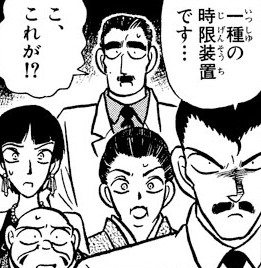
Two murders on a yacht leave the passengers on edge. A blackout occurs followed by another attempted murder. This should narrow down the list of suspects to those who weren’t gathered in the dining room. However, Detective Kogoro finds the power switch had a weight tied to it by rope, with a candle having burned the rope to drop the weight. This allowed the power to be turned off unattended.
小五郎( こごろう ) :「一種( いっしゅ ) の時限( じげん ) 装置( そうち ) です」
“It's a timing device of sorts.”
Challenge Yourself
Show translation
Challenge
How does Kogoro classify the candle-and-rope mechanism?
Clues
一種( いっしゅ ) のa kind of
時限( じげん ) 装置( そうち ) ですit is a timing device
What does the speaker mean?
A kind of timing device.
一種( いっしゅ ) の presents the improvised mechanism as one type of timed device.
A manually operated light switch.
The mechanism delays the switch action without someone operating it at that moment.
A device that measures room temperature.
時限( じげん ) points to a preset time, not temperature.
A rope designed to restrain a suspect.
The rope is part of a delayed mechanism for the power switch.
A permanent repair to the electrical system.
Kogoro describes an improvised setup used to cause the blackout.
A clock that records when people enter.
The device triggers an action after time passes. It does not record arrivals.
Kogoro calls the setup a kind of timing device because the candle burns through the rope after a delay and allows the weight to pull the power switch.
View Full Example