Causes and dependence with 因
因 means “the basis for something to come into being” or “a foundation”.
- Grade 5
- JLPT N3 (estimate)
- WaniKani level 17
- 6 strokes
Words with 因
- Causes
- 原因 げんいん Cause
- 死因 しいん Cause of death
- 要因 よういん Factor
- Causal Chains
- 因果 いんが Cause and effect
- 起因 きいん Origination
- Causal Factors
- 因子 いんし Factor
The bold kana are the part 因 contributes. Words in a dashed box have no manga example yet.
How to Read 因
Every word on this page reads 因 as いん.
The kun readings hide in words that manga nearly always print in kana. ちなみに, “by the way”, can be written 因みに. A count across more than 11,000 manga volumes finds the kanji spelling about 180 times and the kana about 6,600 times.
Etymology
This kanji is an pictographic character comprised of 囗 as an enclosure and 大 as a person, such as a person lying on a mat.
Causes
原因 (げんいん) (Cause)
原因 means the cause of a result or condition, often a problem, accident, or failure.
It combines 原 (origin) with 因 (cause) to show the originating cause.
Example 1 of 2: Cause of incidents in the pool with 原因
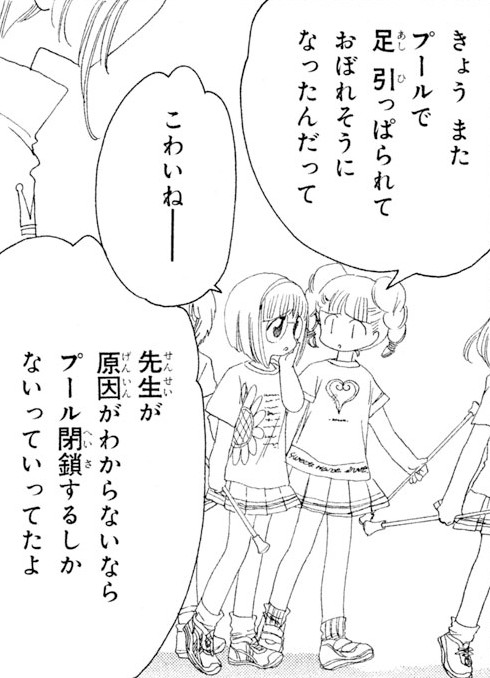
After cheerleading practice, Sakura overhears her friends talking about incidents at the school pool, where Sakura and Chiharu were among those mysteriously pulled underwater.
- 千春:
- 「きょう また プールで足 引っぱられておぼれそうになったんだって」
- “I heard that today, someone got dragged under the water at the pool and almost drowned again.”
- 奈緒子:
- 「こわいねーーー」
- “That's scary!”
- 千春:
- 「先生が原因がわからないならプール閉鎖するしかないっていってたよ」
- “The teacher said that if they can't figure out the cause, they'll have no choice but to close the pool.”
Example 2 of 2: The victim must have loved fishing with 釣り好き
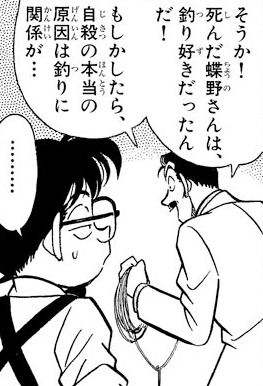
An illustrator, Izumi Chouno, fell from her apartment balcony while Kogoro, Ran, and Conan watched from her boss’s design office a few dozen meters away. The police are calling it suicide, but Conan has figured out how the killer made it look that way. He shows Kogoro a fishing line from the balcony drain, hoping he’ll catch on. Kogoro gets excited and asks an officer whether there’s a fishing tackle shop nearby, and the officer says there is.
- 小五郎:
- 「そうか!死んだ蝶野さんは、釣り好きだったんだ!」
- “I've got it! Ms. Chouno, the dead woman, was a fishing lover!”
- 小五郎:
- 「もしかしたら、自殺の本当の原因は釣りに関係が…」
- “Maybe the real reason for her suicide has something to do with fishing...”
- コナン:
- 「……」
- “...”
死因 (しいん) (Cause of death)
死因 is the illness, injury, or event that caused someone to die. It is common in medical reports, police investigations, and legal records.
It combines 死 (death) with 因 (cause) to show the cause behind a death.
Example 1 of 2: Determining the cause of death with 解剖
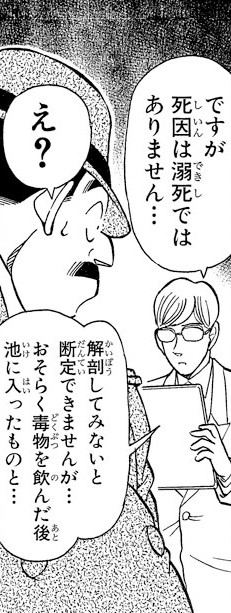
Inspector Megure suggests the murder suspect committed suicide by drowning himself. The medical examiner disagrees.
- 監察医:
- 「ですが死因は溺死ではありません…」
- “However, drowning wasn't the cause of death...”
- 目暮:
- 「え?」
- “What?”
- 監察医:
- 「解剖してみないと断定できませんが… おそらく毒物を飲んだ後池に入ったものと…」
- “I can't say for certain without an autopsy... but it's likely he took poison and then entered the pond...”
Example 2 of 2: Two in ten adventurers die of poison with 〜そうだ
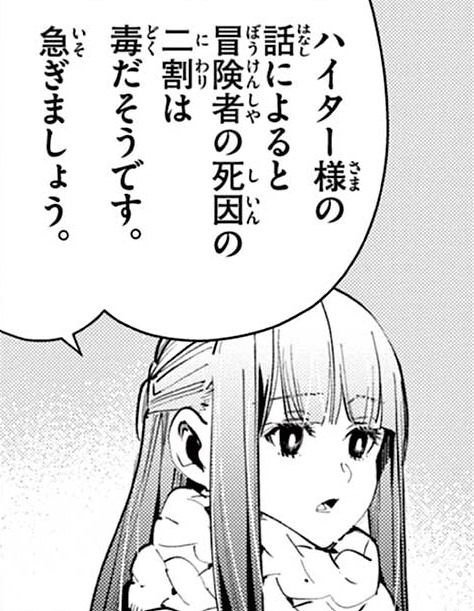
After a villager warns that the area is full of poisonous creatures, Stark gets bitten anyway. Frieren doesn’t recognize the poison and can’t treat it, so Fern and Frieren fly him back to the village. Stark insists he’s fine, since his master always said you can beat poison with guts. Frieren recalls that Eisen once shrugged off an arrow poisonous enough to knock out a dragon, which left Heiter appalled. Fern remarks that if Heiter was appalled, Eisen is the strange one.
- フェルン:
- 「ハイター様の話によると冒険者の死因の二割は毒だそうです。」
- “I heard from Lord Heiter that two in ten adventurers who die are killed by poison.”
- 「急ぎましょう。」
- “Let's hurry.”
Building Bigger Words
These patterns come up again and again in manga. Learn the pattern and you can read words you've never seen.
〜因 いん (the cause of it)
- 敗因 はいいん the cause of a defeat
- 勝因 しょういん the reason for a win
- 一因 いちいん one cause among several
- 原因不明 げんいんふめい cause unknown
因果〜 いんが (cause and effect)
- 因果応報 いんがおうほう getting what your deeds deserve
- 因果関係 いんがかんけい a causal link
Where 因 Breaks the Pattern
The meaning above carries you through most words. These are the ones where it won't, or where the reading is a surprise.
- 因縁 (いんねん) a fated tie, or an old grudge
The second most common 因 word in manga. いん and えん run together as いんねん. Between rivals it is the history that binds them. 因縁をつける is to pick a fight over nothing.
Check Yourself
What does 因 mean?
Causes and dependence.
Read These Without Furigana
原因
死因
Work Out a New Word
敗 is defeat. Read 敗因 in this line. What went wrong?
「君の敗因は相手を舐めすぎていたことだ」
Show the answer
敗因, the cause of a defeat. “You lost because you underestimated your opponent.”
勝 is winning. What would 勝因 be?
Show the answer
勝因, the reason for a win.