Continuation and connection with 続
続 primarily conveys the meanings of continuing without interruption, to continue, and to connect.
- Grade 4
- JLPT N3 (estimate)
- WaniKani level 19
- 13 strokes
Words with 続
- Ongoing Continuation
- 続ける つづける To continue
- 続く つづく To continue
- 継続 けいぞく Continuation
- 続行 ぞっこう Continuation
- 存続 そんぞく Survival
- 持続 じぞく Persistence
- Sequences and Repetition
- 連続 れんぞく Continuation
- 後続 こうぞく Following group
- 続出 ぞくしゅつ One after another
- Succession and Inheritance
- 相続 そうぞく Inheritance
- Connections and Links
- 接続 せつぞく Connection
- Story Continuations
- 続編 ぞくへん Sequel
The bold kana are the part 続 contributes. Words in a dashed box have no manga example yet.
How to Read 続
ぞく in compounds, and ぞっ before a k sound, as in 続行. With kana it is 続く, to go on, and 続ける, to keep something going.
Etymology
This kanji is the simplified form of 檢, a phono-semantic compound comprised of 糸 (thread) as the semantic component and 𧶠 as the phonetic component (ゾク).
The kanji was later simplified into the modern education form 続.
Ongoing Continuation
続ける (つづける) (To continue)
続ける is to keep doing something or keep it going.
Example 1 of 2: Getting on one's nerves with 気に食わない
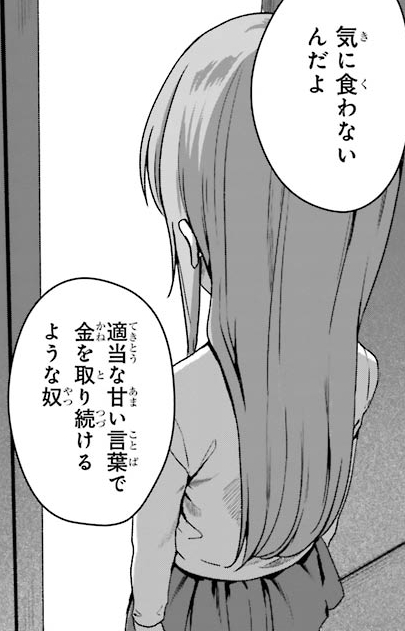
Following the death of their parents, Kanami’s big brother Kazutaka became secluded and abusive. Kanami begins to spend time with Makoto, a “rental big brother” whose advice gives her hope in restoring her brother’s former kindness. Kazutaka rebukes her attempts, suggesting that Makoto’s filling her with nonsense ideas.
- 一敬:
- 「気に食わないんだよ」
- “He gets on my nerves.”
- 「適当な甘い言葉で金を取り続けるような奴」
- “He's the kind of guy who keeps taking (rental) money while spouting alluring words.”
Example 2 of 2: Keeping a museum from shutting down with 事件
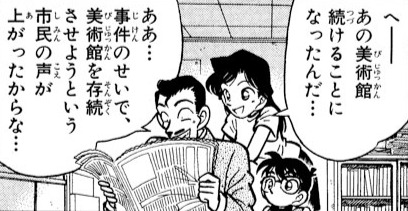
Following the solving of a murder case, Detective Mouri reads an article about the museum where the murder took place.
- 蘭:
- 「へーーー あの美術館続けることになったんだ…」
- “Wow... So they decided to keep the art museum open after all...”
- 毛利:
- 「ああ… 事件のせいで美術館を存続させようという市民の声が上がったからな…」
- “Yeah... Because of the incident, there was a public outcry to keep the art museum open...”
続く (つづく) (To continue)
続く is for something to go on without a break, such as rain, a road, or a story. It also means to come next, after something else.
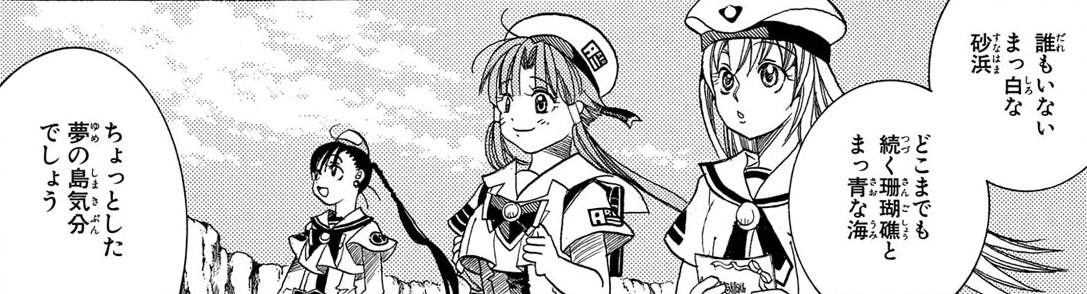
Akari, Aika, and Alice each received a mysterious invitation to “Neverland” and followed it to a small island. On its beach they found Alicia and Akira waiting in swimsuits. Alicia explains that President Aria planned the invitations and that this is a secret beach he found years ago. She adds that the Neo-Adriatic Sea has so many islands that plenty of hidden spots like this remain.
- アリシア:
- 「誰もいない まっ白な砂浜 どこまでも続く珊瑚礁とまっ青な海」
- “A pure white beach with no one on it, coral reefs stretching on and on, and a deep blue sea.”
- 「ちょっとした夢の島気分でしょう」
- “It feels a bit like a dream island, doesn't it?”
続行 (ぞっこう) (Continuation)
続行 means continuing or resuming something already under way.
It combines 続 (continue) with 行 (carry out) to show continuing to carry something forward.
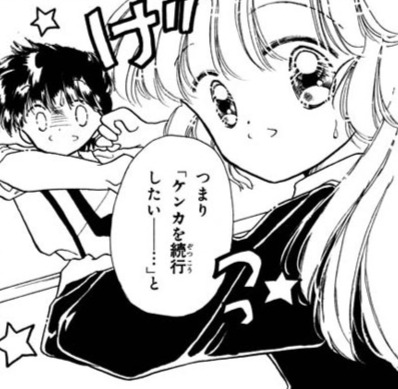
Meimi can’t stand Asuka Jr. speaking ill of her secret alter ego, Saint Tail, and the two get into a fight over it before class. Seira tugs at Meimi’s shirt, but Meimi says, “Don’t stop me, Seira.” The teacher’s voice repeats back, “‘Don’t stop me’…”
- シスター:
- 「つまり『ケンカを続行したいーー…』と」
- “In other words, 'I want to keep on fighting...'”
存続 (そんぞく) (Survival)
存続 means continued existence, especially when an organization or institution remains in operation.
It combines 存 (exist) with 続 (continue) to show existing on into the future.
Following the solving of a murder case, Detective Mouri reads an article about the museum where the murder took place.
- 蘭:
- 「へーーー あの美術館続けることになったんだ…」
- “Wow... So they decided to keep the art museum open after all...”
- 毛利:
- 「ああ… 事件のせいで美術館を存続させようという市民の声が上がったからな…」
- “Yeah... Because of the incident, there was a public outcry to keep the art museum open...”
Sequences and Repetition
連続 (れんぞく) (Continuation)
連続 means a sequence or continuation without interruption.
It combines 連 (link) with 続 (continue) to show things linked in unbroken sequence.
Example 1 of 2: In the same class since preschool with 連続
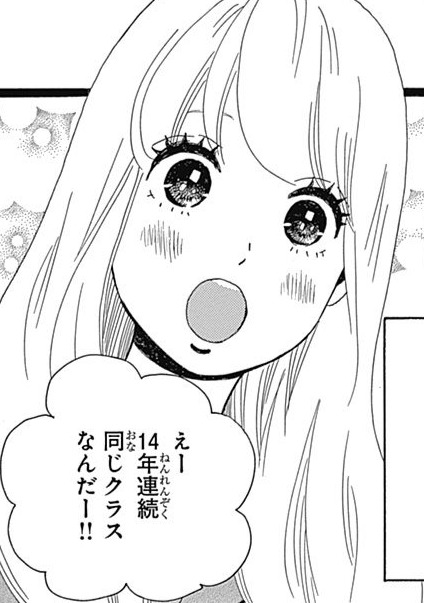
With the new school year, Takeo and Sunakawa are in the same class again. Takeo tells his girlfriend, Yamato, about it.
- 大和:
- 「えー 14年連続同じクラスなんだー!!」
- “Wow, you've been in the same class together for 14 years in a row!!”
Example 2 of 2: Singing one song after another with 連続
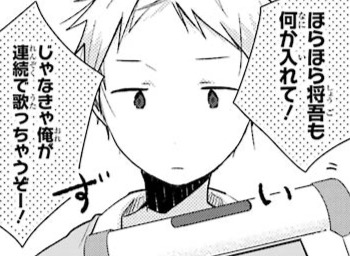
To distract himself from things going on with Fujimiya, Hase goes to karaoke, bringing Shougo with him.
- 長谷:
- 「ほらほら将吾も何か入れて!」
- “Come on, come on, Shougo! Put something in, too!”
- 「じゃなきゃ俺が連続で歌っちゃうぞー!」
- “Otherwise, I'll just keep singing one after another!”
続出 (ぞくしゅつ) (One after another)
続出 describes similar things appearing or happening one after another. News reports often use it for a string of problems or incidents.
It combines 続 (continue) with 出 (come out) to show things coming out continuously.
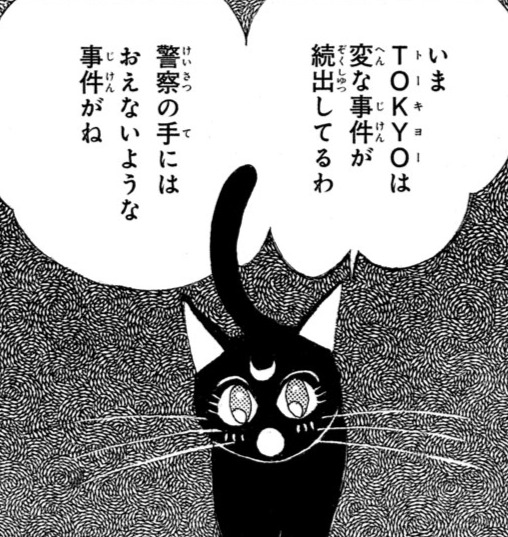
Luna introduces herself to Usagi, but Usagi thinks she’s dreaming if a cat is speaking to her. Luna gives Usagi a special brooch, then proceeds to explain the dire situation that has brought them together.
- ルナ:
- 「いまTOKYOは変な事件が続出してるわ」
- “Strange incidents are popping up all over Tokyo these days.”
- 「警察の手にはおえないような事件がね」
- “Incidents that seem beyond the police's control, you know.”
Building Bigger Words
These patterns come up again and again in manga. Learn the pattern and you can read words you've never seen.
続く and 続ける つづ (going on)
- 続き つづき the rest, the next part
- 続いて つづいて next
- 続けて つづけて in a row
Verb + 続ける つづける (to keep doing it)
- 生き続ける いきつづける to go on living
- 走り続ける はしりつづける to keep running
〜続き つづき (a run of something)
- 手続き てつづき procedure, paperwork
- 引き続き ひきつづき carrying straight on
- 長続き ながつづき lasting a long time
- 立て続け たてつづけ one right after another
続 read ぞく ぞく (more of the same)
- 続々 ぞくぞく one after another
- 連続殺人 れんぞくさつじん serial murder
- 遺産相続 いさんそうぞく inheriting an estate
- 続刊 ぞっかん volumes still to come
Check Yourself
What does 続 mean?
Continuation and connection.
Read These Without Furigana
続ける
続く
続行
存続
連続
続出
Work Out a New Word
長い is long. Read 長続き in this line. What does the speaker fear about this happiness?
「この幸せは長続きしない そんな気がする」
Show the answer
長続き, lasting a long time. “This happiness won’t last. That’s the feeling I get.”
続行 and 連続 both read 続 as ぞく, but one of them changes it. Which?
Show the answer
続行. Before the k of こう, ぞく tightens to ぞっ. 連続 keeps it whole.