Earth and places with 地
The kanji 地 has the core meanings of ground, earth, and land. It extends to place, region, and locations spread across the world. It often marks where something is situated or the earthly surface on which things happen.
- Grade 2
- JLPT N4 (estimate)
- WaniKani level 6
- 6 strokes
Words with 地
- Places and Regions
- 地球 ちきゅう Earth
- 土地 とち Land
- 地下 ちか Underground
- 地図 ちず Map
- 地域 ちいき Area
- 地方 ちほう Region
- 地面 じめん Ground
- 地震 じしん Earthquake
- 地形 ちけい Terrain
- 土地勘 とちかん Feel for a place
- 地図帳 ちずちょう Atlas
- 築地 つきじ Tsukiji
- 農地 のうち Farmland
- Materials
The bold kana are the part 地 contributes. Words in a dashed box have no manga example yet.
How to Read 地
ち and じ are both common, and no rule tells you which to expect. ち appears in 地球, 土地, and 地図. じ appears in 地面, 地震, 地元, and 地獄. Learn the reading with each word.
Etymology
This kanji is a phono-semantic compound comprised of 土 (earth) as the semantic component and 也 as the phonetic component (チ).
Places and Regions
地球 (ちきゅう) (Earth)
地球 is the planet we live on. In science fiction it is the home world, as in 地球人, an Earthling.
It combines 地 (earth / ground) with 球 (sphere) to show the earth as a round world.
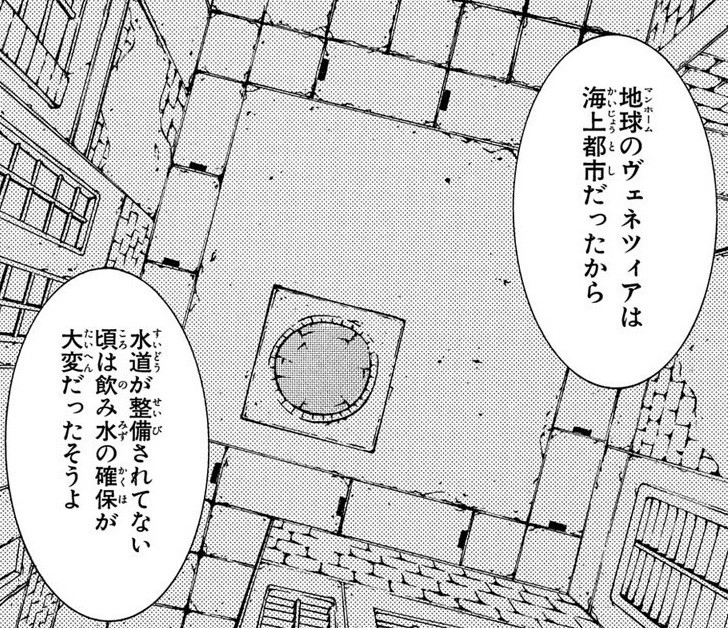
Al shows up late to meet Aika after working overtime, and the two walk the quiet streets at night. Aika climbs onto an old well in a plaza, its rotten cover gives way, and she drops in. Al reaches down to help her out and tumbles in after her. Luckily the well is dry. As Aika tries to climb the stone wall, Al remarks that the town’s wells have covers because no one uses them anymore.
- アル:
- 「地球のヴェネツィアは海上都市だったから」
- “Venice on Manhome was a city on the sea...”
- 「水道が整備されてない頃は飲み水の確保が大変だったそうよ」
- “...so I hear getting drinking water was really hard back before they had a water system.”
地図 (ちず) (Map)
地図 is a map, a drawing of an area that shows land, roads, and places.
It combines 地 (ground) with 図 (diagram) to show a drawn layout of land.
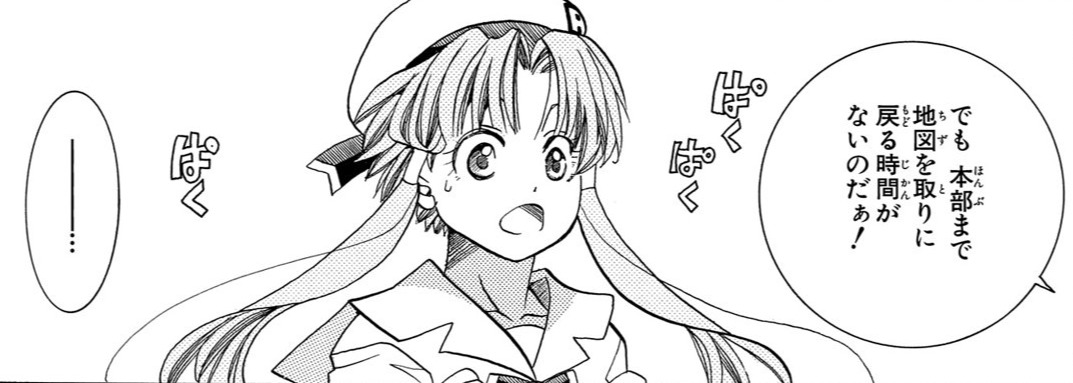
Akari encounters Woody while he’s out on a delivery run. He stopped to show off for some kids, but in the process, he seems to have lost his city map, and he has a terrible sense of direction. Akari asks if he has the delivery addresses, which he says he does.
- ウッディー:
- 「でも 本部まで地図を取りに戻る時間がないのだぁ!」
- “But I don't have time to go back to headquarters to get a map!!”
地面 (じめん) (Ground)
地面 means the ground, whether soil or a paved surface.
It combines 地 (ground) with 面 (surface) to show the surface of the ground.
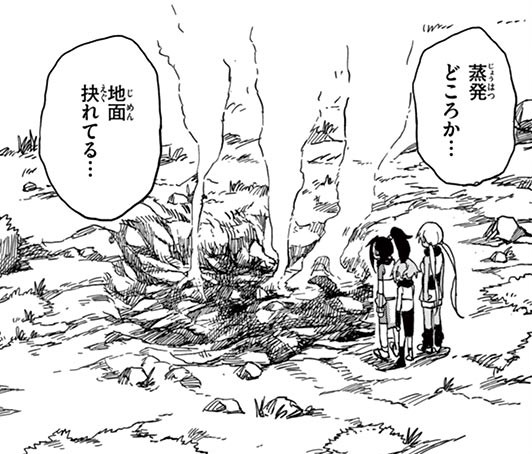
Sazanka is worried that Tsubaki’s abilities go awry when she hears the word “man”. To test this, Sazanka leads Tsubaki to a puddle of water and challenges her to evaporate it with a fire technique, during which Sazanka will whisper “man” into Tsubaki’s ear. The result is Tsubaki’s ability intensifying in power.
- サザンカ:
- 「蒸発どころか…地面抉れてる…」
- “Not just evaporation, even the ground is gouged.”
土地勘 (とちかん) (Feel for a place)
土地勘 means familiarity with an area and its geography.
It combines 土 (land), 地 (ground), and 勘 (intuition) to express feel for a place.
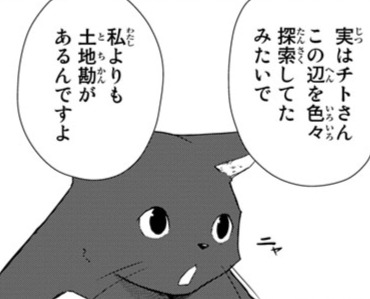
Not long after moving to a new town to stay with relatives, Makoto decides to head out for a walk. Her cousin is worried she’ll get lost. Makoto says not to worry, because she’ll have her witch familiar cat, Chito, with her.
- 真琴:
- 「実はチトさん この辺を色々探索してたみたいで私よりも土地勘があるんですよ」
- “Actually, Chito seems to have explored this area quite a bit, so she knows her way around better than I do.”
地図帳 (ちずちょう) (Atlas)
地図帳 means an atlas or bound collection of maps.
It combines 地図 (map) with 帳 (notebook) to show a book of maps.
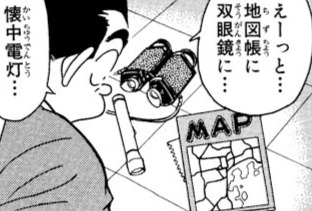
Ayumi leaves the bag with her new Masked Yaiba doll outside while she’s in the restroom. When she returns, she finds the bag waiting for her, but the doll is gone. Ran suggests someone may have taken her bag by mistake. Genta decides to see what’s in the bag Ayumi brought back, dumping its contents onto the ground.
- 元太:
- 「えーっと… 地図帳に双眼鏡に…」
- “Um... an atlas, binoculars...”
- 「懐中電灯…」
- “...a flashlight...”
築地 (つきじ) (Tsukiji)
築地 is a district in central Tokyo, famous for decades as home to the city’s main fish market. The wholesale market moved to Toyosu in 2018, but Tsukiji’s outer market still sells fresh seafood.
It combines 築 (build) with 地 (ground) to show built-up land, since the area was reclaimed from Tokyo Bay.
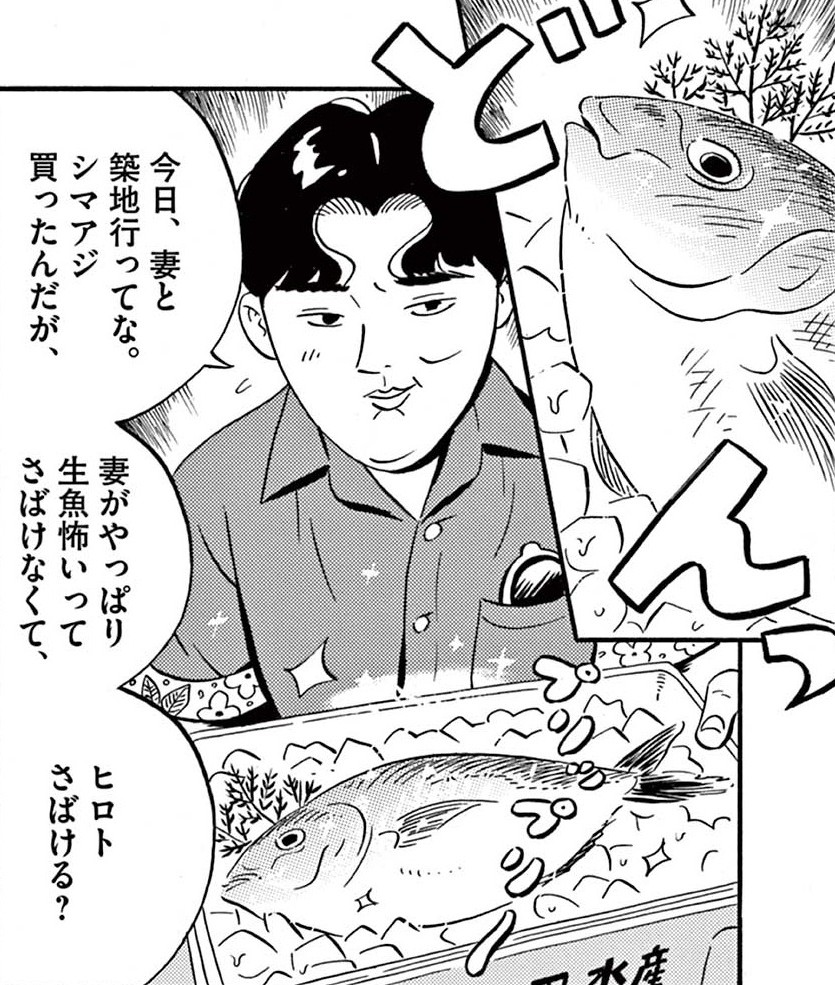
Hiroto and his cousin Natsumi have nothing but rice in the house and can’t decide what to do about lunch. Just then, Hiroto’s friend Hideki pulls up in his car.
- ヒデキ:
- 「今日、妻と築地行ってな。シマアジ買ったんだが、」
- “My wife and I went to Tsukiji today. We bought a striped jack, but...”
- 「妻がやっぱり生魚怖いってさばけなくて、」
- “...my wife says raw fish scares her after all, so she couldn't fillet it.”
- 「ヒロトさばける?」
- “Hiroto, can you fillet it?”
農地 (のうち) (Farmland)
農地 means farmland or land used for cultivation.
It combines 農 (agriculture) with 地 (land) to show land for farming.
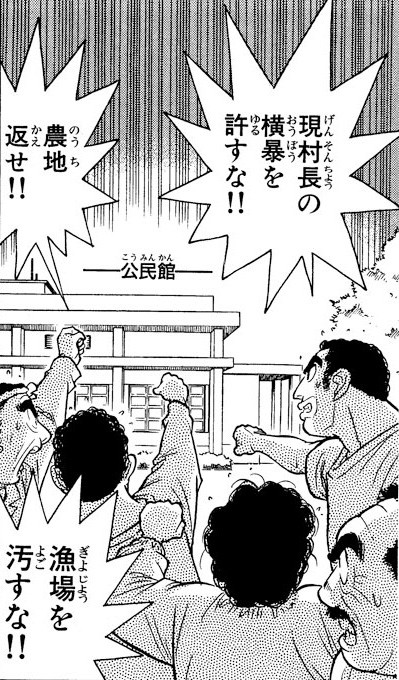
Kogoro, Ran, and Conan have come to Tsukikage Island because of a letter signed by a pianist who died twelve years ago. A doctor tells them the island is in the middle of a mayoral race. One candidate, Masato Shimizu, represents the island’s fishermen and campaigns to protect its fishing grounds, while the current mayor, Tatsuji Kuroiwa, has been losing support. The three head to the community center, where a memorial service for the previous mayor is being held tonight.
- 村人Ⓐ:
- 「現村長の横暴を許すな!!」
- “Don't let the mayor get away with his tyranny!!”
- 村人Ⓑ:
- 「農地返せ!!」
- “Give us back our farmland!!”
- 村人Ⓒ:
- 「漁場を汚すな!!」
- “Stop polluting our fishing grounds!!”
Shapes and Structures
地図 (ちず) (Map)
地図 is a map, a drawing of an area that shows land, roads, and places.
It combines 地 (ground) with 図 (diagram) to show a drawn layout of land.
Akari encounters Woody while he’s out on a delivery run. He stopped to show off for some kids, but in the process, he seems to have lost his city map, and he has a terrible sense of direction. Akari asks if he has the delivery addresses, which he says he does.
- ウッディー:
- 「でも 本部まで地図を取りに戻る時間がないのだぁ!」
- “But I don't have time to go back to headquarters to get a map!!”
Materials
生地 (きじ) (Dough)
生地 is dough or batter, the mixture that becomes bread, pastry, or noodles once it is shaped and cooked. It also means cloth or fabric.
It combines 生 (raw) with 地 (base) to show the unworked base material, such as dough before it is baked or cloth before it is sewn.
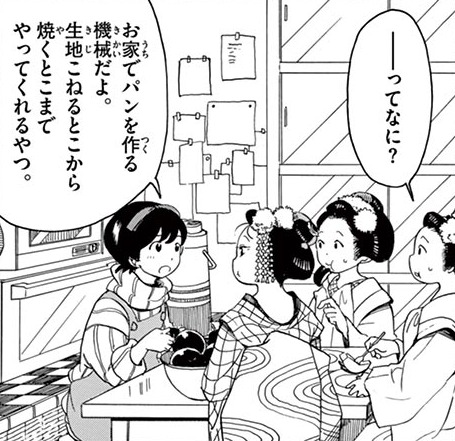
Kiyo and the maiko of the house sit around a bowl of apples in the kitchen. The talk has turned to a “home bakery”, and one of the maiko repeats the unfamiliar words.
- 舞妓さん:
- 「――ってなに?」
- “...What's that?”
- キヨ:
- 「お家でパンを作る機械だよ。生地こねるとこから焼くとこまでやってくれるやつ。」
- “It's a machine for making bread at home. It does it all for you, from kneading the dough to baking the bread.”
Building Bigger Words
These patterns come up again and again in manga. Learn the pattern and you can read words you've never seen.
〜地 ち (a place for something)
- 遊園地 ゆうえんち amusement park
- 目的地 もくてきち destination
- 基地 きち base
- 敷地 しきち the grounds of a building
- 現地 げんち the place itself
地〜 ち (a place or position)
- 地区 ちく district
- 地上 ちじょう above ground
- 地位 ちい rank
- 地点 ちてん a spot
地〜 じ (the ground, or what lies underneath)
- 地獄 じごく hell
- 地元 じもと your home area
- 地道 じみち slow and steady
- 地雷 じらい landmine
Where 地 Breaks the Pattern
The meaning above carries you through most words. These are the ones where it won't, or where the reading is a surprise.
- 心地 (ここち) how something feels
The reading belongs to the whole word. It mostly follows another word, as in 居心地, how comfortable a place is to be in.
- 地味 (じみ) plain
Neither ground nor taste helps here. It describes clothes, people, or work that draw no attention. Its opposite is 派手, flashy.
- 意地 (いじ) stubborn pride
Here 地 is a person’s underlying nature. 意地を張る is to dig in out of pride, and 意地悪 is being mean.
Check Yourself
What does 地 mean?
Earth and places.
Read These Without Furigana
地球
地図
地面
土地勘
地図帳
築地
Work Out a New Word
遊園 is a garden for play. Read 遊園地 in this line. What had she always wanted to do?
「友達と遊園地に行くのすごく憧れだったの」
Show the answer
遊園地, an amusement park. “I always dreamed of going to an amusement park with friends.”
地球 and 地震 both start with 地. Which reads it ち, and which じ?
Show the answer
地球 and 地震.