The kanji 園 means cultivated ground, a garden, or an area and its facilities set aside for a purpose, such as learning and play facilities for children.
Etymology
This kanji isa phono-semantic compound comprised of 囗 (enclosure) as the semantic component and 袁 as the phonetic component (エン).
Etymology Research
Kanjipedia, citing Kadokawa’s Shinjigen, explains the result as その, ground planted with fruit trees or vegetables. The sound relationship belongs to the Chinese character’s formation, not to the origin of the Japanese word その. Kanjipedia, 園
CUHK gives enclosed ground for growing vegetables, fruit, and flowering plants as the original meaning. It quotes the Shuowen Jiezi definition as a place for planting fruit trees. Its older-form collection includes small-seal and bamboo or silk manuscript forms, but no oracle-bone or bronze examples. The cited Shijing poem 將仲子 asks someone not to cross the speaker’s 園 or break its trees. CUHK also cites 園 among gardens and ponds in the Shuihudi Qin manuscript 為吏之道. These provide early textual and manuscript evidence for grounds and gardens, without establishing the character’s first use. CUHK, 園
Heibonsha’s Fukyuban Jitsu agrees that 園 is phono-semantic, but proposes an original meaning of planting trees in burial grounds, drawing on funerary compounds and its interpretation of 袁. This is a competing origin hypothesis. CUHK records imperial burial-ground uses in the Shiji, but keeps cultivation as the original sense. Heibonsha, Jitsu, 園CUHK, 園
公園 is a large area (such as a garden or green space) created by the national government or a municipality for the general public to rest, play, or take a walk.
It combines 公 (public) with 園 (grounds) to show grounds open to everyone.
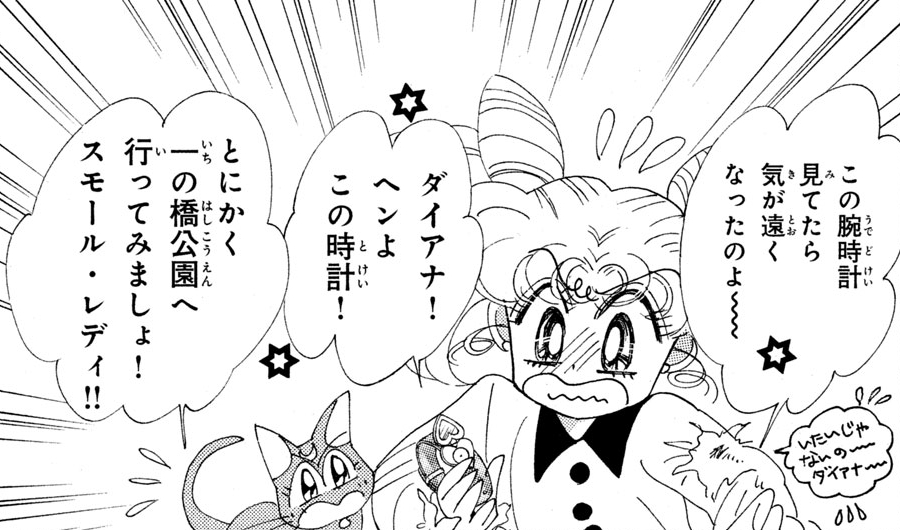
At the stroke of midnight, Chibiusa wakes to a mysterious glow from her new wristwatch. She gets out of bed in a daze, and begins to leave the room. Her cat, Diana, bites her on the arm, returning Chibiusa from her trance.
ちびうさ:
「この腕時計見てたら気が遠くなったのよ〰〰」
“When I looked at this wristwatch, I became lightheaded〰”
「ダイアナ! ヘンよ この時計!」
“Diana! Something is strange about this watch!”
「とにかく 一の橋公園へ行ってみましょ! スモール・レディ!!」
“Anyway, let's try going to Ichinohashi Park! Small Lady!!”
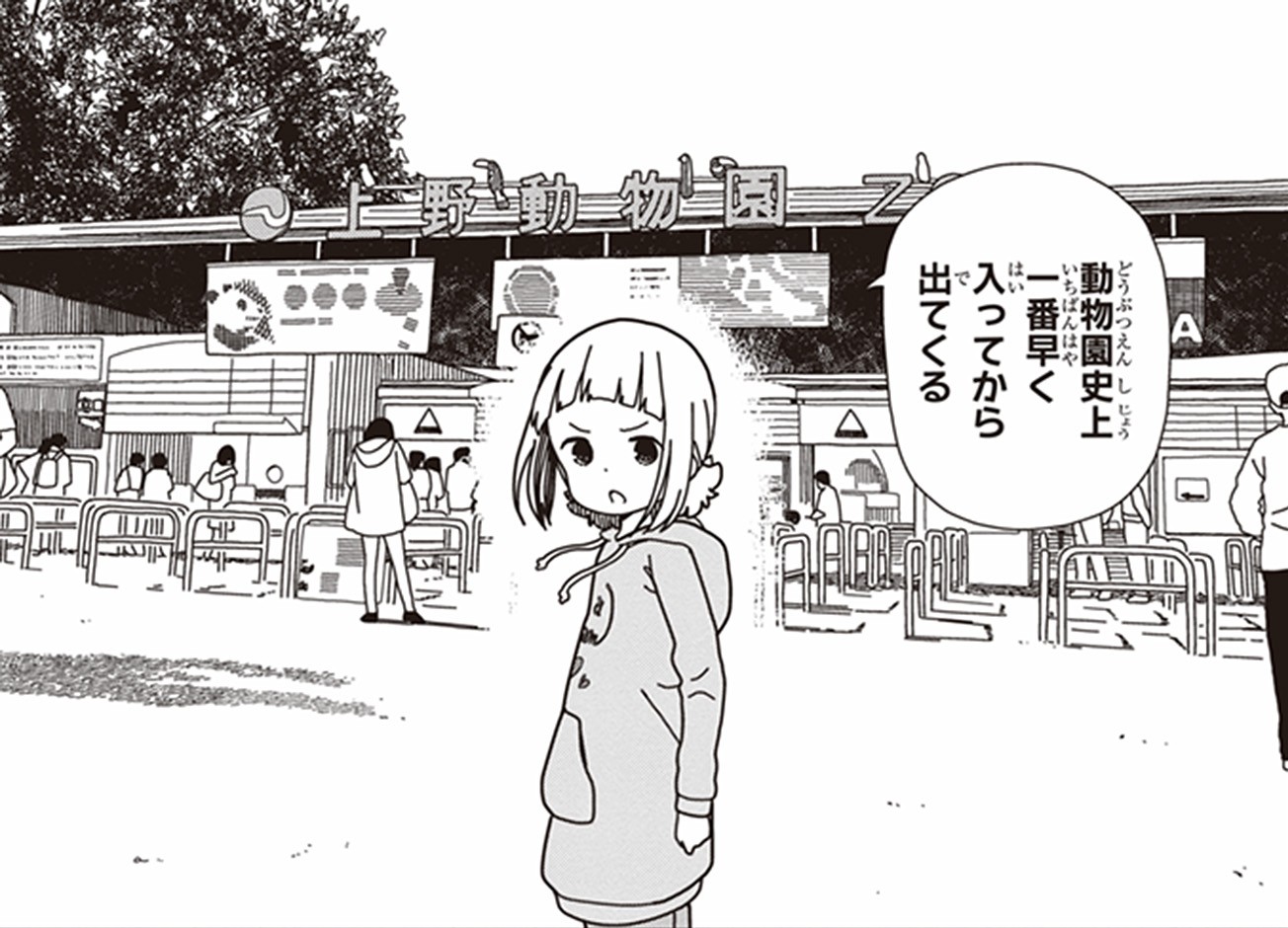
While trying to find something to do, Sacchan and her friends pass by the zoo, which is free for children to enter. Yui asks if Sacchan plans to enter the zoo.
さっちゃん:
「動物園史上一番早く入ってから出てくる」
“The fastest in zoo history to enter and then leave.”