Faces and surfaces with 面
面 has three basic meanings: face, surface, and direction.
Etymology
面 is a pictogram of a face seen from the front.
Faces and Fronts
真面目 (Serious)
真面目 describes someone who acts honestly and puts real effort into things instead of joking around or cutting corners. 真面目にやる means to do something properly and with effort.
It combines 真 (true) with 面目 (face) to show a genuine outward character.
Example 1 of 2: A sign of summer with 風物詩
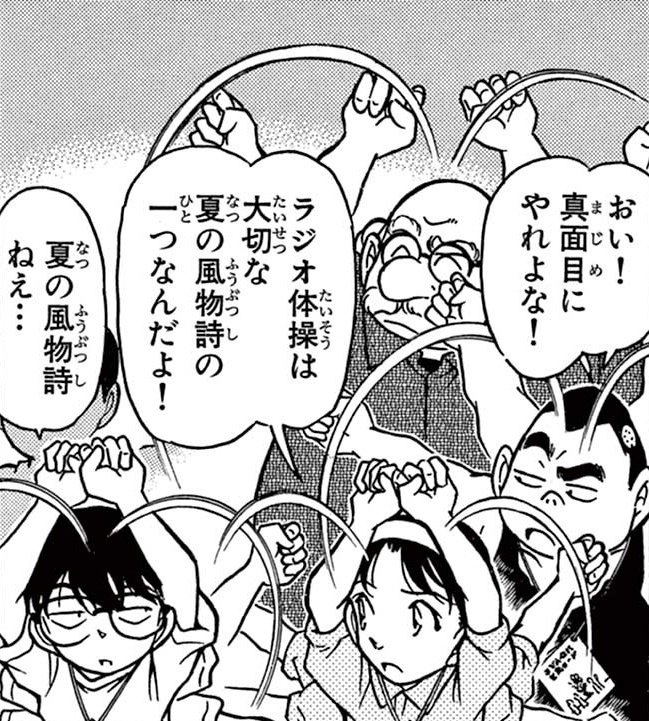
Conan has joined the other children for radio exercises at school. As everyone follows the routine, he broods over how he should be enjoying his summer vacation as a second-year high school student. Instead, he is stuck exercising with elementary schoolers and wonders what he is doing there.
- 元太:
- 「おい! 真面目にやれよな!」
- “Hey! Take this seriously!”
- 歩美:
- 「ラジオ体操は大切な夏の風物詩の一つなんだよ!」
- “Radio exercises are one of those treasured signs of summer!”
- コナン:
- 「夏の風物詩ねえ…」
- “A sign of summer, huh...”
Example 2 of 2: An all-around athlete with 万能
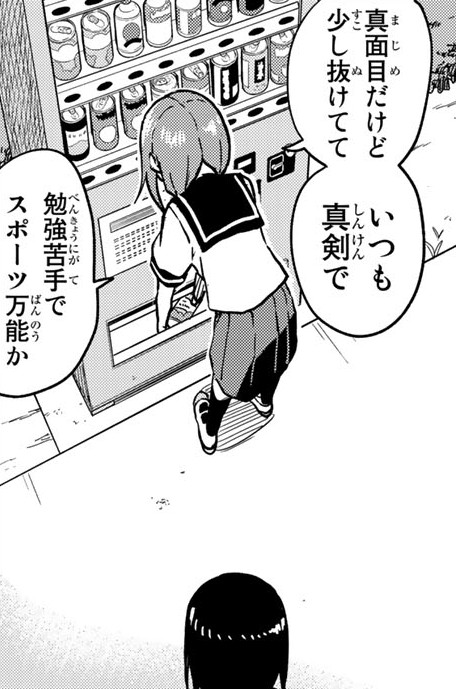
Urushi asks Rin about what Ayumu was like in middle school.
- うるし:
- 「真面目だけど少し抜けてていつも真剣で勉強苦手でスポーツ万能か」
- “Serious but a bit absent-minded, always earnest, struggles with academics, but excels at sports, huh?”
面白い (Interesting)
面白い describes something interesting, fun, or funny.
面白い spells おもしろい with 面 (face) and 白 (white). One popular explanation is a face brightening with delight.
Example 1 of 2: Going to buy mugs with 〜に行く

Cocoa discusses the café’s coffee cups with Chino.
- ココア:
- 「この前面白いカップ見つけたんだ」
- “I found an interesting cup the other day.”
- 「今度買いに行かない?」
- “Why don't we go buy some?”
- リゼ:
- 「へぇ どんな」
- “Oh? What kind?”
Example 2 of 2: More miso soup with おかわり

Yotsuba eats breakfast with her father and grandmother. The grown-ups are talking about all the cleaning Grandma is doing around the house, as she says he hasn’t cleaned the yard at all.
- 父さん:
- 「庭…なんもしとらんな」
- “The yard...I haven't done anything.”
- ばあさん:
- 「なんか植えたらええ。庭作り面白いで」
- “You should plant something. Gardening is great.”
- よつば:
- 「ばーちゃんみそしるおかわり!」
- “Gramma, more miso soup!”
- ばあさん:
- 「ん」
- “Mm.”
- よつば:
- 「ばーちゃんのみそしるすき!」
- “I like Gramma's miso soup!”
Scenes and Aspects
面倒 (Trouble)
面倒 means trouble, bother, or something difficult to deal with. It can also mean caring for someone or something.
This word is an ateji, so the meaning of the kanji do not apply.
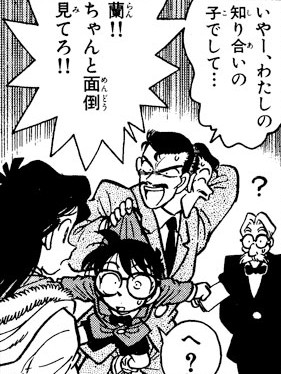
Conan and Ran end up with Kogoro investigating a kidnapping case. As Kogoro questions the butler, Conan steps in with his own questions. The butler asks who the child is.
- 小五郎:
- 「いやー、わたしの知り合いの子でして…」
- “Well, it's the child of an acquaintance, and...”
- 「蘭!! ちゃんと面倒見てろ!!」
- “Ran! Properly look after him!”
Surfaces and Planes
地面 (Ground)
地面 means the ground, whether soil or a paved surface.
It combines 地 (ground) with 面 (surface) to show the surface of the ground.

Sazanka is worried that Tsubaki’s abilities go awry when she hears the word “man”. To test this, Sazanka leads Tsubaki to a puddle of water and challenges her to evaporate it with a fire technique, during which Sazanka will whisper “man” into Tsubaki’s ear. The result is Tsubaki’s ability intensifying in power.
- サザンカ:
- 「蒸発どころか…地面抉れてる…」
- “Not just evaporation, even the ground is gouged.”
譜面 (Score)
譜面 means sheet music or a score written in musical notation.
It combines 譜 (notation) with 面 (surface) to show the page (surface) bearing written notation.
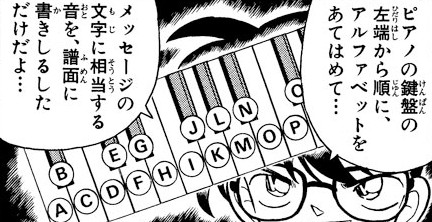
Following a series of murders, Conan discovers a message hidden in sheet music. He explains it to Ran.
- コナン:
- 「ピアノの鍵盤の左端から順に、アルファベットをあてはめて…」
- “Starting from the leftmost key on the piano keyboard, I assigned each key a letter...”
- 「メッセージの文字に相当する音を、譜面に書きしるしただけだよ…」
- “I simply wrote down the notes corresponding to the letters of the message on the sheet music...”