This kanji is a phono-semantic compound comprised of 金 (metal) as the semantic component and 勺 as the phonetic component (チョウ).
Etymology Research
The received form is a semantic and phonetic compound: 金 marks a metal implement, and 勺 supplies the historical sound. 漢字ペディア, following 『角川新字源 改訂新版』, explains its early referent as a fishhook. The Chinese University of Hong Kong database identifies 金 and 勺 in the same roles and cites an early use for catching fish with tackle. It also records a later figurative use for obtaining something by artifice or enticing someone. These later uses do not show that the metal component itself depicts a lure. 漢字ペディア, 釣, 漢語多功能字庫, 釣
The CUHK entry shows a small-seal form and a manuscript form, but no oracle-bone or bronze form for this character. Do not claim a more precise earliest shape from the modern strokes. 勺’s phonetic role concerns the Chinese character’s formation; it does not mean that 勺 is read チョウ as a standalone Japanese kanji. 漢語多功能字庫, 釣
Fishing
釣り(つり) (Fishing)
釣り is fishing with a rod, line, and hook. In a shop, 釣り, often お釣り, is also the change you get back after paying.
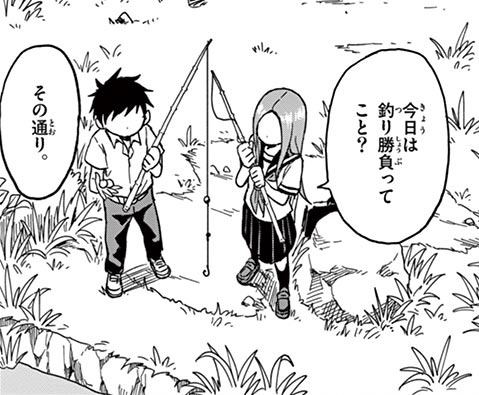
Nishikata keeps challenging Takagi to contests so he can finally beat her. After school, he leads her down a path into the woods to a pond she never knew was there. Takagi teases him about what he’s planning in such a deserted spot. Then he pulls out two fishing rods and some bait.
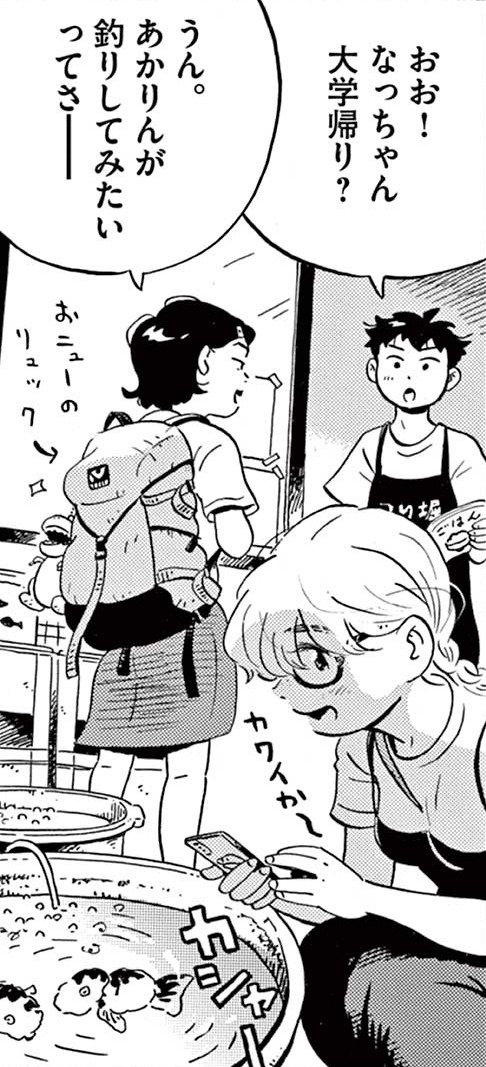
Hiroto works the afternoon shift at a fishing pond in Asagaya, where he mostly minds the counter. Natsumi shows up there with her university friend Akari, who is amazed that a place like this exists in the neighborhood.
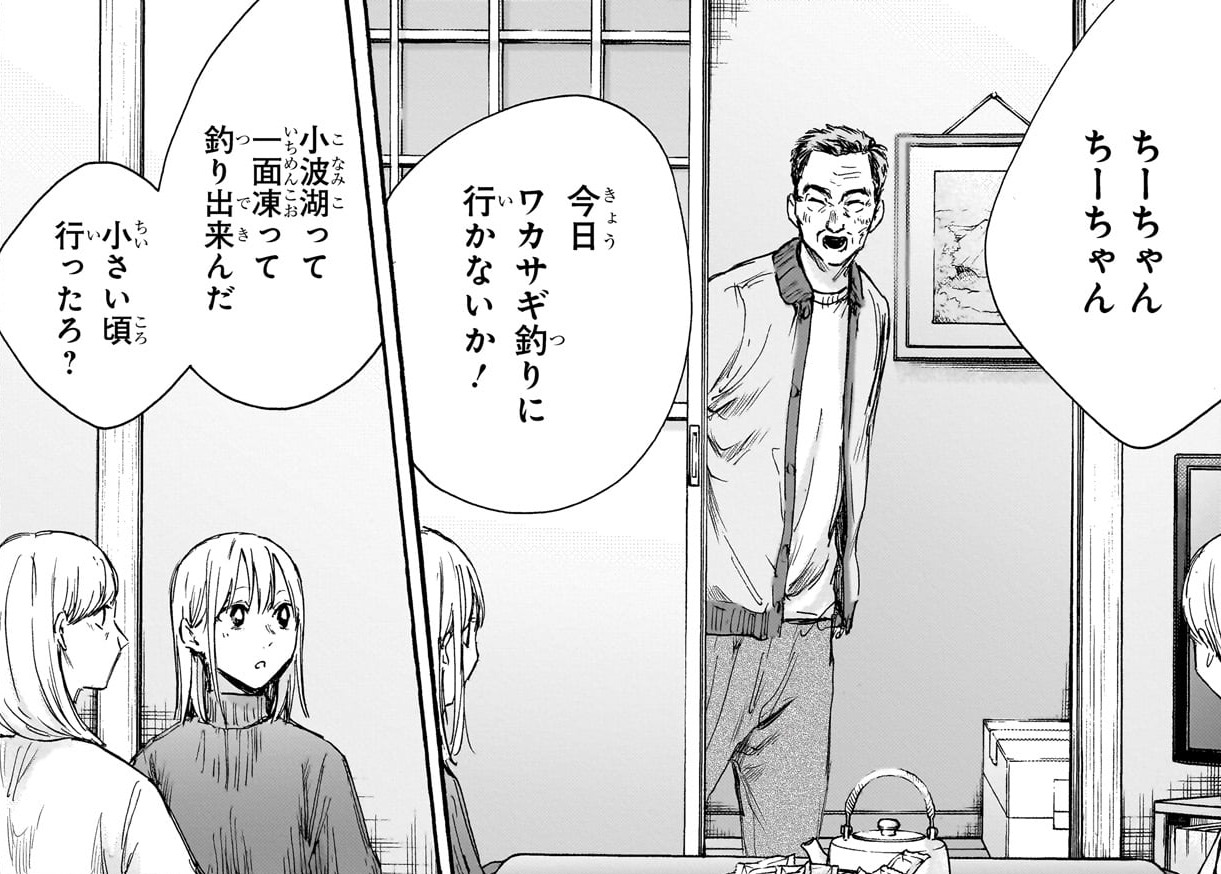
Chinatsu is spending the New Year holidays at her grandparents’ house in Nagano. One morning she sits at the kotatsu with her mother, who tells her they’ll head home on the sixth and can take it easy until then. Then her grandfather calls to her from the doorway.
おじいちゃん:
「ちーちゃん ちーちゃん」
“Chii, Chii!”
「今日ワカサギ釣りに行かないか!」
“Want to go smelt fishing today?”
「小波湖って一面凍って釣り出来んだ」
“Konami Lake freezes over end to end, so you can fish right on it.”
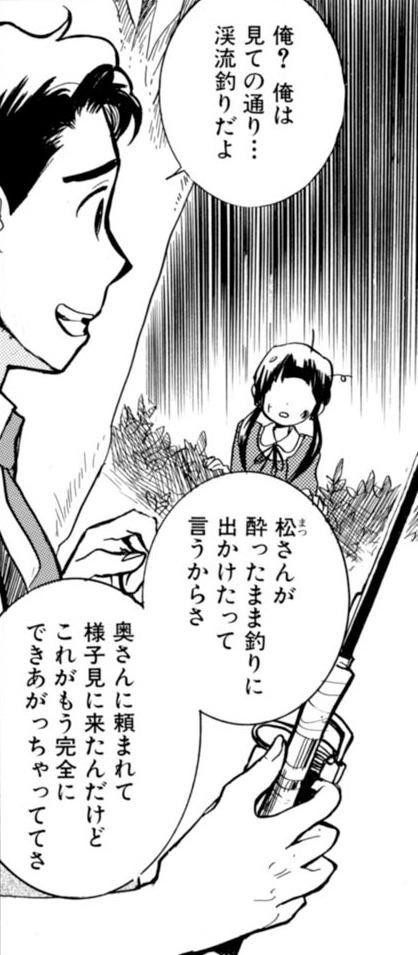
Machi sets out for the Uniqlo in town on an errand, but the heavy bicycle she borrowed falls apart on the mountain road. She decides to cut straight across the mountain on foot and climbs down a steep slope to a stream, where she runs into Yoshio holding a fishing rod. He asks what she’s doing on such a steep slope.
良夫:
「俺? 俺は見ての通り…渓流釣りだよ」
“Me? Well, as you can see... I'm stream fishing.”
「松さんが酔ったまま釣りに出かけたって言うからさ」
“I heard Matsu went off fishing while he was still drunk.”
「奥さんに頼まれて様子見に来たんだけど これがもう完全にできあがっちゃっててさ」
“His wife asked me to come check on him, but he's totally plastered.”
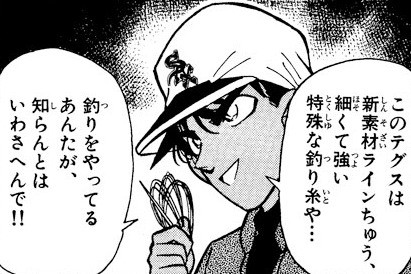
Diplomat Isao Tsujimura has been found poisoned in his study, locked from the inside with his own key in his pocket. Heiji Hattori has shown how the killer could have slipped the key into that pocket from outside the door using tape and a needle-tipped length of thread. He has named the victim’s elderly father, a retired professor who dropped by that afternoon to show off a fish he’d caught. Now he holds up the thread he found in the Japanese-style room.
平次:
「このテグスは新素材ラインちゅう、細くて強い特殊な釣り糸や…」
“This line's a special kind of fishing line called "new-material line". Thin and strong...”
平次:
「釣りをやってるあんたが、知らんとはいわさへんで!!」
“You fish, so don't you dare tell me you've never heard of it!!”
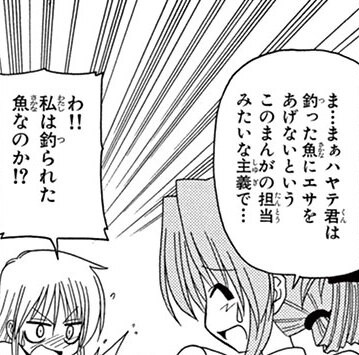
Nagi believes Hayate once confessed his love for her, though it was a misunderstanding. Hayate recently saw her hanging out with another boy and said nothing, and she’s upset that he doesn’t seem jealous. In the bath, she asks Maria why Hayate never gets even a little jealous, when he was the one who said he liked her.
マリア:
「ま…まぁハヤテ君は釣った魚にエサをあげないというこのまんがの担当みたいな主義で…」
“W-well, maybe Hayate is like this manga's editor, and doesn't believe in feeding a fish once it's caught...”
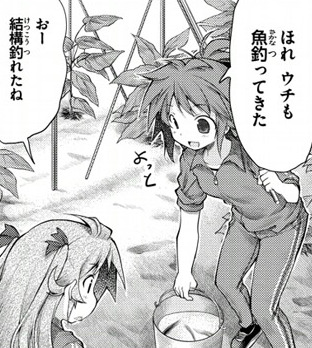
The village kids are having an outdoor cookout at school. Komari and Hotaru have been picking vegetables in the school garden, and Komari is sore that she forgot to bring work gloves. Natsumi walks over and asks if they got any vegetables, and Komari answers that they got a few, more or less.
After school, Nishikata leads Takagi to a hidden pond in the woods and hands her a fishing rod and bait. Takagi asks whether today’s contest is a fishing match, and Nishikata says it is. Now he sets the rules.
西片:
「この池にいるフナを、先に5匹釣った方の勝ち。」
“Whoever catches five carp from this pond first wins.”
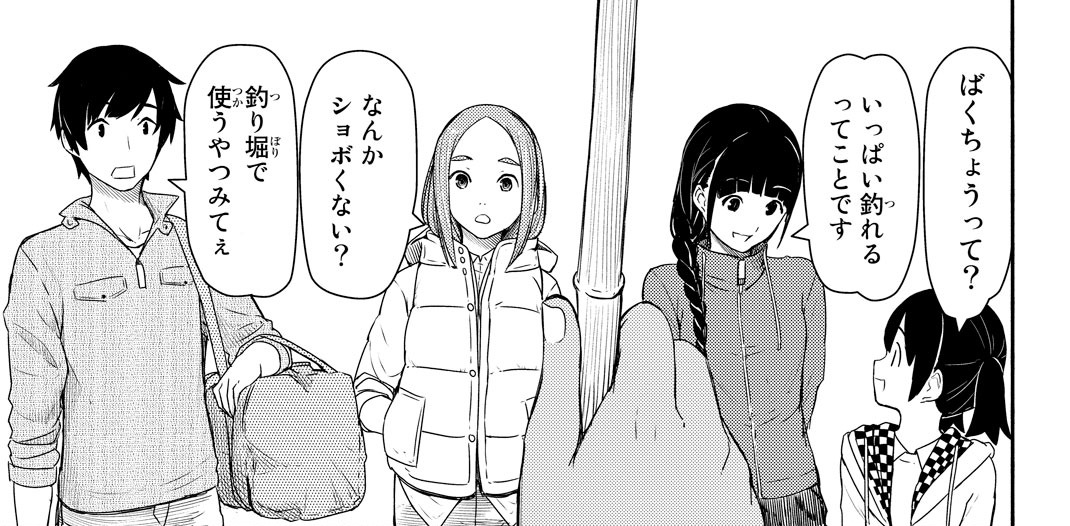
Akane drives Makoto, Kei, Chinatsu, and Nao to a river for the day. When they get out of the car, she pulls a long bamboo rod from the trunk and proudly announces it as the Big Haul Fishing Rod.
千夏:
「ばくちょうって?」
“What's 'big haul'?”
真琴:
「いっぱい釣れるってことです」
“It means you catch a whole lot.”
なお:
「なんかショボくない?」
“Doesn't it look kind of cheap?”
圭:
「釣り堀で使うやつみてぇ」
“Looks like something you'd use at a fishing pond.”
The village kids are having an outdoor cookout at school. Komari and Hotaru have been picking vegetables in the school garden, and Komari is sore that she forgot to bring work gloves. Natsumi walks over and asks if they got any vegetables, and Komari answers that they got a few, more or less.
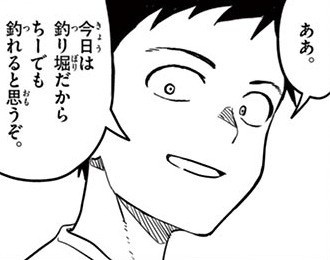
On a sunny day, Nishikata, Takagi, and their young daughter Chii arrive at a fishing spot with their rods. Nishikata declares he’s going to catch a ton of fish. Chii, holding her own rod, asks him whether fishing is fun.
西片:
「ああ。今日は釣り堀だからちーでも釣れると思うぞ。」
“Yeah. We're at a fishing pond today, so I think even you'll catch something, Chii.”
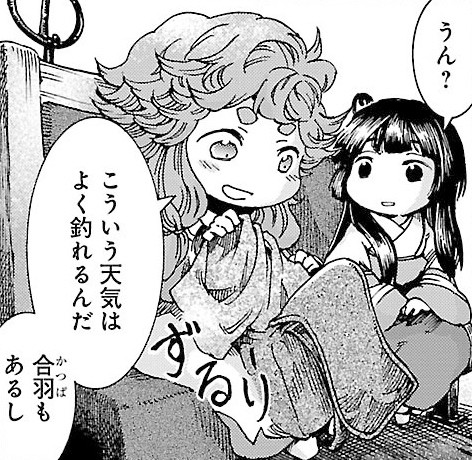
Hakumei and Mikochi take an overnight train to Lake Kanokan, which Hakumei has heard is a great place to fish. Near the end of the trip, it starts to rain. Mikochi says it’s a shame they won’t be able to fish, but Hakumei tells her they’re fishing anyway.
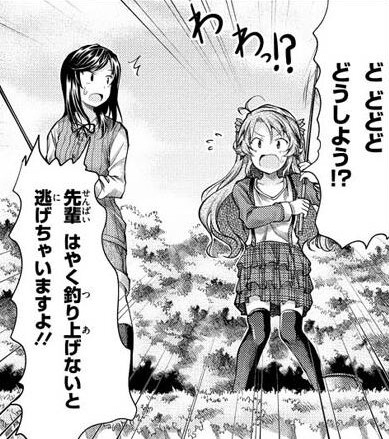
After thirty minutes at the fishing pond without a bite, Natsumi calls the place a scam. Hiroto asks Shibusawa, a gruff regular with a tub full of fish, to give Akari some tips. Moments later, Akari pulls a goldfish out of the water.
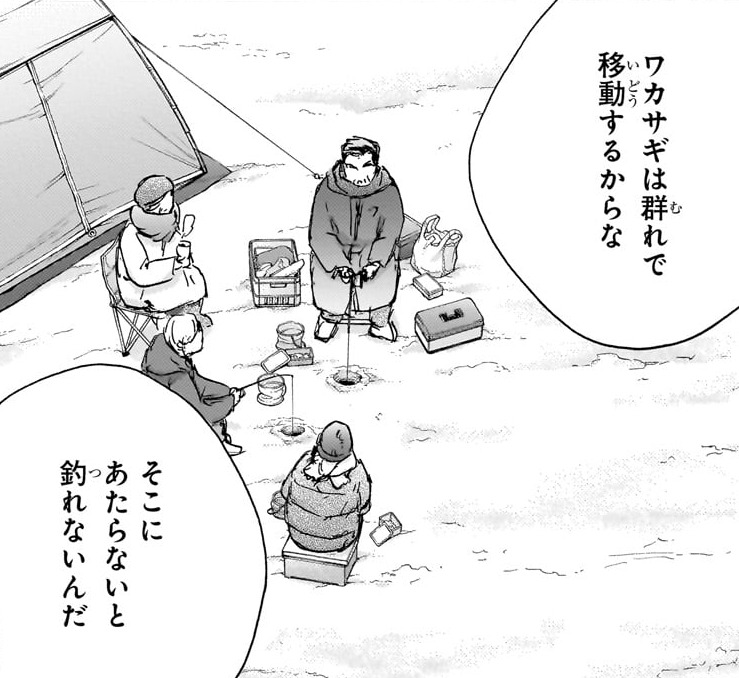
Chinatsu is spending New Year’s at her grandparents’ home in Nagano. Her grandfather has taken the family ice fishing for pond smelt on a frozen lake. After a while the fish stop biting, and Chinatsu remarks on it.
おじいちゃん:
「ワカサギは群れで移動するからな」
“Smelt move around in schools.”
「そこにあたらないと釣れないんだ」
“Unless you hit the spot where they are, nothing's biting.”
Natsumi’s mother has offered her pocket money to catch some creatures for a pond, so Natsumi has dragged everyone out to go fishing. As Komari waits with her line in the water, her rod suddenly jerks, and she cries that she might have hooked a fish.
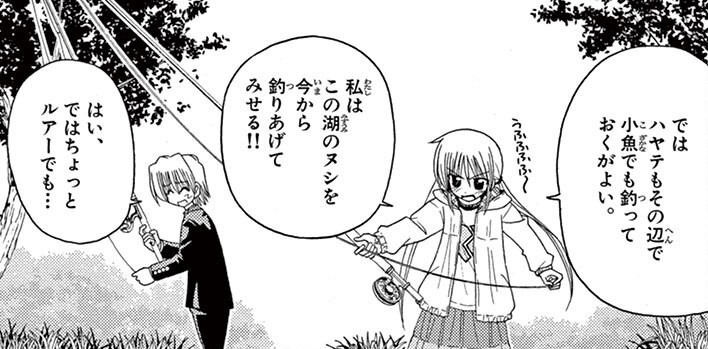
Inspired by a fishing manga, Nagi has dragged Hayate to the lake on the Sanzenin estate. She insists on fly fishing, though she has never tried it, because the hero of her manga does it. After looking over the equipment, she declares that she understands how it works.
ナギ:
「ではハヤテもその辺で小魚でも釣っておくがよい。」
“Then you can go catch some little fish over there, Hayate.”
「私はこの湖のヌシを今から釣りあげてみせる!!」
“I'm going to reel in the master of this lake, starting right now!”
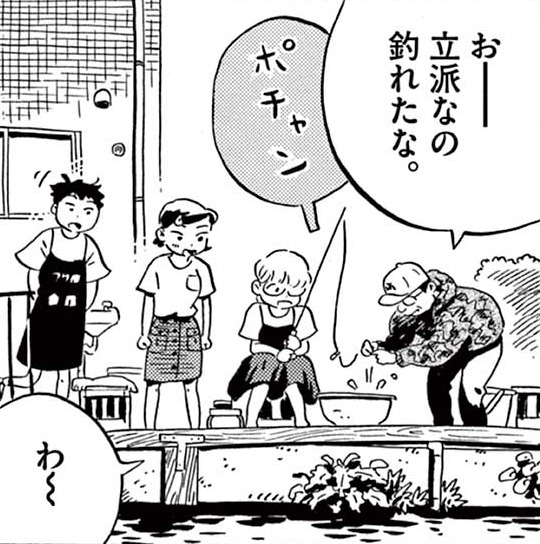
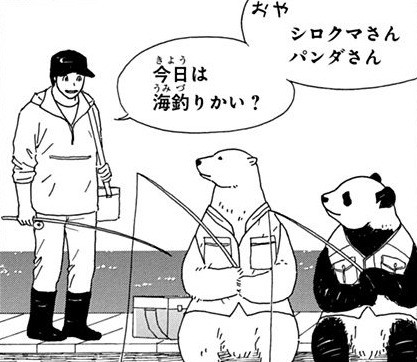
Shirokuma, who runs the café, and his regular customer Panda have gone fishing off a wooden pier by the sea. They sit with their rods out, wondering what they’ll catch.
Machi sets out for the Uniqlo in town on an errand, but the heavy bicycle she borrowed falls apart on the mountain road. She decides to cut straight across the mountain on foot and climbs down a steep slope to a stream, where she runs into Yoshio holding a fishing rod. He asks what she’s doing on such a steep slope.
良夫:
「俺? 俺は見ての通り…渓流釣りだよ」
“Me? Well, as you can see... I'm stream fishing.”
「松さんが酔ったまま釣りに出かけたって言うからさ」
“I heard Matsu went off fishing while he was still drunk.”
「奥さんに頼まれて様子見に来たんだけど これがもう完全にできあがっちゃっててさ」
“His wife asked me to come check on him, but he's totally plastered.”
On a sunny day, Nishikata, Takagi, and their young daughter Chii arrive at a fishing spot with their rods. Nishikata declares he’s going to catch a ton of fish. Chii, holding her own rod, asks him whether fishing is fun.
西片:
「ああ。今日は釣り堀だからちーでも釣れると思うぞ。」
“Yeah. We're at a fishing pond today, so I think even you'll catch something, Chii.”
Akane drives Makoto, Kei, Chinatsu, and Nao to a river for the day. When they get out of the car, she pulls a long bamboo rod from the trunk and proudly announces it as the Big Haul Fishing Rod.
千夏:
「ばくちょうって?」
“What's 'big haul'?”
真琴:
「いっぱい釣れるってことです」
“It means you catch a whole lot.”
なお:
「なんかショボくない?」
“Doesn't it look kind of cheap?”
圭:
「釣り堀で使うやつみてぇ」
“Looks like something you'd use at a fishing pond.”
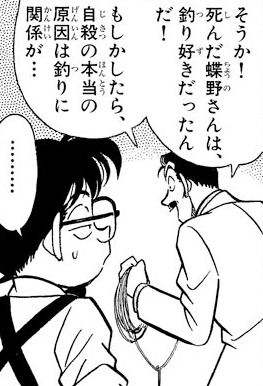
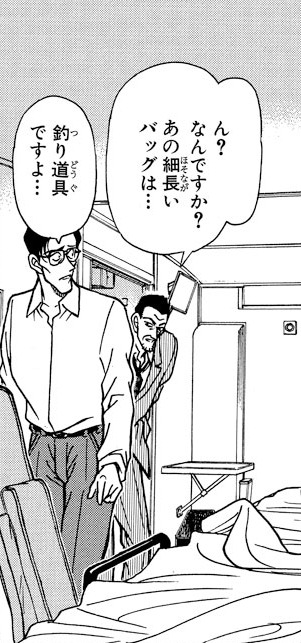
An illustrator, Izumi Chouno, fell from her apartment balcony while Kogoro, Ran, and Conan watched from her boss’s design office a few dozen meters away. The police are calling it suicide, but Conan has figured out how the killer made it look that way. He shows Kogoro a fishing line from the balcony drain, hoping he’ll catch on. Kogoro gets excited and asks an officer whether there’s a fishing tackle shop nearby, and the officer says there is.
小五郎:
「そうか!死んだ蝶野さんは、釣り好きだったんだ!」
“I've got it! Ms. Chouno, the dead woman, was a fishing lover!”
小五郎:
「もしかしたら、自殺の本当の原因は釣りに関係が…」
“Maybe the real reason for her suicide has something to do with fishing...”
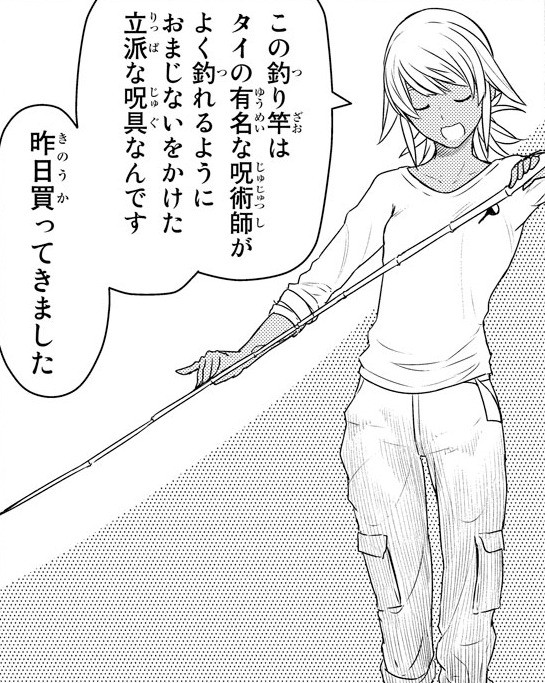
Akane drives Makoto, Kei, Chinatsu, and Nao to a river for the day. When they arrive, she shows off a bamboo rod she bought for the trip and calls it the “big-catch fishing rod”. The others think it looks cheap, and Kei asks whether it can even catch anything. Akane plays a street vendor and tells him it’s no ordinary rod.
茜:
「この釣り竿はタイの有名な呪術師がよく釣れるようにおまじないをかけた立派な呪具なんです」
“This fishing rod is a proper magic charm. A famous sorcerer in Thailand cast a spell on it so the fish will bite.”
Diplomat Isao Tsujimura has been found poisoned in his study, locked from the inside with his own key in his pocket. Heiji Hattori has shown how the killer could have slipped the key into that pocket from outside the door using tape and a needle-tipped length of thread. He has named the victim’s elderly father, a retired professor who dropped by that afternoon to show off a fish he’d caught. Now he holds up the thread he found in the Japanese-style room.
平次:
「このテグスは新素材ラインちゅう、細くて強い特殊な釣り糸や…」
“This line's a special kind of fishing line called "new-material line". Thin and strong...”
平次:
「釣りをやってるあんたが、知らんとはいわさへんで!!」
“You fish, so don't you dare tell me you've never heard of it!!”
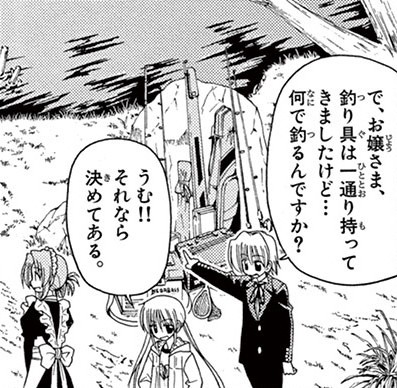
Nagi has been reading a fishing manga and announces that she and Hayate are going fishing. Maria explains that the Sanzenin estate has its own lake, stocked with fish from all over the world, and that she often catches dinner there. Nagi and Hayate head out to the lake with Maria.
ハヤテ:
「で、お嬢さま、釣り具は一通り持ってきましたけど…何で釣るんですか?」
“So, miss, I brought along all the fishing gear, but... what are you going to fish with?”
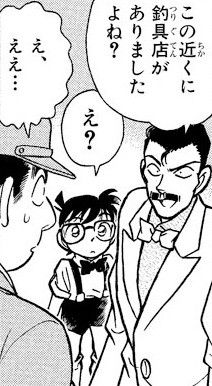
An illustrator, Izumi Chouno, fell from her apartment balcony while Kogoro, Ran, and Conan watched from her boss’s design office a few dozen meters away. The police are calling it suicide, but Conan has figured out how the killer made it look that way. He wants Kogoro to see it too, so he shows him a fishing line and tells him it was in the balcony drain. Kogoro’s eyes go wide, and he says it reminds him of something.
小五郎:
「この近くに釣具店がありましたよね?」
“There's a fishing tackle shop near here, isn't there?”
Jewelry store owner Keitarou Izumo has been shot dead in the lobby car of the Hokutosei, an overnight train bound for Hokkaido. The gunman supposedly escaped through a smashed window, but Inspector Nishimura of the Hokkaido police suspects he’s hiding in someone’s compartment, and he is checking the rooms one by one. He has reached the room of Kaetsu, the manager of Izumo’s store.
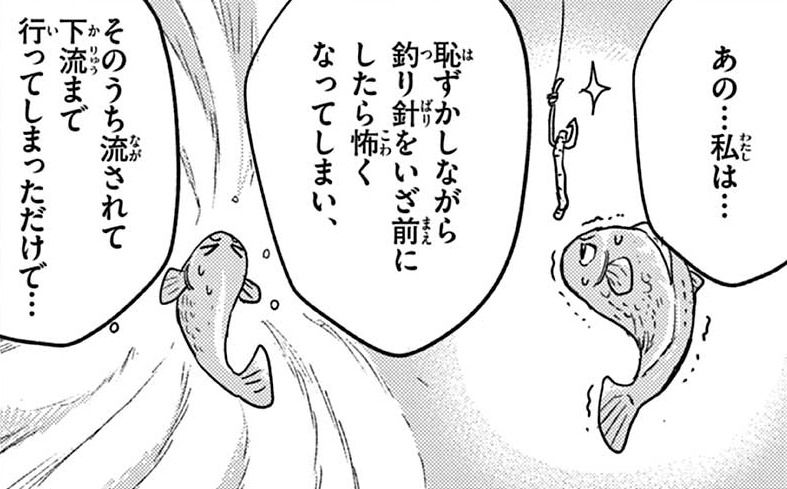
During a fishing contest, Rindou can’t catch a single fish and becomes so discouraged she offers to turn into a fish herself. Tsubaki goes off alone, promising to find a spot where Rindou will catch something, and soon Rindou hooks a huge fish. When Tsubaki returns soaking wet from downstream, Rindou thanks her for using her transformation technique to become the fish. Rindou says she enjoyed getting to catch a big fish.
ツバキ:
「あの…私は…」
“Um... I...”
「恥ずかしながら釣り針をいざ前にしたら怖くなってしまい、」
“I'm embarrassed to say it, but when I was actually face to face with the hook, I got scared...”
「そのうち流されて下流まで行ってしまっただけで…」
“...and then the current just carried me all the way downstream...”
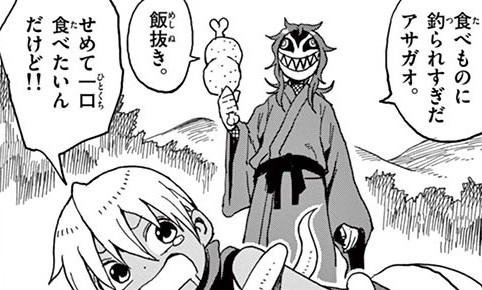
Ms. Hana has canceled lessons for a game of tag. She plays a man chasing the students, to teach them to run from men, and anyone she catches goes without dinner. While the girls hide, a drumstick of meat lies out in the open. Asagao leaps for it, ignoring a warning that it’s an obvious trap, and snakes wrap around her.
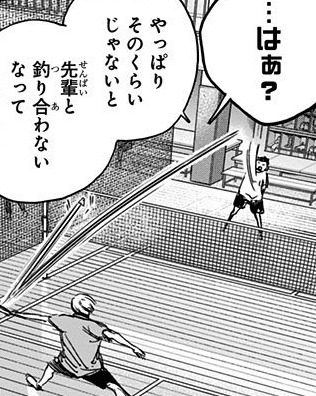
Chinatsu turned down moving abroad with her parents so she could stay in Japan and aim for the Inter-High in basketball. She now lives with Taiki’s family. During badminton practice, Kyo tells Taiki he’s lucky to be living with the girl he likes and might even end up dating her. Taiki says he can’t just ask her out after seeing that kind of resolve, so he has decided to aim for the Inter-High himself this summer.
匡:
「…はぁ?」
“...Huh?”
大喜:
「やっぱりそのくらいじゃないと先輩と釣り合わないなって」
“I figured I'd need at least that much to be good enough for her.”
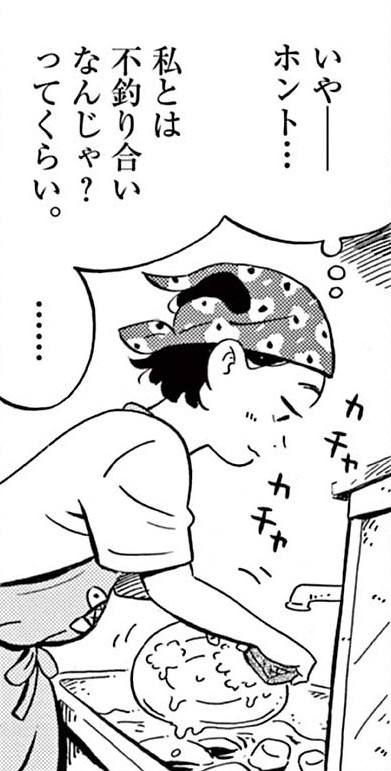
Natsumi has started a part-time job at the Chinese restaurant where her university friend Akari works. When the steam fogs Akari’s glasses and she takes them off, Natsumi realizes Akari is gorgeous, a fact she’d missed because Akari usually looks plain. Then the cook sends Natsumi off to wash dishes.
なつみ:
「いや――ホント… 私とは不釣り合いなんじゃ?ってくらい。」
“I mean, seriously... she's so pretty I have to wonder if we're kind of mismatched.”
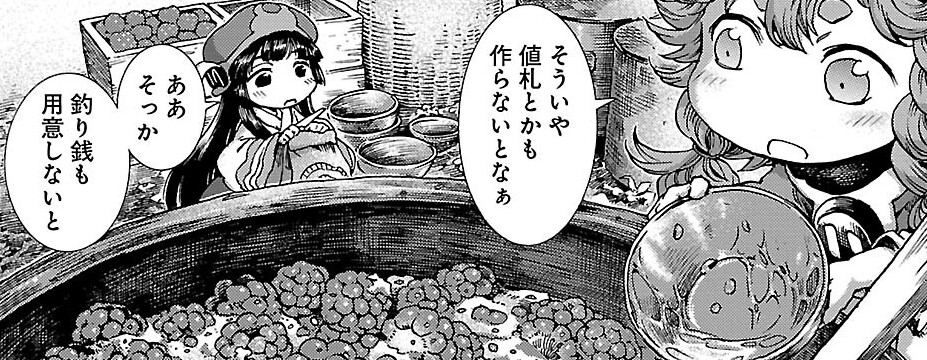
A restaurant has dropped out of tomorrow’s stall festival, so Mikochi takes over its stall to sell fresh raspberry jam with bread. After a long day of buying ingredients, she and Hakumei start on the jam, layering raspberries and sugar in a giant pot.
ハクメイ:
「そういや値札とかも作らないとなぁ」
“Come to think of it, we've gotta make price tags and stuff, too.”
3 kanji on this site use 勺 as their sound part, which by itself is read シャク. 1 of them is read シャク, so the clue is worth a guess but not a gurantee. The other part of each kanji points at its meaning.
釣チョウ金 metalFishing and baiting (this page)
酌シャク酉 wine jar or alcoholPouring and consideration