Fishing and catches with 漁
The kanji 漁 means fishing, catching aquatic life, and the work or yield that comes from that activity.
- Grade 4
- JLPT N2 (estimate)
- WaniKani level 37
- 14 strokes
Words with 漁
- Fishing Equipment
- 漁船 ぎょせん Fishing boat
- Fishing Places
- Fishing Results
- Fishing Work
- 漁 りょう Fishing
- 漁師 りょうし Fisherman
- 漁業 ぎょぎょう Fishing industry
- 密漁 みつりょう Poaching
- 漁民 ぎょみん Fishing folk
- 遠洋漁業 えんようぎょぎょう Deep-sea fishing
The bold kana are the part 漁 contributes. Words in a dashed box have no manga example yet.
How to Read 漁
Etymology
This kanji is a phono-semantic compound comprised of 水 (water) as the semantic component and 魚 as the phonetic component (ギヨ).
Etymology Research
The early forms behind 漁 vary. CUHK’s Multi-function Chinese Character Database describes oracle-bone forms with fish, two hands, and a net, alongside fish-and-water variants. It interprets some simpler forms as losing the hands and net; their exact sequence remains uncertain. CUHK, 漁
Fishing is attested early. CUHK cites Jiaguwen Heji 10475 for the king fishing and a bronze inscription on the Yu gui for fishing in a large pond. It reports that the one-fish, one-water oracle form occurs as a personal name. The Shuowen records 𩼪 with water and multiple fish, and 漁 as its seal-script variant. CUHK, 漁
Heibonsha’s Jitsu describes older forms as depicting angling, then analyzes the later character with 魚 as its phonetic component. It also discusses royal fishing and gifts of fish in bronze ritual records. CUHK gives a more specific account of the angling-shaped 䰻, reporting only place-name uses in the oracle inscriptions it discusses. A fishing-like shape alone therefore does not prove a fishing use in a particular inscription. Jitsu, 漁, via Kotobank, CUHK, 漁
Kanjipedia’s account, attributed to Kadokawa Shinjigen, classifies the familiar water-and-fish structure as both semantic and phonetic. Water supplies the setting, while fish supports the meaning and historical sound relationship. This analysis describes the later structure without replacing the evidence for older hands-and-net variants. It concerns Chinese character formation, not the origin of the native Japanese verbs written 漁る. Kanjipedia, 漁
Fishing Places
漁場 (ぎょじょう) (Fishing grounds)
漁場 is an area of sea, lake, or river where people fish. It is also read ぎょば or りょうば.
It combines 漁 (fishing) with 場 (place) to show a place for fishing.
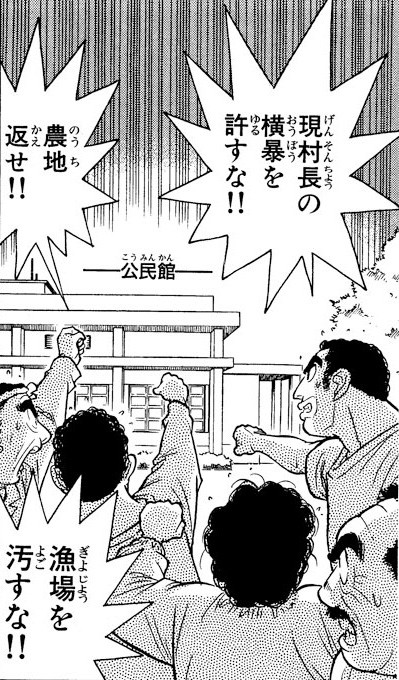
Kogoro, Ran, and Conan have come to Tsukikage Island because of a letter signed by a pianist who died twelve years ago. A doctor tells them the island is in the middle of a mayoral race. One candidate, Masato Shimizu, represents the island’s fishermen and campaigns to protect its fishing grounds, while the current mayor, Tatsuji Kuroiwa, has been losing support. The three head to the community center, where a memorial service for the previous mayor is being held tonight.
- 村人Ⓐ:
- 「現村長の横暴を許すな!!」
- “Don't let the mayor get away with his tyranny!!”
- 村人Ⓑ:
- 「農地返せ!!」
- “Give us back our farmland!!”
- 村人Ⓒ:
- 「漁場を汚すな!!」
- “Stop polluting our fishing grounds!!”
漁村 (ぎょそん) (Fishing village)
漁村 is a village on the coast whose people live by fishing.
It combines 漁 (fishing) with 村 (village) to show a fishing community.
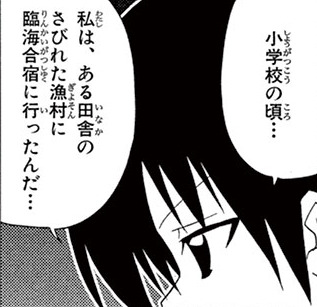
Hayate tried to slip away on an errand, but the Video Research Club girls stopped him. Their clubroom is gone, so they are starting over with new videos, and the first project is an “Ordinary Story Contest”. When Nagi asks what that is supposed to be, Risa says she’ll show them and starts telling a story.
- 理沙:
- 「小学校の頃…」
- “Back in elementary school...”
- 理沙:
- 「私は、ある田舎のさびれた漁村に臨海合宿に行ったんだ…」
- “I went to a seaside camp in a run-down fishing village out in the countryside...”
Fishing Results
大漁 (たいりょう) (Big catch)
大漁 means a big catch or a highly successful haul of fish. It is also associated with celebratory fishing imagery.
It combines 大 (big) with 漁 (catching fish) to show a large haul from fishing.
Example 1 of 3: A big haul of basil with 大漁
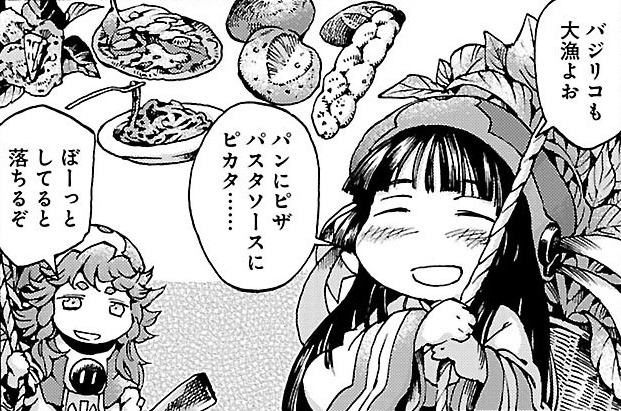
Hakumei and Mikochi are gathering wild herbs on a steep, rocky slope, climbing with ropes. When Hakumei calls over to ask how it’s going, Mikochi says she’s doing well, and the two agree that herbs from rocky hillsides have a good fragrance.
- ミコチ:
- 「バジリコも大漁よお」
- “And a big haul of basil, too!”
- 「パンにピザ パスタソースにピカタ……」
- “Bread, pizza, pasta sauce, piccata...”
- ハクメイ:
- 「ぼーっとしてると落ちるぞ」
- “If you space out, you're going to fall.”
Example 2 of 3: A big haul of handsome men with 大漁
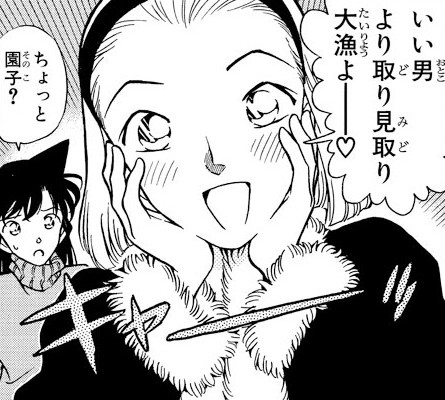
Sonoko has brought Ran and Conan to the skating rink at Tropical Land, which is packed with skaters. As she looks around, she keeps spotting good-looking young men on the ice. Sonoko already has a boyfriend, Makoto Kyogoku.
- 園子:
- 「いい男より取り見取り大漁よー♡」
- “Cute guys, and I get my pick! What a haul! ♡”
- 蘭:
- 「ちょっと園子?」
- “Um, Sonoko?”
Example 3 of 3: A dream of a catch with 大漁
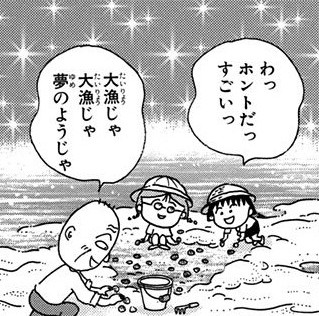
Maruko and Tamae have gone clam digging with Grandpa on a sunny Sunday, but they have found almost nothing. Then Grandpa calls them over, and when they ask if he’s found clams, he points to the spot where they’re buried.
- まる子:
- 「わっ ホントだっ すごいっ」
- “Whoa, you're right! Amazing!”
- おじいちゃん:
- 「大漁じゃ大漁じゃ 夢のようじゃ」
- “What a haul! What a haul! It's like a dream!”
Fishing Work
漁 (りょう) (Fishing)
漁 is fishing for a catch of fish, shellfish, or seaweed, the work fishermen do. It can also mean the catch itself.
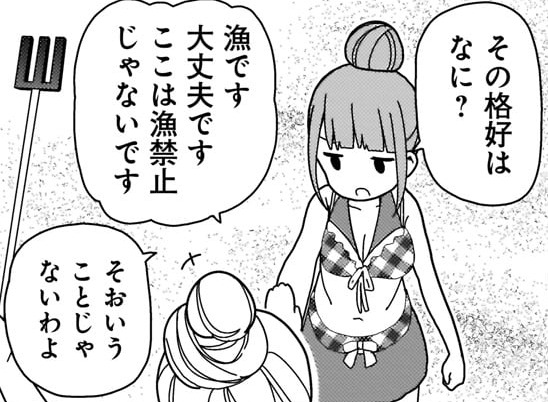
Bocchi and her friends have come to the beach for a day of summer fun. Sotoka arrives in her swimsuit holding a three-pronged spear.
- アル:
- 「その格好はなに?」
- “What's with that getup?”
- ソトカ:
- 「漁です 大丈夫です ここは漁禁止じゃないです」
- “It's for fishing. Don't worry, fishing isn't banned here.”
- アル:
- 「そおいうことじゃないわよ」
- “That's not what I'm asking!”
漁師 (りょうし) (Fisherman)
漁師 means a fisherman or fishing worker. It refers to a person whose work is catching fish or other marine life.
It combines 漁 (fishing) with 師 (professional / master) to show a person who works at fishing.
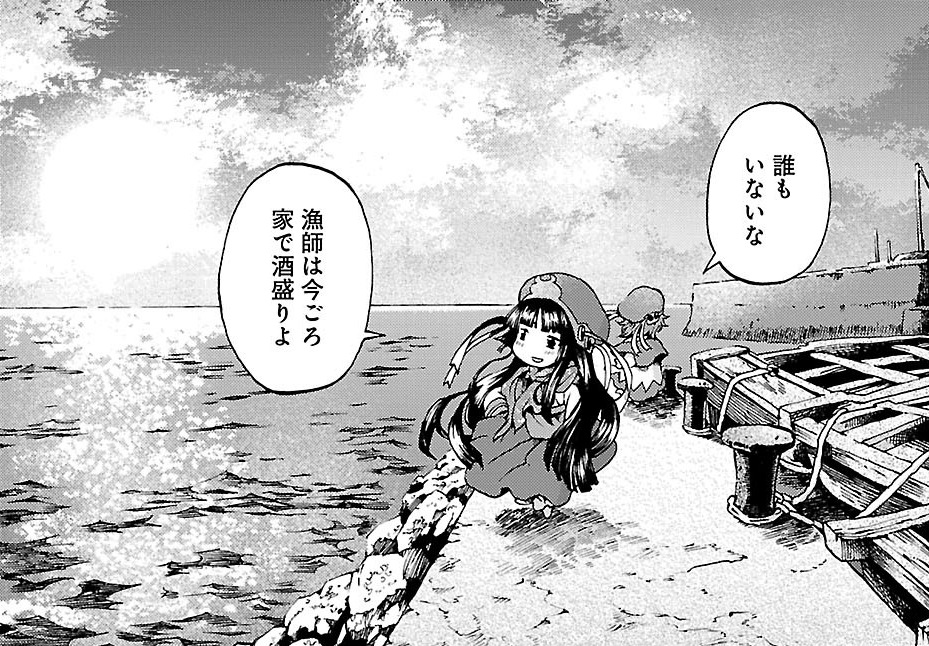
Mikochi has spent the day showing Hakumei around a busy port town. After the vendors in the market pulled Mikochi in to taste their seasonings, the worn-out pair decided to see the harbor before heading home. They reach the pier as the sun is going down.
- ハクメイ:
- 「誰もいないな」
- “Nobody's here.”
- ミコチ:
- 「漁師は今ごろ家で酒盛りよ」
- “The fishermen are all at home drinking by now.”
密漁 (みつりょう) (Poaching)
密漁 is catching fish, shellfish, or other sea life illegally, such as in a closed area, out of season, or without fishing rights.
It combines 密 (secret) with 漁 (fishing) to show fishing done in secret, without permission.
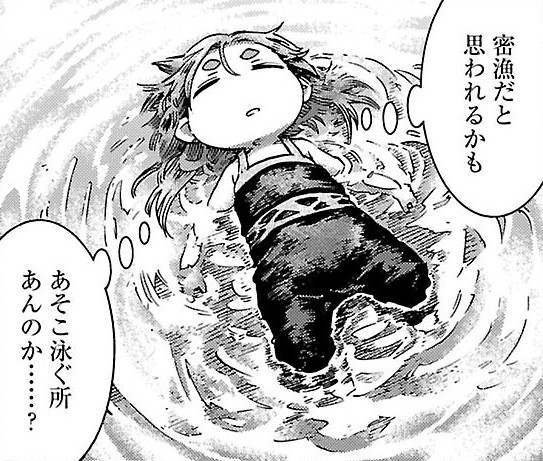
Hakumei can’t swim, so Mimari is teaching her. Hakumei tenses up in the water because she pictures herself drowning, so Mikochi tells her to think about something else, like where she’d go once she can swim. Floating on her back, Hakumei decides she might visit the sea at Arabi with Mikochi. Arabi is a port town known for its seafood.
- ハクメイ:
- 「密漁だと思われるかも」
- “People might think we're poaching.”
- 「あそこ泳ぐ所あんのか……?」
- “Is there even anywhere to swim there...?”
漁民 (ぎょみん) (Fishing folk)
漁民 are the people who make their living by fishing, usually thought of as a community or group.
It combines 漁 (fishing) with 民 (people) to show people who fish for a living.
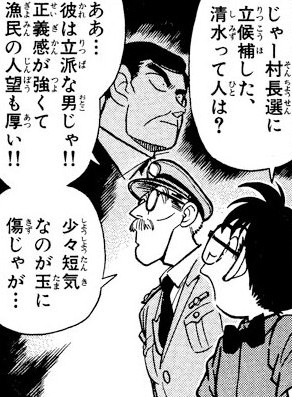
Conan is walking with the island’s elderly police officer to fetch a key from the police box. On the way, he asks about each person connected to the murders. The officer has just described Murasawa, who recently got engaged to the village head’s daughter, and Hirata, the village head’s secretary.
- コナン:
- 「じゃー村長選に立候補した、清水って人は?」
- “Then what about Shimizu, the guy who ran for village head?”
- おまわりさん:
- 「ああ…彼は立派な男じゃ!! 正義感が強くて漁民の人望も厚い!!」
- “Ah... He's a fine man!! He has a strong sense of justice, and the fishermen hold him in high regard!!”
- おまわりさん:
- 「少々短気なのが玉に傷じゃが…」
- “His one flaw is that he's a bit short-tempered, though...”
遠洋漁業 (えんようぎょぎょう) (Deep-sea fishing)
遠洋漁業 is fishing on the open ocean far from the home coast, with voyages that can last weeks or months. It contrasts with coastal and offshore fishing.
It combines 遠 (far), 洋 (ocean), and 漁業 (fishing industry) to show fishing on the distant ocean.
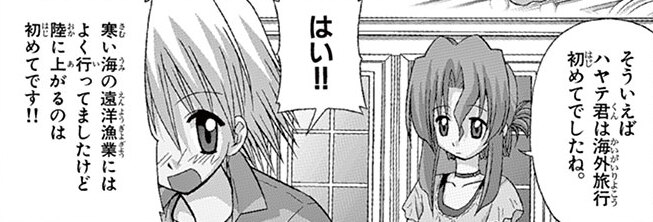
Over Golden Week, Hayate, Nagi, and Maria have come to the Aegean Sea on vacation. Hayate leans over the balcony railing, thrilled at the view. He has worked jobs among adults since he was a small child.
- マリア:
- 「そういえばハヤテ君は海外旅行初めてでしたね。」
- “Come to think of it, Hayate, this is your first trip abroad, isn't it?”
- ハヤテ:
- 「はい!!」
- “Yes!!”
- 「寒い海の遠洋漁業にはよく行ってましたけど陸に上がるのは初めてです!!」
- “I used to go out on deep-sea fishing trips in cold waters all the time, but this is my first time going ashore!!”
Searching
漁る (あさる) (To rummage through)
漁る is to search around through a place or a pile of things, looking for something. Animals 漁る for food, and people 漁る drawers, bookstores, or trash. It often suggests a thorough or greedy search.
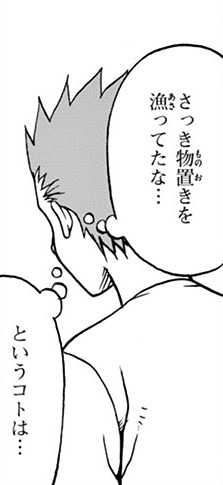
Kenji found Kyoko alone in the house’s storage room, and she wouldn’t tell him what she was doing there. Since then she has insisted nothing is wrong, yet she keeps her back turned away from him. After she drives him out of the room at lunch, Kenji can’t stop wondering what is bothering her.
- ケンジ:
- 「さっき物置きを漁ってたな…」
- “She was rummaging through the storage room earlier...”
- 「というコトは…」
- “Which means...”
買い漁る (かいあさる) (To buy up)
買い漁る is to go around hunting for things and buying them up, one after another. It often suggests buying too much or too eagerly.
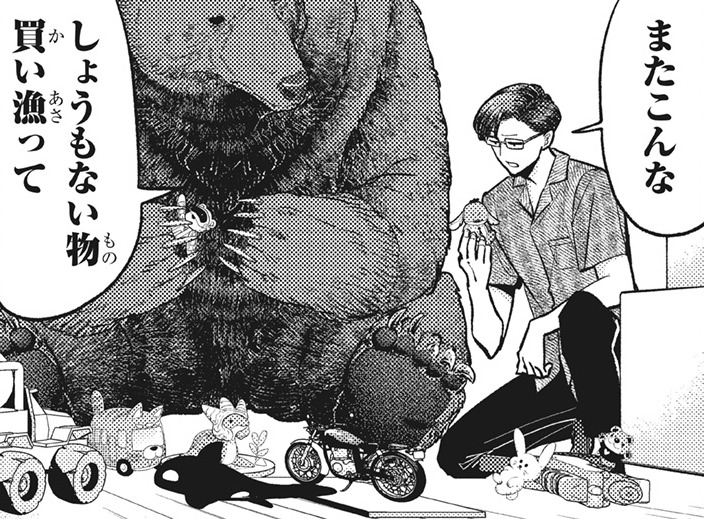
Kumada lives with a bear. When the doorbell rings, the bear hurries to the door in its disguise, carries the delivered boxes into its room, and shuts the door. Kumada peeks in and finds the bear playing among a floor full of new toys and figures.
- 熊田:
- 「またこんなしょうもない物買い漁って」
- “Buying up useless junk like this again...”
Check Yourself
What does 漁 mean?
Fishing and catches.
Read These Without Furigana
漁場
漁村
大漁
漁
漁師
漁る