Going and carrying out with 行
The kanji 行 has the core meanings of go and carry out.
Etymology
Etymology Research
The oldest cited forms of 行 are oracle-bone and bronze inscriptions shaped like roads meeting at a crossroads. Kanjipedia, citing 『角川新字源 改訂新版』, calls the character a pictograph of roads extending in four directions and gives a busy road as its original meaning. The Chinese University of Hong Kong’s character database likewise takes the road as primary and walking as an extension. This is the history of the Chinese character, separate from the origin of the native Japanese verb いく or ゆく that later came to be written 行く. 漢字ペディア, 行, CUHK, 行
CUHK cites an oracle-bone inscription in which 行 means a road and another in which it means walking. Its bronze examples include roads and journeys, then conduct and putting something into practice. Those examples show several uses in early writing; they do not date a neat sequence in which every later Japanese sense arose. CUHK proposes a branch from road to rows, trades, and eventually shops or banks. That proposal helps explain why modern 銀行 cannot be read as “silver road,” but it is an account of semantic development, not a picture hidden in the modern strokes. CUHK, 行
The later 『説文解字』 describes 行 as walking and analyzes it as 彳 plus 亍. CUHK and 『普及版 字通』 contrast that analysis with the earlier crossroads forms. The two sides are parts of the road image in the older forms; neither is identified here as a phonetic component of 行. CUHK, 行, 平凡社『普及版 字通』, 行
Movement
行く (To go)
行く means to go or move toward a place away from the speaker.
Example 1 of 15: According to the rules with 〜によると
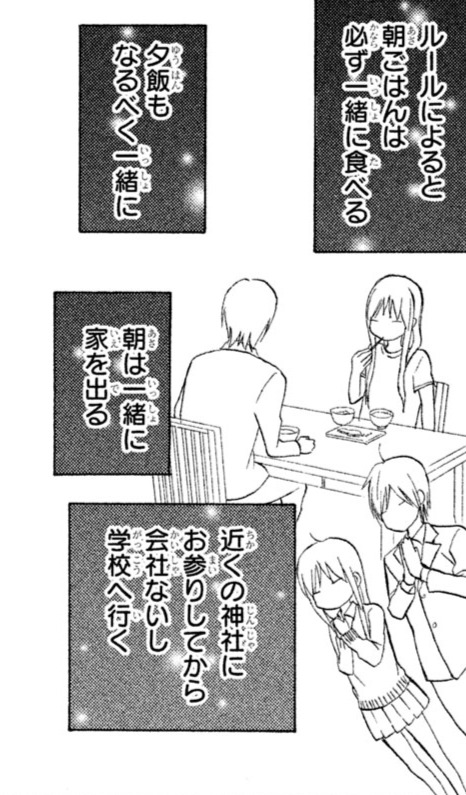
Now that Mao is living at Hiro’s house, Hiro presents her with a list of rules. Before going to bed, Mao looks the list over.
- 真魚:
- 「ルールによると朝ごはんは必ず一緒に食べる」
- “According to the rules, we must always eat breakfast together.”
- 「夕飯もなるべく一緒に」
- “We should eat dinner together too, as often as possible.”
- 「朝は一緒に家を出る」
- “We leave the house together in the morning.”
- 「近くの神社にお参りしてから会社ないし学校へ行く」
- “After praying at the nearby shrine, we go to work or school.”
Example 2 of 15: Agreeing to go somewhere else with 賛成
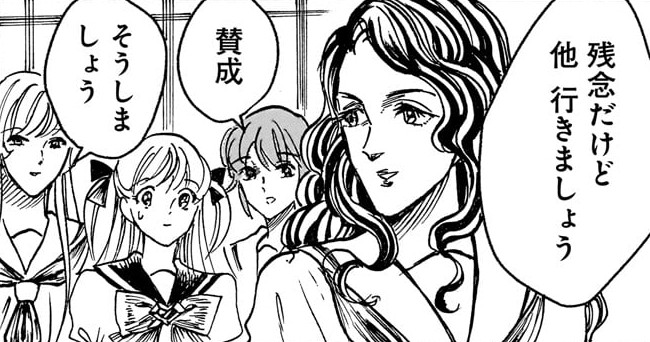
After moving and transferring schools, Lulu has finally made some friends in class. Following some after-school shopping, they stop by the group’s favorite café, only to find it filled to the brim with hoodlums.
- 響子:
- 「残念だけど 他 行きましょう」
- “Too bad... let's just go somewhere else.”
- 清美:
- 「賛成」
- “Agreed.”
- 美代子:
- 「そうしましょう」
- “Yeah, let's do that.”
Example 3 of 15: Dazed by a wristwatch with 気が遠くなる
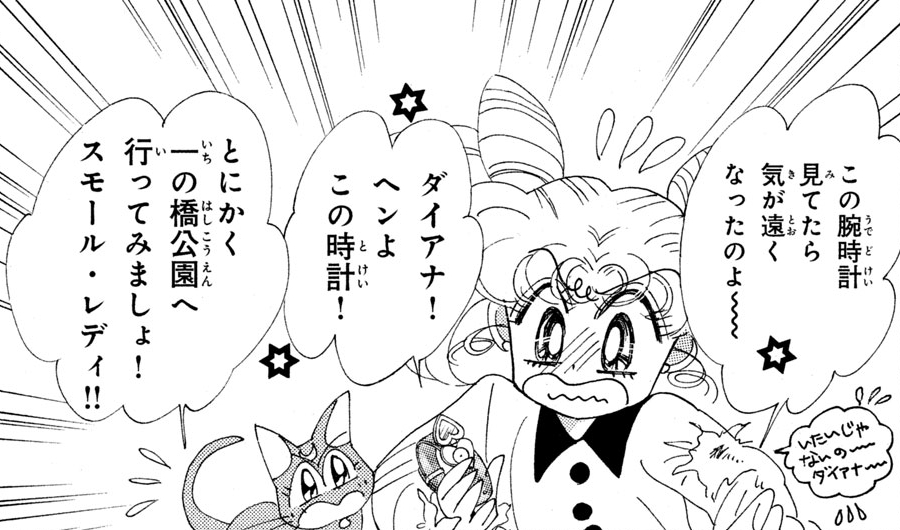
At the stroke of midnight, Chibiusa wakes to a mysterious glow from her new wristwatch. She gets out of bed in a daze, and begins to leave the room. Her cat, Diana, bites her on the arm, returning Chibiusa from her trance.
- ちびうさ:
- 「この腕時計見てたら気が遠くなったのよ〰〰」
- “While I was looking at this wristwatch, I became lightheaded〰”
- 「ダイアナ! ヘンよ この時計!」
- “Diana! Something is strange about this watch!”
- ダイアナ:
- 「とにかく 一の橋公園へ行ってみましょ! スモール・レディ!!」
- “Anyway, let's try going to Ichinohashi Park! Small Lady!!”
Example 4 of 15: Don't worry, just hurry with いいから

Wolf spends some time with Mia, a young girl who’s run away into the forest. After hearing about the troubles Mia is facing at home, Wolf hears something in the distance. She tells Mia to go with her.
- みあ:
- 「どこ行くの?」
- “Where is it that we're going?”
- オオカミちゃん:
- 「いいから早く!」
- “Don't worry about that, hurry!”
- 「こっちこっち」
- “This way!”
Example 5 of 15: Going to school together so as to not get lost with 〜ように

After Cocoa gets lost looking for her new school, she meets Chiya, who will be going to the same school as her.
- 千夜:
- 「ココアちゃんが迷わないように今から学校まで行きましょう」
- “Let's go from here to the school now so you won't get lost.”
- ココア:
- 「め 女神様!」
- “A-a goddess!”
Example 6 of 15: Go to the park or something with でも
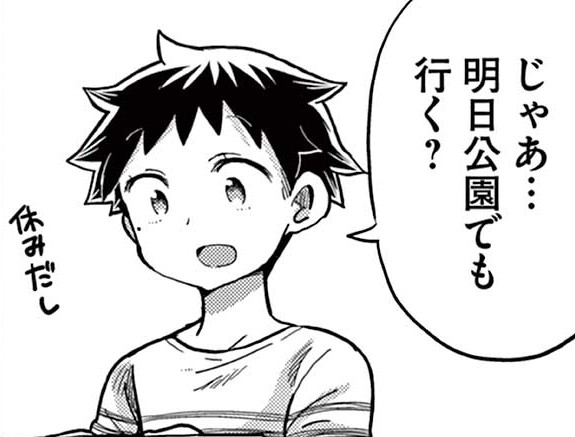
Sami’s father looks over her shoulder as she draws. Sami explains it’s a picture of them playing at a park.
- パパ:
- 「じゃあ… 明日公園でも行く? (休みだし)」
- “Well then... Shall we go to the park or somewhere tomorrow? (Since it's a day off.)”
Example 7 of 15: The milk here is good with 牛乳

Yotsuba and her father have their first breakfast since moving to a new house in a new town. Yotsuba takes a bite from her toast, then drinks down some milk.
- よつば:
- 「こっちの牛乳はうめぇな!!」
- “The milk here is good!”
- 父さん:
- 「(いっしょだろう…)よつば 今日は遊びに行く時 ちゃんといってきますって言えよ」
- “(It tastes the same...) Yotsuba, when you go out to play today, make sure you say "I'm off", okay?”
Example 8 of 15: Going to say good morning with 行っといで
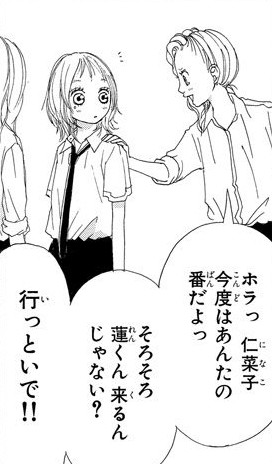
Ninako confessed her feelings to Ren, even knowing he already has a girlfriend and would turn her down. After not seeing Ren during summer break, Ninako wonders if she’ll still be able to greet him normally. After a boy she turned down greets her normally, Ninako feels more confident.
- つかさ:
- 「ホラっ 仁奈子 今度はあんたの番だよっ」
- “Hey, Ninako, now it's your turn.”
- 「そろそろ連くん 来るんじゃない?」
- “Won't Ren be coming soon?”
- 「行っといで!!」
- “Go for it!!”
Example 9 of 15: Limited amusement park admission with 入場制限
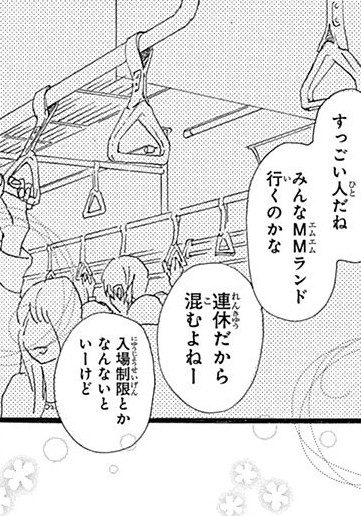
Takeo and his friends board the train bound for the amusement park, MM Land.
- 凛子:
- 「すっごい人だね。みんなMMランド行くのかな」
- “There's a lot of people here. I wonder if everyone's going to MM Land.”
- 隼人:
- 「連休だから混むよねー」
- “It's a long holiday, so it'll be crowded.”
- 愛:
- 「入場制限とかなんないといーけど」
- “I hope they don't restrict admission or anything.”
Example 10 of 15: Merely by shaking hands with 握手
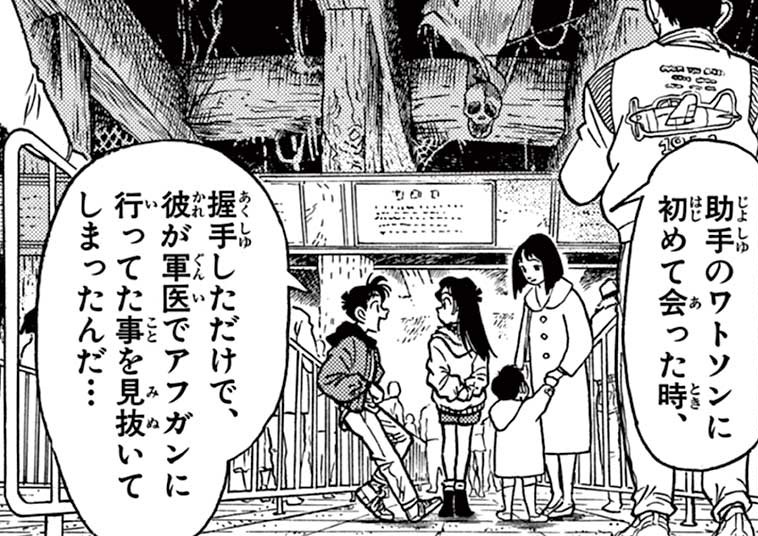
Shin’ichi treats Ran to a day at Tropical Land as a reward for winning the city karate tournament. As they wait in line for a ride on the roller coaster, Shin’ichi explains all the reasons why Sherlock Holmes was the greatest detective.
- 新一:
- 「助手のワトソンに初めて会った時、握手しただけで、彼が軍医でアフガンに行ってた事を見抜いてしまったんだ…」
- “The first time he met his assistant Watson, Holmes could tell just from a handshake that he was a military doctor who had been stationed in Afghanistan...”
Example 11 of 15: Shall we go see a movie with 観る
After talking with her boyfriend in the hall, Futaba returns to her classroom and walks over to her friends.
- 双葉:
- 「この映画一緒に観に行かない?」
- “How about going to see this movie?”
- 悠里:
- 「え どの映画?」
- “Oh, which movie?”
Example 12 of 15: Underutilized talent with 才能
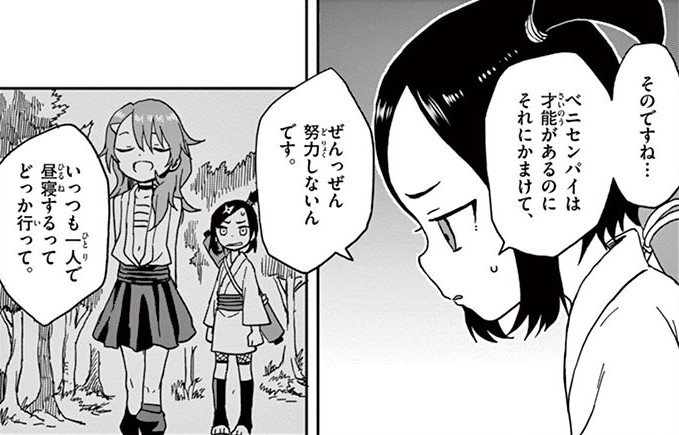
During a free day from training, Touwata and Mizubashou approach Tsubaki to request a favor. She would like Tsubaki to challenge Benisumomo to a one-on-one fight.
- トウワタ:
- 「そのですね… ベニセンパイは才能があるのにそれにかまけて、ぜんっぜん努力しないんです。」
- “Well, you see... Beni-senpai has talent, but she takes it for granted and doesn't put in any effort at all.”
- 「いっつも一人で昼寝するってどっか行って。」
- “She always goes off somewhere to take a nap alone.”
Example 13 of 15: Visiting teahouses with お茶屋さん
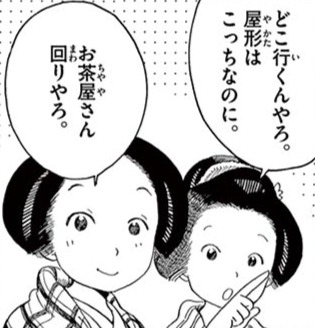
A couple of maiko see Momohana leave a shop and head in the other direction.
- まいこ1:
- 「どこ行くんやろ。屋形はこっちなのに。」
- “I wonder where she's going. The lodge is this way, though.”
- まいこ2:
- 「お茶屋さん回りやろ。」
- “She's probably doing the teahouse rounds.”
Example 14 of 15: Went to see a kindergarden sports day with 運動会
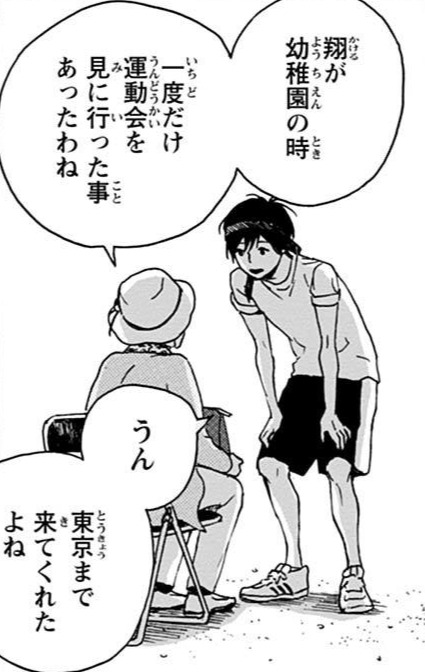
Kakeru’s grandmother unexpectedly shows up at the school sports day event.
- おばあさん:
- 「翔が幼稚園の時一度だけ運動会を見に行った事あったわね」
- “I went to see your sports day just once when you were in kindergarten, didn't I?”
- 翔:
- 「うん 東京まで来てくれたよね」
- “Yeah, you came all the way to Tokyo for me.”
Example 15 of 15: Yui's grandmother's place with 〜んち
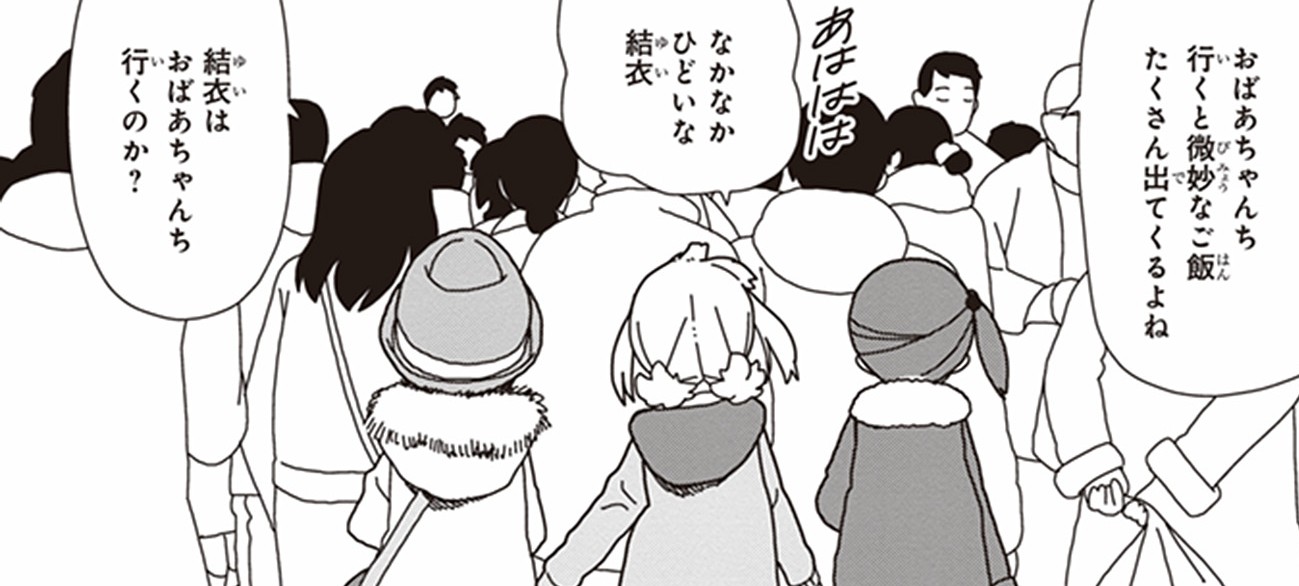
As the end of the year approaches, Yui and her friends discuss which New Year foods they like and dislike.
- 結衣:
- 「おばあちゃんち行くと微妙なご飯たくさん出てくるよね」
- “When I go to my grandma's house, a lot of not-so-good food is served.”
- さっちゃん:
- 「なかなかひどいな結衣」
- “That's pretty bad, Yui.”
- 琴葉:
- 「結衣はおばあちゃんち行くのか?」
- “Are you going to your grandma's house, Yui?”
連れて行く (To take along)
連れて行く is to take someone with you when you go somewhere.
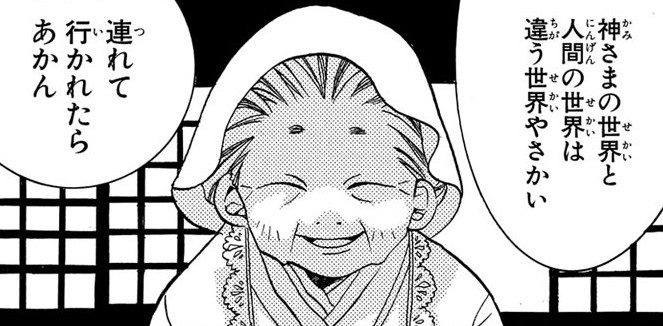
Alicia and Akari visit an island that’s modeled after part of Japan back on Earth. There, an elderly local woman tells the two of the fox spirits that visit the human world there. Akari is excited at the prospect of meeting one, but the old woman gives her a warning: on rare occasion, a fox will take a person back home with them.
- おばあさん:
- 「神さまの世界と人間の世界は違うやさかい」
- “Since the god world and the human world are different...”
- 「連れて行かれたらあかん」
- “...you mustn't get taken away.”
流行 (Trend)
流行 means a trend, craze, or fashion. It is something that spreads through society like a current.
It combines 流 (spread like a flow) with 行 (go) to show something going around widely.
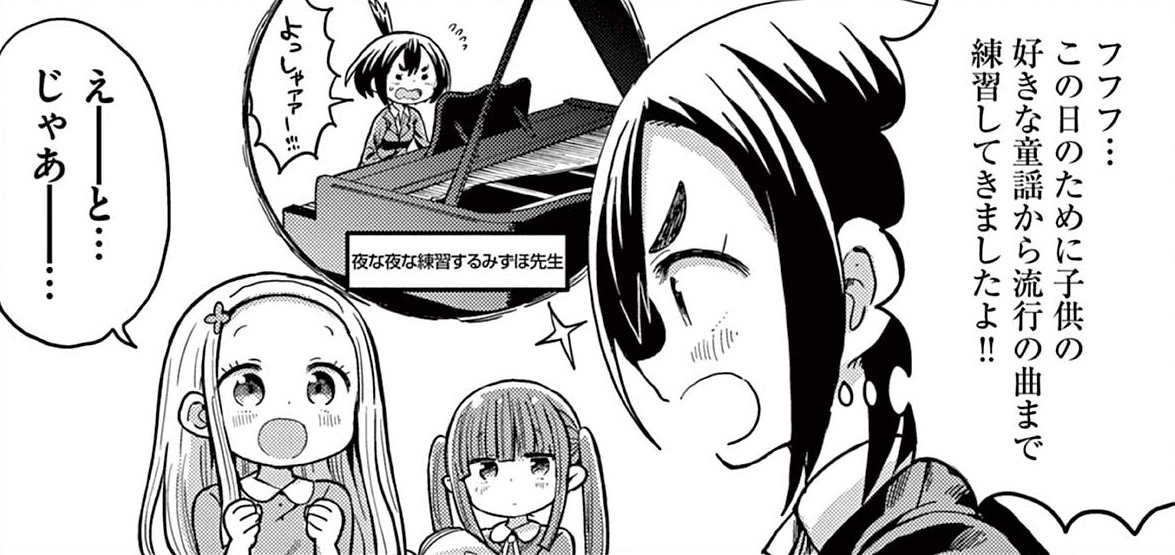
Mizuho-sensei is a new teacher. During her student teaching in Tokyo, a class survey called her lessons boring, and she wants her first graders to have fun. Today she is leading them on a school exploration. In the music room, the children crowd around the grand piano, and Sami asks whether it plays any songs. Mizuho-sensei sees her chance. She sits down at the piano, offers to play, and asks the class for requests.
- みずほ先生:
- 「フフフ… この日のために子供の好きな童謡から流行の曲まで練習してきましたよ!!」
- “Heh heh heh... For this day, I've practiced everything from the nursery rhymes kids love to the latest hits!!”
- みずほ先生:
- 「よっしゃアー!!!」
- “Yeahhh!!!”
- ◯:
- 「夜な夜な練習するみずほ先生」
- “Mizuho-sensei, practicing night after night”
- サミ:
- 「えーーと… じゃあーー…」
- “Ummm... Okay, then...”
Travel
小旅行 (Short trip)
小旅行 is a casual trip that lasts for a short period of time, such as a day trip or a one-night stay.
It combines 小 (small) with 旅行 (travel) to show a short journey.

Al shows Akari and Aika around his workplace. Afterwards, Akari thanks Al for showing them around and she prompts Aika to do the same.
- 藍華:
- 「まあ あんまり乗り気じゃなかったケド思ったより悪くない小旅行だったわよ」
- “Well, I wasn't that enthusiastic, but the excursion wasn't as bad as I thought it would be.”
- 「あんたのおやじっぷりはどうかと思うケド」
- “I still have a problem with your old man style, though.”
Actions
行動 (Action)
行動 means action or behavior, especially something done toward a purpose.
It combines 行 (act) with 動 (move) to show movement into action.
Example 1 of 3: Doing as you please is strictly forbidden with 〜べからず
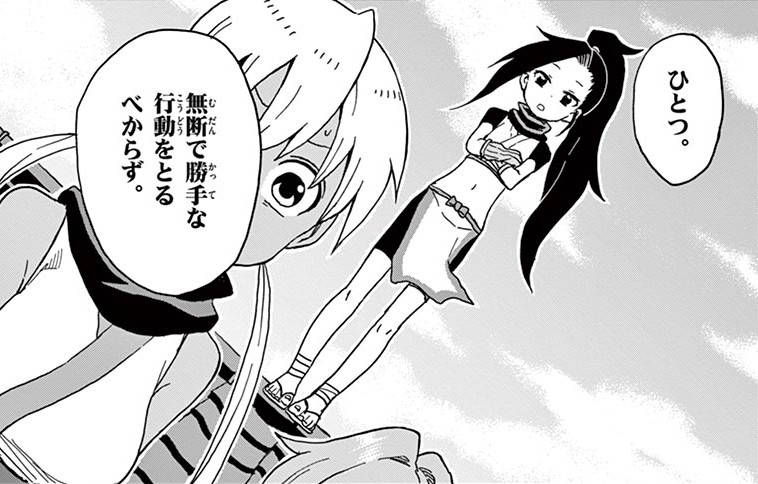
Sazanka sneaks out of class, leaving the teacher to send Asagao to bring her back. As Asagao chases Sazanka across the rooftops near the upper grade classroom, Tsubaki spots them. She meets them up on the roof and recites the school’s first rule.
- ツバキ:
- 「ひとつ。無断で勝手な行動をとるべからず。」
- “One: Doing as you please without permission is strictly forbidden.”
Example 2 of 3: Strange behavior with 異様
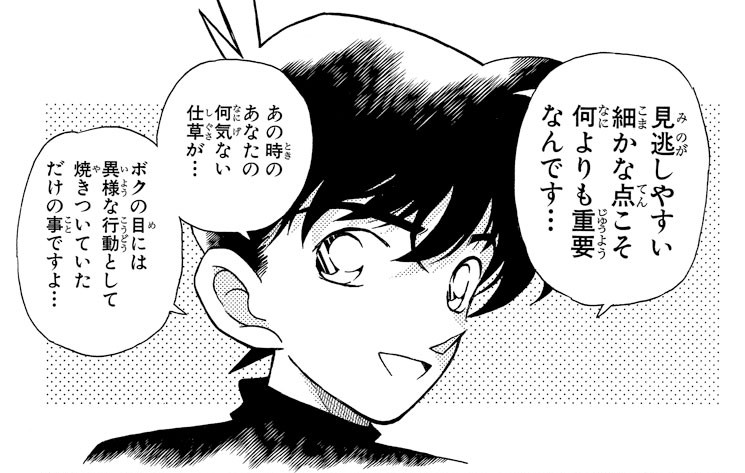
Shin’ichi reveals the details of a murder. The culprit asks how Shin’ichi discovered the hidden weapon, and he explains it was due to a specific movement the culprit made.
- 新一:
- 「見逃しやすい細かな点こそ何よりも重要なんです…」
- “It's precisely those subtle details that are easy to overlook that matter most of all...”
- 「あの時のあなたの何気ない仕草が…」
- “That casual gesture of yours back then...”
- 「僕の目には異様な行動として焼きついてただけの事ですよ…」
- “It's just that it was etched in my mind as strange behavior...”
Example 3 of 3: Wanting to photograph means with 〜たがる
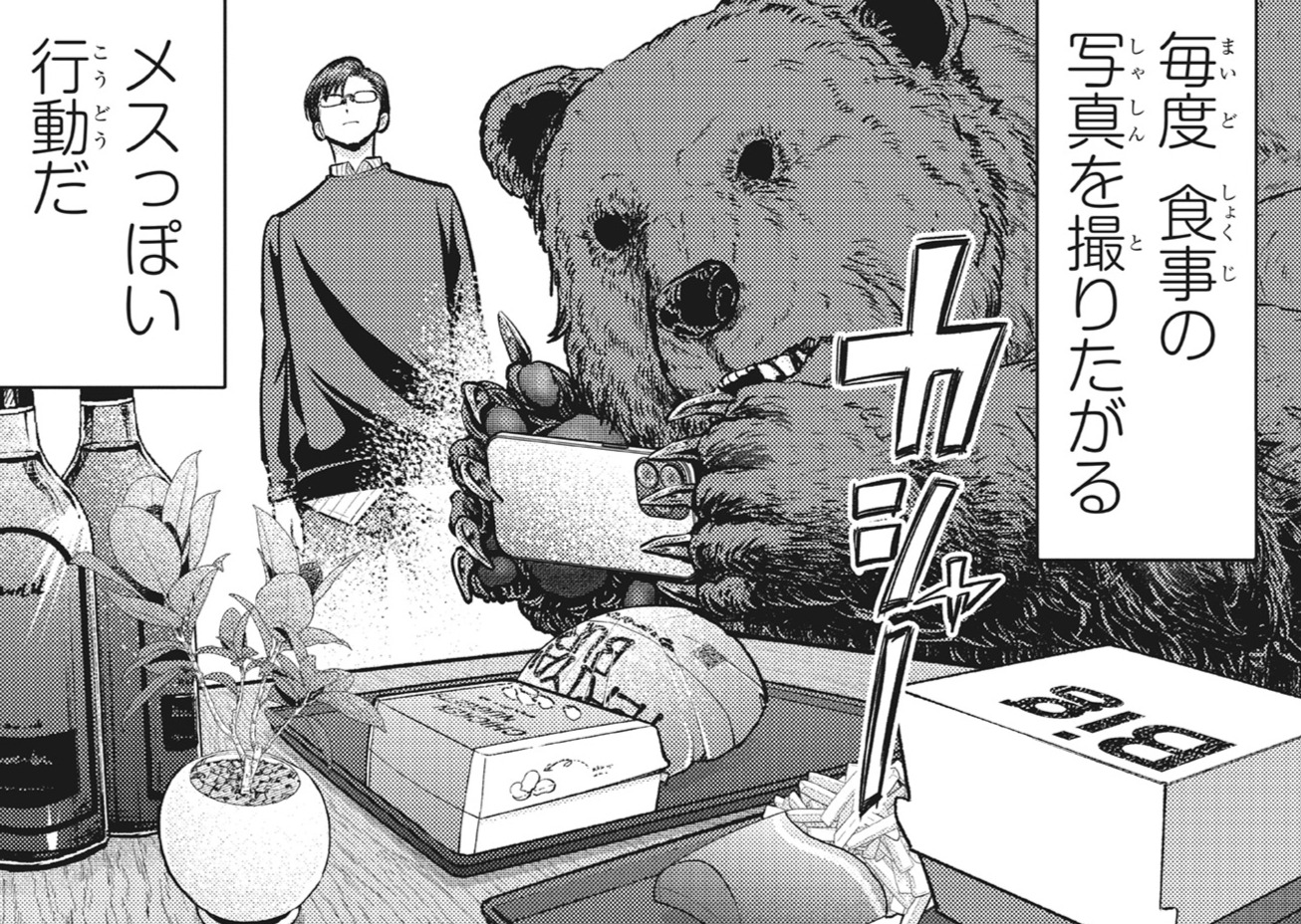
Kumada observes the bear that’s been living in his apartment for a while now, trying to determine from its personality traits whether it’s male or female.
- (熊田):
- 「毎度 食事の写真を撮りたがる」
- “It always wants to take photos of its meals.”
- 「メスっぽい行動だ」
- “That's pretty feminine behavior.”
続行 (Continuation)
続行 means continuing or resuming something already under way.
It combines 続 (continue) with 行 (carry out) to show continuing to carry something forward.
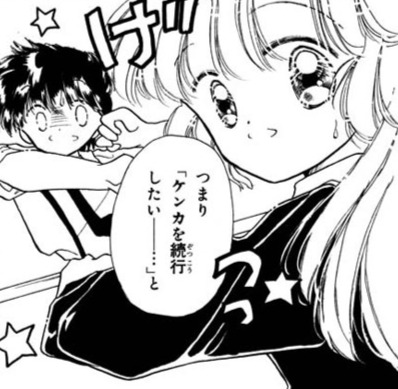
Meimi can’t stand Asuka Jr. speaking ill of her secret alter ego, Saint Tail, and the two get into a fight over it before class. Seira tugs at Meimi’s shirt, but Meimi says, “Don’t stop me, Seira.” The teacher’s voice repeats back, “‘Don’t stop me’…”
- シスター:
- 「つまり『ケンカを続行したいーー…』と」
- “In other words, 'I want to keep on fighting...'”
犯行 (Criminal act)
犯行 means the commission of a crime or the criminal act itself.
It combines 犯 (offense) with 行 (act) to show a criminal act.
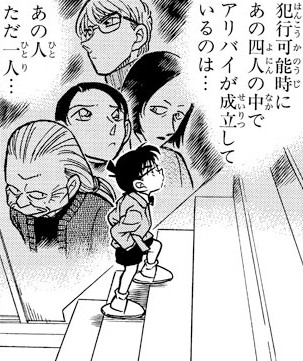
Following a murder made to look like an accidental death, Conan reviews the whereabouts of the four suspects at the time.
- コナン:
- 「犯行可能時にあの四人の中でアリバイが成立しているのは…」
- “Among those four, the one with an established alibi during the time the crime could have been committed is...”
- 「あの人ただ一人…」
- “...that person alone...”
Training
修行 (Training)
修行 is training to master a skill or discipline, often through hardship. It originally meant religious austerities.
It combines 修 (cultivate) with 行 (practice / action) to show self-cultivation through practice.

Renge wedges herself into the Ouran High School Host club, appointing herself the club’s manager. Due to her social status, Tamaki and the other wealthy club members are unable to object. Instead, they leave it to Haruhi to oust her.
- 環:
- 「これもホスト修行だハルヒ!!」
- “This, too, is host training, Haruhi!!”
- 「おとーさんは心を鬼にするぞ!!」
- “Dad is going to harden his heart!”