Gripping and control with 握
握 represents the act of firmly cupping something in the palm of one’s hand or with one’s fingers, or the state of making something one’s own and never letting go.
- Secondary School
- JLPT N1 (estimate)
- WaniKani level 42
- 12 strokes
Words with 握
- Understanding and Control
- 把握 はあく Grasp
- 掌握 しょうあく Control
- Physical Grips
- 握手 あくしゅ Handshake
- 握力 あくりょく Grip strength
- 一握 いちあく Handful
- 握る にぎる To grip
- Food by Hand
- 握飯 にぎりめし Rice ball
The bold kana are the part 握 contributes. Words in a dashed box have no manga example yet.
How to Read 握
あく in compounds. The verb is 握る, to grip. It does more work in manga than the compounds do, for hands and for power alike.
Etymology
This kanji is a phono-semantic compound comprised of 扌 (hand) as the semantic component and 屋 as the phonetic component (アク).
Physical Grips
握手 (あくしゅ) (Handshake)
握手 is shaking hands with someone as a greeting or a sign of agreement.
It combines 握 (grip) with 手 (hand) to show hands gripping each other.
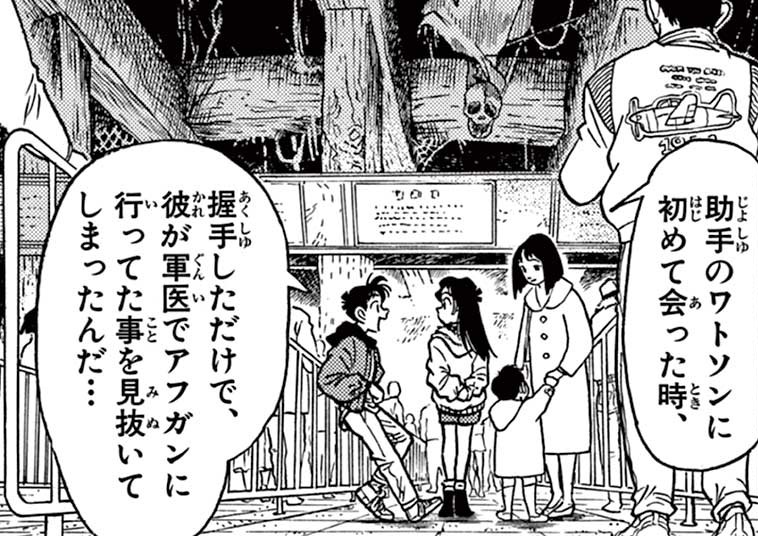
Shin’ichi treats Ran to a day at Tropical Land as a reward for winning the city karate tournament. As they wait in line for a ride on the roller coaster, Shin’ichi explains all the reasons why Sherlock Holmes was the greatest detective.
- 新一:
- 「助手のワトソンに初めて会った時、握手しただけで、彼が軍医でアフガンに行ってた事を見抜いてしまったんだ…」
- “The first time he met his assistant Watson, Holmes could tell just from a handshake that he was a military doctor who had been stationed in Afghanistan...”
握る (にぎる) (To grip)
握る means to grip or squeeze something in your hand. It is also the verb for shaping food by hand, as in おにぎりを握る or 寿司を握る, and for holding power or control, as in 権力を握る.
Example 1 of 2: Never even held a kitchen knife with 包丁を握る
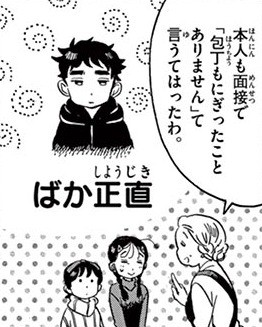
Kiyo and Sumire visit a Western-style restaurant whose card their childhood friend Kenta left them, guessing he works there as a waiter. When they can’t cover the bill, the woman serving them says a staff member already paid for their meal out of his wages. That turns out to be Kenta, who works in the kitchen as an apprentice cook. Sumire admits the news surprised them, since Kenta never used to cook.
- 店員さん:
- 「本人も面接で『包丁もにぎったことありません』て言うてはったわ。」
- “He said so himself at his interview. 'I've never even held a kitchen knife.'”
- ー:
- 「ばか正直」
- “Honest to a fault”
Example 2 of 2: Never messing up rice balls with おにぎりを握る
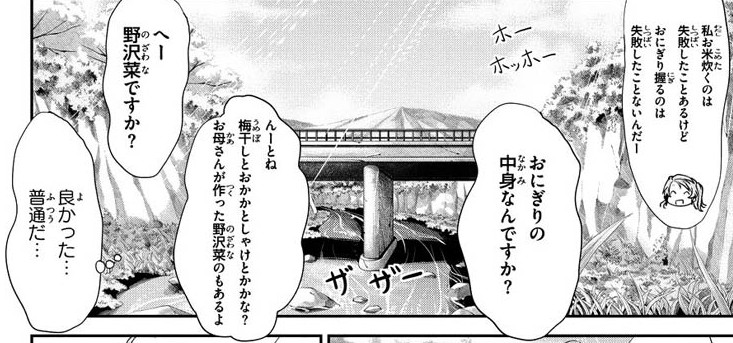
Hotaru and Komari agreed to trade homemade lunches while viewing the cherry blossoms. Komari’s lunch came out badly, with burnt noodles and a hamburger covered in melted chocolate, but Hotaru ate it anyway and insisted it was delicious. Now Komari offers her a rice ball, and Hotaru takes a bite and finds it good.
- 小鞠:
- 「私お米炊くのは失敗したことあるけどおにぎり握るのは失敗したことないんだー」
- “I've messed up cooking rice before, but I've never messed up making rice balls!”
- 蛍:
- 「おにぎりの中身なんですか?」
- “What's in the rice balls?”
- 小鞠:
- 「んーとね 梅干しとおかかとしゃけとかかな? お母さんが作った野沢菜のもあるよ」
- “Let's see... pickled plum, bonito flakes, salmon, that kind of thing? There's also one with the nozawana pickles my mom made.”
- 蛍:
- 「へー 野沢菜ですか?」
- “Oh, nozawana?”
- 「良かった… 普通だ…」
- “Thank goodness... They're normal...”
Building Bigger Words
These patterns come up again and again in manga. Learn the pattern and you can read words you've never seen.
握り にぎり (a grip or a handful)
- 一握り ひとにぎり a handful, a tiny share
- 握り飯 にぎりめし rice ball
- 握り潰す にぎりつぶす to crush in the hand, to quash
- 握りしめる にぎりしめる to clench
〜を握る にぎる (to hold power over)
- 鍵を握る かぎをにぎる to hold the key to a problem
- 主導権を握る しゅどうけんをにぎる to take the lead
- 弱みを握る よわみをにぎる to have something on someone
Check Yourself
What does 握 mean?
Gripping and control.
Read These Without Furigana
握手
握る
Work Out a New Word
Here 握 has り after it, and 一 takes its native reading. Read 一握り in this line. How many make it?
「ほんの一握りなんだからな」
Show the answer
一握り, a handful. “It’s only a tiny handful, after all.”
How is 握 read in 握手, and how in 握る?
Show the answer
握手 and 握る.