Homes and specialists with 家
The kanji 家 generally has three senses. The first is a dwelling, a building people live in. The second is a cluster of blood kin, a lineage. The third is a school or tradition of learning or technique, and the person who specializes in it.
Etymology
This kanji is an ideogrammic compound comprised of 宀 (roof) and 豕 (pig). The image is a pig given as a living offering, at the place where such a pig was presented to an ancestral deity.
Etymology Research
Components and Older Forms
Every account agrees on the two parts. The graph is 宀 over a boar, and the earliest inscriptions sometimes write the full 豭, the boar with its bristles, rather than 豕 alone. CUHK’s 形義通解 says the oracle-bone and bronze forms take 宀 with either 豕 or 豭, and it identifies 豭 as supplying the sound while the boar image carries the sense of keeping animals inside the house. The 說文’s own wording is 居也。从宀,豭省聲, “to dwell; from 宀, with 豭 as the phonetic minus its left radical”, glossed 古牙切. The regular small-seal form is 𡩵, and the older transmitted forms are 𠖔, 𡩅, and 𡧚. 漢典 files the character under 宀 and notes that 段玉栽 argued the seal form belongs under 豕 instead. CUHK, 家 Kangxi, 家
Whether the Pig Gives Sound or Meaning
The disagreement is old and it is not settled. Kanjipedia, reporting 角川新字源, calls the character a 会意 made of 宀 and 豕, and 漢典’s structural analysis agrees. The 說文, which CUHK reproduces, makes 豭 the phonetic, which would make the character 形声, and CUHK’s 形義通解 sides with the 說文 on the sound while also supplying a meaning gloss. 康熙字典 quotes the 說文 wording and then rejects it. Following the 六書故, it points out that an older form of the character is written with 亼 under the roof and glossed as people gathered together, and it argues that 乑, the old form of 族, was corrupted into 豕, so that 豭省聲 has no basis. 段玉栽 opens his note on the character by calling it 一大疑案, one great puzzle, and asks why the 說文 did not simply say 叚聲 if 叚 was the sound. Kanjipedia, 家 Kangxi, 家 Shuowen zhu, 家 CUHK, 家
What the Pig Was For
The sources give three accounts of the animal’s job, and they are worth setting side by side rather than merging.
角川新字源, as Kanjipedia reports it, glosses 豕 as いけにえのぶた, a pig given as a living offering, and says the character first meant たまや, the place where such a pig was offered to an ancestral deity, and only later came to mean いえ. On this account the pig is a ritual object and the original meaning is a shrine. Kanjipedia, 家
漢典’s explanatory note keeps the household but changes the animal’s role. Because productivity was low, people kept pigs inside the house, and a house with a pig in it came to mark a household, so the original sense is the inside of a house, a dwelling. CUHK’s 形義通解 adds supporting material from the other direction, noting that the houses of the Miao in Yunnan and Guizhou had people living above and cattle, sheep, and pigs below, citing 李濟 and 衛聚賢, and it quotes 方言 卷八 on 豭 as a word for pig current between northern China and Korea. 康熙字典 preserves a fourth view in 周伯溫’s words: 豕居之圈曰家, a pen for pigs is called 家, which is why the graph has a roof and a boar, and later writers borrowed it for the house a family lives in. Kangxi, 家 CUHK, 家
段玉栽 ties the accounts together. He reads the seal form’s original sense as 豕之凥, a pen for pigs, and treats the move to 人之凥, a place for people, as a borrowing through 叚. He backs this with 牢, which is 牛之凥, a pen for cattle, and which was extended to mean the prison that holds prisoners. His argument is that pigs produce many young, so the place where people gathered and lived took over the character, and in time the extended sense displaced the original one, which he says had been happening since antiquity. He ends by saying the seal form should be filed under 豕, and he rejects the transmitted 𠖔 as a mistake, saying it should be the ancient graph for 豕. His reasoning is a proposal about how the meaning developed, not a dated sequence that the sources establish. Shuowen zhu, 家
Early Attestations and Glosses
CUHK reports one oracle-bone form and nine bronze forms, and describes the oracle-bone sense as both a 宗廟, an ancestral shrine, and a 家族. Among the bronze examples it quotes 克鼎 with 諫辪王家,惠于萬民, where 家 is the royal house, 麥尊 with 侯易者𢦚臣二百家, where two hundred 家 are units of household, and 弔家父簠 with 弔家父乍仲姬匡, where the graph sits inside a personal name. 漢典’s 字源 gallery counts seventeen oracle-bone examples, thirty-six bronze, forty-four Chu silk and bamboo, four Qin bamboo, and thirty-two clerical forms. CUHK, 家 Kangxi, 家
Two early glosses frame the meaning. The 爾雅, quoted in 康熙字典 and again in 段玉栽’s note, says 戸牖之閒謂之扆。其內謂之家, what lies between the door and the window is the 扆, and its inside is the 家. That is a spatial gloss, and it sets 家 beside 戸, which is why the two characters belong to one family of words in Japanese. The 說文’s 居也, to dwell, compresses the same idea into one word. The 周禮 commentary on land allotment says 有夫有婦,然後爲家, only a husband and a wife together make a 家, and calls a great officer’s fief a 家 and his retainers 家臣. 段玉栽 states the extension into territory in one line, 引伸之天子諸侯曰國,大夫曰家, the emperor and the lords were called 國 and a great officer was called 家, which is where the political sense behind 国家 comes from. 康熙字典 adds 蔡邕’s 獨斷 on 天子無外,以天下爲家, and the 左傳 has 大夫皆富,政將在家, when the great officers are all rich, government will be in their houses. Kangxi, 家 Shuowen zhu, 家
The Japanese Word
The history of いえ is separate from the history of the Chinese character. The 精選版 traces いえ to the 古事記 of 712, where it appears as 伊弊 in a song, and to the 土左日記 of about 935, and it quotes the 徒然草 of about 1331 on how to build a house. The 改訂新版 世界大百科事典 adds that Old Japanese イヘ generally named the dwelling of a family rather than a building, and that individual buildings were called ヤ, イホ, ムロ, or クラ instead, so イヘ did not denote a structure. The same encyclopedia records a theory connecting イヘ to ヘ, the word for a hearth, while noting that the 甲類 ヘ of Old Japanese and the 乙類 ヘ of the hearth are held to have been pronounced differently, so the theory is not settled. It also notes that the kanji 家 was used to write a separate Japanese word, ヤケ, an enclosed compound containing 屋 and 倉, and that names such as 大伴家持 and 石上宅嗣 show ヤケ in personal names, while イヘ was closely tied to family. On that account a ヤケ was a matter of property and inheritance while an イヘ was a matter of the people living in it, and the two words were not interchangeable. Seisenban, 家 Heibonsha, 家
The Dwelling
家 (House)
家 is a building where people live.
Example 1 of 7: According to the rules with 〜によると
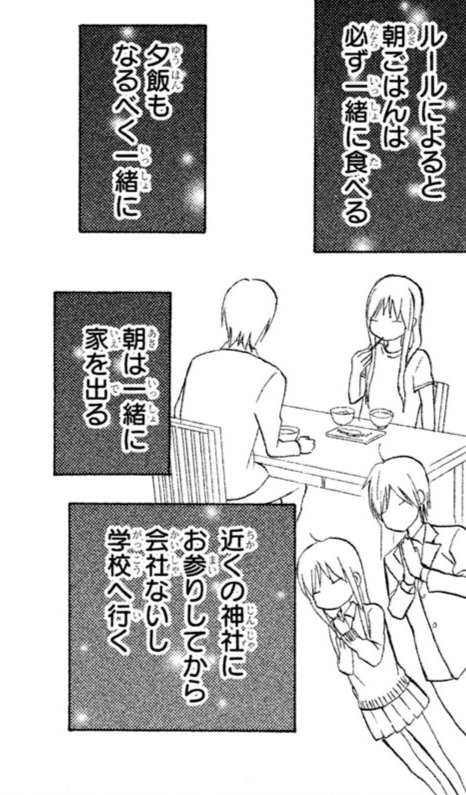
Now that Mao is living at Hiro’s house, Hiro presents her with a list of rules. Before going to bed, Mao looks the list over.
- 真魚:
- 「ルールによると朝ごはんは必ず一緒に食べる」
- “According to the rules, we must always eat breakfast together.”
- 「夕飯もなるべく一緒に」
- “We should eat dinner together too, as often as possible.”
- 「朝は一緒に家を出る」
- “We leave the house together in the morning.”
- 「近くの神社にお参りしてから会社ないし学校へ行く」
- “After praying at the nearby shrine, we go to work or school.”
Example 2 of 7: Just looking for farm help with 〜ていたところだ
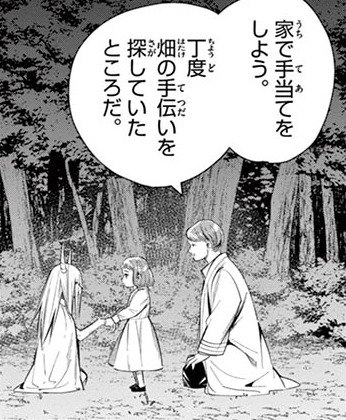
In a village Frieren once visited with Himmel’s party, a demon child killed and ate a villager’s daughter. When Frieren moved to finish off the wounded demon, the village chief stopped her, saying it doesn’t need to eat people to live and deserves a chance to make amends.
- 村長:
- 「家で手当てをしよう。」
- “I'll treat your wounds at my house.”
- 「丁度畑の手伝いを探していたところだ。」
- “As it happens, I was just looking for a hand in the fields.”
Example 3 of 7: Kindred spirits in golf with 気が合う
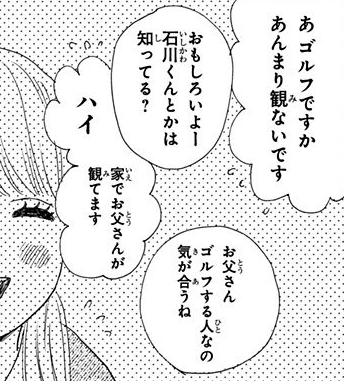
Takeo’s girlfriend Rinko visits to study with him, but Takeo’s parents take turns interrupting them to get to know her better. Takeo’s father, Yutaka, asks if she watches golf.
- 凛子:
- 「あ ゴルフですか。あんまり観ないです」
- “Ah, golf? I don't watch a lot of it.”
- 豊:
- 「おもしろいよー!石川くんとかは知ってる?」
- “It's fun! Do you know about Ishikawa-kun?”
- 凛子:
- 「ハイ。家でお父さんが観てます」
- “I do. My father watches it at home.”
- 豊:
- 「お父さん ゴルフする人なの。気が合うね」
- “So your dad's a golf guy. We're kindred spirits, eh?”
Example 4 of 7: わたし from a teenage girl
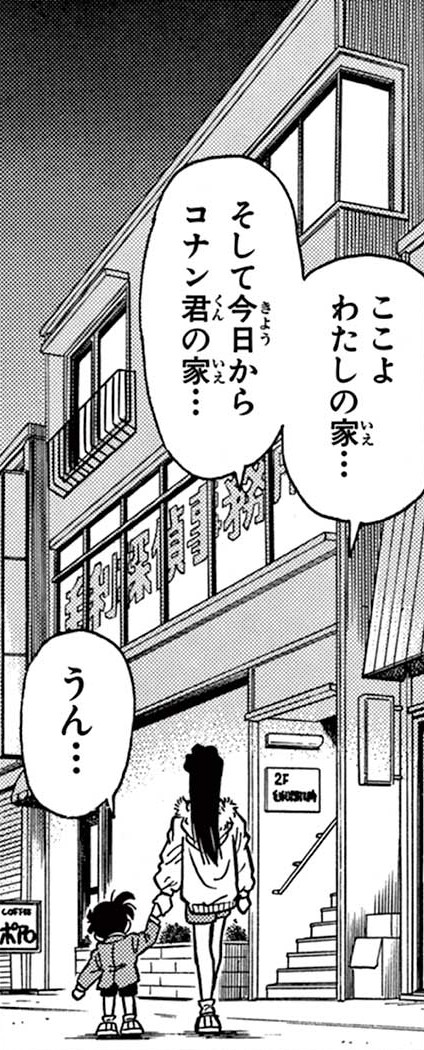
Professor Agasa convinces Ran to take Conan in to stay with her and her father.
- 蘭:
- 「ここよ わたしの家… そして今日からコナン君の家…」
- “It's here. My home... And starting today, your home...”
Example 5 of 7: Nearly turning to ash with 〜ってば
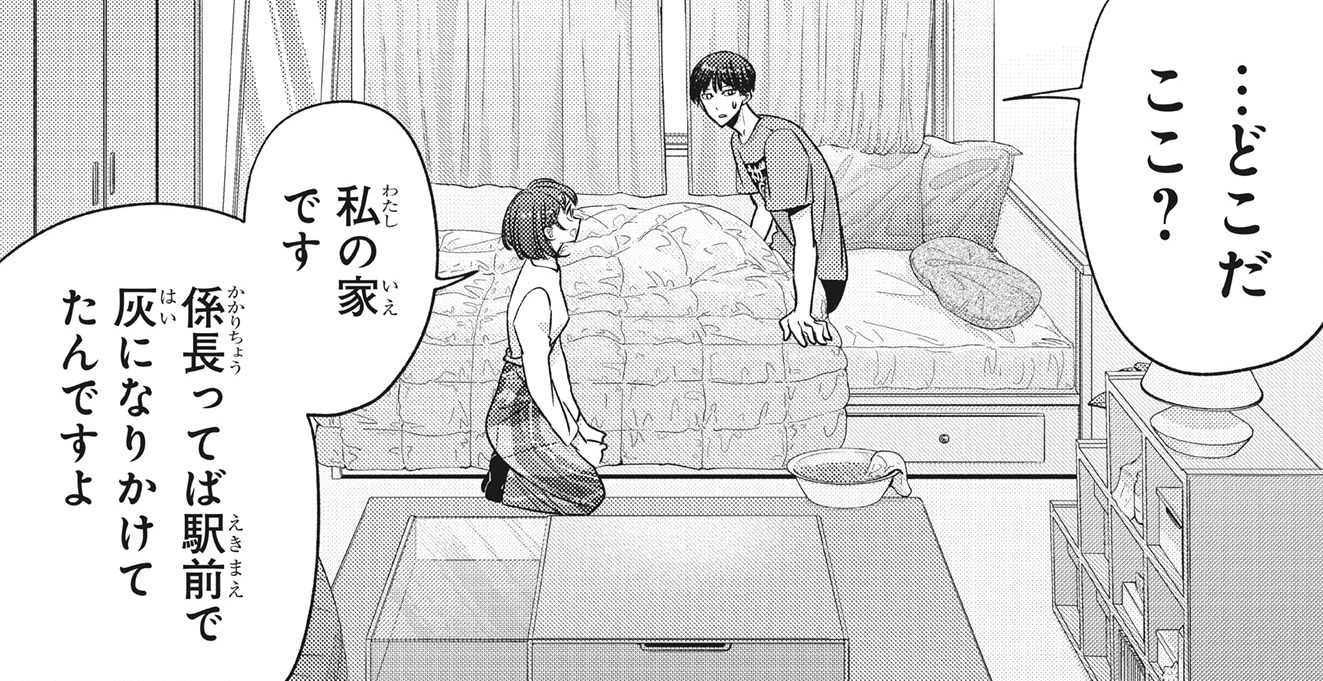
Kumada, a section chief who avoids other people, has spent the night being dragged into one subordinate’s home after another. Worn out, he slumped on the steps by the station, where Akagi, another of his subordinates, found him. He passed out, and he has just woken up in a bed he doesn’t recognize.
- 熊田:
- 「…どこだここ?」
- “…Where am I?”
- 赤城:
- 「私の家です 係長ってば駅前で灰になりかけてたんですよ」
- “My place. Honestly, sir, you were about to turn to ash outside the station.”
Example 6 of 7: Place of lodging with 〜先
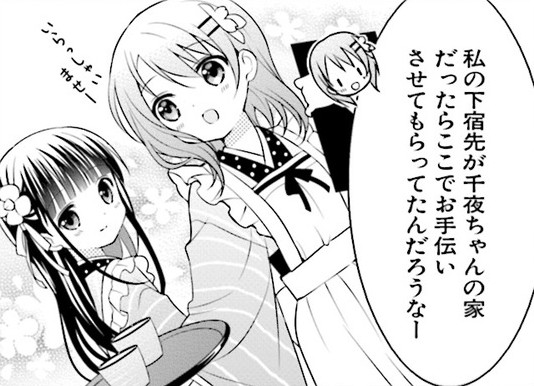
Since Cocoa helps out at Chino’s house where she’s staying, she considers the situation if she were instead staying with Chiya.
- ココア:
- 「私の下宿先が千夜ちゃんの家 だったらここでお手伝い させてもらってたんだろうなー」
- “If my lodging place were Chiya-chan's house, I probably would've been allowed to help out here.”
Example 7 of 7: Thanks for the boxed lunch with サンキュ
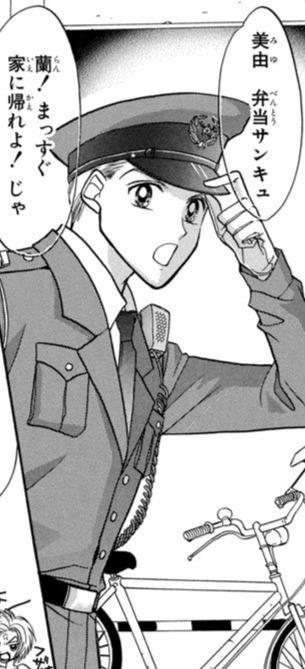
Miyu visits Yamato at his police box workplace to bring him a packed lunch. She sees her friend, Yamato’s sister Ran, there and stops by to see her next. A call comes in, and Yamato heads to help provide backup.
- 大和:
- 「美由 弁当サンキュ」
- “Miyu, thanks for the boxed lunch.”
- 「蘭! まっすぐ 家に帰れよ! じゃ」
- “Ran! Head right home! Bye!”
実家 (Parents' home)
実家 is the home one grew up in, where one’s parents live.
It combines 実 (real / true) with 家 (home) to show one’s original home.

Cocoa and Chiya pass by a bakery. Cocoa stops to admire the bread in the window.
- ココア:
- 「実家がベーカリーでよく作ってたんだ」
- “My family runs a bakery, so I used to bake bread all the time.”
- 「また作りたいなぁ」
- “I want to make it again.”
- 千夜:
- 「お手製なの?すごい!」
- “You made these yourself? Amazing!”
家賃 (Rent)
家賃 means the rent paid for a house or apartment.
It combines 家 (house / home) with 賃 (fee / charge) to show the charge for a dwelling.
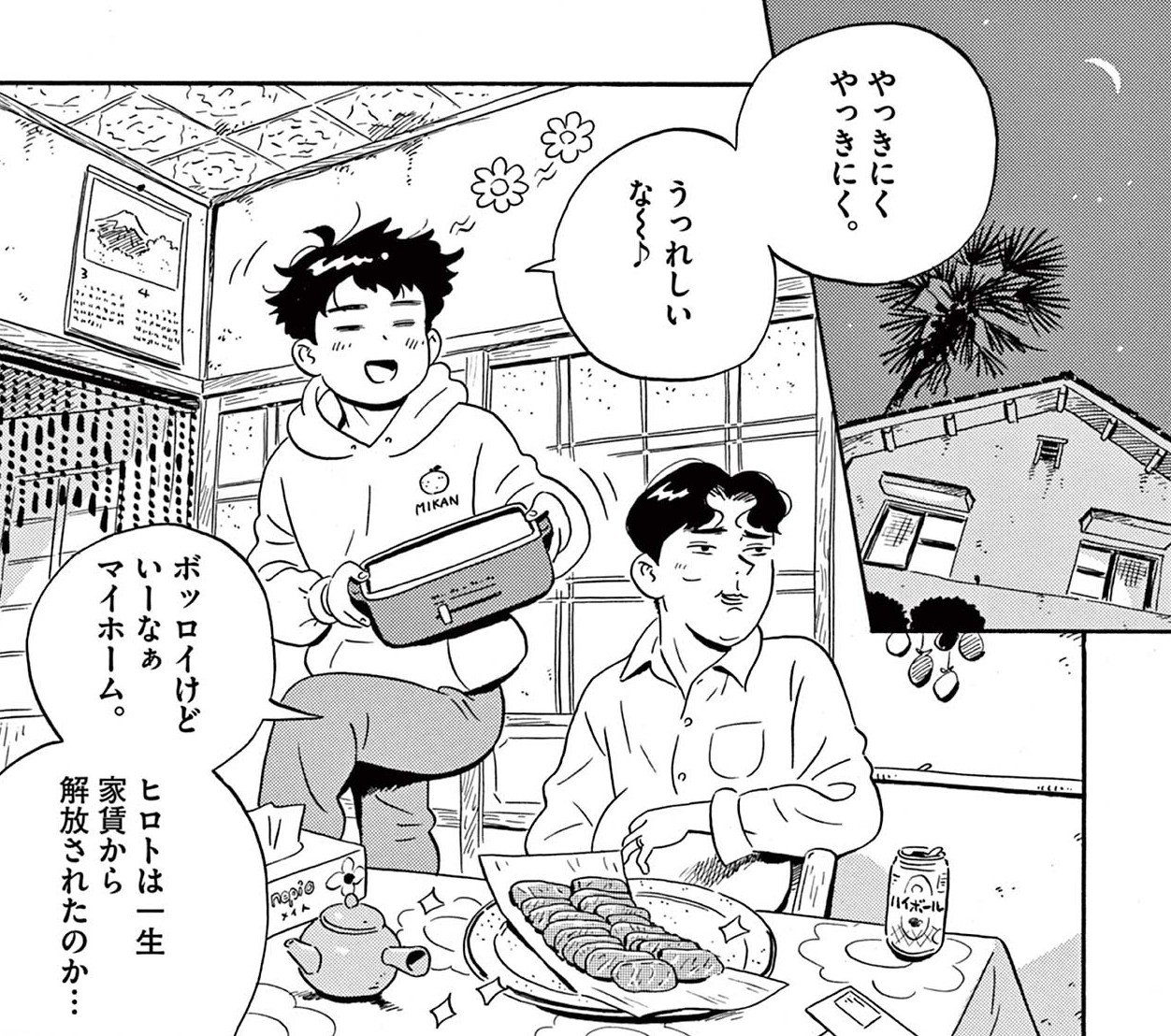
Hiroto’s friend Hideki stops by Hiroto’s workplace looking for a place to stay for the night. He has with him a shopping bag with beef.
- ヒロト:
- 「やっきにく やっきにく。うっれしいな〜♪」
- “Grilllled meat, grilllled. So happy~~♪”
- ヒデキ:
- 「ボッロイけどいーなぁマイホーム。」
- “It's a bit run down, but how nice, having your own home.”
- 「ヒロトは一生家賃から解放されたのか…」
- “Have you been freed from rent forever...?”
Domesticated Animals
家鴨 (Domestic duck)
家鴨 means a domestic duck. The reading あひる belongs to the whole word rather than to either kanji separately.
It combines 家 (house / domestic) with 鴨 (duck) to distinguish a domesticated duck from a wild one.
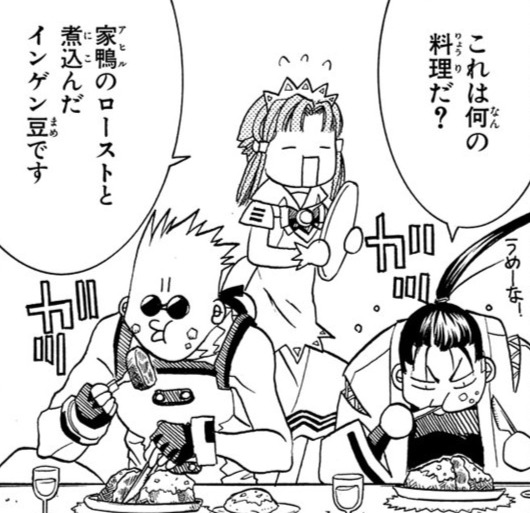
As part of their training, Akari, Aika, and Alice prepare a meal and host a large dinner.
- 暁:
- 「これは何の料理だ?」
- “What dish is this?”
- 灯里:
- 「家鴨のローストと煮込んだインゲン豆です」
- “It's roast duck and stewed green beans.”