Learning and schooling with 学
学 means to learn or study, the knowledge organized through study, and a school or educational institution. It can also refer to a person who studies. The standard readings are ガク and まなぶ.
Etymology
The kanji 学 is the simplified form of the older character 學.
Etymology Research
学 is the simplified Japanese form of 學. Kanjipedia’s account, from Kadokawa’s Shinjigen, classifies the fuller original form as 会意形声. It combines a teaching element, 冂 interpreted as covered darkness and ignorance, and 𦥑, two hands, with a sound connection given as キヨク to カク. It explains learning through imitation of taught actions and describes successive abbreviation into 學 and 学. Those component sound labels are historical analysis, not extra modern readings of 学. Kanjipedia, 学
The Chinese University of Hong Kong database presents an account of early forms as hands manipulating counting or divination rods. It describes variants containing 五 and 六, or 爻 with a phonetic role, and notes the addition of 子 in bronze forms to indicate children. It also reports Shirakawa Shizuka’s alternative interpretation of crossed roof timbers on a school building. These accounts disagree about the original scene and component functions. CUHK, 學 discussion under 爻
CUHK cites an oracle-bone inscription recording a ritual at 大學 and the Jing gui bronze inscription concerning learning and teaching archery at a 學宮. Such evidence places schooling, learning, and teaching in early Chinese usage. It does not establish a neat progression from personal study to institutions, or explain the origin of Japanese まなぶ. CUHK, early uses of 學
Learning
学生 (Student)
学生 means a student, especially at a school or university.
It combines 学 (study) with 生 (person / life) to show a person who studies.
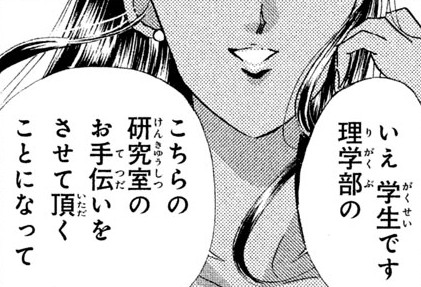
Reika sees an unknown person in the old lab next to her class’s. She asks the woman if she’s an assistant.
- せつな:
- 「いえ 学生です理学部の」
- “No, I'm a student, in the science department.”
- 「こちらの研究室のお手伝いをさせて頂くことになって」
- “It's arranged for me to help out in this lab.”
小学生 (Elementary school student)
小学生 means an elementary school student. In Japan, this usually means a child in grades 1 through 6.
It combines 小学 (elementary schooling) with 生 (student) to show a elementary school student.
Example 1 of 2: It's not like I'm a grade-schooler with 〜じゃあるまいし
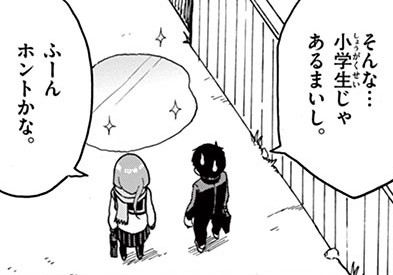
Seeing a frozen puddle on the ground, Nishikata is excited at the thought of picking it up and holding it. Takagi asks if this is what he’s thinking, and he quickly denies it.
- 西片:
- 「そんな… 小学生じゃあるまいし。」
- “It's not like I'm some kind of...grade-schooler.”
- 高木:
- 「ふーん。ホントかな。」
- “Hm, I wonder...”
Example 2 of 2: Experienced receiving a gold prize with 〜た+ことがある

Talking about drawing, Cocoa is boastful of her own ability.
- ココア:
- 「これでも金賞もらったことあるんだ」
- “Believe it or not, I've actually won a gold medal before.”
- リゼ:
- 「町内会の小学生低学年の部とかいうのはナシな」
- “And don't tell me it was in the neighborhood association's lower-elementary division.”
Schools and Enrollment
学校 (School)
学校 means a school, where teachers provide organized instruction to students.
It combines 学 (study) with 校 (school building / institution) to show a place for learning.
Example 1 of 8: A loss of public order at school with 治安
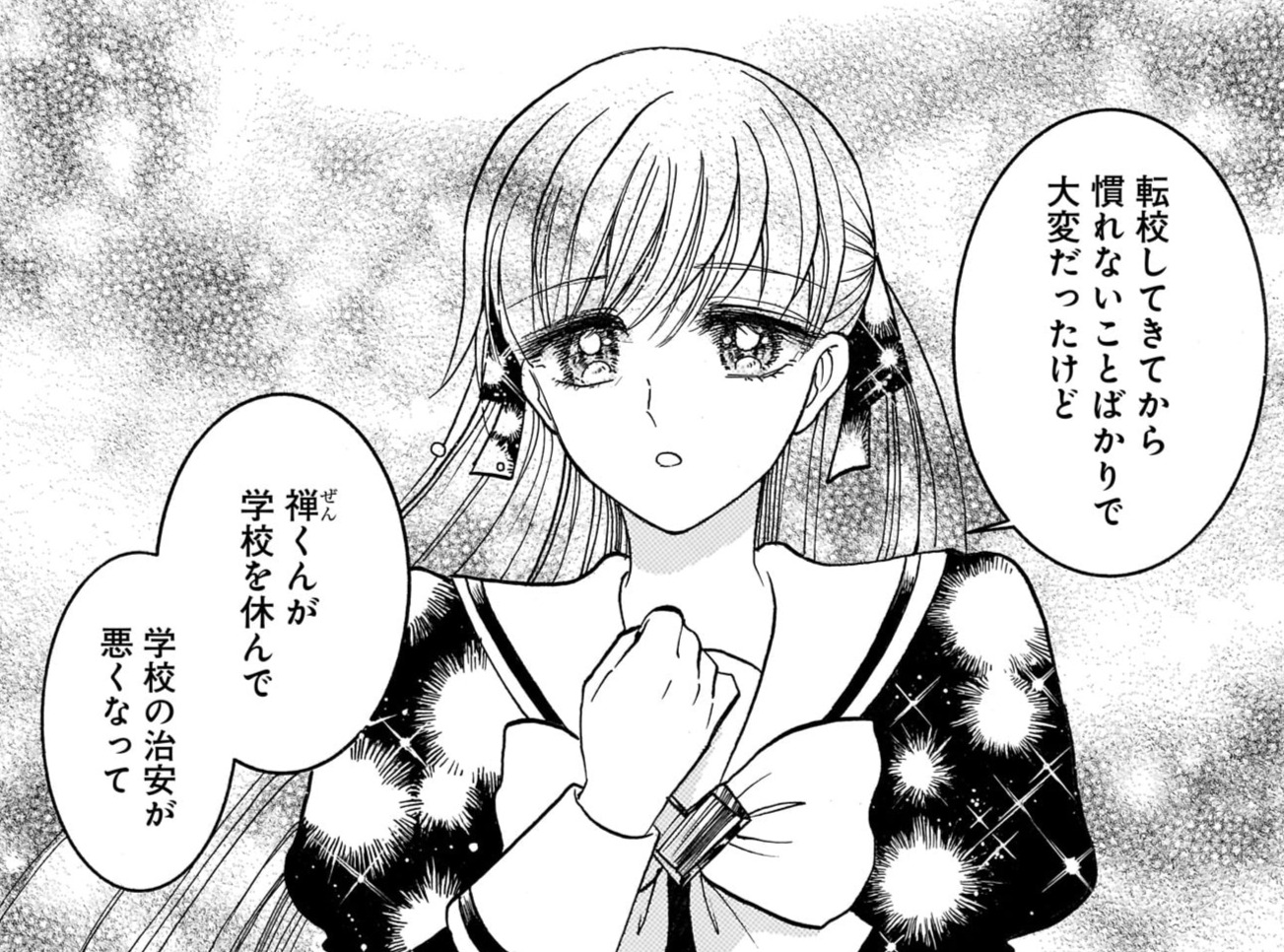
Following Zen’s absence from school for a while, fights and disobedience have taken over the school grounds. When Lulu learns Zen hasn’t been at home either during this time, she travels to the mountains in search of him. After finding him, she explains the situation at school.
- ルル:
- 「転校してきてから慣れないことばかりで大変だったけど禅くんが学校を休んで学校の治安が悪くなって」
- “Since I transferred to this school, everything has been unfamiliar and difficult, but ever since you've started missing school, the school's security has gotten worse...”
Example 2 of 8: According to the rules with 〜によると
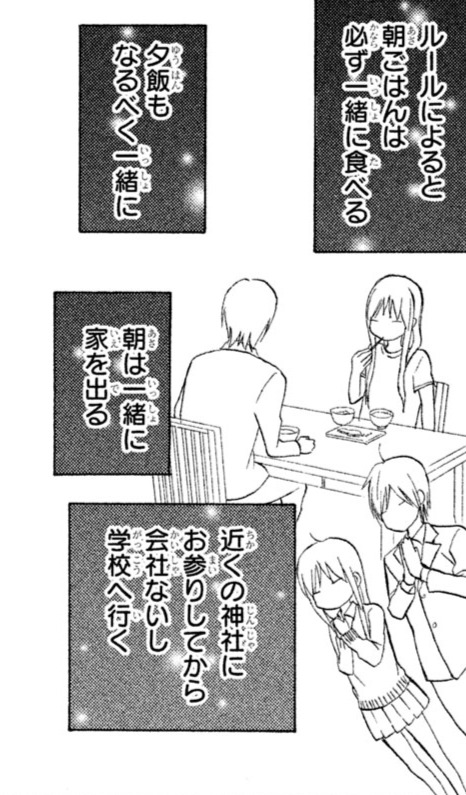
Now that Mao is living at Hiro’s house, Hiro presents her with a list of rules. Before going to bed, Mao looks the list over.
- 真魚:
- 「ルールによると朝ごはんは必ず一緒に食べる」
- “According to the rules, we must always eat breakfast together.”
- 「夕飯もなるべく一緒に」
- “We should eat dinner together too, as often as possible.”
- 「朝は一緒に家を出る」
- “We leave the house together in the morning.”
- 「近くの神社にお参りしてから会社ないし学校へ行く」
- “After praying at the nearby shrine, we go to work or school.”
Example 3 of 8: Being innocent at school with 猫を被る
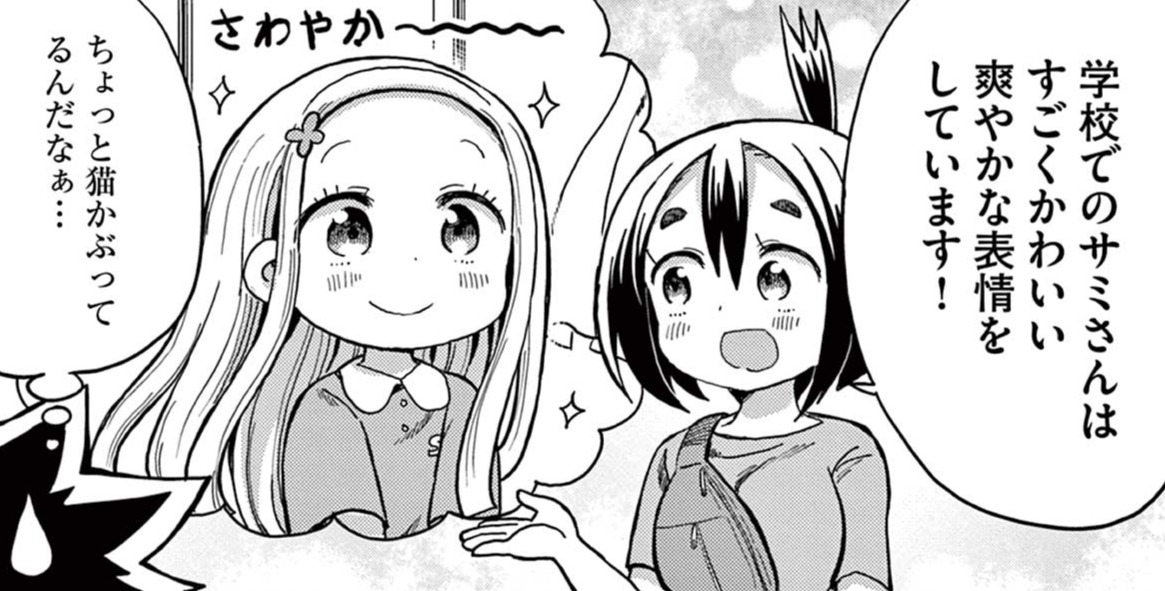
Sami and her father go to the park to play. There, they see Sami’s teacher. The teacher is surprised to see Sami’s rambunctious behavior, as it’s different from the Sami she sees at school.
- 先生:
- 「学校でのサミさんはすごくかわいい爽やかな表情をしています!」
- “At school, Sami has such a cute and delightful expression!”
- パパ:
- 「ちょっと猫かぶってるんだなぁ…」
- “She's just putting on a front, isn't she...”
Example 4 of 8: Being strict with oneself and one's student with 心を鬼にする
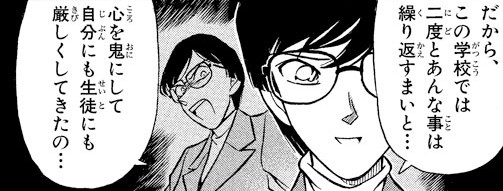
Conan’s classmates aren’t fond of their new teacher’s strict attitude. Ms. Kobayashi explains how at her last school, she couldn’t bring herself to be strict, and it allowed her students to get so out of control that students were injured in a fight.
- 小林:
- 「だから、この学校では二度とあんな事は繰り返すまいと…」
- “Therefore, to keep from repeating that kind of situation at this school...”
- 「心を鬼にして自分にも生徒にも厳しくしてきたの…」
- “I hardened my heart and became strict, with myself and with my students...”
Example 5 of 8: Call me Teacher with と呼べ
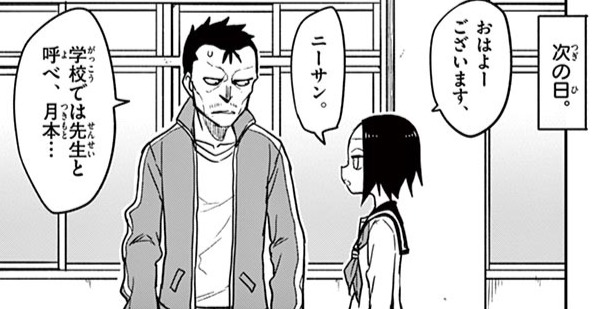
Sanae’s teacher, Mr. Tanabe, has proposed to her older sister, who is also a teacher at the school.
- 「次の日。」
- “The following day.”
- サナエ:
- 「おはよーございます、ニーサン。」
- “Good morning, Big Brother.”
- 田辺:
- 「学校では先生と呼べ、月本…」
- “Call me 'Teacher' at school, Tsukimoto.”
Example 6 of 8: Going to school together so as to not get lost with 〜ように

After Cocoa gets lost looking for her new school, she meets Chiya, who will be going to the same school as her.
- 千夜:
- 「ココアちゃんが迷わないように今から学校まで行きましょう」
- “Let's go from here to the school now so you won't get lost.”
- ココア:
- 「め 女神様!」
- “A-a goddess!”
Example 7 of 8: Kindrid spirits in drinking tea with 気が合う
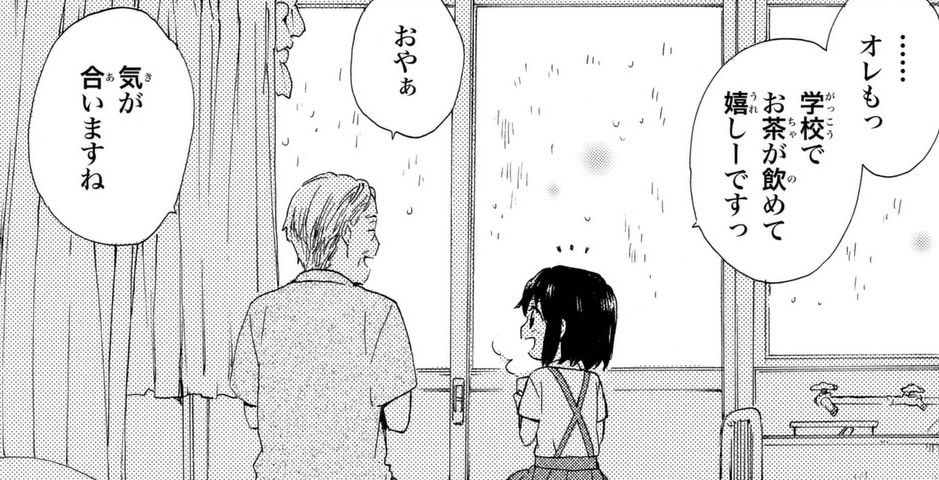
Hinata escorts a classmate to the school nurse. There, she meets an elderly man sipping tea. Seeing her interest, the old man offers her a cup.
- 日向:
- 「……オレもっ 学校でお茶が飲めて嬉しーですっ」
- “It also makes me happy when I can drink tea at school.”
- おじいさん:
- 「おやぁ 気が合いますね」
- “Oh, we're kindred spirits, huh?”
Example 8 of 8: Sometimes pretending to be someone else with 〜ことがある
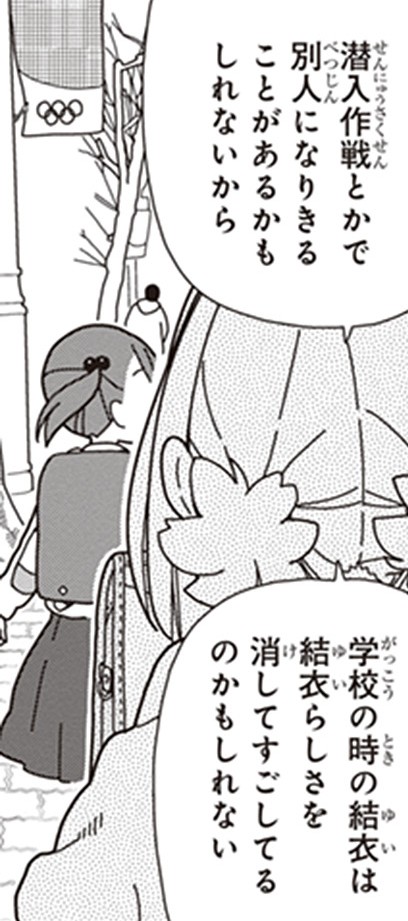
Sacchan and Kotoha notice Yui walking with a couple of her friends from school. The two decide to sneak and follow after them. Sacchan notices Yui doesn’t act quite the same with these friends as she does with Sacchan and Kotoha.
- さっちゃん:
- 「潜入作戦とかで別人になりきることがあるかもしれないから」
- “Maybe it's because she's in an undercover operation or something that she sometimes pretends to be a different person....”
- 「学校の時の結衣は結衣らしさを消してすごしてるのかもしれない」
- “...that Yui at school might be trying to hide her true self.”
小学校 (Elementary school)
小学校 is elementary school, the first six years of school in Japan.
It combines 小 (small / elementary) with 学校 (school) to show an elementary-level school.
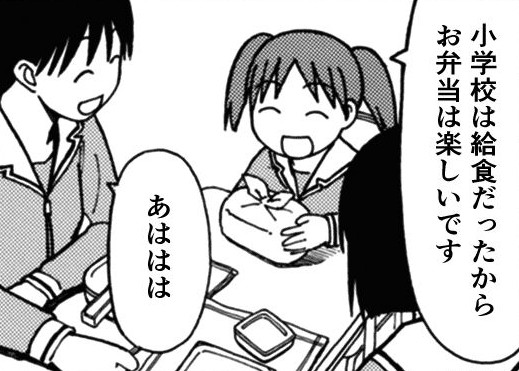
Chiyo is a child prodigy who’s skipped from elementary school to high school.
During her first day of class, Chiyo is invited by a couple of classmates to join them for lunch.
- ちよ:
- 「小学校は給食だったからお弁当は楽しいです」
- “Since we were provided lunches in elementary school, a boxed lunch is fun.”
中学 (Middle school)
中学 is middle school, the three years of school after elementary school in Japan. It is a shortened form of 中学校.
It combines 中 (middle) with 学 (learning) to show the middle stage of schooling.
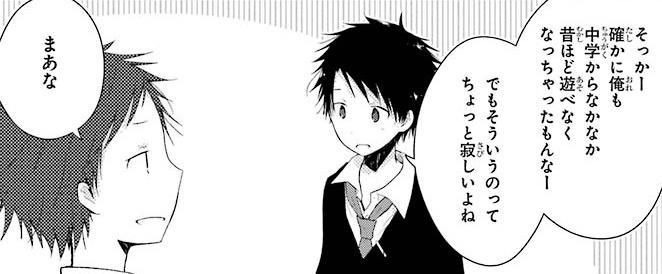
Kohei points out that this is the first time in a while he and Sana have talked this much. Ayumu asks why. Kohei says that between club activities, cram school, and entrance exams, everyone got busy, and they just got together less often.
- 歩:
- 「そっかー 確かに俺も中学からなかなか昔ほど遊べなくなっちゃったもんなー」
- “I see. Come to think of it, since middle school I haven't really been able to hang out as much as I used to, either.”
- 「でもそういうのってちょっと寂しいよね」
- “But that kind of thing is a little lonely, isn't it?”
- 康平:
- 「まあな」
- “I guess.”
学び舎 (School building)
学び舎 refers to a place of learning, such as a school or school building.

Chiya takes Cocoa to see where her new school is located. Coca is filled with excitement to see it.
- ココア:
- 「あれが私の新しい 学び舎かぁ」
- “So that over there is my new schoolhouse.”
- 「見てるだけでわくわくしてくるよ」
- “Just looking at it makes me excited.”
低学年 (Lower grades)
低学年 is the first few grades of elementary school, usually first and second grade.
It combines 低 (lower) with 学年 (school year) to show the lower grade levels.
Talking about drawing, Cocoa is boastful of her own ability.
- ココア:
- 「これでも金賞もらったことあるんだ」
- “Believe it or not, I've actually won a gold medal before.”
- リゼ:
- 「町内会の小学生低学年の部とかいうのはナシな」
- “And don't tell me it was in the neighborhood association's lower-elementary division.”
Knowledge and Academic Study
理学部 (Faculty of Science)
理学部 is the university faculty of natural sciences, such as physics, chemistry, and biology.
It combines 理学 (physical science) with 部 (department) to show a department of science.
Reika sees an unknown person in the old lab next to her class’s. She asks the woman if she’s an assistant.
- せつな:
- 「いえ 学生です理学部の」
- “No, I'm a student, in the science department.”
- 「こちらの研究室のお手伝いをさせて頂くことになって」
- “It's arranged for me to help out in this lab.”
Class Roles
学級委員長 (Class president)
学級委員長 is a student who serves as the leader of a school class and takes on its main duties.
It combines 学級 (class group) with 委員長 (committee chair) to show the leader of the class representatives.
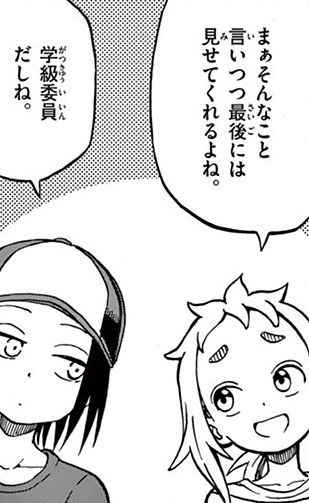
As summer break is half over, talk of summer homework comes up. Yukari says she won’t let Mina copy off of hers.
- ミナ:
- 「まぁそんなこと言いつつ最後には見せてくれるよね」
- “Well, even though she says that, she'll show it to me in the end, you know.”
- サナエ:
- 「学級委員長だしね」
- “She is the class representative, after all.”