Limits and basis with 以
The kanji 以 has two meanings: one indicating “using” a means or basis, and the other indicating “from” a starting point in time or place.
Bounds
以上 (Above)
以上 means “at least” or “and above” when setting an inclusive lower limit. It can also mean “the preceding”, mark the end of a report, or introduce a conclusion based on what came before.
It combines 以 (basis) with 上 (above) to show what lies at or above the set point.
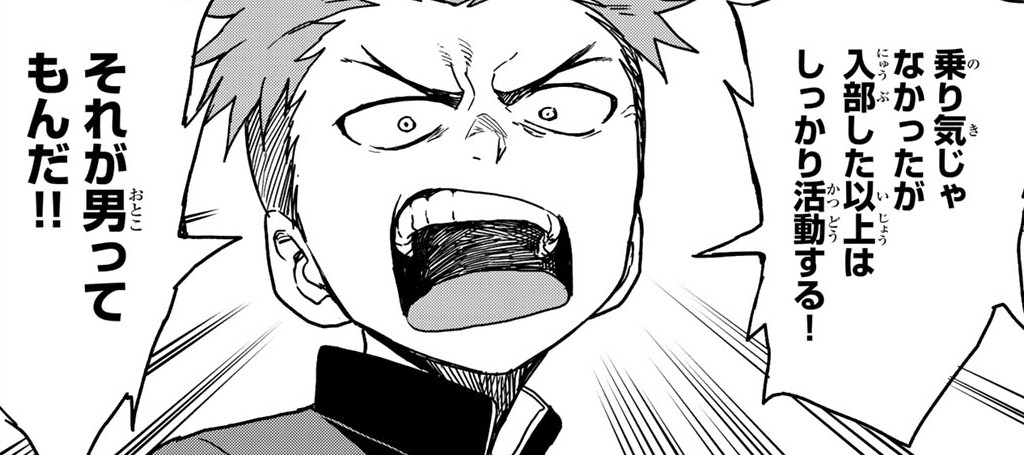
Sakurako forces Takeru to join the shogi club. When he suggests she join as well, she refuses and tells him not to go either, or else he’ll be in the way there.
- タケル:
- 「乗り気じゃなかったが入部した以上はしっかり活動する!」
- “I wasn't enthusiastic, but now that I'm in the club, I'll work hard!”
- 「それが男ってもんだ!!」
- “That's what it means to be a man!!”
Exclusions
以外 (Except)
以外 means outside, except for, or other than a stated range or item.
It combines 以 (basis) with 外 (outside) to show what lies outside that range.

Chino is fascinated by the rabbit at a rival tea shop, but she keeps her distance.
- ココア:
- 「触らないの?」
- “You're not going to touch it?”
- リゼ:
- 「チノはティッピー以外の動物が懐かないらしい」
- “It seems that animals other than Tippy don't warm up to Chino.”
Time Anchors
以来 (Since)
以来 describes a situation that has continued uninterrupted from a specific point (or event) in the past up to the present.
It combines 以 (basis) with 来 (come) to show what has come from that point onward.

A day of bad luck for Cocoa culminates with Syaro telling her to stay away.
- ココア:
- 「私そんな不運オーラ出てたんだ!」
- “Was I giving off that much bad-luck energy!?”
- 千夜:
- 「小さい頃あんこによくかじられて以来ちょっと恐怖症で…」
- “Ever since she received bites by Anko a lot when she was little, she's a bit traumatized...”