Linking and succession with 連
連 means “to line up” (to continue or be connected) or “to accompany” (to act together). It depicts the appearance of people or objects connected without interruption, or a situation in which events occur in succession.
Etymology
This kanji is an ideogrammic compound comprised of 辶 (movement) and 車 (vehicle), giving an image of movement joined with a carriage.
Bringing Along
連れる (To take along)
連れる is to have someone come with you. 連れて帰る means to bring someone home.

Yousuke’s daughter Yotsuba wanders off while he’s moving things into their new home. One of his new neighbors offers to keep an eye out for her. Later, he finds Yotsuba outside with the neighbors.
- 葉介:
- 「あぁ連れて帰ってくれたんだね」
- “Ah, so you brought her back home.”
- 「どうもありがとう」
- “Thank you so much.”
- あさぎ:
- 「いえいえ 私はたいした事はなにも」
- “No, no, it was nothing at all.”
- 恵那:
- 「ただいま…」
- “I'm home...”
連れてくる (To bring along)
連れてくる is to bring a person or animal with you to a place.
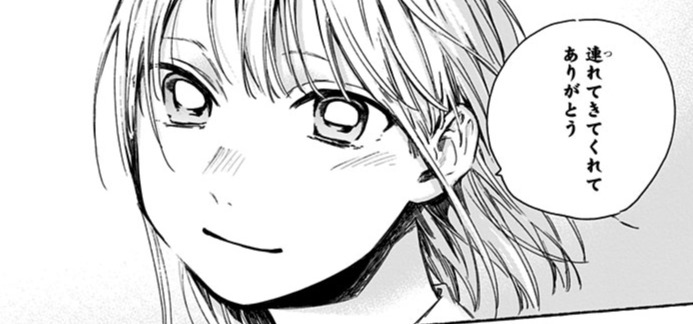
Chinatsu tells Taiki she’d like to go to the beach. A train ride later, they’re wading through the tide. After playing for a while, the two sit and watch the setting sun, and then it’s time to head back home.
- 千夏:
- 「連れてきてくれてありがとう」
- “Thanks for bringing me.”
連れて行く (To take along)
連れて行く is to take someone with you when you go somewhere.
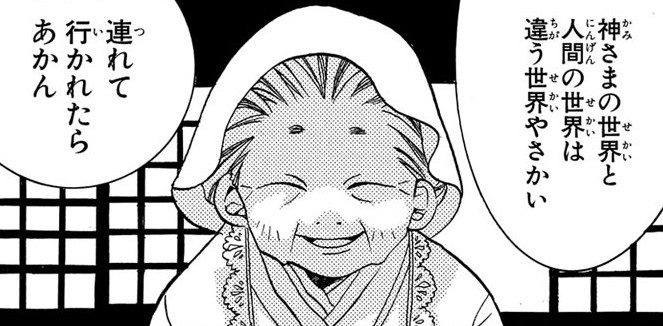
Alicia and Akari visit an island that’s modeled after part of Japan back on Earth. There, an elderly local woman tells the two of the fox spirits that visit the human world there. Akari is excited at the prospect of meeting one, but the old woman gives her a warning: on rare occasion, a fox will take a person back home with them.
- おばあさん:
- 「神さまの世界と人間の世界は違うやさかい」
- “Since the god world and the human world are different...”
- 「連れて行かれたらあかん」
- “...you mustn't get taken away.”
Communication
連絡 (Contact)
連絡 means contacting someone or passing along information. It can also mean a connection between things.
It combines 連 (link) with 絡 (entwine) to show information or people connected together.
Example 1 of 2: Preparing to contact Asuka Jr. with 連絡

Takamiya suspects Meimi is the magical thief Saint Tail. When Meimi is asked to model a wedding dress for a design contest where Saint Tail is going to appear, Takamiya decides to keep a close eye on her at the event. As Takamiya looks around the dressing room, Meimi asks what she’s doing.
- 高宮:
- 「電話はどこかなと思って」
- “I was just wondering where the phone is.”
- 「アスカと連絡をとることになってるの」
- “I'm supposed to get in touch with Asuka.”
- スタッフ:
- 「ちょっと…あなた!」
- “Hey… you!”
Example 2 of 2: When I took my eyes off her for just a minute with 目を離す

Satsuki leaves Sara, the young girl she’s watching, alone to go heat up lunch. When she returns with the food, Sara is nowhere to be found. Satsuki calls her sister to let her know what’s happened.
- 皐:
- 「それが… ちょっと目を離した隙に…」
- “The thing is, I took my eyes off her for a just a minute...”
- 「これから警察に連絡して探しに出るから…」
- “I'm going to call the police, then I'm heading out to look for her...”
Continuity
連続 (Continuation)
連続 means a sequence or continuation without interruption.
It combines 連 (link) with 続 (continue) to show things linked in unbroken sequence.
Example 1 of 2: In the same class since preschool with 連続
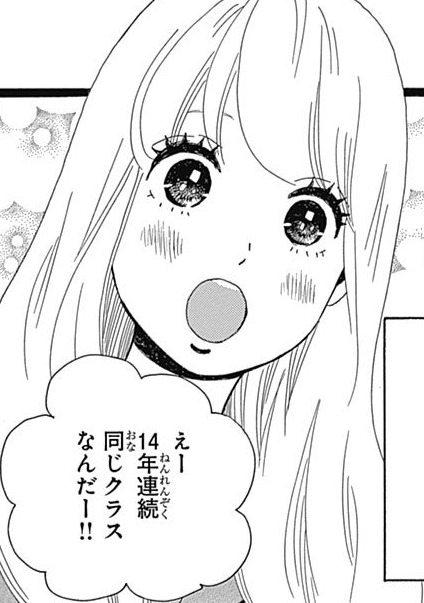
With the new school year, Takeo and Sunakawa are in the same class again. Takeo tells his girlfriend, Yamato, about it.
- 大和:
- 「えー 14年連続同じクラスなんだー!!」
- “Wow, you've been in the same class together for 14 years in a row!!”
Example 2 of 2: Singing one song after another with 連続
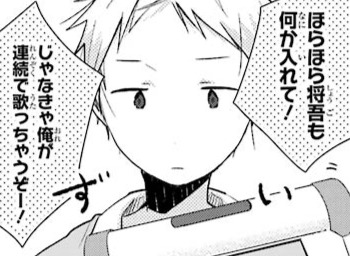
To distract himself from things going on with Fujimiya, Hase goes to karaoke, bringing Shougo with him.
- 長谷:
- 「ほらほら将吾も何か入れて!」
- “Come on, come on, Shougo! Put something in, too!”
- 「じゃなきゃ俺が連続で歌っちゃうぞー!」
- “Otherwise, I'll just keep singing one after another!”
連休 (Consecutive holidays)
連休 means two or more consecutive days off.
It combines 連 (successive) with 休 (rest) to show rest days linked together.
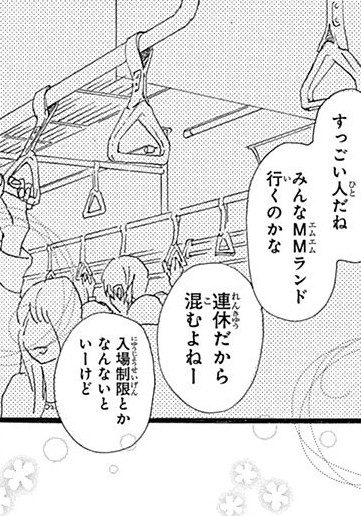
Takeo and his friends board the train bound for the amusement park, MM Land.
- 凛子:
- 「すっごい人だね。みんなMMランド行くのかな」
- “There's a lot of people here. I wonder if everyone's going to MM Land.”
- 隼人:
- 「連休だから混むよねー」
- “It's a long holiday, so it'll be crowded.”
- 愛:
- 「入場制限とかなんないといーけど」
- “I hope they don't restrict admission or anything.”