Living and lively movement with 活
活 means to live or to be lively . In compounds, it often refers to daily life, activity, revival, practical use, or vigor.
Etymology
This kanji isa phono-semantic compound comprised of 氵 (water) as the semantic component and 舌 as the phonetic component (カツ).
The water portion gives meanings of living motion and vitality.
Activity
活動 (Activity)活動( かつどう ) means activity or organized action toward a purpose.
It combines 活 (lively ) with 動 (move ) to show lively movement .
それでも歩は寄せてくる »
Volume 2 » Page 84
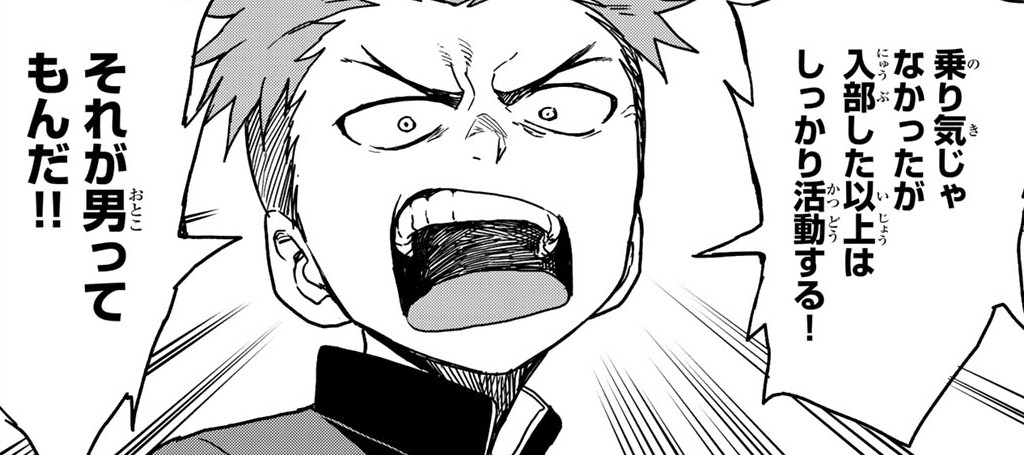
Sakurako forces Takeru to join the shogi club. When he suggests she join as well, she refuses and tells him not to go either, or else he’ll be in the way there.
タケル:
「乗( の ) り気( き ) じゃなかったが入部( にゅうぶ ) した以上( いじょう ) はしっかり活動( かつどう )
“I wasn't enthusiastic, but now that I'm in the club, I'll work hard!”
「それが男( おとこ ) ってもんだ!!」
“That's what it means to be a man!!”
Challenge Yourself
Show translation
Challenge
How has Takeru's attitude toward the shogi club changed?
Clues
乗( の ) り気( き ) じゃなかったが"I was not enthusiastic, but..." admitting his initial reluctance
入部( にゅうぶ ) した以上( いじょう ) は"now that I have joined," treating membership as grounds for obligation
しっかり活動( かつどう ) する
"I will participate properly and responsibly."
What does the speaker mean?
He was reluctant, but now feels obligated to participate seriously.
Takeru contrasts his earlier lack of 乗( の ) り気( き ) with his resolve to work properly once he has joined.
He was eager to join but now wants to quit.
This reverses the contrast. He starts reluctant and ends determined to participate.
He will attend only when Sakurako forces him.
入部( にゅうぶ ) した以上( いじょう ) は makes his membership itself the reason he will act responsibly.
He plans to join without taking part in club activities.
しっかり活動( かつどう ) する says he will participate properly.
He remains uninterested and regrets joining.
He admits the initial lack of enthusiasm, but the second half announces a firm change in conduct.
He thinks serious participation would be unmanly.
His follow-up says responsible participation is exactly what being a man means to him.
Takeru says he was not 乗( の ) り気( き ) at first. Once he has joined, however, he treats serious club participation as an obligation and even as proof of his manliness.
View Full Example
部活 (Club activities)部活( ぶかつ ) , short for 部活動( ぶかつどう ) , means a school club activity. It includes sports and cultural clubs that meet outside class.
It combines 部 (club ) with 活 (activity ) to show the activities of a club .
ひとりぼっちの○○生活 »
Volume 1 » Page 107
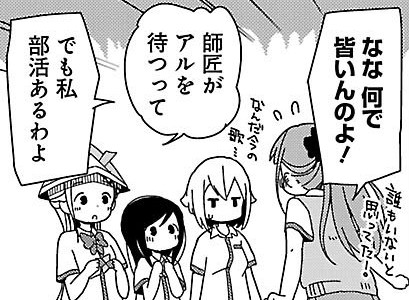
Aru returns to her classroom after club. Expecting the classroom to be empty, she’s singing a song about herself as she enters the room. There, she finds her friends idling away the time.
アル:
「なな 何( なん ) で皆( みな ) いんのよ!(誰( だれ ) もいないと思( おも ) ってた!)」
“Wh- why is it that you all are here?! (I was thinking no one was here!)”
なこ:
「(なんだ今( いま ) の歌( うた ) …)」
“(What was with that song just now...)”
ソトカ:
「師匠( ししょう ) がアルを待( ま ) つって」
“Master said she'd wait for you.”
アル:
「でも私( わたし ) 部活( ぶかつ )
“But I'm in a club!”
Challenge Yourself
Show translation
Challenge
Why are Bocchi and the others still in the classroom?
Clues
師匠( ししょう ) がアルを待( ま ) つBocchi will wait for Aru
って
casually reports what Bocchi said
What does the speaker mean?
Bocchi said she would wait for Aru.
師匠( ししょう ) refers to Bocchi, and アルを待( ま ) つ says that she will wait for Aru.
Aru told them that her club had been canceled.
Aru says she has club, but the reported statement is Bocchi's promise to wait for her.
They expected Aru to return and sing for them.
Nako reacts to Aru's song, but Sotoka says the group stayed because Bocchi would wait for Aru.
Sotoka asked everyone to wait for their teacher.
師匠( ししょう ) is Sotoka's name for Bocchi here, and アル is the person being waited for.
They thought the classroom would be empty after club.
That was Aru's expectation, not the reason the others remained in the room.
Bocchi said she would wait for Sotoka.
The object of 待( ま ) つ is アル, so Bocchi is waiting for Aru.
Sotoka reports that Bocchi said she would wait for Aru. The casual quotation marker って passes along Bocchi’s words and answers Aru’s startled question about why everyone is there.
View Full Example
Life
生活 (Daily life)生活( せいかつ ) means daily life or livelihood. It can refer to everyday routines and circumstances or to the means by which someone supports themselves.
It combines 生 (live ) with 活 (be active ) to show active living .
僕が僕であるために。 »
Volume 2 » Page 50
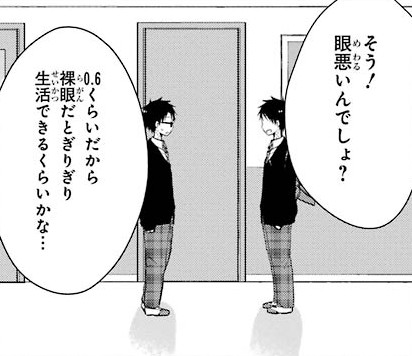
Shun asks Ayumu to continue switching places with him, since pretending to be Ayumu helps him be more open. Ayumu is game, but this requires Shun to go without his glasses, so Ayumu suggests he get contact lenses. Shun asks, “Contacts?”
歩( あゆむ ) :「そう!眼( め ) 悪( わる ) いんでしょ?」
“That's right! You have bad eyesight, don't you?”
駿( しゅん ) :「0.6くらいだから裸眼( らがん ) だときりぎり生活( せいかつ )
“My vision's about 0.6, so without glasses, I can just barely get by in daily life...”
Challenge Yourself
Show translation
Challenge
What does Shun say about managing without his glasses?
Clues
裸眼( らがん ) だとwhen relying on his unaided vision
きりぎり生活( せいかつ ) できるくらい
to the extent that he can just barely manage daily life
What does the speaker mean?
He can just barely manage daily life.
きりぎり shows that ordinary life is possible for him, but only just.
He cannot function at all without his glasses.
He says that he can manage, although きりぎり makes that ability very limited.
He can see normally except when he is reading.
Shun describes his overall ability to manage daily life, not a problem limited to reading.
He has no difficulty because his vision is perfect.
His vision is about 0.6, and he describes getting by only with difficulty.
He can manage only if he wears contact lenses.
The statement concerns what he can do with 裸眼( らがん ) , without glasses or contacts.
He can see well enough to drive without correction.
He only says that he can barely manage everyday life. Driving is not mentioned.
Shun says his vision is about 0.6 and that he can still get through daily life without glasses. きりぎり makes clear that he can do so only barely.
View Full Example